
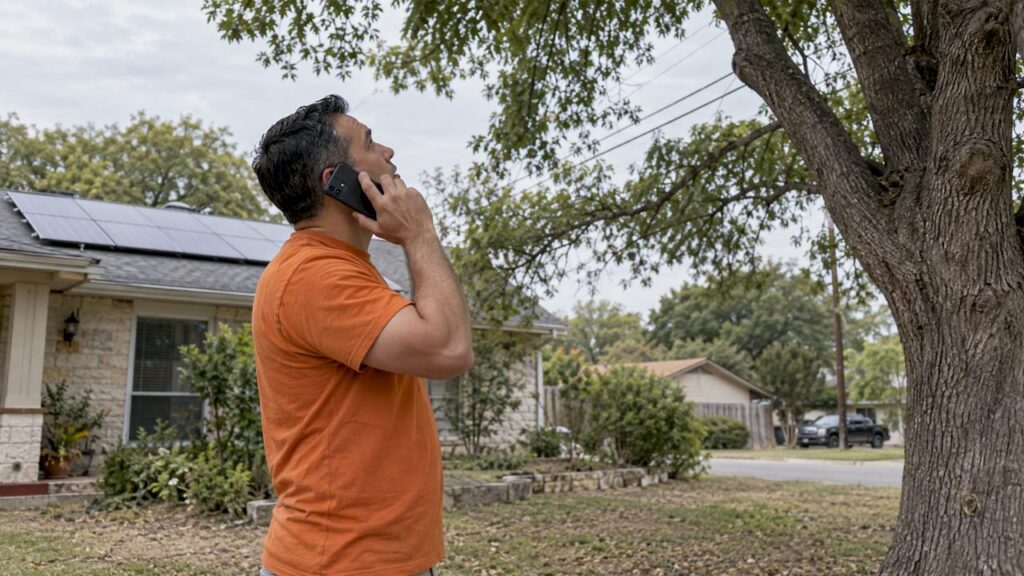
Tell your solar contractor before the crew arrives so your panels are protected. We at Alpha Solar Solutions handle the cleaning and reattachment side once the branches are down.
TL;DR:
- Late fall and winter make branch structure easier to assess and reduce disease pressure, but trees that flower in spring may need different pruning schedules.
- Remove no more than 25% of live canopy in one season, starting with dead, diseased, or rubbing branches; avoid topping and lion tailing.
- Arborists with ISA certification typically charge 20% to 30% more, and their documentation can support permit applications and insurance claims.
- Call CPS Energy at least five business days before work near service lines, and confirm local oak permits because requirements differ by city.
- Tree trimming typically costs $400 to $900 per small or medium tree; budget separately for panel cleaning or panel removal and reinstallation after risky work.
Table of Contents
- When should you trim trees to get more sun on your panels?
- How do you choose the right arborist for solar-adjacent trimming?
- What permits and safety steps apply in San Antonio?
- How much can you cut without hurting the tree?
- What does trimming cost, and how long does it take?
- How do you coordinate tree work with your solar contractor?
- Why we prefer professional trimming to quick fixes
- Alpha Solar Solutions handles the panel side of your tree work
- FAQ
- Sources
When should you trim trees to get more sun on your panels?
Dormant windows are usually the best time. Late fall and winter make branch structure easy to see, slow sap flow, and lower disease pressure, which is why dormant-season pruning is recommended for most hardwoods, with exceptions such as spring-flowering trees.

Before you book anyone, decide what you are trying to fix. Experts describe tree management for solar as a balance, and measuring shade by tree distance and height relative to your array tells you whether trimming will matter. Selective cuts often deliver more production per dollar than taking the whole tree down.
A quick way to size up the job:
- Start with dead, diseased, or rubbing branches, since they are the easiest wins.
- Choose trimming over removal when the problem sits at branch level and the trunk and roots are sound.
- Watch for shade that only appears in winter, when the sun sits low over San Antonio.
- Consider removal only for trunk or root defects, heavy deadwood, or a tree that needs deep cuts every few years just to “fit.”
How do you choose the right arborist for solar-adjacent trimming?
Credentials come first. ISA-certified arborists follow ANSI A300 pruning protocols, typically charge about 20–30% more than non-certified crews, and provide documentation that permits and insurance claims often require. That extra cost can provide documentation and may help reduce the risk of mistakes.
Use this checklist when you interview candidates:
- Ask for their ISA certification number and verify it on the ISA site.
- Request proof of liability insurance and workers’ compensation.
- Ask whether they have pruned near solar arrays and how they protect panels.
- Ask about oak-wilt protocols and whether they hold the permits your city requires.
- Confirm they do not top trees or lion-tail branches.
- Get a written scope, timeline, and itemized quote, plus before and after photos.
Pro Tip: For a high-value tree near your roof or panels, ask whether the arborist can perform a TRAQ risk assessment, so you have documented analysis rather than a verbal opinion.
What permits and safety steps apply in San Antonio?
Start with the utility. CPS Energy asks you to call at least five business days before trimming near the service line, and only qualified crews may work near high-voltage lines. Never try this yourself. CPS Energy’s Look Up and Live safety guidance repeats that contacting them first is required for work near service lines.
Then check your city’s oak rules. Many Bexar County-area jurisdictions regulate oak cutting because open wounds can spread oak wilt. Windcrest is a clear example: its ordinance requires a permit and registered, licensed contractors before any oak trimming that creates an open wound, with a nominal permit fee.
Keep these points in mind:
- Confirm the local ordinance before scheduling, since rules differ by city.
- Ask your contractor for licensing documentation and keep a copy.
- Check the local rules before pruning, and ask the city what requirements apply.
- City planning or community development pages, like those on Leon Valley’s resident page, are a good place to ask about trimming rules.
- If an HOA governs your street, review our guide to handling HOA approval before visible changes to trees.
How much can you cut without hurting the tree?
The standard answer is about a quarter. Industry standards advise against removing more than 25% of a tree’s live canopy in a single season, and they favor removing dead, diseased, or rubbing branches before anything else.
Cutting deeper backfires. Over-pruning stresses the tree, triggers weak, fast regrowth, and can add shade later. Uncertified crews may top trees, a practice that damages structure and creates hazards.
Industry standards advise against removing more than 25% of a tree’s live canopy in one season, according to Trees Forever. Respecting that limit keeps the tree healthy and your panel exposure improving year after year.
What good technique looks like:
- Selective thinning to let light through while keeping the natural shape.
- The three-cut method for large limbs, which prevents bark tearing.
- No climbing spikes on maintenance jobs, because they wound the tree.
- No lion-tailing, which strips interior branches and weakens the limb.
- Oak care: for fresh oak cuts, applying wound paint quickly can help limit oak-wilt spread in the San Antonio region.
What does trimming cost, and how long does it take?
Expect roughly $400–$900 per tree for small to medium jobs, with very large or complex trees costing more, according to HireLocal. Removal costs more and usually adds stump work. Trimming runs cheaper per visit but recurs every few years, while removal is a one-time cost plus stump grinding.
What moves a quote up or down:
- Tree height and how close it stands to your roof or panels.
- Access for equipment and crews.
- Permit requirements and oak-wilt precautions.
- Whether a TRAQ assessment is needed.
For timeline, plan on an assessment first, then permit lead time if your city requires one, then the workday itself and cleanup. Demand is seasonal, so winter bookings can fill fast. Budget separately for solar-side work such as temporary panel removal or a post-trim cleaning, and settle with both contractors up front who pays for that coordination.
How do you coordinate tree work with your solar contractor?
A little planning protects your panels and shows you the payoff right away. Follow this order:
- Tell your solar contractor about the planned trimming so panels can be covered or temporarily detached if debris risk is high.
- Ask the arborist to avoid working directly over the array and to agree on a plan for controlling falling branches.
- Schedule a panel cleaning after the work, because sawdust, leaves, and pollen settle on glass quickly. Our article on spring pollen and dust explains why.
- Book a reattachment or production check if panels were removed.
- Ask for a post-trim production or inspection report so you can see the gain in numbers.
Why we prefer professional trimming to quick fixes
We have a clear preference here. Hire certified pros, resist the urge to cut deeper than the tree can tolerate, and loop in your solar contractor before a single branch comes down. Chasing every last minute of sun with an aggressive cut tends to cost you the tree and sometimes the panels. A documented assessment can help you make an informed decision when a tree sits near your roof, your array, or a play area.
— Anthony
Alpha Solar Solutions handles the panel side of your tree work
Trimming is only half the project. Once the crew leaves, your panels need to be clean, secure, and producing again. We offer solar panel cleaning and maintenance and solar panel removal and reinstallation for San Antonio homeowners, so your arborist can work safely and your array can return to production.

Ask us for a joint plan: your arborist trims, and we protect or detach panels and clean them.
- Panel cleaning after debris, sawdust, and pollen
- Temporary removal and reinstallation when branches threaten the array
If you are weighing a bigger upgrade, see our residential solar installation page, then reach out to schedule your cleaning or removal today.
FAQ
Do landscape companies remove trees?
Some do, but removal near solar panels calls for an ISA-certified arborist with insurance and, for oaks, the right permits. Ask for credentials and a written scope before work begins.
How many branches can you cut off a tree without killing it?
Keep cuts under about 25% of the live canopy in one season, as Trees Forever notes industry standards advise. Start with dead, diseased, or rubbing branches.
Should I call the utility before trimming near my service line?
Yes. Contact CPS Energy before arranging work near a service line, and do not attempt work near power lines yourself.
Do I need a permit to trim oak trees in the San Antonio area?
Often, yes. Windcrest, for example, requires a permit and registered contractors for oak trimming, and other cities have their own rules. Check with your city before scheduling.
Sources
- Pruning Practices for Healthy Trees – Trees Forever
- Tree Trimming – Power Line Safety
- Oak Tree Permit | Windcrest, TX – Official Website
- Fall Tree Pruning & Dormant Season Prep Guide | HireLocal