

TL;DR:
- Perovskite-silicon tandem panels are entering early commercial production with high efficiency but limited durability data.
- Battery storage is now a standard feature, predominantly using lithium iron phosphate for safety and longevity, transforming energy independence.
Solar is moving fast. If you’re thinking about installing panels, upgrading your system, or adding battery storage this year, the top solar trends 2026 brings to the table will directly affect what you buy, what it costs, and how well it performs long term. Solar PV is projected to surpass wind and nuclear by 2026, with its share exceeding 10% of electricity generation in many economies. That kind of growth means better technology, shifting prices, and more choices — which is good news, but only if you know what to look for.
Table of Contents
- Key takeaways
- What to look for when evaluating solar trends in 2026
- 1. Perovskite-silicon tandem panels reach early commercial production
- 2. Battery storage becomes the default, not the upgrade
- 3. Hybrid inverters become the smart system standard
- 4. Microinverters gain ground on complex rooftops
- 5. High-output modules push close to 500 watts per panel
- 6. Panel prices tick upward after years of decline
- 7. Smart inverters improve monitoring and grid interaction
- 8. DC coupling vs. AC coupling shapes installation strategy
- 9. US manufacturing reshoring creates new buying options
- 10. Building-integrated and bifacial panels expand design options
- My take on what actually matters in 2026
- How Alphasolarsa helps you navigate solar in 2026
- FAQ
Key takeaways
| Point | Details |
|---|---|
| Tandem panels are emerging | Perovskite-silicon tandem modules are entering commercial production with efficiency above 29%, but durability questions remain. |
| Battery storage is now standard | Around 75% of new solar projects include battery storage, with lithium iron phosphate leading for safety and longevity. |
| Inverter choice matters more than ever | Hybrid inverters suit new battery installs; microinverters work best on shaded or complex rooftops. |
| Panel prices are shifting upward | After years of declining costs, panel prices are rising slightly in 2026 due to supply chain and demand changes. |
| Timing affects your options | High-output modules and new tech availability are time-sensitive. Acting informed beats waiting indefinitely. |
What to look for when evaluating solar trends in 2026
Not every solar trend deserves equal attention for your home. Here is a practical framework to filter what actually matters before you commit to a system.
- Efficiency gains: Higher efficiency means more power from the same roof space. This matters most if your usable roof area is limited.
- Battery compatibility: The best panels mean little if your inverter and storage system don’t work well together. Look for systems designed as an integrated whole.
- Roof flexibility: New module formats and mounting systems are improving options for complex rooftops, shaded areas, and tile roofs.
- Durability and warranty: A 25-year panel warranty is the current standard. Emerging technologies should meet the same bar before you invest.
- Pricing signals: Panel costs are influenced by manufacturing origin, tariffs, and demand. Knowing the direction of prices helps you time your purchase wisely.
- Local codes and fire safety: California and other states have updated fire setback requirements that affect panel layout and, in some cases, inverter choice.
Pro Tip: Don’t evaluate solar technology in isolation. A moderately efficient panel in a well-designed system will outperform a high-efficiency panel in a poorly matched one.
1. Perovskite-silicon tandem panels reach early commercial production
This is the headline technology of 2026. Tandem solar panels stack two different light-absorbing materials — perovskite on top of silicon — to capture a wider portion of the solar spectrum. The result is efficiency levels that standard silicon panels simply cannot reach.
Tandem PV launched a commercial-scale factory in California producing perovskite-silicon panels at approximately 29.7% efficiency and targeting 2026 sales. Separately, IEC-certified tandem modules are being procured for commercial delivery with 25-plus-year warranty claims.
However, durability and repeatability at scale remain the real bottleneck for tandem PV, not peak efficiency numbers. For most homeowners, tandem panels are something to watch closely rather than adopt immediately in 2026.
2. Battery storage becomes the default, not the upgrade
One of the clearest solar energy predictions 2026 confirms is that battery storage is no longer optional for most buyers. About 75% of new solar projects now include storage, a remarkable shift from just a few years ago when batteries were a niche add-on.
The chemistry of choice is lithium iron phosphate, or LFP. It runs cooler than older lithium-ion formulations, lasts longer, and has a much better safety profile. Pairing LFP storage with your solar system gives you backup power during outages and lets you use stored solar energy when utility rates peak in the evening.
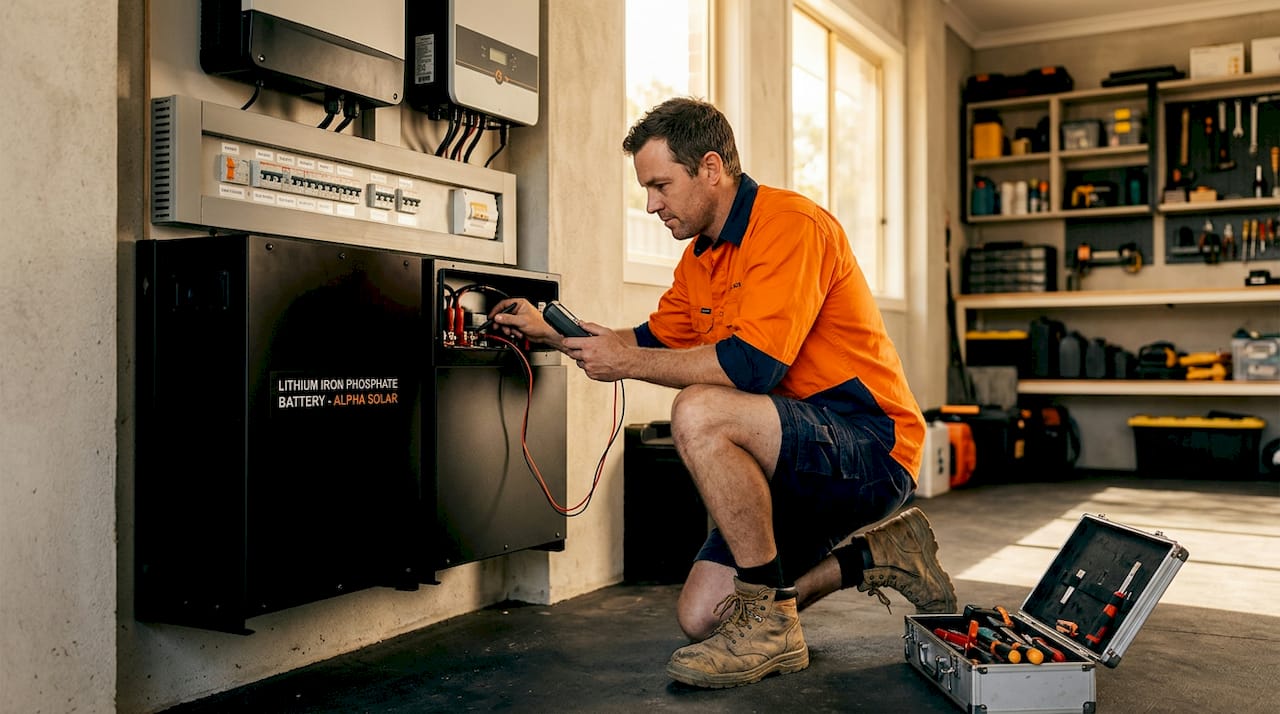
This trend is reshaping how homeowners think about energy independence. Instead of sending excess power back to the grid for minimal credit, you keep it, use it, and rely less on the utility.
3. Hybrid inverters become the smart system standard
A hybrid inverter manages both your solar panels and your battery storage through a single device. That means simpler wiring, one monitoring interface, and better coordination between generation and storage. In 2026, hybrid inverters are the default recommendation for any new solar-plus-storage installation.
Microinverters cost more but suit shaded roofs, while hybrid inverters are the common choice when batteries are part of the plan. If you know battery storage is in your future, starting with a hybrid inverter is almost always the more cost-effective path.
You can learn more about your inverter options before making any decisions. Choosing the wrong inverter type upfront is one of the most expensive mistakes to undo later.
4. Microinverters gain ground on complex rooftops
Microinverters attach to each panel individually, so shading on one panel doesn’t reduce output across the whole system. Per-panel power optimization reduces string drag from shading and complex roof layouts, which makes microinverters a genuinely practical choice on L-shaped roofs, dormers, or homes surrounded by trees.
Beyond performance, microinverters simplify safety monitoring and code compliance. Each panel can be monitored and shut down independently. That’s not marketing language. It’s a real functional advantage in states with stricter rapid-shutdown requirements.
The tradeoff is upfront cost. Microinverters run higher per watt than string inverters, so the decision should be based on your actual roof layout, not a blanket preference.
5. High-output modules push close to 500 watts per panel
Standard residential panels have crossed 400 watts, and the leading edge in 2026 is pushing toward 500 watts per panel. This matters for homes with limited roof space because fewer panels are needed to meet your energy goals.
Higher-wattage modules also tend to lower the cost per watt at the system level, since fewer mounting brackets, fewer connectors, and less labor are required. However, availability of the highest-output panels can be limited depending on your region and installer relationships.
Pro Tip: Ask your installer specifically about module wattage options. A system quoted with 400W panels may be upgradable to 450W panels with the same physical footprint, which could meaningfully improve your long-term production.
6. Panel prices tick upward after years of decline
For over a decade, solar panel prices fell almost every year. That trend has shifted. Supply chain pressures, tariff changes, and strong global demand are pushing prices modestly higher in 2026. The era of “wait and the price will drop” is not the safe strategy it once was.
This doesn’t mean solar is suddenly expensive. The economics remain strong. But it does mean that waiting another year hoping for lower prices may cost more than acting now. Read more about how panel pricing has evolved to put current numbers in context.
7. Smart inverters improve monitoring and grid interaction
Smart inverters do more than convert DC power to AC. They communicate with the grid, respond to voltage fluctuations, and can be remotely updated with new settings. In 2026, smart inverters are moving from a premium feature to a standard expectation.
Economics and smart management are now as important as the technology itself in driving solar adoption. Real-time monitoring lets you track panel performance, battery state, and energy exports from your phone. If a panel underperforms due to debris or shading, you’ll know before it becomes a costly efficiency loss.
8. DC coupling vs. AC coupling shapes installation strategy
When you pair solar with battery storage, the connection method matters. DC-coupled systems charge the battery directly from the panels before the power is converted, which is more efficient. DC coupling provides 90 to 95% round-trip efficiency compared to 85 to 90% for AC-coupled setups.
For new installations, DC coupling is typically the better choice. But if you already have solar and are adding batteries later, AC-coupled retrofits avoid the cost and disruption of replacing your existing inverter. The efficiency trade-off is modest and the savings in installation complexity are real.
Consult this guide on battery and solar integration for a deeper breakdown of how these systems are configured for residential homes.
9. US manufacturing reshoring creates new buying options
Geopolitical pressures and tariff policies are accelerating efforts to produce solar components domestically. Several manufacturers are expanding or opening US-based panel and inverter production. This gives buyers more supply chain security and, in some cases, access to products that qualify for procurement incentives tied to domestic content.
This trend won’t flip the market overnight, but by late 2026, you may have more options for American-made components than at any point in the past decade. Ask your installer about country-of-origin options when reviewing quotes.
10. Building-integrated and bifacial panels expand design options
Bifacial panels generate electricity from both sides, capturing reflected light from rooftops, ground surfaces, or nearby walls. In the right installation environment, this can add meaningful production gains without adding more panels.
Building-integrated photovoltaics, or BIPV, embed solar cells directly into roofing materials. While still a niche category, the 2026 product lineup is broader and more reliable than previous years. If you are replacing a roof and considering solar simultaneously, BIPV options are worth a real look this year.
My take on what actually matters in 2026
I’ve worked with enough homeowners to know that the newest technology on paper doesn’t always translate into the best result on your roof. What I’ve learned is that system design decisions matter more than chasing the highest efficiency number available.
Here’s my honest read on the 2026 landscape. Tandem solar panels are exciting, but early adoption carries risk. The factories are just scaling up, durability data at real-world conditions is limited, and warranty enforcement from brand-new manufacturers is unproven. I’d let the technology mature for another cycle before recommending it as a primary choice for most homeowners.
What I’m genuinely enthusiastic about is battery storage becoming standard. The shift toward energy autonomy for homeowners is real and it’s accelerating. LFP batteries paired with a well-matched hybrid inverter give you something that was genuinely difficult to achieve three years ago: a home that can largely run itself through a grid outage or a rate spike.
My caution for 2026 is this: don’t delay your purchase waiting for some perfect future panel. The technology available today is excellent. The prices are rising, not falling. And the savings you delay are savings you don’t get back. Work with an installer who understands your specific roof, your energy goals, and the current product landscape. That conversation is worth more than any spec sheet comparison you’ll read online.
— Anthony
How Alphasolarsa helps you navigate solar in 2026
The trends shaping solar this year are real opportunities for homeowners who act with good information. At Alphasolarsa, we help you turn those opportunities into a system that actually fits your home, your budget, and your energy goals.
Our team stays current on the latest solar technology for 2026, from hybrid inverter selection to LFP battery integration and high-output module availability. We design every system around your specific roof, your utility rate structure, and what you want your energy future to look like. Whether you’re starting fresh or upgrading an existing setup, our residential solar installation service is built around getting you the most from your investment. We also offer EV charger installation for homeowners who want to power their vehicle from the same solar system. Contact Alphasolarsa today and let’s design something that works for you.
FAQ
What are the top solar trends in 2026?
The leading trends include perovskite-silicon tandem panels entering commercial production, battery storage becoming standard with roughly 75% of new installs, hybrid inverters replacing older string designs, and high-output modules approaching 500 watts per panel.
Are solar panel prices going up or down in 2026?
Prices have shifted slightly upward in 2026 after years of decline, driven by supply chain pressures and increased global demand. Waiting for lower prices is no longer a reliable strategy.
Should I get a hybrid inverter or microinverters?
Choose microinverters if your roof has shading, multiple orientations, or a complex shape. Choose a hybrid inverter if you plan to include battery storage now or in the future, as it manages solar and batteries through a single system more efficiently.
Is battery storage worth adding in 2026?
Yes. About 75% of new solar projects include storage, and lithium iron phosphate batteries offer strong safety, long cycle life, and real backup power capability. Battery storage also lets you use your own solar energy during peak-rate evening hours instead of drawing from the grid.
Are perovskite-silicon tandem panels ready for residential use?
Commercial production has started, with efficiencies around 29.7%, but scaling durability and long-term reliability are still being proven. For most homeowners, standard high-efficiency silicon panels remain the lower-risk and better-supported choice in 2026.