Hard water spots on solar panels need a cleaning method approved by the panel manufacturer; another rinse with mineral-rich water can leave fresh deposits when it dries. For solar panel cleaning in San Antonio, start by identifying the residue and checking the panel care instructions before choosing tools or cleaners. Do not scrape deposits, apply a household descaler, or climb onto the roof to experiment.
- For solar panel cleaning san antonio, identify mineral deposits before choosing a cleaning method.
- Alpha Solar Solutions offers local solar panel cleaning; confirm the proposed hard water treatment before booking.
- Solar panel maintenance should follow manufacturer instructions, including restrictions on chemicals, tools, and water pressure.
- Battery backup does not make rooftop solar equipment safe to handle during cleaning.
For homeowners who want a local contractor, Alpha Solar Solutions offers solar panel cleaning in San Antonio. Ask how the proposed service handles mineral deposits, not just loose dirt, and request a clear explanation of any limitations before work starts.
How should you remove hard water spots from solar panels in San Antonio?
Remove hard water spots with the panel manufacturer's approved cleaning procedure, not a stronger version of ordinary window cleaning. Dried mineral residue and loose surface dirt are different problems. The right approach depends on what is on the glass, what the manufacturer permits, and whether the panels can be reached safely.
Use this comparison when discussing a service in 2026:
| Approach | Best for | Benefit | Limitation |
|---|---|---|---|
| Approved water rinse | Loose surface dirt | Removes dirt without unnecessary chemical treatment | Does not establish that bonded mineral deposits will come off |
| Approved mineral treatment | Confirmed hard water deposits | Addresses residue that a routine rinse leaves behind | Requires compatibility checks and controlled application |
| Inspection before cleaning | Unidentified marks or suspected damage | Helps avoid treating damage as dirt | Does not remove the mark itself |
A white outline is a clue, not a diagnosis. Marks that look similar from the ground can require different responses, so ask the cleaner to explain the identification process before accepting a treatment.
Why this matters
Hard water contains dissolved minerals. When water evaporates, some of those minerals remain on the surface as spots or a cloudy film. Repeatedly wetting panels with the same mineral-rich water does not solve that source of residue.
Solar panels also contain electrical components and have specific care requirements. A cleaning method that removes a mark can still be unsuitable if it damages the surface, forces water into vulnerable areas, or conflicts with the manufacturer's instructions.
Clean glass is the goal; protecting the module comes first. A visibly cleaner panel is not proof of a particular energy gain, and cleaning is not a substitute for diagnosing an electrical fault.
Start by identifying the marks
Before you schedule treatment, gather the panel manufacturer and model from your installation paperwork. Photograph the marks from a safe location, and note whether they appeared after sprinkler use, washing, construction work, or another identifiable event.
These details help distinguish the next step. They do not require you to touch the equipment or access the roof.
Mineral residue
Hard water residue often appears as dried droplet outlines or a pale film. Appearance alone does not confirm the material, but the pattern and a history of water exposure help guide inspection.
Tell the provider if a sprinkler regularly reaches the array. Removing existing deposits without correcting that exposure leaves the same source of spotting in place.
Loose dirt
Dust and other loose debris need a different approach from attached mineral deposits. Start with the least aggressive method the manufacturer permits rather than assuming every visible mark needs a chemical cleaner.
The advantage is restraint. The limitation is that a gentle rinse will not necessarily resolve residue that has bonded to the surface.
Suspected damage
Cracks, surface changes, and marks beneath the glass are not ordinary cleaning tasks. If the condition is unclear, request an assessment before anyone attempts to polish, scrape, or dissolve it.
Do not promise yourself a spotless result before that distinction is made. Some marks need repair or further investigation rather than additional cleaning.
A safe cleaning decision starts with the panel instructions
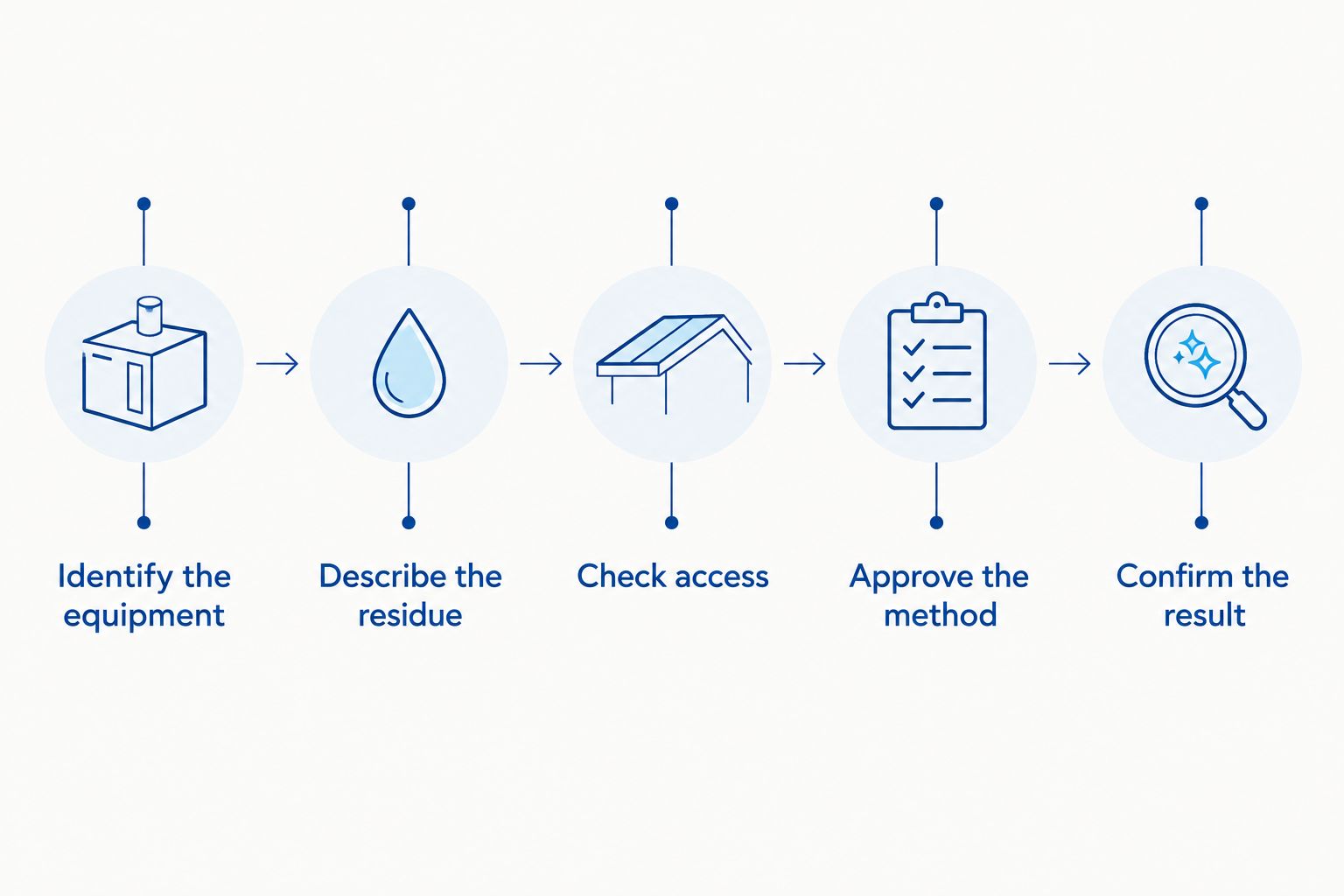
Use this sequence to assess a proposed cleaning plan. It is a buying checklist, not permission to perform rooftop work yourself.
- Identify the equipment. Find the module model and current cleaning instructions. Include any installer guidance, but resolve conflicts with the manufacturer before proceeding.
- Describe the residue. Explain where the spots appear and what water or cleaning products have contacted the panels. Share ground-level photographs when available.
- Check access. Ask how the provider will reach the array without walking on modules or creating a fall hazard. A ground-accessible panel and a steep rooftop array are different jobs.
- Approve the method. Request the proposed tools, cleaning solution, water source, and rinse procedure. The answer should connect each choice to the panel's care requirements.
- Confirm the result. Agree on how remaining deposits, suspected damage, and inaccessible areas will be documented. Avoid an open-ended promise to keep scrubbing until every mark disappears.
Your 2026 maintenance checklist should record the approved method alongside the panel model. That gives you a useful reference for the next cleaning instead of starting the compatibility check from scratch.
What to avoid when treating hard water spots
A stubborn mark does not justify a more aggressive tool. Stop and reassess when an approved method does not remove the residue.
- Scraping and abrasive pads: These can scratch glass or damage surface treatments. Do not treat a solar module like an uncoated household surface.
- Unapproved descalers: A product designed for bathroom scale is not automatically suitable for module glass, seals, frames, or coatings.
- Pressure washing: Do not assume pressure that works on a driveway is acceptable for solar equipment. Follow the module manufacturer's restrictions.
- Sudden temperature changes: Avoid applying cold water to hot modules. Check the manufacturer's cleaning conditions rather than choosing a time solely for convenience.
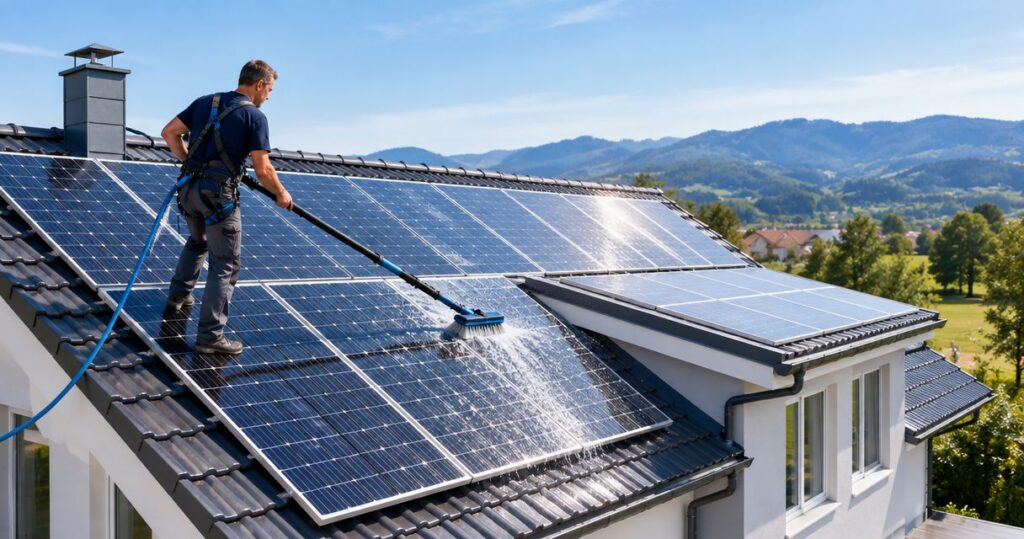
- Walking on panels: Modules are not a working platform. Ask the provider how access will be managed without standing or kneeling on them.
- Handling wiring: Cleaning does not require you to unplug connectors or touch exposed electrical parts. Damaged wiring needs qualified attention.
Turning off a household switch does not establish that a solar array is electrically safe. Panels exposed to light can generate electricity, so leave electrical isolation and fault assessment to qualified personnel.
Why hard water spot removal varies
There is no sound reason to prescribe the same treatment for every rooftop. These factors determine what an appropriate cleaning plan includes:
- Residue type: Loose dirt, mineral buildup, and damaged surfaces require different responses.
- Panel instructions: Approved chemicals, tools, and cleaning conditions depend on the equipment.
- Water source: Mineral content affects what remains after water dries; ask how rinse-water quality is managed.
- Access conditions: Roof pitch, height, and safe reach affect how the work can be performed.
- Deposit condition: Residue that remains after an approved rinse needs reassessment rather than automatic escalation.
- Continuing exposure: Sprinklers or another recurring water source can create new spots after cleaning.
For a 2026 service booking, ask which of these factors the provider has assessed. A useful answer explains your array's conditions instead of relying on a generic promise of spotless panels.
What should a hard water cleaning service include?
Ask for a written scope that separates routine dirt removal from mineral treatment. You need to know whether the visit includes assessment of stubborn marks, what happens if treatment is unsuitable, and how the finished condition will be recorded.
The solar panel cleaning service quote guide covers what to check in a proposed service. For hard water spots, make the treatment method and exclusions explicit rather than assuming a general cleaning description includes deposit removal.
Useful questions include:
- Which panel instructions will govern the work?
- What tools and cleaning products will contact the modules?
- How will the water source and final rinse be managed?
- What happens if marks remain after the approved procedure?
- Will suspected damage be documented separately from dirt?
- What access arrangements does the property need?
Alpha Solar Solutions is a local solar panel cleaning option for San Antonio homeowners who want a contractor consultation. Its cleaning service is relevant to this problem, but confirm the specific treatment for your panel model before authorizing work. A general service offering does not establish that every deposit is removable.
You can also ask about support after the visit and how a recurring problem would be handled. Custom system design and installation support matter when planning solar, while an existing array needs a cleaning decision based on its actual equipment and condition.
Discuss your panel cleaning needs
Ask about hard water spots, panel care requirements, and a free consultation.
Will removing hard water spots increase solar production?
Removing residue can improve light reaching the cells when that residue is obstructing sunlight. There is no defensible fixed production gain for your home without system-specific evidence. The appearance of a deposit does not measure its energy impact.
Weather, shading, seasonal sunlight, and equipment condition also affect generation. Compare monitoring records under reasonably similar conditions, and do not attribute every change after cleaning to the cleaning itself.
For your 2026 records, keep the service date, photographs, and notes about remaining marks. If production remains below expectations, ask for system troubleshooting rather than scheduling repeated cleaning without a diagnosis.
Can you use vinegar on solar panels?
Do not use vinegar unless the panel manufacturer explicitly permits the proposed use. Household familiarity does not establish compatibility with the module's surface treatments, seals, or other materials.
The same rule applies to detergents and commercial mineral removers. Ask for approval of the actual product and procedure, not a broad assurance that the cleaner is gentle.
Does solar panel cleaning improve battery backup?
Cleaning addresses the panel surface; it does not increase a battery's storage capacity or change which circuits receive backup power. A battery system's outage performance also depends on its configuration, charge level, and the loads connected to it.
Keep those decisions separate. If your concern is outage protection, request a system discussion rather than treating panel cleaning as a remedy for insufficient backup capacity.
FAQ
What’s the best way to remove hard water spots from solar panels?
Use the panel manufacturer’s approved cleaning procedure after identifying the residue. Do not scrape the glass or substitute a household descaler without explicit compatibility guidance.
Can I clean my rooftop solar panels myself?
Do not climb onto the roof or handle solar electrical components to clean panels. If the work cannot be completed safely within the manufacturer’s instructions, use a qualified service provider.
Will tap water leave spots on solar panels?
Water containing dissolved minerals can leave deposits when it dries. Ask how the cleaning provider manages water quality and the final rinse.
Does rain remove hard water stains from solar panels?
Rain is not a dependable treatment for attached mineral deposits. Inspect remaining marks and follow the panel manufacturer’s approved cleaning guidance.
Should solar panels be cleaned on a fixed schedule?
Base cleaning on the panel instructions and observed conditions rather than assuming every home needs the same schedule. Recurring sprinkler exposure also needs correction.
Can hard water spots reduce solar generation?
Deposits can reduce light reaching solar cells, but appearance alone does not establish the production loss. Use system monitoring and inspection to investigate performance concerns.
Does Alpha Solar Solutions offer solar panel cleaning in San Antonio?
Alpha Solar Solutions offers solar panel cleaning in San Antonio. Ask whether the proposed service includes assessment and manufacturer-compatible treatment of your hard water deposits.
One last thing
Check where the water comes from before booking another cleaning. If irrigation reaches the panels, correct that exposure without climbing onto the roof or adjusting solar equipment. Otherwise, removing today's spots leaves tomorrow's source untouched.
For your 2026 maintenance plan, keep the panel instructions with the cleaning record. Knowing what contacted the glass is more useful than a receipt that says only that the panels were washed.
Related guides
- Solar panels in San Antonio: add a battery now or later
- Can solar battery backup recharge during a grid outage?
- Solar panel removal and reinstallation: storing panels safely