

TL;DR:
- Utility companies control grid access, set net metering rates, and are shifting towards managing distributed energy resources to support solar integration. They use advanced inverters, virtual power plants, and safety measures like anti-islanding to maintain grid stability amid increasing solar adoption. Financial policies such as net metering and fixed fees directly influence the economic viability of solar for homeowners and businesses.
Utility companies are the central operators of the electrical grid, and their role in solar energy deployment determines how quickly and reliably solar power reaches homes and businesses. Whether you are a homeowner in San Antonio weighing a rooftop system or a policymaker shaping local energy rules, understanding how utilities manage solar integration is the foundation for every smart decision you make. Utilities control grid access, set financial incentives like net metering, and are actively transforming their business models to coordinate distributed energy resources. Their decisions directly shape your solar return on investment and the stability of the power supply in your community.
How do utility companies manage solar energy integration?
Utility companies manage solar energy integration by balancing the variability of solar generation against constant grid demand. Solar output rises and falls with sunlight, and the grid must match supply to demand in real time. Utilities use forecasting tools, grid sensors, and automated controls to absorb these fluctuations without causing outages or voltage problems.
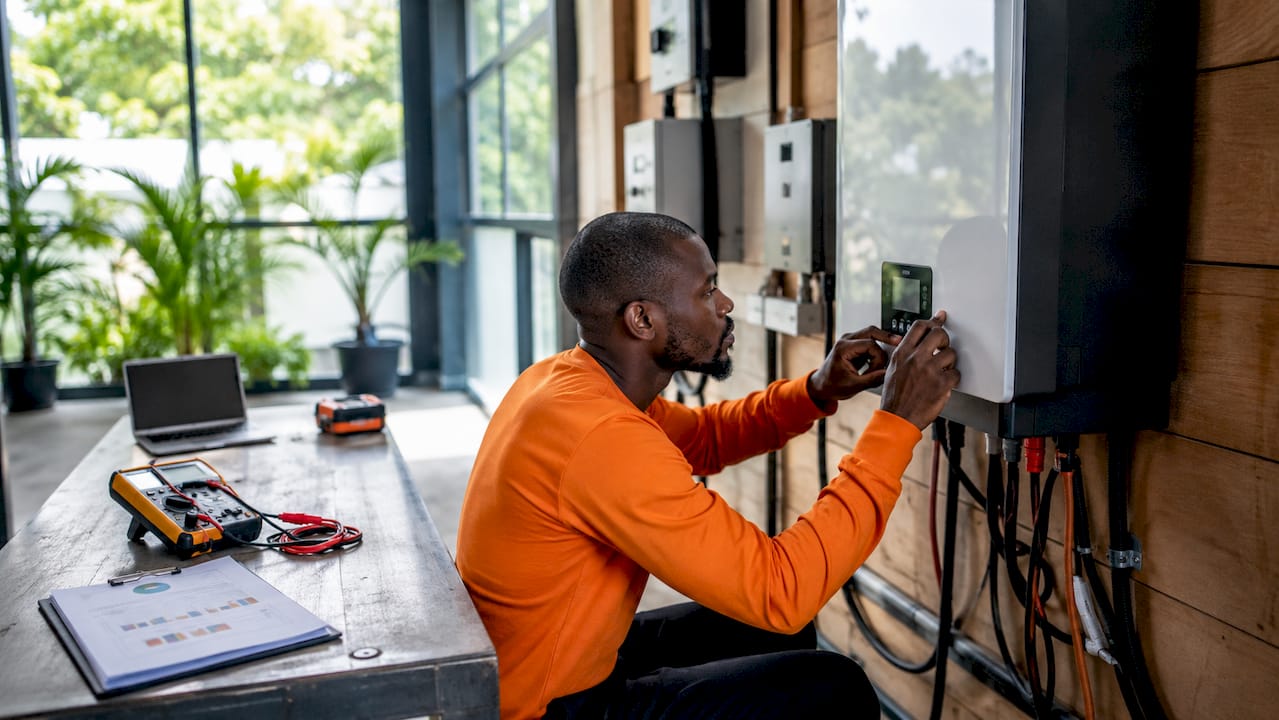
A key piece of this technical puzzle is the solar inverter. Modern solar inverters can provide reactive power and automatic generation control, enabling utilities to maintain grid stability as solar penetration grows. Reactive power keeps voltage levels steady across long transmission lines. Without it, widespread solar adoption would create dangerous voltage swings that could damage appliances and equipment.
One specific safety concern utilities manage is islanding. Islanding happens when a solar system keeps generating electricity during a grid outage, sending power back into lines that workers believe are de-energized. Utility connection agreements are designed to prevent this backfeed, protecting lineworkers from electrocution. Every solar installation requires an interconnection agreement with your utility before it can legally operate.
Beyond individual rooftop systems, utilities are building larger coordination tools. Virtual power plants, or VPPs, are one of the most promising developments in solar energy integration. A VPP aggregates hundreds or thousands of customer-owned solar and battery systems into a single, dispatchable resource. One major VPP provider reported 107,000 customers contributed 18 GWh in 2025, with $17 million compensated to participants. That scale shows that distributed solar, when coordinated by utilities, can replace the output of a mid-size power plant.
Here is what utilities actively manage on the grid to support solar:
- Frequency regulation: Keeping grid cycles stable when solar output drops suddenly
- Voltage control: Using inverters and grid equipment to prevent dangerous voltage swings
- Islanding prevention: Requiring anti-islanding protection in every connected solar system
- Demand forecasting: Predicting solar generation curves to schedule backup generation
- VPP coordination: Aggregating customer solar and storage to respond to peak demand
Pro Tip: Ask your installer whether your inverter model meets your utility’s grid services requirements before you purchase. Some utilities in Texas and California require specific inverter certifications for interconnection approval.
What financial mechanisms do utilities use to promote solar?
Utilities act as gatekeepers for the financial returns of your solar system. They set the rules for net metering, administer rebate programs, and determine the fixed fees on your bill. Each of these levers directly affects whether solar makes financial sense for you.
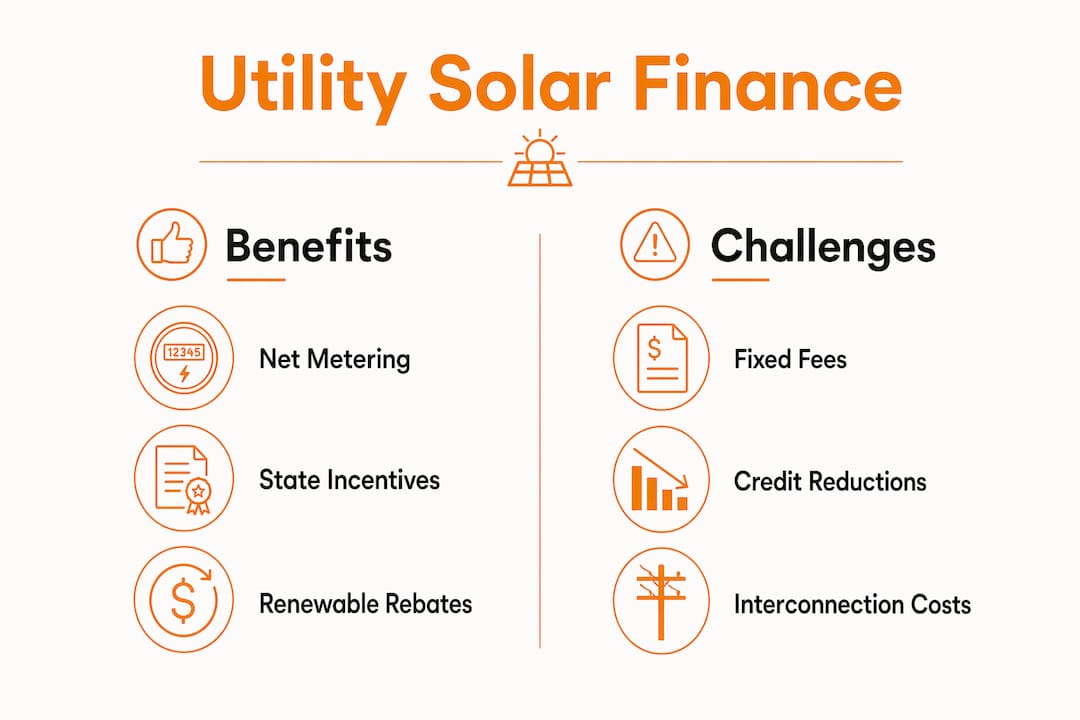
Net metering is the most significant financial mechanism. Utilities manage net metering policies that credit solar users for surplus electricity sent to the grid, and those credit rates significantly impact homeowner returns on investment. When your panels produce more than you use, the excess flows to the grid and your meter runs backward. The rate at which utilities credit that surplus varies widely. Some utilities offer full retail rate credits; others offer wholesale rates that are a fraction of what you pay for power.
Fixed connection fees are a growing concern. High fixed connection fees imposed by utilities reduce rooftop solar financial viability by forcing payments even when net grid usage is zero. This creates a billing floor that does not shrink no matter how much solar you generate. For homeowners who install solar to eliminate their electricity bill, a mandatory $30–$50 monthly fixed fee changes the math considerably.
The table below compares how different utility financial mechanisms affect your solar investment:
| Mechanism | How It Helps Solar | How It Can Hurt Solar |
|---|---|---|
| Net metering | Credits surplus generation at retail or near-retail rates | Utilities can reduce credit rates or cap program enrollment |
| Solar rebates | Lowers upfront installation cost | Often limited in funding and expire without notice |
| Performance incentives | Pays per kilowatt-hour generated over time | Requires utility approval and metering infrastructure |
| Fixed connection fees | None | Creates a monthly cost floor that reduces net savings |
| Time-of-use rates | Can reward solar export during peak hours | Can penalize consumption patterns that don’t align with solar output |
Utilities also collaborate with state and federal programs to align incentives. In Texas, utilities like CPS Energy and Oncor have offered rebate programs that stack with state-level incentives. Policymakers who want to accelerate solar adoption in their communities should focus on how local utilities structure these mechanisms, because the net metering rules your utility sets will determine whether solar is a strong financial choice for residents.
Pro Tip: Before signing a solar contract, call your utility and ask specifically about their current net metering credit rate and any planned changes. Utilities in several states have already reduced credit rates, and knowing this upfront protects your financial projections.
How are utility business models evolving for solar?
Utilities are shifting from commodity sellers to network operators coordinating distributed energy resources. This is one of the most significant structural changes in the American energy sector. Utilities are transitioning to roles as network operators managing solar, batteries, and EVs to balance grid reliability with renewable growth.
Here is how that transformation is unfolding in practice:
-
Large-scale solar procurement: Salt River Project (SRP) committed to developing 3,000 MW of solar capacity by 2034 through an agreement with NextEra Energy Resources, enough to power around 595,000 Arizona homes. This shows utilities are not waiting for customers to go solar. They are building utility-scale solar directly.
-
Distributed solar interconnection: Pacific Gas and Electric (PG&E) surpassed 1 million customer solar interconnections, the largest concentration of customer-sited solar generation of any U.S. utility. Managing that volume requires entirely new grid management infrastructure.
-
Solar and battery pairing: Xcel Energy is expanding solar and battery storage to manage energy costs and support reliability. Pairing storage with solar lets utilities dispatch clean energy during evening peak demand, reducing dependence on gas peaker plants.
-
Customer data utilization: Utilities now use smart meter data to identify neighborhoods with high solar potential, time grid upgrades more efficiently, and design better rate structures. This data-driven approach makes solar integration cheaper for everyone on the grid.
-
Virtual power plant programs: Rather than building new generation, some utilities pay customers to let them control solar and battery systems during peak demand. This is cheaper than building a new power plant and keeps bills lower for all ratepayers.
The solar and battery combination is central to this evolution. Utilities that once resisted rooftop solar are now actively designing programs around it because storage solves the variability problem that made distributed solar difficult to manage.
What safety and policy challenges do utilities face with solar?
Widespread solar adoption creates real operational and safety challenges for utilities. Understanding these challenges helps you work with your utility more effectively and helps policymakers design smarter rules.
-
Islanding risk: When the grid goes down for repairs, solar systems without proper anti-islanding protection can keep energizing the lines. This puts utility workers at serious risk. Every grid-tied solar system must include automatic shutdown capability, and utilities verify this during the interconnection inspection process.
-
Plug-in solar concerns: Smaller, portable solar panels that plug directly into household outlets are gaining popularity. Utilities have raised concerns about these devices because they bypass the standard interconnection process, creating potential backfeed hazards without safety verification.
-
Fixed fee policy tension: As more customers reduce their grid consumption through solar, utilities face revenue shortfalls. Their response has been to raise fixed monthly fees. This creates a conflict: the fees reduce solar savings for existing customers and discourage new customers from going solar, which slows the clean energy transition.
-
Advanced inverter requirements: Some utilities now require advanced inverters that provide frequency response and reactive power as a condition of interconnection. These requirements add cost but improve overall grid stability for everyone.
-
Legislative friction: State legislatures and public utility commissions are actively debating how to regulate plug-in solar, community solar programs, and net metering changes. Policymakers play a direct role in whether these debates result in rules that support or slow solar adoption.
Key takeaways
Utility companies control the financial, technical, and regulatory conditions that determine whether solar energy succeeds in your community.
| Point | Details |
|---|---|
| Utilities control grid access | Every solar system requires a utility interconnection agreement before it can legally operate. |
| Net metering shapes your ROI | The credit rate your utility sets for surplus solar power directly determines your payback period. |
| Fixed fees reduce solar savings | Mandatory monthly connection fees create a billing floor that shrinks the financial benefit of going solar. |
| Business models are changing | Utilities like PG&E, SRP, and Xcel Energy are building large-scale solar and VPP programs to modernize the grid. |
| Safety rules protect everyone | Anti-islanding requirements and interconnection inspections protect lineworkers and ensure grid reliability. |
What i’ve learned watching utilities and solar collide
Utilities are not the enemy of solar. That framing is too simple, and it leads homeowners and policymakers to the wrong conclusions. The real picture is more complicated and, honestly, more interesting.
What I have seen over years of working in this space is that utilities are under genuine pressure from two directions at once. Customers want lower bills and clean energy. Regulators want grid reliability and universal service. Those goals do not always point in the same direction, and utilities are caught in the middle trying to satisfy both.
The fixed fee debate is where I think the most important policy battle is happening right now. When a utility raises its fixed monthly charge to recover lost revenue from solar customers, it is not being malicious. It is trying to maintain the grid infrastructure that everyone depends on. But the effect is real: it makes solar less attractive for the next customer who might have gone solar. Policymakers who want to accelerate adoption need to find a smarter way to fund grid maintenance that does not punish solar investment.
The VPP model gives me genuine optimism. When utilities pay customers for their solar and battery capacity, everyone wins. The utility gets a flexible resource. The customer gets a check. The grid gets cleaner. That is the direction this needs to go, and the solar savings data from 2026 shows the financial case for storage is stronger than ever.
My honest advice: do not wait for your utility to make solar easier. Understand the rules they have set today, design your system around those rules, and work with an installer who knows your local utility’s interconnection process inside and out.
— Anthony
Ready to go solar in san antonio? Alphasolarsa can help
Understanding how utilities work is the first step. The second step is designing a solar system that works within your utility’s rules and maximizes your financial return.
Alphasolarsa designs and installs custom solar and battery systems for San Antonio homeowners and businesses, with deep knowledge of local utility programs, interconnection requirements, and net metering structures. Whether you are looking at residential solar installation for your home or a commercial solar system for your business, we build systems that are grid-compatible from day one. We also handle EV charger installation, panel cleaning, and panel removal and reinstallation. Get your free energy quote and find out exactly what solar looks like for your property.
FAQ
What is the role of utility companies in solar energy?
Utility companies manage grid integration, set net metering credit rates, administer solar rebates, and require interconnection agreements for every solar installation. Their policies directly determine the financial return and safety of your solar system.
How does net metering work with my utility?
Net metering credits you for surplus solar electricity you send to the grid, and your utility sets the credit rate. Some utilities offer full retail rate credits while others offer lower wholesale rates, so checking your utility’s specific policy before installing solar is critical.
Why do utilities charge fixed monthly fees to solar customers?
Utilities impose fixed monthly connection fees to recover the cost of maintaining grid infrastructure, regardless of how much electricity a customer consumes. These fees reduce the net savings from solar and can affect your payback period.
What is a virtual power plant and how do utilities use it?
A virtual power plant (VPP) aggregates customer-owned solar and battery systems so the utility can dispatch that combined capacity during peak demand. Participants receive financial compensation, and the utility avoids building new generation infrastructure.
Do i need utility approval before installing solar panels?
Yes. Every grid-tied solar system requires a utility interconnection agreement and inspection before it can operate. This process verifies anti-islanding protection and confirms the system meets the utility’s technical and safety requirements.