

TL;DR:
- Replacing electricity bills with renewable energy and efficiency improvements saves homeowners money and reduces dependence on the grid. Utility bills include rising transmission, distribution, and maintenance costs that solar power can offset but not eliminate because of fixed charges. Improving home efficiency first reduces system size and costs, making solar investment more affordable and effective.
Replacing electricity bills means shifting from paying a utility company each month to generating and managing your own energy through renewable systems and efficiency improvements. The U.S. Department of Energy recognizes residential renewable energy, particularly solar PV, as the most practical path for homeowners to reduce or eliminate grid dependence. Solar PV alone accounted for nearly 80% of global renewable energy capacity growth recently. That number tells you where the momentum is. Understanding why replace electricity bills matters starts with knowing that your monthly bill is not just a generation cost. It is a bundle of charges that keeps growing regardless of how cheap clean energy gets.
Why electricity bills keep rising despite cheaper renewable energy
Your utility bill is not a single charge. It bundles generation, transmission, distribution, and fixed maintenance fees into one number. Transmission and distribution now account for 50% of utility spending, up from 35% in 2015. That shift explains why your bill creeps higher even as solar panels get cheaper every year.
Utilities are spending heavily to upgrade aging grid infrastructure. Those capital costs get passed directly to ratepayers through rate increases approved by state regulators. You pay for new transmission lines, substation upgrades, and storm hardening whether you use more electricity or not.
Several systemic forces are pushing bills upward right now:
- Fixed charges appear on every bill regardless of how much power you use. They cover grid access and administrative costs.
- Transmission fees pay for moving electricity from power plants to your neighborhood. These costs rise as grids expand.
- Grid maintenance covers repairs, upgrades, and reliability investments that utilities must fund continuously.
- Rising demand from data centers and electric vehicles is straining existing infrastructure, triggering further spending.
The core problem is that retail bills do not fall immediately when wholesale generation costs drop. The savings from cheaper renewable generation stay at the wholesale level. Homeowners absorb the full retail rate, which includes all those infrastructure layers on top. That gap is exactly why generating your own power at home changes the financial equation so dramatically.
How renewable energy systems help reduce and replace electricity costs
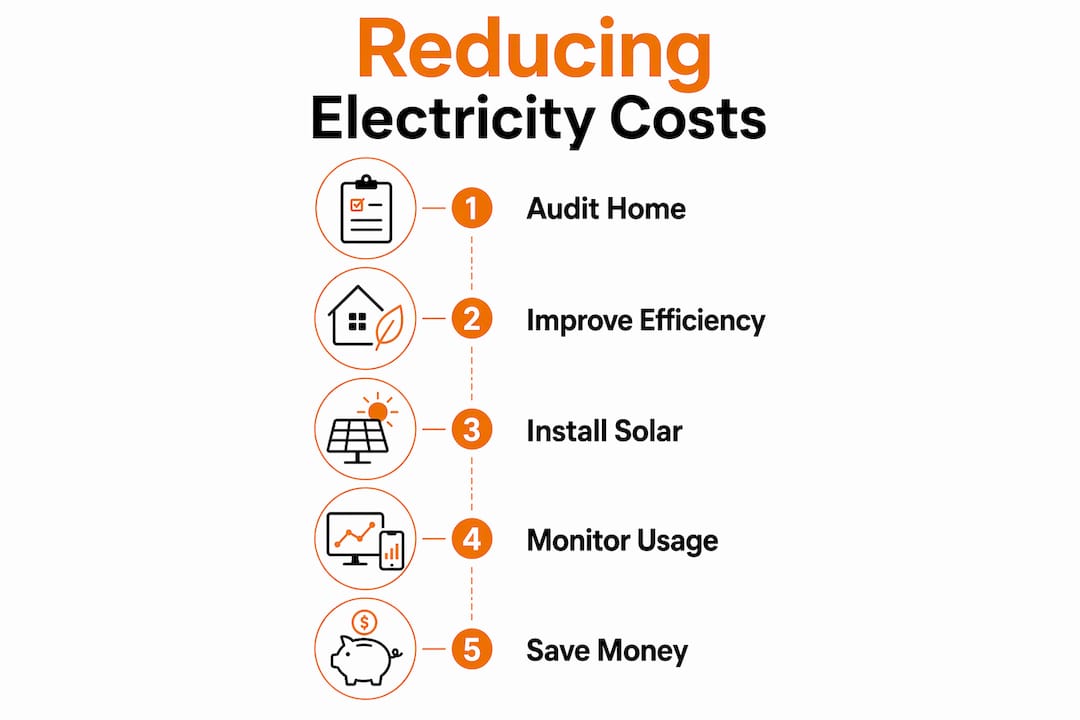
Solar PV is the most accessible way for homeowners to generate their own electricity. A residential solar PV system costs about $3 per watt installed. A typical 7 kW system generates 20–35 kWh per day, which covers most of what an average household uses. That production directly offsets what you would otherwise buy from the grid at full retail price.
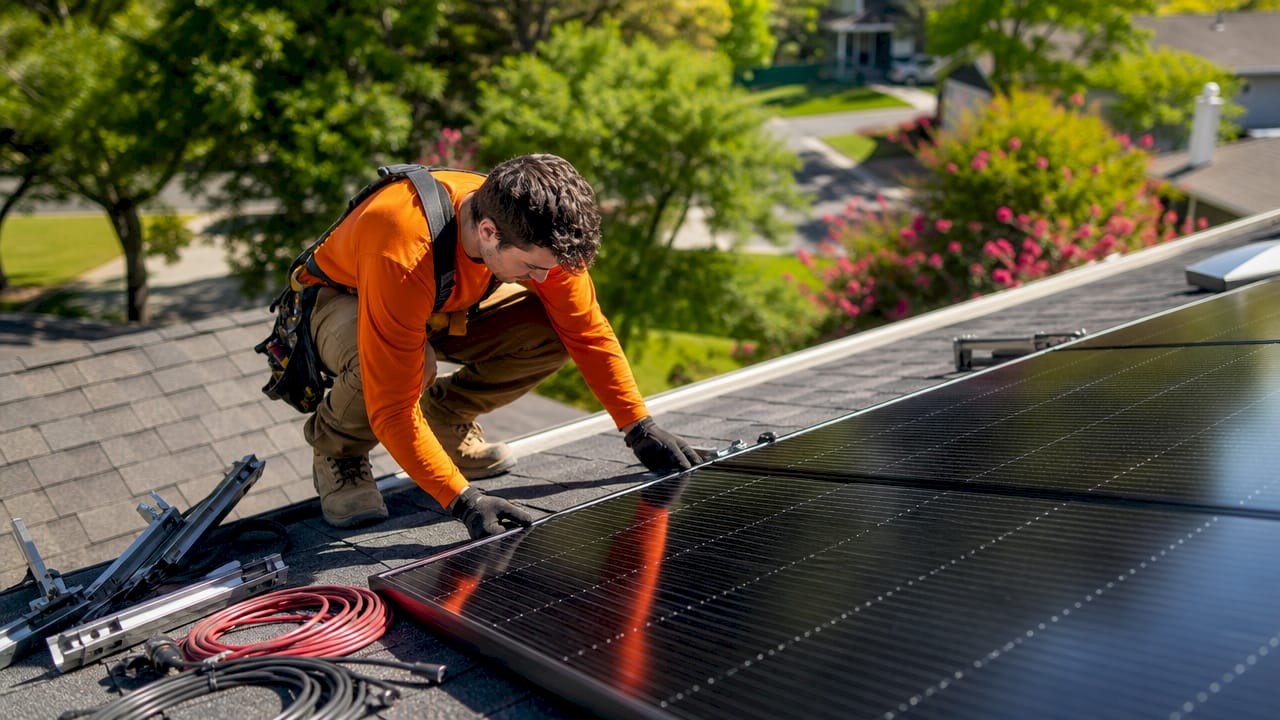
Net metering makes the financial case even stronger. When your panels produce more electricity than you use, the excess flows back to the grid. Your utility credits that energy against future bills. Bi-directional meters track both what you draw and what you send back, effectively turning your roof into a small power plant with a built-in billing offset. You can learn more about how this works by reading about net metering benefits for solar homeowners.
Beyond solar, other residential systems add value in the right situations:
- Geothermal heat pumps use stable ground temperatures to heat and cool your home at a fraction of conventional HVAC costs.
- Small wind turbines work well on rural properties with consistent wind, complementing solar output on cloudy days.
- Battery storage captures excess solar production for use at night or during outages, reducing grid dependence further.
Combining generation with efficiency is the key step most homeowners skip. A smaller, more efficient home needs a smaller solar system. That means lower upfront cost and faster payback. The benefits of going solar compound when your home is already using less power to begin with.
Pro Tip: Size your solar system after making efficiency improvements, not before. Reducing your load first means you buy fewer panels to cover the same lifestyle, which cuts your installation cost directly.
Household energy efficiency measures to minimize electricity consumption
Efficiency is the fastest and cheapest way to lower electricity bills before you invest in generation. HVAC systems account for about 50% of household energy use. Water heating adds another 18%. Those two categories alone represent more than two thirds of what you pay each month.
The Department of Energy recommends specific settings that deliver measurable savings:
- Set your water heater to 120°F. Lowering the temperature from the factory default of 140°F cuts heating costs by 4–22% annually. That is real money for almost no effort.
- Set your thermostat to 78°F in summer and 68°F in winter. These settings save 10–18% on HVAC energy use. A programmable or smart thermostat automates this without any daily adjustment.
- Switch to LED lighting throughout your home. LEDs use about 75% less energy than incandescent bulbs and last years longer.
- Replace old appliances with ENERGY STAR-rated models. Refrigerators, washers, and dishwashers with the ENERGY STAR label use significantly less electricity than models from a decade ago.
- Run appliances during off-peak hours. Dishwashers and washing machines used after 9 p.m. avoid peak-rate pricing in many utility territories.
An energy audit is the most targeted tool available. Real-time consumption tracking uncovers hidden loads like phantom power from electronics, old chest freezers, or poorly insulated attics. You stop guessing and start fixing the right things first.
| Efficiency measure | Estimated annual savings |
|---|---|
| Water heater set to 120°F | 4–22% on water heating costs |
| Thermostat optimization | 10–18% on HVAC costs |
| LED lighting replacement | Up to 75% reduction in lighting energy |
| ENERGY STAR appliances | Varies by appliance; significant over time |
Pro Tip: Get a professional energy audit before installing solar. Auditors identify the upgrades with the fastest payback, and a more efficient home needs a smaller, less expensive solar system.
Evaluating the costs and benefits of switching away from traditional electricity bills
The financial case for replacing your electricity bill rests on one simple comparison: what you pay now versus what you would pay after investing in efficiency and generation. Efficiency improvements reduce costs predictably regardless of regional grid price volatility or geopolitical conflict. That predictability has real economic value that a monthly utility bill can never offer.
The value of saved power is often higher than the value of newly generated electricity. Every kilowatt-hour you avoid buying saves you the full retail rate. Every kilowatt-hour you generate and sell back earns you a wholesale or net metering credit, which is typically lower. Efficiency first, generation second is not just practical advice. It is the financially superior sequence.
Grid-tied solar systems offer a financial hedge that off-grid systems cannot match. You stay connected to the grid as a backup while your panels cover most of your load. Net metering credits reduce your bill further. You can explore how grid-tied systems work in detail to understand the billing mechanics before you commit.
Sizing your system correctly after efficiency improvements is critical. Improving efficiency before installing solar allows you to purchase a smaller, less costly system and maximizes your return. A homeowner who cuts consumption by 20% through efficiency measures needs 20% fewer panels. That directly reduces upfront cost and shortens the payback period.
Local power generation also insulates your household from fossil fuel market volatility. When natural gas prices spike or a storm disrupts regional supply, your solar production continues. That energy security is a benefit that does not show up on a simple cost spreadsheet but matters enormously when the grid goes down.
Key takeaways
Replacing electricity bills with renewable energy and efficiency improvements is the most financially sound strategy for homeowners facing rising utility costs in 2026.
| Point | Details |
|---|---|
| Bills rise for structural reasons | Transmission and distribution now make up 50% of utility spending, driving rates up regardless of generation costs. |
| Efficiency before generation | Reducing home energy use first lowers the solar system size needed, cutting upfront installation cost. |
| Net metering offsets bills | Excess solar energy sent to the grid earns billing credits, reducing or eliminating monthly charges. |
| Efficiency savings are predictable | Saved power reduces costs regardless of grid price swings or fuel market volatility. |
| Solar PV leads renewable growth | Solar PV accounted for nearly 80% of global renewable capacity growth, making it the most proven residential option. |
What I have learned after years of watching homeowners go solar
After working with homeowners across San Antonio on solar installations, I have seen one pattern repeat itself more than any other. Homeowners who skip the efficiency step first almost always overbuy on panels. They size their system to their current consumption, which includes waste they could have eliminated for a fraction of the cost. Then they wonder why their payback period is longer than expected.
The homeowners who do it right spend a few hundred dollars on an energy audit, fix the obvious problems, and then install a smaller system that covers their actual needs. Their return on investment is faster, their bills drop further, and they feel genuinely in control of their energy costs for the first time.
The other thing I have seen is how much peace of mind matters. Utility rates in Texas have moved unpredictably for years. Homeowners with solar tell me they stopped dreading the summer bill. That psychological shift is real and it is worth something beyond the dollar savings.
My honest advice: treat your electricity bill as a problem you can solve permanently, not just manage. The tools exist, the economics work, and the technology is proven. Start with efficiency, add generation, and let net metering do the rest.
— Anthony
How Alphasolarsa helps homeowners replace rising electricity bills
Alphasolarsa designs and installs custom residential solar systems for San Antonio homeowners who are ready to stop paying unpredictable utility bills. Every installation starts with a personalized energy assessment so your system is sized correctly for your actual home, not a generic estimate.
Beyond solar panels, Alphasolarsa also installs home EV chargers so you can charge your vehicle with the power your roof generates. Solar panel cleaning and detach and reattachment services keep your system performing at its best year after year. If you are ready to move from paying a utility to owning your energy, contact Alphasolarsa for a free consultation and find out what a custom system would look like for your home.
FAQ
Why do electricity bills keep rising if renewable energy is cheaper?
Retail electricity bills include transmission, distribution, and grid maintenance fees that utilities pass on to customers. These infrastructure costs have grown significantly and are not offset by cheaper renewable generation at the wholesale level.
What is net metering and how does it lower my bill?
Net metering credits your account for excess solar electricity sent back to the grid. Those credits reduce the amount you owe on future bills, effectively lowering or eliminating your monthly charge.
Should I improve efficiency before installing solar panels?
Improving efficiency first is the financially smarter sequence. A more efficient home needs a smaller solar system, which costs less to install and pays back faster.
How much does a residential solar system cost?
A residential solar PV system costs about $3 per watt installed. A typical 7 kW system generates 20–35 kWh per day and covers most of what an average household uses.
What are the best ways to lower electricity bills without solar?
Setting your water heater to 120°F, using thermostat settings of 78°F in summer and 68°F in winter, switching to LED lighting, and replacing old appliances with ENERGY STAR models deliver the largest savings without any generation investment.