

TL;DR:
- Energy storage captures excess solar energy for use during peak demand and outages, enhancing home resilience. Lithium-ion batteries are the most practical residential storage, with proper sizing and system design unlocking savings and energy independence. Incorporating storage shifts how homeowners interact with the grid, reducing costs and increasing renewable energy use over time.
Energy storage is defined as the process of capturing energy produced at one time and holding it for use later, transforming intermittent power sources into reliable electricity. For homeowners and renters pairing solar panels with battery systems, this technology is the difference between energy that works only when the sun shines and energy that works around the clock. Storage forms include chemical batteries, gravitational pumped hydro, thermal heat retention, kinetic flywheels, and molecular fuels like hydrogen. Understanding how these systems work puts you in control of your energy costs and your home’s resilience.
What is energy storage and how does it work for solar homes?
Energy storage solves a fundamental timing problem. Solar panels generate the most electricity in the middle of the day, but your household typically uses the most power in the morning and evening. Without storage, that midday surplus goes back to the grid, often at low rates, and you buy power back later at higher prices.
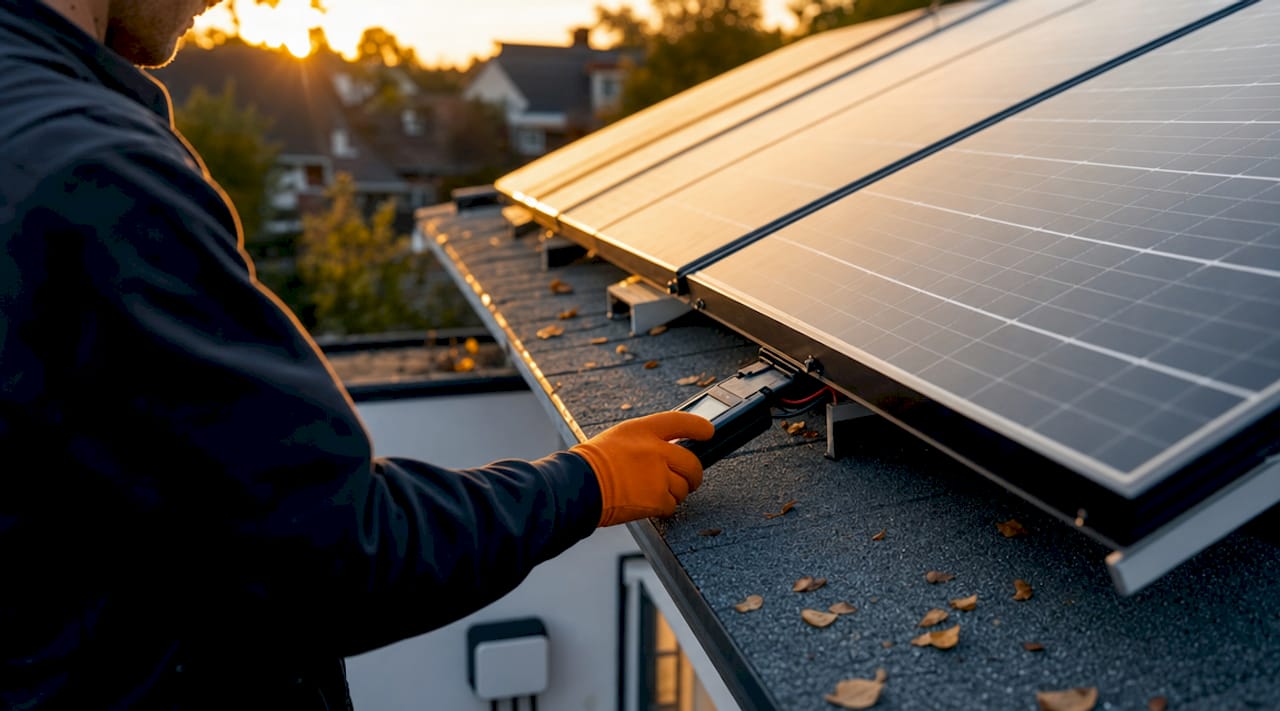
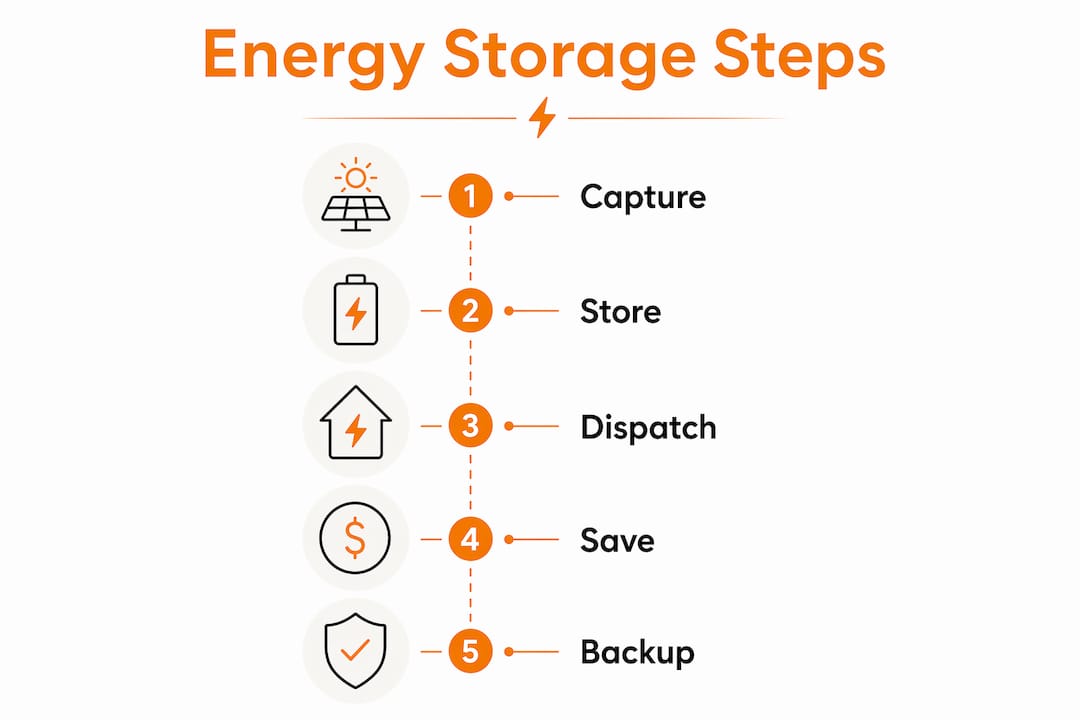
A home battery system captures that surplus and holds it until you need it. This concept is called time-shifting. You produce energy when conditions are right, store it, and dispatch it when demand or prices are higher. The U.S. Department of Energy frames storage’s core mission around resilient, flexible, and affordable energy systems, which maps directly to what homeowners want from their solar setup.
Battery storage is also the fastest-responding dispatchable resource available, capable of discharging in milliseconds and recharging multiple times daily. That speed matters during a grid outage. A well-designed solar-plus-storage system can detect a grid failure and switch to battery power almost instantly, keeping your lights, refrigerator, and medical devices running.
Here is what a home energy storage system does for you day to day:
- Stores excess solar energy generated during peak sunlight hours instead of sending it back to the grid at low rates
- Supplies backup power during outages, with batteries able to recharge using solar over several days if needed
- Reduces your electricity bill by drawing from stored power during evening peak-rate hours instead of buying from the utility
- Reduces grid dependence so rising utility rates affect your bill less over time
- Supports whole-home or partial-home backup depending on system size and design
Pro Tip: If your utility uses time-of-use pricing, where electricity costs more in the evening than midday, a battery system pays for itself faster because you avoid buying the most expensive grid power.
What are the main types of energy storage technologies?
Energy storage technologies are grouped by physical principles: mechanical, electrochemical, thermal, and chemical. Each category operates differently and suits different applications. For homeowners, electrochemical storage, meaning batteries, is the most practical and widely available option. The others are worth knowing because they show up in utility-scale projects that affect your grid and your rates.
Here is how the main types compare:
| Storage type | How it works | Best use case | Residential fit |
|---|---|---|---|
| Electrochemical (lithium-ion batteries) | Stores energy as chemical potential in battery cells | Home backup, solar time-shifting | High. Products like Tesla Powerwall and Enphase IQ Battery are purpose-built for homes. |
| Mechanical (pumped hydro) | Pumps water uphill to store energy as gravitational potential | Large-scale grid storage | Low. Requires geography and scale not available to homeowners. |
| Mechanical (flywheels) | Spins a rotor to store kinetic energy | Short-duration grid frequency regulation | Low. Industrial application only. |
| Thermal (molten salt, water) | Retains heat for later electricity generation or direct use | Utility solar plants, water heating | Moderate. Hot water thermal storage is practical for some homes. |
| Chemical (hydrogen, power-to-fuel) | Converts electricity to hydrogen or synthetic fuels for long-term storage | Long-duration grid storage, industrial decarbonization | Emerging. Not yet practical for most residential use. |
Lithium-ion batteries dominate the residential market today because they balance energy density, response time, lifespan, and cost better than any alternative at home scale. Chemical storage forms like hydrogen help manage renewable intermittency at the grid level, which supports the broader clean energy system your solar panels feed into.
One important nuance: no single storage technology fits all applications. Response time, efficiency, and storage capacity requirements vary by use case. A flywheel optimized for millisecond grid response is useless for storing three days of home power. Matching the technology to the job is what good system design is about.
What are the benefits of energy storage for homeowners and renters?
The practical benefits of adding storage to a solar system go beyond backup power. Here are the four most meaningful advantages for residential users:
-
Energy resilience. When the grid goes down, a battery keeps your home running. This matters especially in Texas, where grid reliability has been a real concern. A solar-plus-storage setup gives your household an independent power source that does not depend on utility infrastructure.
-
Lower electricity costs. Storage acts as an economic lever, not just a backup. By capturing cheap solar energy and using it during peak-rate hours, you reduce demand charges and avoid buying the most expensive grid power. Over time, this compounds into significant savings.
-
Greater use of renewable energy. Without storage, excess solar generation is wasted or sold back at low rates. With storage, you use more of what your panels produce, which means less fossil fuel electricity consumed from the grid. Your carbon footprint shrinks without any extra effort.
-
Long-term energy cost predictability. Utility rates in San Antonio and across Texas have risen steadily. A battery paired with solar locks in a larger share of your energy supply at a fixed cost, making your monthly bills more predictable regardless of what the utility charges.
Pro Tip: Renters can benefit from energy storage too. Portable battery systems and solar generators, like those available through solar generator options, provide backup power and off-grid capability without permanent installation.
Energy storage also benefits your neighbors. When many homes store and dispatch power locally, the grid faces less strain during peak demand periods. Reducing reliance on peak grid infrastructure lowers costs for everyone on the system, not just the households with batteries.
How to choose and integrate an energy storage system in your home
Choosing the right storage system starts with understanding two numbers: energy capacity measured in kilowatt-hours (kWh) and power output measured in kilowatts (kW). These are not the same thing. Two batteries can have identical kWh ratings but very different abilities to supply your home’s load at once.
Think of it this way. Energy capacity is how large the tank is. Power output is how fast water flows out of the tap. A battery with 10 kWh of capacity but only 3.8 kW of output cannot run a central air conditioner, even if it has plenty of stored energy. Sizing a home storage system requires matching both dimensions to your actual household loads.
Here are the key factors to work through before choosing a system:
- Identify your critical loads. Decide whether you want whole-home backup or protection for specific circuits like the refrigerator, lights, and medical equipment. Whole-home backup requires more capacity and higher power output.
- Review your solar production data. Your installer can pull 12 months of production history to size storage around your actual surplus, not a generic estimate.
- Understand your utility’s interconnection rules. Some utilities in Texas require specific inverter configurations or limit how batteries interact with the grid. A qualified installer handles this, but knowing it exists helps you ask the right questions.
- Check compatibility with your solar inverter. AC-coupled systems, where the battery connects through a separate inverter, work with most existing solar setups. DC-coupled systems are more efficient but require compatible equipment. Products like hybrid solar inverters are designed to handle both solar and storage in a single unit.
- Ask about lifespan and warranty. Most residential lithium-ion batteries carry 10-year warranties and are rated for thousands of charge cycles. Degradation is gradual, not sudden, so a well-maintained system delivers reliable performance for well over a decade.
The benefits of a solar-plus-storage system also depend on how the battery is programmed to charge and discharge. Backup-only mode keeps the battery full for emergencies. Self-consumption mode prioritizes using stored solar before drawing from the grid. Some systems offer both, switching automatically based on weather forecasts or utility rate schedules.
Key takeaways
Energy storage captures surplus solar power and dispatches it on demand, making renewable energy reliable, cost-effective, and resilient for homeowners.
| Point | Details |
|---|---|
| Core energy storage definition | Storage captures energy when produced and holds it for use later, solving the timing gap between solar generation and home demand. |
| Lithium-ion leads for homes | Electrochemical batteries like Tesla Powerwall and Enphase IQ Battery are the most practical residential storage option available today. |
| Two sizing numbers matter | Both energy capacity (kWh) and power output (kW) must match your household loads for a system to work as expected. |
| Storage saves money, not just power | Shifting stored solar to peak-rate hours lowers electricity costs and reduces exposure to rising utility prices over time. |
| Professional design is critical | System performance depends on inverter compatibility, utility rules, and load analysis, all of which require a qualified installer. |
Why I think most homeowners underestimate what storage actually changes
I have worked with hundreds of homeowners in San Antonio who came in asking about solar panels and left with a much clearer picture of why storage is the part that makes the whole system work. The panels get all the attention. The battery is what changes your relationship with the grid.
Here is what most articles do not tell you. The financial case for storage is not just about backup power. It is about the compounding effect of using your own energy instead of buying peak-rate grid power, month after month, for 15 or 20 years. Utility rates do not go down. Every year you draw from your battery instead of the grid, you avoid a cost that keeps growing.
I also think the conversation around hydrogen storage is worth watching, even for homeowners. Chemical storage forms that support long-duration grid storage will eventually make the entire grid more stable and affordable, which benefits every solar home connected to it. We are not there yet for residential use, but the direction is clear.
My honest advice: do not size your storage system for today’s energy use. Think about where your household is heading. An electric vehicle, a heat pump, a home addition. Storage that feels adequate now can feel undersized in three years. Size up slightly, and you will not regret it.
— Anthony
Ready to add energy storage to your home?
At Alphasolarsa, we design solar and battery systems around your actual household needs, not a one-size-fits-all package. Every home we work with in San Antonio gets a custom load analysis, a system sized for both energy capacity and power output, and a clear explanation of how it all works before anything is installed.
If you are ready to stop guessing what your electricity bill will be next month, our team can show you exactly what a solar-plus-storage system would produce, save, and protect for your home. Visit our residential solar installation page to learn more about our services and get started with a free consultation. We also cover battery storage benefits in detail if you want to dig deeper before reaching out.
FAQ
What is the energy storage definition in simple terms?
Energy storage is the process of capturing electricity or heat when it is produced and saving it for use at a later time. For homeowners, this most commonly means a battery system that stores solar energy during the day and supplies it at night or during an outage.
How does a home energy storage system work with solar panels?
Solar panels generate electricity during daylight hours. Any surplus beyond what your home uses in real time charges the battery. When the sun goes down or the grid fails, the battery discharges to power your home without drawing from the utility.
What types of energy storage are used in homes?
Lithium-ion batteries are the dominant residential storage technology, with products like Tesla Powerwall and Enphase IQ Battery leading the market. Thermal water heating storage is a secondary option for some homes, but chemical and mechanical storage types are not practical at residential scale today.
How long does a home battery last during an outage?
Duration depends on battery capacity and which loads are running. A 10 kWh battery powering only critical circuits like lighting, a refrigerator, and phone charging can last 24 hours or more. A solar-plus-storage system can extend that indefinitely by recharging the battery during daylight hours.
Is energy storage worth it for renters?
Renters who cannot install permanent systems can still benefit from portable solar generators and battery units that require no installation. For renters in homes where landlords allow it, a solar-plus-storage lease or power purchase agreement may also be an option worth exploring with a local installer.