

TL;DR:
- Optimizing solar energy involves correct panel orientation, regular maintenance, and data-driven monitoring to maximize efficiency.
- Proper azimuth alignment, cleaning schedules, and strategic energy use during peak solar hours significantly reduce costs and improve system lifespan.
Optimizing solar energy means getting the highest possible output from your panels while reducing how much electricity you buy from the grid. The three pillars of solar optimization are correct panel placement, consistent system monitoring, and smart energy consumption habits. Tools like NREL PVWatts, inverter monitoring dashboards, and battery storage systems give homeowners real leverage over their electricity costs. Whether your system is brand new or a few years old, applying these solar energy optimization techniques can meaningfully lower your monthly bills and extend the productive life of your investment.
How to optimize solar energy with the right panel tilt and orientation
Panel placement is the single biggest factor in how much energy your system produces over its lifetime. Getting it right from the start, or correcting it if it’s off, pays dividends every single day.
Tilt angle: the formula that matters
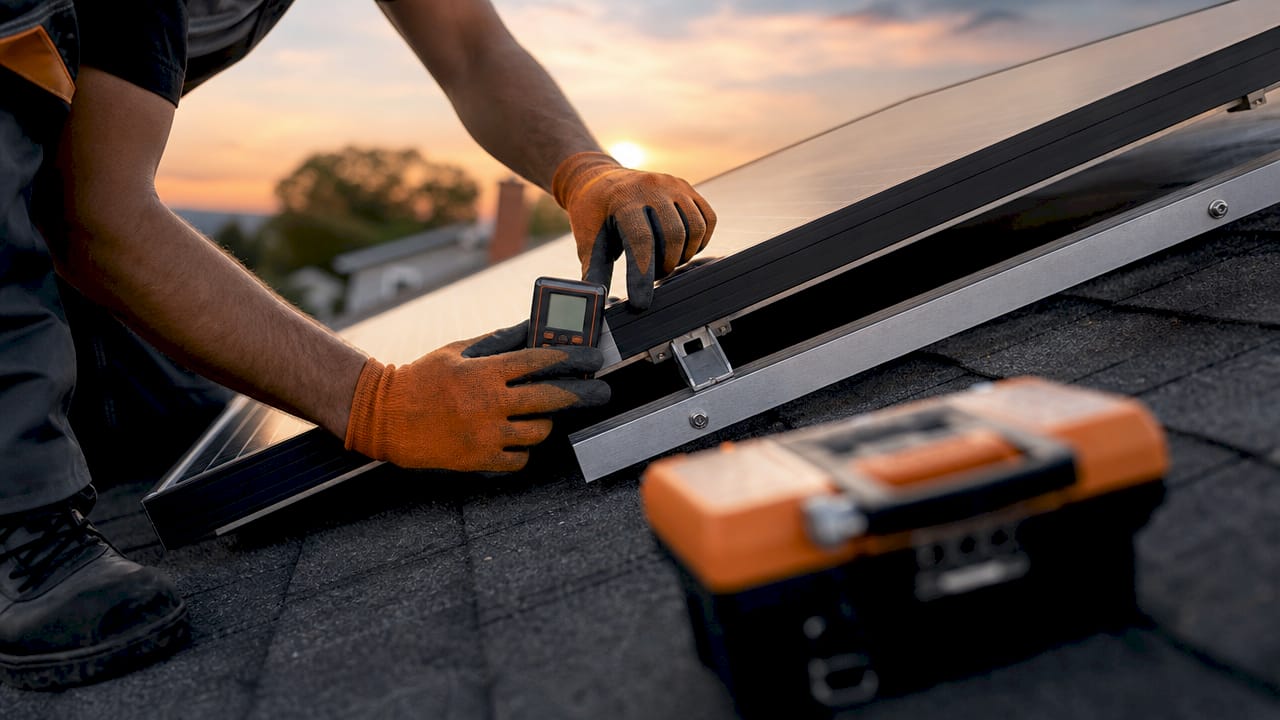
The optimal tilt angle for fixed panels is calculated as latitude × 0.76 + 3.1 degrees. For a San Antonio homeowner sitting at roughly 29 degrees latitude, that works out to approximately 25 degrees. This formula accounts for the sun’s average annual path and gives you the best year-round energy yield rather than optimizing for just one season.
NREL PVWatts and PVGIS are free simulation tools that let you plug in your exact address and test different tilt angles before committing to a design. Running a quick simulation can reveal whether your roof pitch already puts you close to optimal or whether a mounting adjustment is worth the cost.
Pro Tip: If your roof allows it, adjustable mounts that let you shift tilt by 10 to 15 degrees between summer and winter can increase annual yield by 5 to 10 percent compared to a fixed angle.
Why azimuth matters more than tilt
Most homeowners focus on tilt, but azimuth accuracy is actually more critical. A 90-degree azimuth error causes a 14 to 16 percent energy loss, while a 10-degree tilt error costs only 2 to 3 percent. Azimuth refers to the compass direction your panels face. In the northern hemisphere, true south is the target.
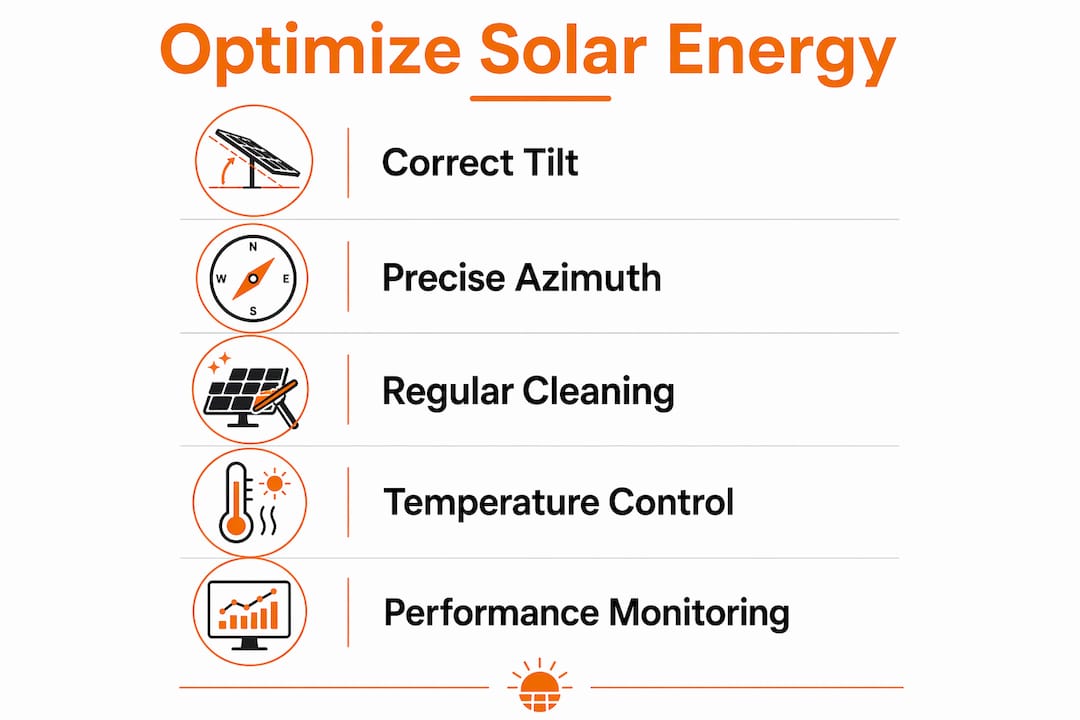
The difference between magnetic south and true south can be several degrees depending on your location. Use a solar compass or a professional site survey to confirm your panels are aimed at true south, not just approximately south.
| Placement Error | Approximate Energy Loss |
|---|---|
| 10° tilt deviation | 2–3% annual loss |
| 90° azimuth deviation | 14–16% annual loss |
| Partial shading (one string) | Up to 25% system loss |
For bifacial panels, which capture light from both sides, rear-side irradiance depends heavily on ground reflectance and mounting height. These panels benefit from slightly higher mounting and lighter-colored ground surfaces beneath them. Standard monofacial panels follow the tilt and azimuth rules above without the rear-side considerations.
You can explore more about panel placement strategies to see how orientation decisions translate directly into dollar savings on your utility bill.
Does cleaning and temperature control really affect solar output?
Yes, and the impact is larger than most homeowners expect. Physical maintenance and thermal management are two of the most overlooked ways to boost solar panel output.
Soiling losses and cleaning schedules
Soiling losses of 5 to 15 percent are common on panels that are not cleaned regularly. Dust, pollen, bird droppings, and general grime accumulate on the glass surface and block sunlight from reaching the cells. A single bird dropping concentrated on one cell can disrupt an entire panel string due to the way panels are wired in series.
The right cleaning approach matters as much as the frequency:
- Use soft brushes or microfiber cloths with clean water. Avoid abrasive materials that scratch the anti-reflective coating.
- Clean panels in the early morning or evening when they are cool. Cold water on hot glass can cause micro-cracks.
- In dusty climates like San Antonio, cleaning every two to three months is a reasonable baseline. After pollen season or a dust storm, clean sooner.
- Never use high-pressure washers directly on panel surfaces or junction boxes.
Pro Tip: Drone imagery and satellite tools like Google Earth Pro can help you spot shading from new tree growth or neighboring structures without climbing on your roof. Schedule a shading analysis every two years as trees mature.
Temperature and its effect on efficiency
Heat is the enemy of solar efficiency. Cooling cell temperature by 10°C can increase annual energy yield by approximately 3 percent. This matters most in hot climates where panels regularly operate well above their rated temperature.
Passive cooling methods include mounting panels with a gap of at least 3 to 4 inches above the roof surface to allow airflow underneath. Some installers use aluminum fins or ventilated racking systems that pull heat away from the module back sheet. Advanced active cooling systems exist but carry higher costs that rarely justify the investment for residential systems. For most San Antonio homeowners, proper mounting clearance and light-colored roofing materials beneath the array are the most cost-effective thermal management tools available.
How do you monitor your solar system’s performance?
Monitoring is how you protect your investment. Without it, a faulty inverter or shaded string can quietly drain your production for weeks before you notice a change in your electricity bill.
Understanding Performance Ratio
Performance Ratio, or PR, is the standard metric for measuring how efficiently your system converts available sunlight into usable electricity. Well-designed residential systems achieve a PR of 75 to 85 percent. A PR below 70 percent signals a problem worth investigating. PR accounts for inverter efficiency, wiring losses, temperature effects, shading, soiling, and panel degradation all at once, making it the most useful single number to track.
Setting up your monitoring baseline
Establishing reliable year-one performance data is the foundation of every optimization decision you make afterward. Without a commissioning baseline, you have no way to know whether a drop in output is seasonal, a sign of soiling, or evidence of equipment failure. Save your commissioning report and your first year of monthly production data somewhere you can access it easily.
Here is a practical monitoring routine:
- Log into your inverter dashboard weekly. Most modern inverters from brands like SolarEdge, Enphase, and Fronius provide app-based monitoring with daily production graphs.
- Compare this month’s production to the same month last year. A drop of more than 10 percent warrants a closer look.
- Check for active alerts. Configurable monitoring alerts flag inverter trips, string underperformance, and communication errors before they become costly.
- Review your Soiling Ratio after dry or dusty periods to decide whether cleaning is due.
- Track your Degradation Rate annually. Most panels degrade at 0.5 to 0.7 percent per year. Faster degradation signals a warranty claim.
For a deeper look at what your monitoring data is telling you, the Alphasolarsa guide on solar system monitoring walks through how to interpret common alerts and what to do when your numbers look off.
Pro Tip: Set your monitoring platform’s alert threshold at 85 percent of your expected daily output. This catches underperformance early without triggering false alarms on naturally cloudy days.
When should you run appliances to maximize solar self-use?
The timing of your energy consumption is as important as the size of your solar array. Running high-draw appliances during peak solar production hours reduces how much electricity you pull from the grid and lowers your monthly bill directly.
Peak solar production in San Antonio typically runs from 9 a.m. to 4 p.m. Shifting these tasks to that window captures the most value from your system:
- Run your dishwasher, washing machine, and dryer between 10 a.m. and 2 p.m.
- Pre-cool your home to 72°F before 4 p.m. so your air conditioner runs less during the evening peak when grid electricity is most expensive.
- Schedule EV charging for midday rather than overnight. This is especially valuable if your utility uses time-of-use (TOU) pricing, where rates spike in the evening.
- Run pool pumps and water heaters during solar production hours.
Battery storage takes this further. Battery systems increase self-consumption to 60 to 80 percent by storing excess midday solar energy and releasing it during evening hours when grid rates are highest. For homeowners on TOU tariffs, this shift can produce significant monthly savings beyond what a solar-only system delivers. Smart home platforms like Google Home or Amazon Alexa-connected devices can automate appliance scheduling based on your solar production data, removing the guesswork entirely.
Homeowners under TOU rate structures may also find that a slight east-west panel split, rather than a pure south-facing array, spreads production across more hours of the day and better matches their consumption curve. This produces slightly fewer total kilowatt-hours but can increase the financial value of what you generate.
Common mistakes that reduce solar efficiency
Even well-installed systems underperform when homeowners make these avoidable errors:
- Ignoring azimuth during installation. Accepting whatever direction the roof faces without checking true south orientation is the most expensive mistake in solar placement.
- Skipping monitoring for months at a time. Faults that go undetected for 60 to 90 days represent real lost production and real money.
- Assuming panels clean themselves. Rain removes loose dust but does not clear bird droppings, pollen film, or mineral deposits from hard water.
- Overlooking new shading sources. A tree that was small at installation can shade a critical string three years later. Annual shading checks are worth the time.
- Misreading temperature impacts. Panels rated at 20 percent efficiency in lab conditions often operate at 15 to 17 percent on a hot summer afternoon. This is normal, but poor ventilation makes it worse.
Pro Tip: Schedule a professional system review every two to three years. An installer like Alphasolarsa can run a full diagnostic, check string performance, inspect wiring, and identify any shading changes that have developed since your original install.
For more ways to protect and grow your solar returns, the Alphasolarsa maximize ROI resources cover both technical and financial optimization strategies in detail.
Key takeaways
Maximizing solar output requires correct panel orientation, regular physical maintenance, data-driven monitoring, and deliberate energy consumption habits working together.
| Point | Details |
|---|---|
| Prioritize azimuth over tilt | A 90-degree azimuth error causes 14 to 16 percent energy loss versus only 2 to 3 percent for a 10-degree tilt error. |
| Clean panels consistently | Soiling causes 5 to 15 percent output loss; clean every two to three months in dusty climates. |
| Track Performance Ratio | A PR of 75 to 85 percent is healthy; below 70 percent signals a problem requiring investigation. |
| Shift loads to solar hours | Running appliances from 9 a.m. to 4 p.m. reduces grid dependency and lowers bills under TOU pricing. |
| Use battery storage | Battery systems raise self-consumption to 60 to 80 percent, maximizing value from every kilowatt-hour you generate. |
What I’ve learned after years of solar optimization work
By Anthony
Most homeowners come to us focused on panel count and system size. Those matter, but the biggest gains I’ve seen come from two things that get almost no attention at the point of sale: azimuth accuracy and monitoring discipline.
I’ve reviewed systems where a 15-degree azimuth error was baked in at installation because the installer used magnetic south instead of true south. The homeowner had no idea for two years. That’s two years of reduced production that no amount of cleaning or battery storage could recover.
The other thing I push hard on is commissioning data. Your year-one production numbers are your reference point for everything that follows. Without them, you’re making maintenance decisions based on gut feel rather than evidence. Save that data. Review it every year. Set alerts on your monitoring platform so you’re not waiting for your electricity bill to tell you something went wrong.
I’ll also say this: the homeowners who get the most financial value from their systems are not always the ones with the biggest arrays. They’re the ones who run their dishwasher at noon, pre-cool their homes before 4 p.m., and actually look at their monitoring app once a week. The technology does the heavy lifting, but a little attention to your consumption habits multiplies the return.
— Anthony
Get more from your solar system with Alphasolarsa
At Alphasolarsa, we design residential solar systems specifically for maximum performance in San Antonio’s climate, where heat and sun intensity demand more than a standard install. Our team handles everything from precise azimuth and tilt optimization during installation to professional panel cleaning that keeps your output where it should be year-round. We also set up monitoring dashboards and commissioning baselines so you always know exactly how your system is performing. If your current system isn’t hitting its numbers, we can diagnose why. Explore our residential solar services and find out what a properly optimized system looks like for your home.
FAQ
What is the best tilt angle for solar panels?
The best fixed tilt angle is calculated as your latitude multiplied by 0.76, plus 3.1 degrees. For most U.S. homeowners, this falls between 25 and 40 degrees depending on location.
How often should I clean my solar panels?
In dusty or dry climates, clean your panels every two to three months. After heavy pollen seasons or dust storms, clean sooner to prevent the 5 to 15 percent output loss that soiling causes.
What is a good Performance Ratio for a home solar system?
A Performance Ratio between 75 and 85 percent indicates a healthy, well-functioning system. If your PR drops below 70 percent, investigate for shading, soiling, inverter faults, or wiring issues.
Does running appliances during the day really save money?
Yes. Running high-draw appliances like dishwashers, washing machines, and EV chargers during peak solar hours from 9 a.m. to 4 p.m. reduces grid electricity purchases and lowers your bill, especially under time-of-use pricing.
How does battery storage improve solar efficiency?
Battery storage increases self-consumption from a typical 30 to 40 percent up to 60 to 80 percent by capturing excess midday solar energy and releasing it during evening peak hours when grid electricity costs the most.