
TL;DR:
- Backup batteries store electricity to power your home during outages, offering silent, automatic, and emission-free backup.
- They can be paired with solar to enable multi-day coverage, improve safety, and reduce electricity costs through load shifting.
Backup batteries, known in the industry as home energy storage systems, store electrical energy so your home keeps running when the grid goes down. Understanding why use backup batteries matters more now than ever: extreme weather events are knocking out power for hours or even days at a time, and the grid is not getting more reliable on its own. Systems like the Tesla Powerwall 3, which holds 13.5 kWh of usable capacity, can power your refrigerator, lights, and medical devices without you lifting a finger. Unlike a generator, a battery does this silently, automatically, and without a drop of fuel.
Why use backup batteries: how they work in your home
A home battery stores electricity in chemical form and releases it as usable power when your grid connection drops. The device at the center of this process is an inverter, which converts stored DC (direct current) energy into the AC (alternating current) power your appliances actually use. A transfer switch detects the outage and shifts your home to battery power in milliseconds, so most homeowners never even notice the grid went down.
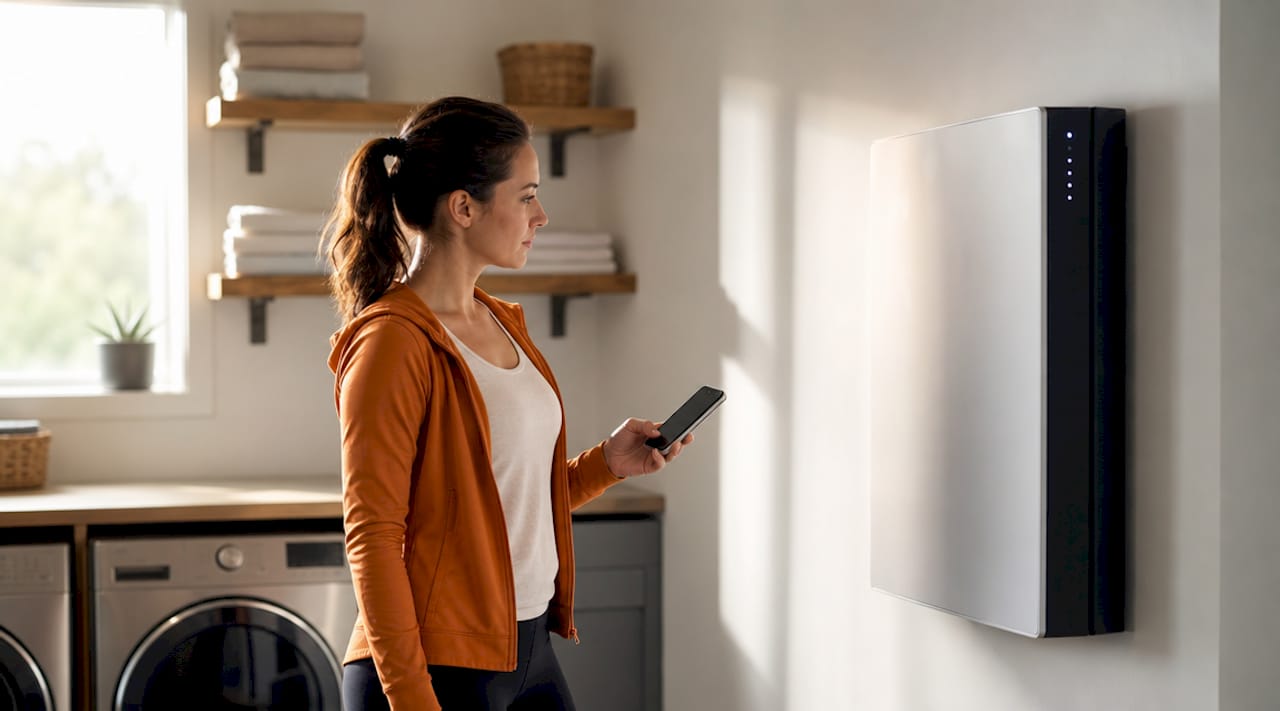
Batteries charge in two ways. They pull power from the grid during normal operation, or they pair with solar panels to recharge continuously from sunlight. Standalone batteries charge directly from the grid and deliver immediate backup without any solar panels required. You can always add solar later to turn that one-time reserve into a system that recharges itself every day.
When paired with solar, the combination becomes significantly more powerful. Home batteries paired with solar enable multi-day backup coverage by continuously recharging during sunny periods, which a standalone battery simply cannot do. This is the setup that gives San Antonio homeowners real energy independence, not just a temporary cushion.
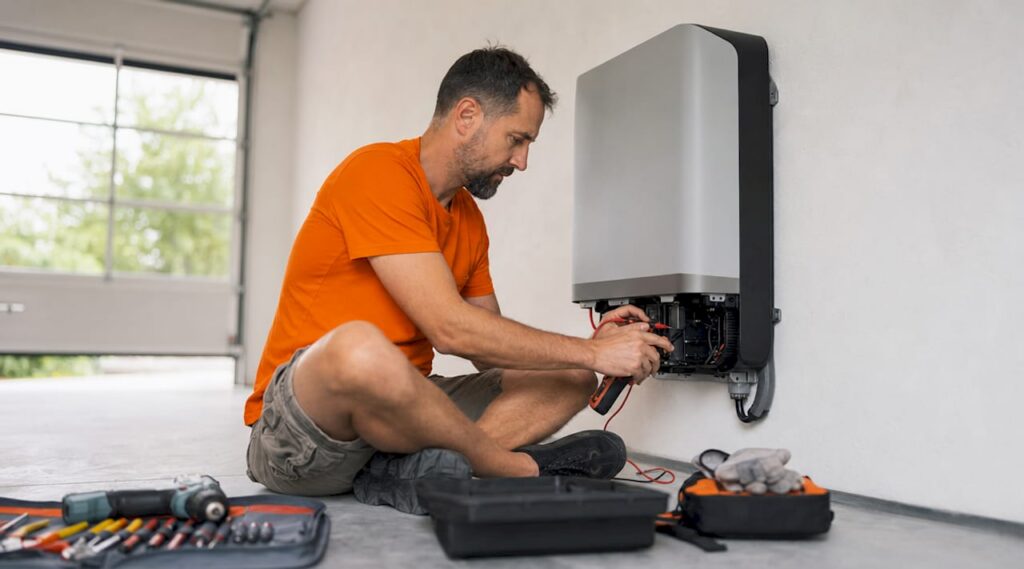
Modern batteries also include temperature regulation built right in. This means indoor installation in an unfinished garage or utility room requires no special ventilation, unlike a generator that demands outdoor placement and fuel storage. Maintenance is minimal too. Most systems need only occasional software updates and a periodic system check. Residential battery systems typically last 10 to 15 years, which means you install once and rely on it for over a decade.
Pro Tip: Ask your installer to walk you through the transfer switch location and test the automatic switchover before they leave. Knowing it works before an outage gives you real peace of mind.
What are the key benefits of backup batteries over generators?
The advantages of using backup batteries over traditional generators are significant, and they go well beyond convenience. Here is a direct comparison across the factors that matter most to homeowners and property managers.
| Feature | Backup Battery | Generator |
|---|---|---|
| Noise level | Silent operation | 65 to 100 decibels |
| Emissions | Zero on-site emissions | Carbon monoxide and exhaust fumes |
| Fuel required | None (charges from grid or solar) | Gasoline, propane, or natural gas |
| Maintenance | Software updates, system checks | Oil changes, fuel rotation, filter replacements |
| Switchover | Automatic, milliseconds | Manual or delayed auto-start |
| Lifespan | 10 to 15 years | 10 to 20 years with heavy upkeep |
| Indoor installation | Yes, with no ventilation needed | No, outdoor only |
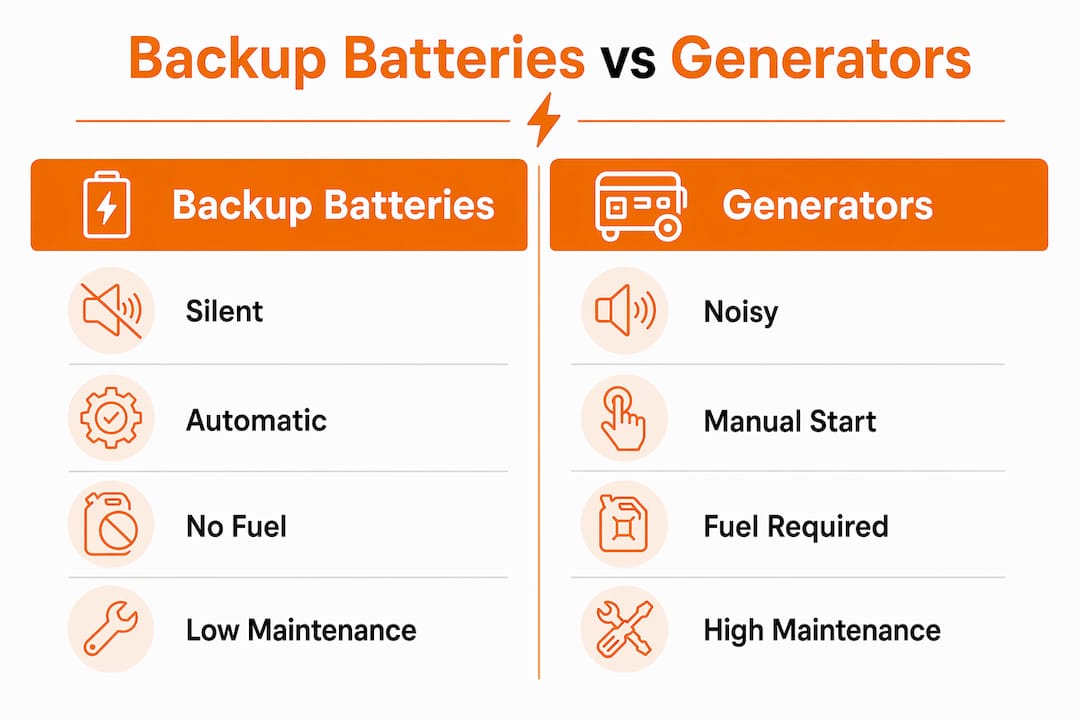
The safety difference is especially important for households with elderly residents or anyone who depends on medical equipment. Battery backups provide clean, quiet power with no on-site emissions and minimal upkeep. A generator running in or near an enclosed space creates a carbon monoxide risk. A battery creates none.
The financial picture also favors batteries over time. Battery backup systems reduce electricity bills through load shifting, meaning the battery charges when electricity rates are low and discharges when rates are high. For homeowners on time-of-use rate plans, this alone can produce meaningful monthly savings. Generators, by contrast, cost money every time you run them.
Homes with battery backups also sustain less secondary damage during outages, including food spoilage, sump pump failures, and HVAC shutdowns. That kind of protection has real dollar value that rarely shows up in simple cost comparisons.
Pro Tip: If you manage rental properties, a battery backup system is a strong selling point for tenants with home offices or medical needs. It also reduces your liability exposure during extended outages.
For a deeper look at how batteries and generators stack up across more scenarios, the backup power comparison guide at Alphasolarsa covers the full picture.
How backup batteries support energy independence every day
The importance of backup batteries goes well beyond emergency protection. Modern homeowners and property managers are using them as active energy management tools, not just insurance policies. Consumers increasingly view backup batteries as daily energy assets rather than emergency-only systems. This shift in thinking changes how you size, program, and use your battery.
Here are four practical ways a home battery works for you on a normal day:
-
Store solar energy for evening use. Solar panels generate the most power midday when you are often away from home. Your battery captures that energy and releases it in the evening when your household demand peaks, so you buy less from the grid at the most expensive time of day.
-
Shift loads to off-peak hours. Even without solar, a battery charges overnight when utility rates are lowest and powers your home during peak hours. This strategy directly reduces your monthly electricity bill without changing how you live.
-
Participate in demand response programs. Some utilities pay homeowners to allow controlled battery discharge during grid stress events. Your battery earns credit while helping stabilize the local grid. This is an income stream most homeowners do not know exists.
-
Cover multi-day outages with solar recharging. A battery alone may last one to two days depending on your usage. Paired with solar panels, the system recharges every sunny day and can carry your home through extended outages that would leave a standalone battery depleted.
The solar and battery integration guide for San Antonio homes explains how to size this combination for your specific energy profile. San Antonio’s high solar irradiance makes it one of the best markets in the country for solar-plus-storage returns.
What homeowners should consider before installing backup batteries
Installing a backup battery is a meaningful investment, and getting the sizing right matters more than almost anything else. Typical systems cost between $10,000 and $25,000 for partial home coverage, and up to $50,000 for whole-home backup including installation and components like the inverter and transfer switch. That range is wide because the right system depends entirely on your load requirements.
Before you commit, work through these key considerations:
-
Critical loads vs. whole-home backup. A critical loads panel powers only your most important circuits: refrigerator, lights, Wi-Fi, and medical devices. This approach costs less and extends battery duration significantly. Whole-home backup powers everything but requires more battery capacity and a higher upfront cost.
-
Battery sizing. Running only essential devices extends battery duration during outages. A qualified installer will calculate your average daily consumption and recommend a system that covers your critical loads for at least 24 hours.
-
Solar compatibility. You do not need solar panels to install a battery today. A standalone battery is a fully functional backup solution. However, choosing a battery that is solar-compatible from the start means you can add panels later without replacing the battery.
-
Installation location. Modern batteries install indoors or in a garage without special ventilation. This flexibility is a genuine advantage over generators, which require outdoor placement and fuel storage.
-
Warranty and lifespan. Most quality systems carry a 10-year warranty. Confirm what the warranty covers: capacity retention, parts, and labor all matter.
-
Weather resistance. Choosing climate-appropriate, weather-resistant systems enhances reliability, especially in regions with temperature extremes. San Antonio summers push outdoor-rated equipment hard.
The battery backup checklist from Alphasolarsa walks you through each of these decisions in a format you can bring to your installer consultation.
Key takeaways
Backup batteries are the most practical way to protect your home from outages while actively reducing your electricity costs every day.
| Point | Details |
|---|---|
| Automatic outage protection | Batteries switch to backup power in milliseconds, with no manual action required. |
| Daily energy cost savings | Load shifting and time-of-use optimization reduce monthly electricity bills year-round. |
| Safer than generators | Silent, emission-free operation makes batteries the right choice for medical needs and indoor safety. |
| Solar pairing extends coverage | A battery paired with solar panels recharges daily and can cover multi-day outages. |
| Sizing determines value | Prioritizing critical loads over whole-home backup reduces cost and extends battery runtime. |
Why I think most homeowners are still underestimating batteries
I have talked with hundreds of homeowners in San Antonio who installed a battery primarily for peace of mind during storm season. Almost every one of them tells me the same thing six months later: the daily energy savings surprised them more than the outage protection did.
That tells me most people are still thinking about batteries the wrong way. They treat it like a spare tire. You hope you never need it, and it sits there doing nothing the rest of the time. But a well-configured battery is working for you every single day, shifting loads, capturing solar, and reducing what you owe the utility company.
The other thing I see underestimated is the safety argument. Generators are genuinely dangerous. Carbon monoxide poisoning from improper generator use sends thousands of people to emergency rooms every year. A battery has none of that risk. For any household with an elderly parent, a child with respiratory issues, or someone on home medical equipment, that difference is not a minor footnote. It is the whole decision.
My honest recommendation: do not wait for the next major outage to think seriously about this. The home energy storage guide at Alphasolarsa is a good starting point if you want to understand your options before talking to an installer. Go in informed. You will make a better decision and get a better system.
— Anthony
Ready to protect your home with solar and battery backup?
Alphasolarsa designs and installs custom solar and battery systems for homeowners across San Antonio. Whether you want to protect against outages, reduce your monthly electricity bill, or build toward full energy independence, our team sizes the right system for your home and budget.

Every installation includes a full load assessment, system design, and professional setup from licensed technicians who know San Antonio’s climate and utility structure. We handle residential solar and battery installation from the first consultation through final inspection, so you get a system that works from day one. Contact Alphasolarsa today to schedule your free home energy assessment and find out what the right backup solution looks like for your property.
FAQ
Why use backup batteries instead of a generator?
Backup batteries operate silently, require no fuel, and switch on automatically during an outage. Generators produce exhaust emissions and require manual operation or delayed auto-start, making batteries the safer and lower-maintenance choice for most homes.
Do I need solar panels to install a backup battery?
No. Standalone batteries charge from the grid and provide immediate backup power without any solar panels. Adding solar later allows the battery to recharge continuously and extend outage coverage to multiple days.
How long does a home backup battery last during an outage?
Runtime depends on your battery capacity and how many devices you power. A single Tesla Powerwall 3 at 13.5 kWh can run essential home loads for 12 to 24 hours. Pairing with solar extends that coverage indefinitely during daylight hours.
What is the typical cost of a home backup battery system?
Home battery systems cost between $10,000 and $25,000 for partial coverage, including installation. Whole-home backup systems can reach $50,000 depending on capacity and home size.
Can a backup battery reduce my monthly electricity bill?
Yes. Batteries reduce bills through load shifting, charging during low-rate hours and discharging during peak-rate periods. Some utilities also offer demand response programs that pay homeowners for allowing controlled battery discharge during high-demand events.