
TL;DR:
- Backup power solutions supply electricity during utility outages, including UPS systems, generators, and solar-plus-battery setups. Layering these technologies ensures immediate protection, bridging power, and sustained coverage, enhancing reliability and safety. Integrating proper transfer switches and compliance measures optimizes system performance and safety for homes and businesses.
Backup power solutions are defined as systems that supply electricity to a home or business when the utility grid fails, ranging from instantaneous protection lasting seconds to sustained coverage lasting days. The most common types include portable generators, standby generators, uninterruptible power supplies (UPS), battery storage systems, and solar-plus-battery setups. Brands like Generac, Eaton, and Tesla Powerwall represent the major technology categories, each serving a different need. Choosing the right combination depends on how long you need power, what loads you need to protect, and whether energy independence is part of your goal.
1. Types of backup power solutions at a glance
The six primary backup power categories are UPS systems, portable generators, standby generators, battery storage, solar-plus-battery systems, and hybrid combinations. Each fills a specific role in the overall picture of energy reliability. UPS systems respond in milliseconds. Generators run for hours or days. Battery storage sits in between, offering clean and quiet power without fuel logistics. Understanding where each fits helps you build a system that actually works when you need it.
2. Uninterruptible power supplies (UPS)
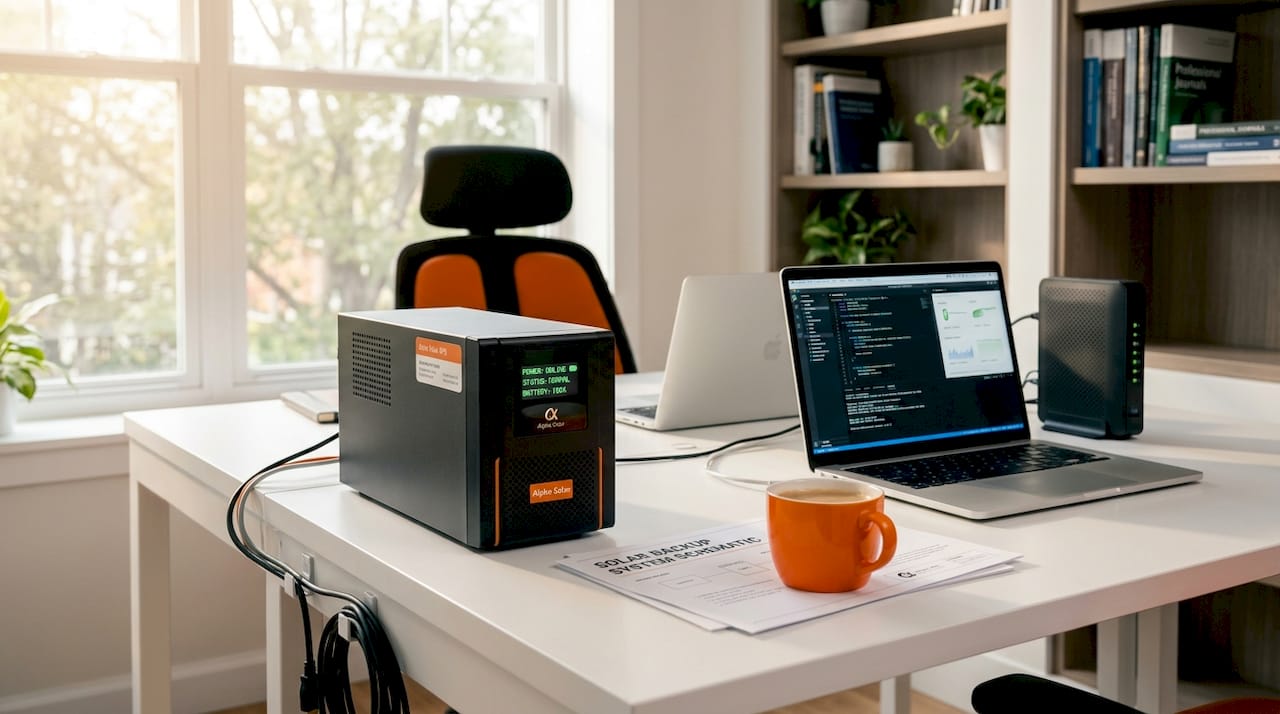
A UPS is a battery-based device that provides instant power the moment grid electricity disappears. UPS bridges power for seconds to minutes, giving generators time to start and take over the load. That short window matters more than most people realize. A two-second gap is enough to crash a server, corrupt a file, or reset a medical device.
There are three main UPS types:
- Online double conversion: Continuously converts AC to DC and back, providing the cleanest power with zero transfer time. Best for data centers and sensitive medical equipment.
- Line-interactive: Regulates voltage fluctuations before switching to battery. A solid middle ground for small offices and networking equipment.
- Offline standby: The most basic type. Switches to battery only after detecting an outage. Suitable for desktop computers and consumer electronics.
Common UPS applications include data centers, telecom infrastructure, point-of-sale systems, and home office setups. Eaton, APC by Schneider Electric, and CyberPower are the leading brands in this space. The main limitation is duration. A UPS is not designed to power your home for hours. It buys time, not independence.
Pro Tip: If you plan to pair a UPS with a generator, verify that the generator’s voltage and frequency output falls within the UPS input tolerance window. A mismatch causes the UPS to reject generator power and drain its battery instead.
3. How portable and standby generators differ
Generators are the most widely recognized emergency power systems, and the difference between portable and standby units is significant enough to affect your entire backup strategy.
Portable generators run on gasoline or propane, produce between 3,000 and 12,000 watts, and require manual setup. They are flexible and affordable, but they demand fuel storage, outdoor placement, and a transfer switch or interlock kit to connect safely to your home panel.
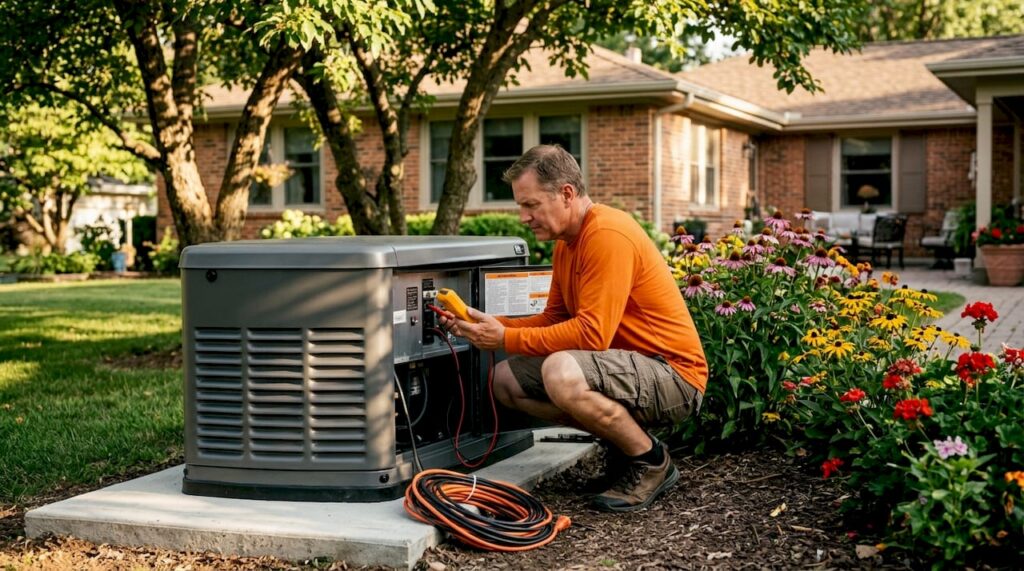
Standby generators are permanently installed outside your home or business and connect to your electrical panel through an automatic transfer switch (ATS). When the grid fails, the ATS detects the outage and starts the generator within seconds, without any action from you. Generac and Kohler dominate the residential standby market, while Caterpillar and Cummins serve commercial and industrial sites.
Fuel choice shapes the role of backup generators in a meaningful way:
- Gasoline: Widely available but degrades in storage and requires rotation every 30 days.
- Propane: Stores indefinitely and burns cleaner than gasoline. Requires a tank on your property.
- Natural gas: Connects directly to your utility line, eliminating fuel storage entirely. Preferred for smaller commercial installations.
- Diesel: The top choice for large commercial and industrial sites above 1 MW due to energy density and cold-start reliability.
Generator sizing depends on outage context, critical load requirements, transfer speed, and site conditions. Matching kilowatts to load is only the starting point. You also need to account for motor startup surges, which can be two to three times the running load of an appliance.
Pro Tip: Never run a portable generator indoors or in a garage. Carbon monoxide poisoning is the leading cause of generator-related deaths. Keep it at least 20 feet from any window, door, or vent.
4. What role battery backup systems and solar-plus-battery play
Battery backup systems store electricity and release it silently, without fuel or exhaust. Battery systems offer silent, clean energy and integrate with solar for genuine energy independence. That combination changes the math on backup power entirely.
Here is a direct comparison of battery-only versus solar-plus-battery systems:
| Feature | Battery-only backup | Solar-plus-battery backup |
|---|---|---|
| Runtime | Limited to stored capacity | Extends daily via solar recharge |
| Fuel required | None | None |
| Grid independence | Partial | High |
| Noise level | Silent | Silent |
| Scalability | Modular | Modular |
| Best for | Short to medium outages | Extended outages and energy independence |
The Tesla Powerwall 3, Enphase IQ Battery 5P, and Anker Solix E10 represent the current generation of home battery systems. Whole-home solar-plus-battery backup uses inverter modules, battery modules, and energy management software with an ATS power dock to cover your full electrical panel. That means your refrigerator, HVAC, lights, and medical devices stay on, not just a few circuits.
Key advantages of solar-plus-battery over traditional generators:
- No fuel costs or fuel storage
- Zero emissions and no noise
- Eligible for utility incentives and net metering programs
- Recharges automatically every day the sun shines
- Pairs with solar battery integration for long-term energy ownership
The upfront cost is higher than a generator, but the absence of fuel and maintenance expenses narrows that gap over time. For San Antonio homeowners dealing with summer grid stress and rising utility rates, the long-term value is clear.
5. How to evaluate and combine backup power options
The most reliable backup power architectures layer multiple technologies, each covering a different time window. Layered components include a UPS for immediate ride-through, a generator for sustained power, and batteries for bridging and storage. Each component has a distinct job.
Here is how a layered system works in practice:
| Layer | Technology | Response time | Duration |
|---|---|---|---|
| Immediate | UPS | Milliseconds | Seconds to minutes |
| Bridge | Battery storage | Seconds | Minutes to hours |
| Sustained | Standby generator | 10 to 30 seconds | Hours to days |
For most homeowners, a solar-plus-battery system handles the immediate and bridge layers without a generator at all. For businesses with critical loads, adding a standby generator behind the battery creates a system that can run indefinitely as long as fuel is available.
The automatic transfer switch is the component that ties everything together. Transfer switch selection between open and closed transition types affects equipment tolerance and reliability goals. An open transition switch causes a brief power interruption during source switching. A closed transition switch briefly parallels both sources, eliminating that gap. For sensitive equipment, closed transition is worth the added cost.
Safety codes also apply. NEC 702 rules require anti-backfeed measures to prevent generator power from feeding back into the utility grid, which creates a serious hazard for utility workers. Any professionally installed system must meet this requirement.
Pro Tip: Before finalizing your backup system design, list your critical loads in order of priority: medical devices, refrigeration, HVAC, lighting, and communications. Size your battery and generator to cover that list first, then add capacity for comfort loads if the budget allows.
For homeowners preparing for 2026 and beyond, the battery backup checklist from Alphasolarsa walks through every decision point before installation.
Key takeaways
The most reliable backup power strategy layers a UPS for instant protection, battery storage for clean bridging power, and a generator or solar array for long-duration coverage.
| Point | Details |
|---|---|
| UPS for instant protection | UPS systems respond in milliseconds and protect sensitive electronics during the first moments of an outage. |
| Generators for sustained power | Standby generators with automatic transfer switches provide hours to days of power without manual intervention. |
| Solar-plus-battery for independence | Solar-plus-battery systems recharge daily and eliminate fuel costs, making them ideal for extended outages. |
| Layered architecture wins | Combining UPS, battery, and generator coverage removes single points of failure and maximizes reliability. |
| Safety and code compliance matter | NEC 702 anti-backfeed requirements and proper transfer switch selection are non-negotiable for any installed system. |
What I’ve learned after years of backup power installations
The most common mistake I see homeowners and businesses make is treating backup power as a single-product decision. They buy a generator, check the box, and assume they are covered. Then the generator takes 30 seconds to start, and the server crashes anyway because there was no UPS in the chain.
The second mistake is ignoring generator-UPS compatibility. A UPS that rejects generator power because the voltage regulation is slightly off will drain its battery in minutes and leave you with nothing. This is not a rare edge case. It happens regularly in installations where the two systems were purchased separately without a compatibility check.
What actually works is thinking in layers. You need something that responds in milliseconds, something that bridges for minutes, and something that sustains for hours. Solar-plus-battery handles the first two layers quietly and cleanly. A natural gas or propane standby generator handles the third. That combination gives you coverage across every outage scenario without the noise, emissions, or fuel anxiety of a generator-only setup.
The technology has also shifted significantly. The Anker Solix E10 and Tesla Powerwall 3 now offer whole-home coverage that was not practical at the residential level five years ago. If you are evaluating top backup power solutions for 2026, battery-first architectures deserve serious consideration, not just as a green choice, but as a practical one. They require less maintenance, create no exhaust risk, and recharge automatically every day.
My honest recommendation: start with your critical load list, then work backward to the technology. The system that fits your actual needs will always outperform the system that sounded impressive in a brochure.
— Anthony
How Alphasolarsa can help you build the right backup system
If you are ready to move from evaluating options to actually protecting your home or business, Alphasolarsa designs and installs custom solar and battery backup systems across San Antonio. We size every system to your specific critical loads, integrate automatic transfer switches, and handle the full installation from permits to commissioning.
Whether you need a residential solar and battery system for your home or a commercial solar backup solution for your business, our team builds systems that work when the grid does not. Contact Alphasolarsa today for a free consultation and a system design tailored to your energy goals.
FAQ
What are the main types of backup power solutions?
The main types are UPS systems, portable generators, standby generators, battery storage, and solar-plus-battery systems. Each serves a different role based on response time, duration, and fuel requirements.
How long can a battery backup system power a home?
Runtime depends on battery capacity and the loads connected. A single Tesla Powerwall 3 can power essential circuits for 8 to 12 hours, while a solar-plus-battery system can extend coverage indefinitely by recharging during daylight hours.
What is the role of backup generators compared to battery storage?
Generators provide sustained power for hours or days using fuel, while battery storage offers clean, silent power limited to stored capacity. Combining both gives you the best of each technology across different outage durations.
Do I need a transfer switch for a backup generator?
Yes. NEC 702 requires anti-backfeed protection for any generator connected to a home or business panel. An automatic transfer switch handles this safely and automatically, while a manual interlock kit is the minimum for portable generator connections.
What is the best backup power option for a home in 2026?
A solar-plus-battery system paired with a natural gas standby generator covers every outage scenario. The battery handles short and medium outages silently, while the generator provides sustained coverage during extended grid failures.