
TL;DR:
- Proper solar detachment by certified professionals safeguards your roof warranty, preserves your solar system’s integrity, and can enhance energy performance after reinstallation. The process involves careful electrical disconnection, panel removal, roofing repairs, and precise reinstallation, typically taking two to six weeks and costing $350 to $850 per panel. Hiring NABCEP-certified contractors with solar and roofing experience ensures warranties remain valid and reduces long-term risks and expenses.
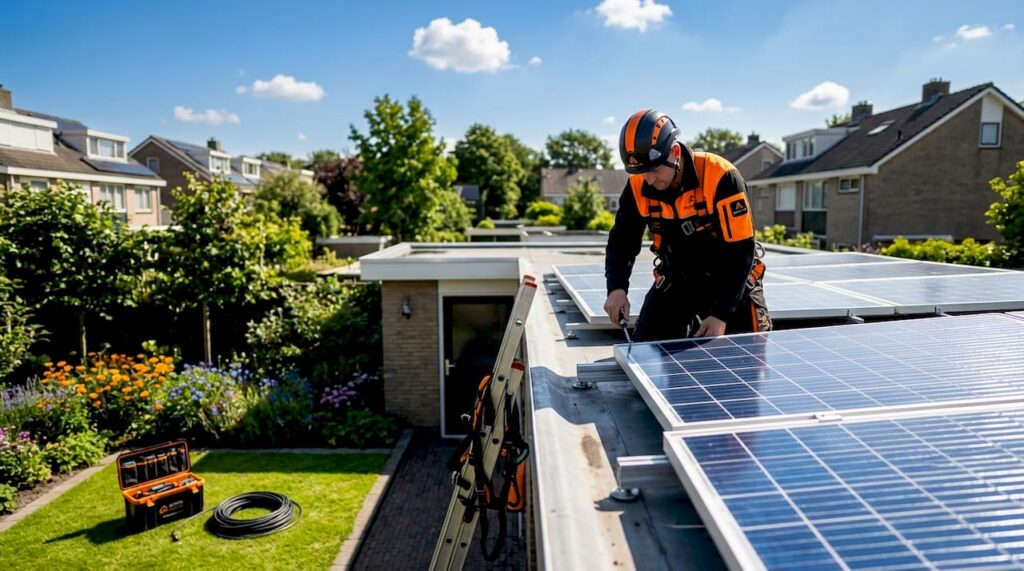
Solar detachment is defined as the professional temporary removal and reinstallation of solar panels, performed by certified contractors to protect your roof and solar system during repairs or upgrades. Homeowners with solar installations face a critical decision when their roof needs replacement or repair: remove the panels correctly or risk voiding warranties, creating leaks, and losing energy production. The benefits of solar detachment go well beyond simple convenience. Done right, the process protects your solar investment, preserves your roof warranty, and can actually improve your system’s performance after reinstallation. This guide walks you through exactly what to expect and why it matters.
1. What the benefits of solar detachment actually mean for your home
Solar detach and reattach, the industry term for this service, delivers measurable protection across three areas: your roof structure, your solar equipment warranties, and your long-term energy output. Most homeowners only discover this process exists when a roofer tells them the panels must come off before any work begins. Understanding the advantages of solar detachment before that moment puts you in a far stronger position to plan, budget, and choose the right contractor.
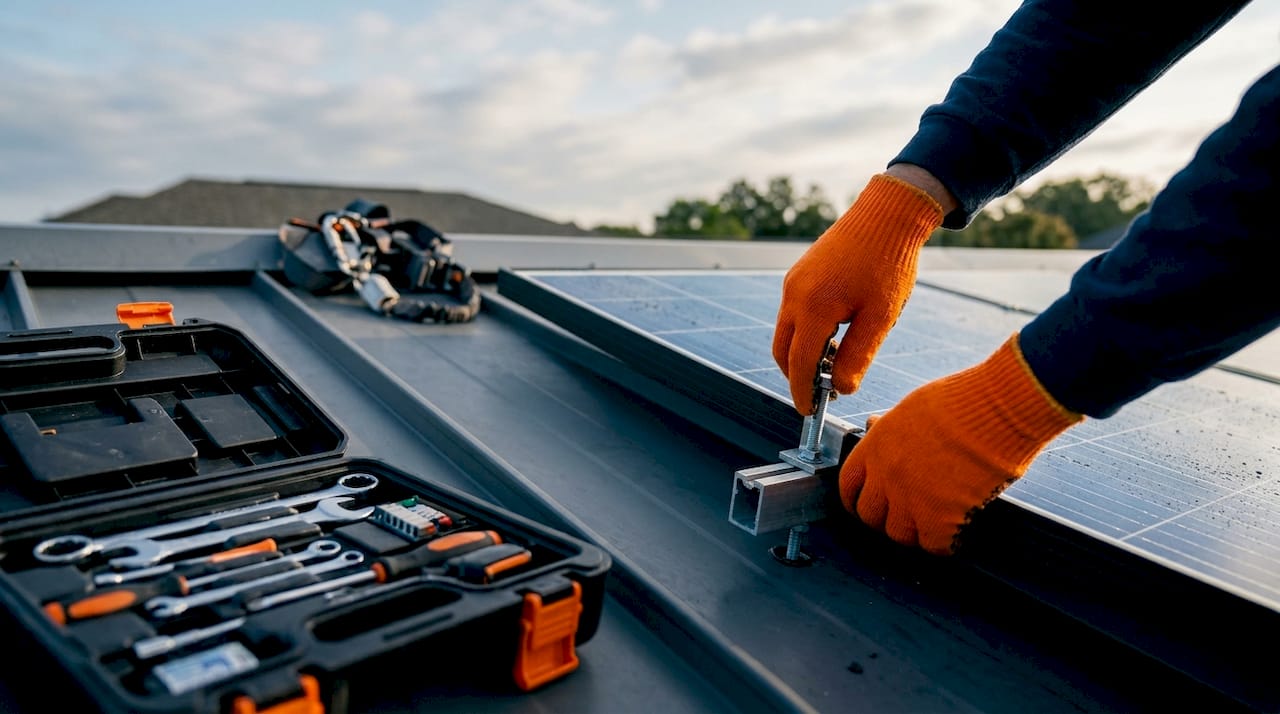
The core benefit is simple. Panels removed and reinstalled by certified solar professionals stay under warranty. Panels handled by unqualified workers do not. That single fact shapes every decision that follows.
2. How solar detachment works: the step-by-step process
Solar detach and reset is a professionally managed sequence, not a quick pull-and-plug job. Here is what a qualified contractor does from start to finish:
- Initial inspection — The contractor documents panel positions, wiring configurations, and mounting hardware before touching anything.
- Electrical disconnection — A certified solar technician safely de-energizes the system, disconnecting the inverter and isolating circuits.
- Panel removal — Panels are carefully unbolted from the racking system and moved to on-site storage, typically padded and stacked to prevent damage.
- Roof work — Your roofing contractor completes the replacement or repair with full access to the deck.
- New mounting and flashing — The solar contractor installs fresh racking hardware and proper through-flashing integrated under the new shingles.
- Reinstallation and wiring — Panels go back in their documented positions, wiring is reconnected, and all connections are tested.
- Electrical testing and homeowner walkthrough — The system is powered on, output is verified, and you receive documentation of the completed work.
This process typically takes two to six weeks from start to finish, depending on roof size and contractor scheduling.
Pro Tip: Schedule your detach and reset during spring or fall in San Antonio. Temperatures are milder, roofing crews work faster, and your solar downtime falls outside the peak summer billing months when your panels produce the most.
3. How solar detachment protects your roof and solar investment
Improper panel removal is one of the most common causes of roof leaks that homeowners never connect to their solar installation. Incorrect resealing causes leaks that may not appear until months after the work is done, making the source difficult to trace and the repair expensive.
Here is what proper solar detachment protects you from:
- Voided solar warranties — Most solar panel manufacturers and inverter brands require certified handling for warranty coverage to remain valid. Unqualified removal voids that protection immediately.
- Roof warranty conflicts — Roofing manufacturers like GAF and Owens Corning require licensed installation methods at all penetration points. Surface sealants alone fail within two to five years, while proper through-flashing lasts the life of the roof.
- Electrical hazards — Solar arrays carry live DC voltage even when the inverter is off. Only a certified technician can safely disconnect the system without risk of shock or equipment damage.
- Delayed leak damage — Leaky roof penetrations often manifest months later, long after the contractor has left. Detailed documentation during the reset process gives you a clear record if a dispute arises.
“Detach and reset is not just a roofing task. It is a warranty management event that determines whether your solar equipment and your roof stay protected for the next 20 years.” — Alphasolarsa
The financial logic here is straightforward. A solar system represents a significant long-term asset. Protecting it through a professional detach and reset costs far less than replacing panels, fighting warranty claims, or repairing water damage inside your home.
4. Energy efficiency and performance advantages after reinstallation
One of the most overlooked solar detachment benefits for homeowners is the performance boost that often follows a professional reset. Energy production frequently improves after reinstallation because the process creates a natural opportunity for diagnostics and cleaning that most homeowners never schedule on their own.
During a detach and reset, certified technicians can:
- Clean every panel thoroughly — Ground-level cleaning removes dust, pollen, bird droppings, and mineral deposits that reduce output. In San Antonio, where dust and heat are constant factors, this alone can restore measurable production.
- Identify underperforming modules — With panels off the roof, technicians can test each unit individually and flag any that are degrading faster than expected.
- Inspect and upgrade wiring connections — Loose or corroded connectors that reduce efficiency get caught and corrected during reinstallation.
- Optimize panel positioning — If your roof pitch or orientation changes slightly with a new deck, technicians can adjust tilt angles to capture more sunlight.
Pro Tip: Ask your contractor to provide a pre-reset and post-reset production comparison using your inverter’s monitoring data. This gives you a concrete record of any performance improvement and helps you track your system’s health going forward.
Pairing your reset with professional panel cleaning maximizes the output gains from the process. Many homeowners report noticeably lower utility bills in the first full month after their system goes back online.
5. Costs, timelines, and planning considerations for homeowners
Understanding the financial and scheduling impact of solar detachment helps you budget accurately and avoid surprises. Here is a realistic breakdown for 2026.
| Factor | Typical Range | What It Means for You |
|---|---|---|
| Cost per panel | $350 to $850 | A 20-panel system runs $7,000 to $17,000 for detach and reset alone |
| Total project duration | 2 to 6 weeks | Plan for roof work plus solar reinstallation and testing time |
| Solar offline period | 1 to 3 weeks | Your system produces no power during this window |
| Extra utility costs | $50 to $200 | Grid power replaces your solar production during downtime |
| Insurance considerations | Varies by policy | Confirm your homeowner’s policy covers panels during removal and storage |
These cost and timeline estimates reflect regional pricing patterns and give you a solid baseline for getting quotes. The offline period is the most immediate financial impact. In Texas, where summer utility rates climb steadily, timing your project outside of June through August reduces the cost of grid power during downtime.
Budgeting for solar detachment savings means looking at the full picture. The cost of a professional reset is real, but it is far smaller than the cost of a voided warranty, a leaking roof, or a degraded solar system that underperforms for years. Think of it as a maintenance investment that protects the larger asset.
You should also confirm with your homeowner’s insurance provider that your panels are covered while they are off the roof and in storage. Most standard policies cover this, but verifying before the project starts removes any uncertainty.
6. How to choose the right contractor for detach and reset
Certified solar contractors protect equipment warranties and ensure safety in ways that general roofers simply cannot. Roofers are skilled at roofing. They are not trained in DC electrical systems, inverter disconnection, or solar equipment handling. Hiring a roofer to remove your panels to save money is one of the most common mistakes homeowners make, and it is one of the most expensive.
When evaluating contractors for your detach and reset project, look for these qualifications and ask these questions:
- NABCEP certification — The North American Board of Certified Energy Practitioners credential is the gold standard for solar installation and service professionals.
- Combined solar and roofing capability — Contractors who handle both the solar removal and the roofing work provide better coordination, cleaner scheduling, and unified warranty accountability.
- Manufacturer authorization — Some solar panel brands like SunPower and Enphase require authorized service partners for warranty-valid handling. Confirm your contractor qualifies.
- Documentation practices — Ask whether the contractor provides pre-removal photos, wiring diagrams, and a post-reinstallation report. This protects you if any issues arise later.
- References from similar projects — Request examples of completed detach and reset projects, not just new installations.
Qualified handling reduces risks significantly compared to unqualified removal. The right contractor treats your solar system as the precision electrical asset it is, not as an obstacle to the roofing job.
For homeowners preparing for a roof replacement, reviewing roof preparation best practices before you hire anyone gives you a clearer picture of what to expect and what questions to ask.
Key takeaways
Solar detachment done by certified professionals protects your roof warranty, preserves your solar equipment warranty, and frequently improves system performance after reinstallation.
| Point | Details |
|---|---|
| Warranty protection is the top benefit | Unqualified panel removal voids solar equipment warranties immediately and permanently. |
| Proper flashing prevents leaks | Through-flashing under shingles outlasts surface sealants by decades and keeps your roof warranty valid. |
| Performance often improves post-reset | Cleaning and diagnostics during reinstallation restore or increase energy output. |
| Budget $350 to $850 per panel | Plan for 1 to 3 weeks of solar downtime and $50 to $200 in extra utility costs. |
| Hire certified solar contractors only | NABCEP-certified professionals with combined solar and roofing experience provide the best protection. |
What I’ve learned from watching homeowners skip the certified contractor
I have seen the same scenario play out more times than I would like. A homeowner gets a roofing quote, the roofer offers to “move the panels” for a few hundred dollars less than a certified solar contractor would charge, and the homeowner takes the deal. Six months later, there is a slow leak tracing back to an improperly resealed penetration, or the solar manufacturer denies a warranty claim because the system was handled by an uncertified party.
The money saved on the front end rarely covers the cost of what breaks on the back end. A roof leak that goes undetected for months can damage insulation, framing, and drywall. A voided warranty on a $15,000 solar system is not a paperwork problem. It is a real financial loss.
What I tell every homeowner is this: time your roof replacement carefully relative to your solar installation age. If your roof is within five years of needing replacement and you are considering solar, replace the roof first. That sequencing eliminates the detach and reset cost entirely and gives your solar system a fresh 25-year surface to sit on. If you already have panels and need a new roof, treat the detach and reset as a non-negotiable line item in your roofing budget, not an optional add-on.
The homeowners who come out ahead financially are the ones who plan the whole project as a single coordinated event, with one team accountable for both the roof and the solar system. That coordination is where the real savings live.
— Anthony
Professional solar detachment services in San Antonio

Alphasolarsa provides professional solar panel removal and reinstallation for homeowners across San Antonio, TX. Our certified technicians handle every step of the detach and reset process, from safe electrical disconnection to proper flashing and post-reinstallation testing. We coordinate directly with your roofing contractor to keep the project on schedule and your warranties intact. Whether you are replacing an aging roof or upgrading your solar system, our team protects your investment at every stage. Contact Alphasolarsa today to get a quote for your detach and reset project and keep your solar system performing at its best.
FAQ
What does solar detach and reattach mean?
Solar detach and reattach, also called detach and reset, is the professional process of temporarily removing solar panels for roof work and reinstalling them once the roofing project is complete. A certified solar contractor handles all electrical disconnection, storage, and reinstallation to keep warranties valid.
How long does solar detachment take?
Most solar detach and reset projects take two to six weeks from start to finish, with the solar system offline for one to three weeks during the roofing work. Scheduling outside of peak summer months reduces the cost of grid power during the downtime period.
Will solar detachment void my warranty?
Solar detachment performed by a certified contractor preserves your warranty. Removal by an unqualified person, such as a general roofer without solar training, voids most solar equipment warranties immediately and permanently.
How much does solar detachment cost per panel?
Solar detachment costs between $350 and $850 per panel in 2026, depending on system size, location, and contractor. A 20-panel system typically runs between $7,000 and $17,000 for the full detach and reset service.
Can solar detachment improve my system’s performance?
Yes. Many homeowners see improved energy output after a professional reset because technicians clean panels, identify underperforming modules, and inspect wiring connections during the reinstallation process. Pairing the reset with a full panel cleaning maximizes the performance benefit.