

TL;DR:
- A solar home energy audit evaluates home electricity use and reveals efficiency improvements before solar installation. It helps accurately size your system, lowering costs by reducing energy waste and optimizing performance. Professional assessments and proper preparations ensure the most effective and cost-efficient solar investment.
A solar home energy audit is a structured evaluation of how your home consumes electricity, where it loses energy, and how well your current or planned solar system matches your actual needs. The industry term for this process is a home energy assessment, and the U.S. Department of Energy identifies it as the foundational first step before any solar investment. Skipping this step leads to oversized systems, wasted money, and missed savings. This guide walks you through both DIY and professional approaches so you can make confident, informed decisions about your home’s energy future.
What tools and preparations does a solar home energy audit require?
The right preparation separates a useful audit from a guesswork exercise. Before you touch a single outlet or climb on your roof, gather at least 12 months of utility bills. Seasonal swings in your electricity use, especially in San Antonio summers, will skew your solar sizing if you only look at one or two months.
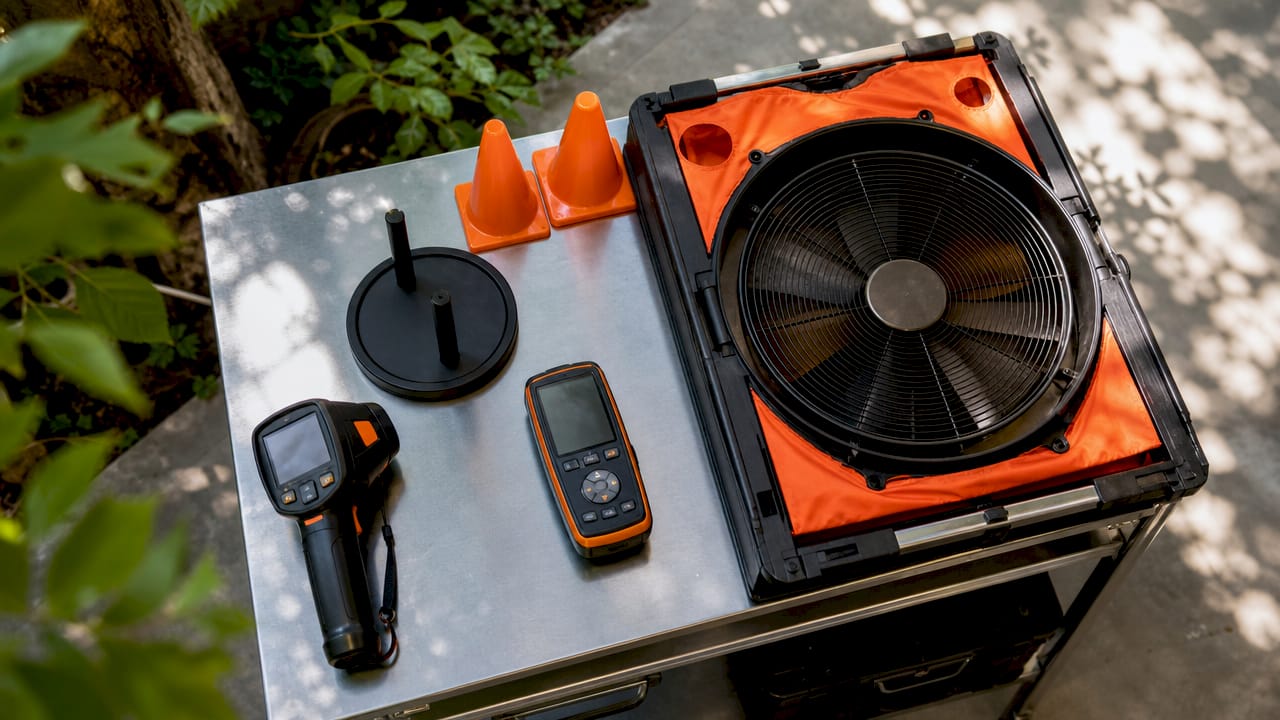
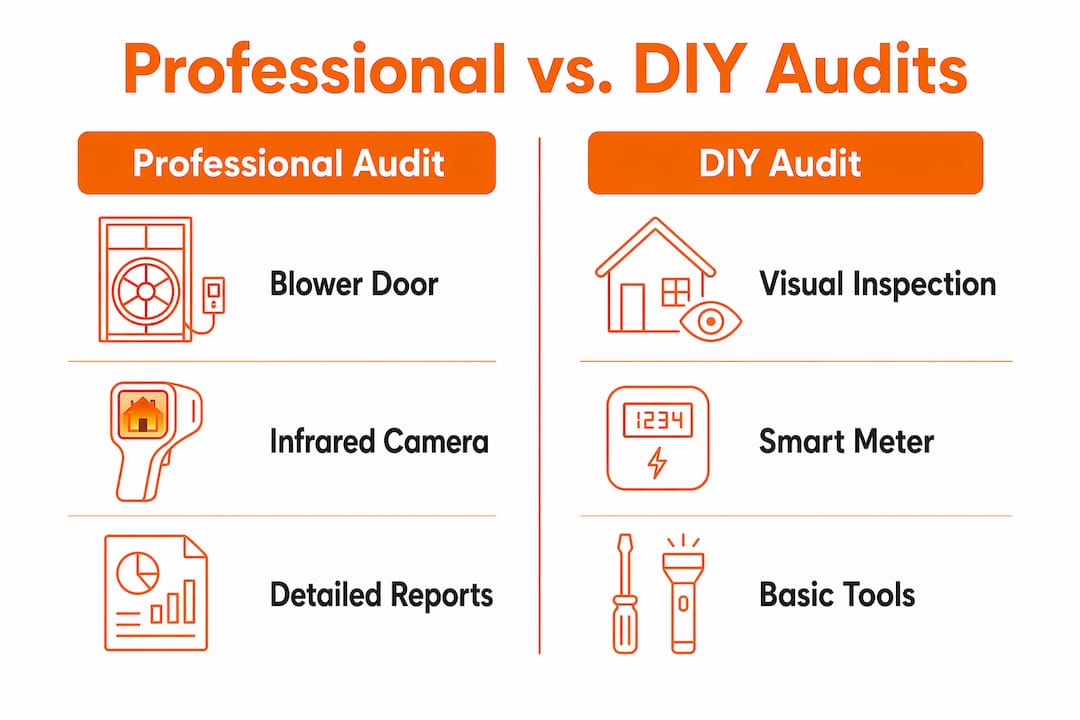
Professional tools give auditors a level of detail that DIY methods simply cannot match. Blower doors and infrared cameras reveal hidden air leaks and insulation gaps that are invisible to the naked eye. Professional auditors also carry gas detectors and carbon monoxide monitors, because safety checks for carbon monoxide leaks and indoor air quality are a standard part of a thorough audit.
DIY tools are more accessible and still deliver real value. A smart meter or plug-in energy monitor like the Kill A Watt measures how much power individual appliances draw. Your utility’s online portal often provides hourly usage data, which is more useful than monthly totals alone.
| Category | Professional Audit | DIY Audit |
|---|---|---|
| Air leak detection | Blower door test | Visual inspection, incense stick |
| Thermal imaging | Infrared camera | Not available |
| Gas and CO safety | Certified detectors | Consumer CO alarm |
| Energy monitoring | Calibrated data loggers | Kill A Watt, smart meter |
| Cost | Free to subsidized via utility | Low cost |
| Data accuracy | High | Moderate |
Many homeowners qualify for free audits through their local utility or state programs but never ask. A professional assessment typically takes about 60 minutes and costs nothing when booked through your utility provider. That is one of the best free services available to any homeowner considering solar.
Pro Tip: Call your utility company before scheduling any paid audit. Ask specifically about free or subsidized home energy assessment programs. Many San Antonio homeowners are surprised to find this service is already available to them at no charge.
How do you perform a solar home energy audit step by step?
A structured walkthrough produces far better results than a random inspection. Follow these steps in order for the most complete picture of your home’s energy profile.
-
Walk the exterior. Check your roof’s age, condition, and orientation. South-facing roofs with minimal shading produce the most solar energy in San Antonio. Note any trees, chimneys, or neighboring structures that cast shadows between 9 a.m. and 3 p.m.
-
Inspect the attic and insulation. Poor attic insulation is one of the top energy wasters in Texas homes. Look for thin or uneven insulation coverage. Gaps around recessed lights and HVAC ducts are common leak points.
-
Check doors, windows, and wall penetrations. Run your hand along door frames and window edges on a windy day. Feel for drafts. Electrical outlets on exterior walls are another frequent source of air infiltration.
-
Test your solar panels if you have them. Shaded or dirty panels lose 10–20% of their efficiency. Check each panel for debris, bird droppings, and shading from new tree growth. Review your inverter’s production logs and compare month-over-month output. Consistent drops signal a problem worth investigating. Regular panel cleaning is one of the simplest ways to recover lost output.
-
Measure appliance consumption. Plug a Kill A Watt monitor into your refrigerator, HVAC unit, water heater, and any other high-draw appliance. Record the wattage and daily run time. Standby power consumption from devices left on idle adds up faster than most homeowners expect.
-
Review your utility data. Map your monthly kilowatt-hour (kWh) usage across all 12 months. Identify your peak month. That peak figure, not your average, drives your solar system size calculation.
-
Document everything. Photograph problem areas, record appliance readings, and note any rooms that feel unusually hot or cold. This documentation becomes the input for your solar sizing conversation.
Pro Tip: Download your utility’s hourly usage data if available. Knowing exactly when your home draws the most power, morning showers, afternoon AC, evening cooking, helps you size battery storage correctly alongside your solar panels.
- Prioritize the attic and HVAC system. They account for the largest share of energy loss in most Texas homes.
- Check your electrical panel capacity. An undersized panel may need an upgrade before solar installation.
- Note the age of your water heater and major appliances. Replacing an aging unit before going solar reduces your system size needs.
How do audit findings help you size your solar system and cut costs?
Audit data translates directly into solar system decisions. The most important number from your audit is your annual kWh consumption. From that figure, a solar installer can calculate how many panels you need to offset your usage. But the audit does more than produce a number. It shows you where to shrink that number before you buy.
Sealing air leaks and upgrading insulation is consistently the most cost-effective pre-solar improvement. Reducing your home’s heating and cooling load means you need fewer panels to cover your energy needs. Smart home upgrades like programmable thermostats, LED lighting, and smart power strips can cut household energy use by up to 25%. That reduction directly shrinks the solar array you need to purchase. Smaller system, lower upfront cost, same energy independence.
Understanding how to size your solar system correctly after improving home efficiency delivers the best return on investment and prevents costly upgrades later. Audit findings also reveal seasonal patterns. If your peak usage hits in july and august due to air conditioning, your system needs to be sized for that demand, not your mild-weather average.
| Audit Finding | Recommended Action | Impact on Solar Size |
|---|---|---|
| Air leaks in attic or walls | Seal and add insulation | Reduces system size needed |
| Dirty or shaded panels | Clean panels, trim trees | Recovers 10–20% lost output |
| Aging HVAC system | Upgrade to high-efficiency unit | Lowers cooling load significantly |
| High standby appliance draw | Add smart strips, replace old units | Reduces baseline consumption |
| Undersized electrical panel | Upgrade panel before installation | Enables full system capacity |
- Fixing insulation before going solar often pays back faster than the panels themselves.
- A professional solar power consultation after your audit gives you verified numbers, not estimates.
- Shading analysis tools like Aurora Solar or Nearmap can model your roof’s production potential with precision.
What are the most common mistakes in solar energy audits?
The biggest mistake homeowners make is relying entirely on online solar potential tools. Online tools estimate roof capacity based on satellite data but cannot assess your home’s actual energy efficiency, electrical panel condition, or economic feasibility. They are a starting point, not a plan.
Ignoring HVAC efficiency is another frequent oversight. Your heating and cooling system typically accounts for 40–50% of your home’s total energy use. An audit that skips the HVAC system misses the single largest lever for reducing your energy bill. Check filter condition, duct sealing, and the system’s age and SEER rating.
Homeowners also underestimate the value of a certified auditor. A comprehensive professional audit provides precise, data-driven findings that go far beyond what a DIY walkthrough can produce. Certified auditors follow Building Performance Institute (BPI) or RESNET standards, which means their findings hold up when you present them to a solar installer or lender.
“A good energy audit doesn’t just tell you where your home wastes energy. It tells you exactly what to fix first to get the most value from your solar investment.” — Alphasolarsa
Pro Tip: Ask your auditor for a written report with prioritized recommendations. A ranked list of improvements, from highest to lowest impact, gives you a clear spending plan before you commit to solar.
- Do not skip the electrical panel inspection. Many older San Antonio homes need a panel upgrade before a solar system can be safely installed.
- Avoid scheduling your audit during mild weather. Extreme heat or cold reveals leaks and inefficiencies that comfortable days hide.
- Choose an auditor certified by BPI or RESNET for results you can trust and use with any installer.
Key takeaways
A home energy assessment is the single most important step before investing in solar, because it determines the right system size and reveals the cheapest efficiency improvements to make first.
| Point | Details |
|---|---|
| Audit before you buy solar | The DOE confirms audits prevent oversized systems and wasted installation costs. |
| Use 12 months of utility data | Seasonal peaks, not averages, determine the correct solar system size for your home. |
| Fix leaks before sizing panels | Sealing air leaks and upgrading insulation reduces the array size you need to purchase. |
| Professional tools find hidden losses | Blower doors and infrared cameras reveal leaks that DIY inspections consistently miss. |
| Free audits are available | Many homeowners qualify for no-cost assessments through their local utility provider. |
Why I think most homeowners audit their home in the wrong order
After working with hundreds of San Antonio homeowners on solar projects, I keep seeing the same pattern. Someone gets excited about solar, requests quotes from three installers, and then wonders why the system sizes vary wildly. The answer is almost always that no one did a proper home energy assessment first.
The part that surprises most people is how much the audit changes the final system size. I have seen homes where air sealing and a new HVAC unit reduced the required solar array by nearly a third. That is real money left in your pocket. Skipping the audit to save a few hours ends up costing far more in oversized equipment.
The other thing I have noticed is that DIY audits, while genuinely useful, tend to miss the HVAC duct system and the attic air barrier. Those two areas drive more energy loss in Texas than almost anything else. Combining a DIY walkthrough with at least one professional blower door test gives you the best of both approaches. You learn your home, and you get verified data to back it up. For homeowners who want to maximize solar savings, the audit is where that process actually begins.
— Anthony
Alphasolarsa can help you take the next step
You have done the research. Now it is time to put your audit findings to work with a team that knows San Antonio homes inside and out.

Alphasolarsa designs custom residential solar systems built around your actual energy data, not generic estimates. Whether your audit revealed a need for a full residential solar installation, a panel cleaning service to recover lost efficiency, or a system removal and reinstallation during a roof replacement, we handle every step. Our team also installs EV chargers and battery backup systems for homeowners who want complete energy independence. Contact Alphasolarsa today for a consultation grounded in your home’s real numbers.
FAQ
What is a solar home energy audit?
A solar home energy audit, formally called a home energy assessment, evaluates how your home uses electricity and identifies inefficiencies that affect solar system sizing and performance. The U.S. Department of Energy recommends completing one before any solar installation.
How long does a professional home energy assessment take?
A professional home energy assessment typically takes about 60 minutes and is often available for free or at a subsidized cost through local utility programs.
Can I do a solar energy audit myself?
Yes, a DIY audit using utility bills, a Kill A Watt monitor, and a visual inspection covers the basics. For hidden air leaks and precise data, pair your DIY effort with a professional blower door test.
How does an audit affect my solar system size?
Fixing insulation and air leaks before installation can reduce your energy consumption by up to 25%, which directly lowers the number of panels you need to purchase.
Are online solar potential tools accurate enough to replace an audit?
Online tools estimate roof capacity from satellite images but cannot assess economic feasibility or your home’s actual efficiency. They are a useful starting point, not a substitute for an in-person audit.