

TL;DR:
- Texas has ideal conditions for cost-effective residential solar due to high sun exposure.
- Incentives like tax credits and property exemptions significantly reduce solar installation costs.
- Proper system sizing, maintenance, and storage options maximize savings and energy independence.
Texas sits in one of the most solar-rich regions in the country, and that matters directly to your electricity bill. With 5.4 peak sun hours available daily on average, the state gives homeowners a genuine advantage when it comes to generating clean power at home. Yet many Texans still hesitate, unsure whether solar actually pays off or whether it is just a trend for coastal states. This guide cuts through that confusion. You will find clear explanations of how solar works, real numbers on what you can save, honest information about grid concerns, and practical steps for choosing and maintaining your system.
Table of Contents
- Understanding solar energy basics
- How solar panels deliver savings in Texas
- Solar intermittency, grid impact, and homeowner incentives
- Choosing and maintaining your solar system
- Alpha Solar’s perspective: The real opportunity most Texans overlook
- Ready to go solar? Expert solutions and support in Texas
- Frequently asked questions
Key Takeaways
| Point | Details |
|---|---|
| Texas solar potential | High sun hours make residential solar highly effective statewide. |
| Homeowner savings | Solar panels can significantly cut annual energy bills and reduce CO2 emissions. |
| Incentives outweigh challenges | Tax exemptions and credits make solar financially attractive despite grid concerns. |
| Maintenance matters | Regular cleaning and seasonal prep maximize solar system performance. |
| Smart upgrades | Combining batteries and EV chargers lets homeowners optimize solar energy use. |
Understanding solar energy basics
Solar energy is simply sunlight converted into electricity your home can use. Panels on your roof capture photons from the sun, and a device called an inverter (which converts direct current to the alternating current your appliances need) turns that captured energy into usable power. It is a straightforward process, and the technology has become reliable and affordable enough for everyday homeowners.
A typical residential solar system includes three main components:
- Solar panels: These absorb sunlight and generate electricity. Panel efficiency has improved significantly, meaning you need fewer panels to power the same home.
- Inverter: This converts the electricity from your panels into the form your home uses. String inverters handle the whole system at once, while microinverters work panel by panel for better performance in partial shade.
- Battery storage: Optional but increasingly popular, a battery stores excess energy so you can use it at night or during a grid outage.
For Texas homeowners, the numbers are genuinely encouraging. The state averages 5.4 peak sun hours daily, which is well above the national average. That level of sun exposure means your panels produce more energy per day than they would in most other states.
Solar also connects naturally to a modern home setup. If you already have or plan to add an EV charger, your solar system can power your vehicle directly. Pair that with a battery, and you have a home energy setup that keeps running even when the grid does not. For more ideas on how these systems work together, explore our solar solutions blog.
Pro Tip: If you have a south or southwest-facing roof with minimal shade, you are in an excellent position for solar in Texas. Even east or west-facing roofs can perform well given the state’s strong sun exposure.
The bottom line is that Texas conditions are genuinely well-suited for residential solar. The sun hours are there. The technology is proven. What most homeowners need is a clear picture of the financial side.
How solar panels deliver savings in Texas
Let’s get into the numbers that actually matter for your wallet. An 8-kilowatt (kW) system, which is a common size for a Texas home, generates roughly 13,000 kWh per year under Texas sun conditions. The average Texas household uses about 1,200 kWh per month, or 14,400 kWh annually. That means a well-sized system can cover the large majority of your annual usage.
Here is how that translates to real savings:
| Scenario | Monthly bill (estimated) | Annual cost |
|---|---|---|
| No solar (avg Texas rate) | $160 to $200 | $1,920 to $2,400 |
| With 8kW solar system | $20 to $50 | $240 to $600 |
| Estimated annual savings | $1,320 to $1,800+ |
Those savings add up fast. Over a 25-year panel lifespan, you are looking at $33,000 to $45,000 in reduced electricity costs, before factoring in rate increases. And Texas utility rates have been creeping higher each year, which makes locking in solar production now even more valuable.

Beyond the financial side, the environmental impact is real too. The same 8kW system reduces CO2 by 3 to 4 tons annually. That is roughly equivalent to taking a car off the road for a year.
Key savings drivers for Texas homeowners:
- Net metering: Some Texas utilities credit you for excess energy your system sends back to the grid.
- Time-of-use rates: Solar production peaks during the day when electricity is most expensive, reducing your highest-cost usage.
- Battery storage: Storing midday solar energy lets you avoid buying expensive evening power.
Pro Tip: Review your last 12 months of electricity bills before sizing your system. Your installer should design around your actual usage, not a generic estimate.
For a deeper look at what drives system costs and payback timelines, check out our solar cost breakdowns and our guide to solar pros and cons before you commit.
Solar intermittency, grid impact, and homeowner incentives
One concern you may have heard is that solar is unreliable because the sun does not always shine. This is called intermittency, and it is worth understanding clearly rather than dismissing.
Solar production does vary with weather and time of day. On the Texas grid (managed by ERCOT), this variability requires backup resources to fill gaps. ERCOT ancillary costs reached $788M in 2023, partly attributed to managing renewable intermittency. Critics point to this as a hidden cost of solar expansion.
Here is the important context though: those are grid-level costs spread across all ratepayers. As an individual homeowner, your financial picture looks very different.
“Residential homeowners benefit from tax exemptions and federal credits that more than offset any marginal grid cost increases from solar intermittency.”
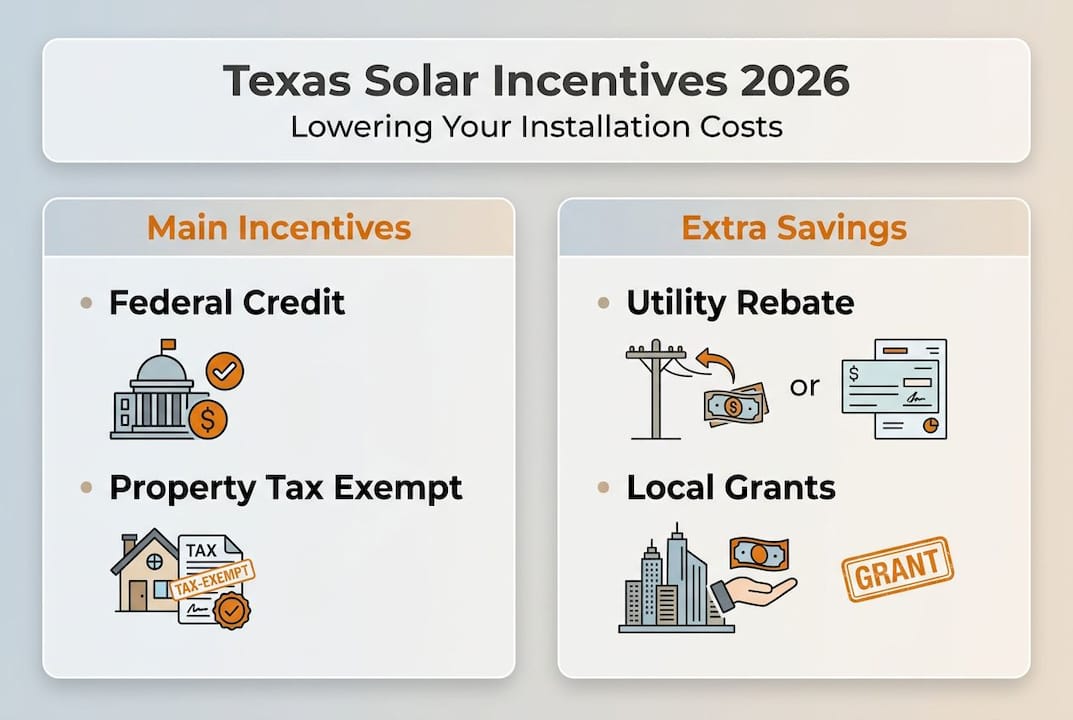
Texas and federal incentives available to you in 2026:
| Incentive | Benefit |
|---|---|
| Federal Investment Tax Credit (ITC) | 30% of system cost as a tax credit |
| Texas property tax exemption | Full value of solar system excluded from property tax |
| Sales tax exemption | No state sales tax on solar equipment |
| Utility net metering programs | Credits for excess energy sent to grid |
These incentives are powerful. A $25,000 system becomes effectively $17,500 after the 30% federal credit alone. Add the property tax exemption, and your home’s value increases without a matching tax burden.
For more detail on available programs, visit our solar incentives and solar tax credits resources. The intermittency concern is real at the grid level, but for your household, the incentive stack makes solar a strong financial move.
Choosing and maintaining your solar system
Knowing solar makes sense is one thing. Knowing how to choose and care for your system is where most homeowners need practical guidance.
Choosing the right system
- Audit your energy use. Pull 12 months of bills and calculate your average monthly kWh. This is the foundation of any accurate system design.
- Size your system appropriately. Oversizing wastes money. Undersizing leaves you dependent on the grid. A good installer matches output to your actual consumption.
- Decide on battery storage. If you want backup power during outages or want to maximize savings on time-of-use rates, a battery is worth the investment. The LCOE (levelized cost of energy) with storage runs $41 to $71 per MWh, which is competitive with grid power in Texas.
- Check your roof condition. If your roof needs replacement within 5 to 7 years, do it before installing panels. Removing and reattaching panels later adds cost.
- Verify installer credentials. Look for NABCEP-certified installers and check reviews specific to your area.
Permitting and installation
Your installer handles most permitting, but you should know that Texas cities and counties each have their own requirements. The process typically takes 2 to 6 weeks from contract to activation.
Ongoing maintenance
Solar panels are low maintenance, but not zero maintenance. Here is what matters:
- Clean panels regularly, especially after dust storms or pollen season. Dirty panels can lose 15% to 25% of their efficiency.
- Inspect for shade changes as trees grow. New shade can significantly reduce output.
- Schedule a professional inspection every few years to check wiring and inverter performance.
Pro Tip: Texas summers bring dust, pollen, and bird activity. A professional panel cleaning once or twice a year keeps your system running at full capacity.
Winter preparation matters too. Before cold fronts arrive, review our guide on winter solar preparation to protect your investment during freeze events.
Alpha Solar’s perspective: The real opportunity most Texans overlook
After working with Texas homeowners across San Antonio and beyond, we have noticed a consistent pattern. Most people focus on the upfront cost of solar and miss where the real value sits: the combination of incentives and battery storage.
The 30% federal tax credit alone changes the math dramatically. But pairing that with a battery system is what separates homeowners who feel empowered from those who still feel exposed during grid events. Texas has seen enough weather-related outages to make backup power a genuine priority, not just a luxury.
We also hear the “solar only works in California” concern regularly. Texas actually outperforms many California regions in daily sun hours during peak summer months. The data backs this up.
The honest lesson from our installs: do not wait for the perfect moment. Incentives are strongest right now in 2026, panel prices have stabilized, and every month you delay is a month of utility bills you did not have to pay. Explore the solar energy realities that apply specifically to Texas before making your decision.
Ready to go solar? Expert solutions and support in Texas
You now have a clear picture of what solar can do for your home, your bills, and your energy independence. The next step is getting a system designed specifically for your roof, your usage, and your goals.

At Alpha Solar Solutions, we handle everything from custom residential solar installation to ongoing panel cleaning service and backup protection with battery storage. We also help you navigate incentive paperwork so you capture every dollar available. Whether you are starting from scratch or upgrading an existing system, our team is ready to walk you through it. Reach out today for a free consultation and a system design built around your home.
Frequently asked questions
How many sun hours does Texas get annually for solar energy?
Texas averages 5.4 peak sun hours daily, which supports strong year-round solar energy production across most of the state.
Do incentives and tax credits make solar affordable for homeowners?
Yes. Texas offers a full property tax exemption on solar system value, and the federal Investment Tax Credit covers 30% of system cost, making solar significantly more affordable than the sticker price suggests.
How does solar intermittency affect the Texas electric grid?
Solar intermittency contributes to ERCOT ancillary costs at the grid level, but individual homeowners are insulated from this through strong incentive programs and reliable battery storage options.
What maintenance is required to keep solar panels efficient?
Panels should be cleaned regularly and inspected seasonally. Dust and debris can reduce output by 15% to 25%, so routine cleaning is one of the highest-return maintenance tasks for any solar owner.
Can solar energy support home battery systems and EV charging?
Absolutely. Solar paired with battery storage and an EV charger creates a fully integrated home energy system. Solar plus storage delivers competitive energy costs while giving you backup power and the ability to charge your vehicle on clean, homegrown electricity.
Recommended
- Texas solar savings: your complete guide for long-term success
- Solar power benefits for San Antonio homeowners in 2026
- Solar Panels Archives – Alpha Solar Solutions, LLC
- solar tax credit Archives – Alpha Solar Solutions, LLC
- Solar tax credits in 2026: What homeowners need to know – Sunflowers Energy LLC A Roofing and Solar Companys