
TL;DR:
- Commercial solar reduces energy costs and increases property value in San Antonio.
- Proper site assessment, permitting, and maintenance are crucial for successful installation and savings.
- Ongoing system monitoring and expert support maximize long-term solar benefits.
Energy costs are one of the biggest operational expenses San Antonio businesses face, and they keep creeping higher every year. Switching to commercial solar is one of the most effective ways to take control of those costs while showing your customers and community that sustainability matters to you. This guide walks you through the entire process, from understanding the financial case for solar to maintaining your system for peak performance. Whether you own a warehouse, retail space, or office building, you will find a clear, practical roadmap here.
Table of Contents
- Understanding the benefits and ROI of commercial solar
- Essential requirements and pre-installation checklist
- Step-by-step installation process for commercial solar panels
- Maintenance, monitoring, and troubleshooting for your solar system
- What most businesses overlook about solar savings in San Antonio
- Partner with experts for commercial solar success
- Frequently asked questions
Key Takeaways
| Point | Details |
|---|---|
| Holistic cost reduction | Proper commercial solar installation significantly lowers utility expenses for San Antonio businesses. |
| Thorough preparation pays | Pre-installation planning and permitting streamlines the entire solar project and avoids delays. |
| Proactive maintenance matters | Regular checks and cleaning keep your solar investment running efficiently and unlock long-term savings. |
| Expert partners deliver results | Choosing the right provider ensures quality installation and support for years to come. |
Understanding the benefits and ROI of commercial solar
The financial case for commercial solar in San Antonio is strong. Commercial solar panels reduce energy costs for businesses and can increase property value at the same time. With San Antonio’s abundant sunshine, your system generates significant electricity year-round, which translates directly into lower monthly utility bills.
Businesses typically see payback periods between 5 and 8 years, depending on system size, energy consumption, and available incentives. After that payback window, you are essentially generating free electricity for the remaining life of the system, which is often 25 to 30 years. That is a long runway of solar panel savings that compounds over time.
Here is a quick look at what commercial solar delivers:
- Immediate cost reduction: Lower monthly electricity bills from day one
- Federal Investment Tax Credit (ITC): Businesses can claim a significant percentage of system costs as a federal tax credit
- Accelerated depreciation: The Modified Accelerated Cost Recovery System (MACRS) lets businesses depreciate solar assets quickly, improving cash flow
- Utility rebates: CPS Energy in San Antonio offers rebate programs for qualifying commercial installations
- Reputational value: Customers and partners increasingly favor businesses with visible sustainability commitments
- Energy independence: Reduced exposure to utility rate increases
According to commercial solar energy overview data from the U.S. Department of Energy, solar adoption among commercial properties continues to accelerate as costs drop and incentives remain strong.
Average commercial solar outcomes in San Antonio
| Metric | Typical range |
|---|---|
| Energy bill reduction | 50% to 90% |
| System payback period | 5 to 8 years |
| System lifespan | 25 to 30 years |
| Property value increase | Up to 4% |
| Federal ITC (2026) | 30% of system cost |
Statistic callout: San Antonio businesses that go solar often reduce their energy bills by 50% to 90%, with some larger installations achieving even greater reductions when paired with battery storage.
Pro Tip: Stack your incentives. Combining the federal ITC with MACRS depreciation and CPS Energy rebates can dramatically shorten your payback period. Talk to your tax advisor early so you capture every available benefit when cutting energy bills for your business.
Now that you know why solar is a smart investment, let’s look at what you need before you start.
Essential requirements and pre-installation checklist
Before any panels go up, there is important groundwork to cover. Site evaluation, energy audit, and local permitting are all required steps before installation can begin. Skipping or rushing these steps is one of the most common reasons commercial solar projects run over budget or hit unexpected delays.
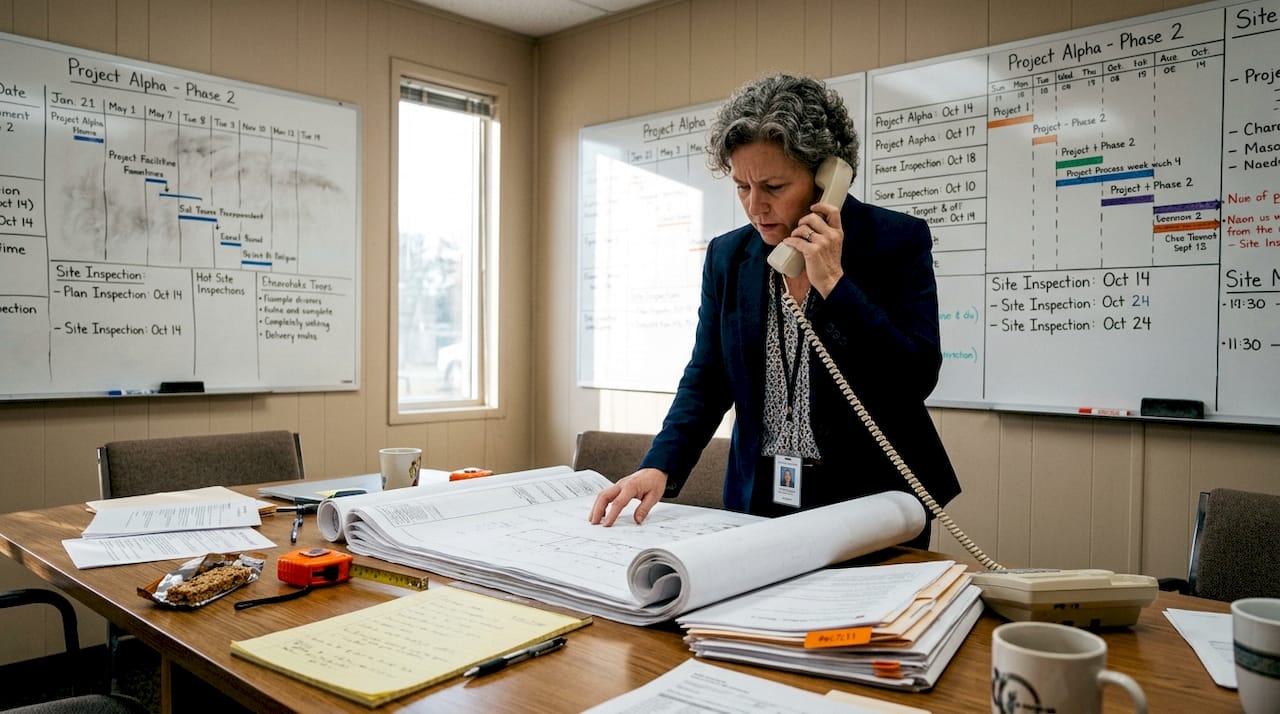
Start with a professional site assessment. A qualified installer will evaluate your roof’s age and structural integrity, available square footage, shading from nearby buildings or trees, and your building’s electrical infrastructure. If your roof needs repairs, it is far better to address them before panels are installed. You can learn more about commercial roof considerations that affect your installation timeline and costs.
Here is what the pre-installation checklist looks like:
- Energy audit: Understand your current consumption so the system is sized correctly
- Structural analysis: Confirm your roof or ground site can handle the added load
- Utility interconnection application: Submit to CPS Energy to get approval for grid connection
- Building permits: Apply through the San Antonio permitting office before work begins
- Incentive applications: File for rebates and confirm ITC eligibility with your accountant
- Contractor selection: Verify your installer is licensed and experienced with commercial projects
Rooftop vs. ground-mounted systems
| Factor | Rooftop system | Ground-mounted system |
|---|---|---|
| Space required | Existing roof area | Open land area |
| Installation cost | Generally lower | Generally higher |
| Maintenance access | More complex | Easier |
| Flexibility | Limited by roof shape | Highly adjustable tilt/direction |
| Best for | Most commercial buildings | Large properties with land |
For most San Antonio businesses, rooftop systems are the practical choice. Comparing commercial vs residential solar needs also helps clarify the scale and complexity differences you should plan for.
Common obstacles to address before installation:
- Aging or damaged roofing materials
- Insufficient electrical panel capacity
- Shading from HVAC units or neighboring structures
- HOA or zoning restrictions (less common for commercial, but worth checking)
- Delays in utility interconnection approvals
Pro Tip: Submit your permitting and utility interconnection applications as early as possible. These approvals often take 4 to 8 weeks and are outside your installer’s control. Starting early keeps your project on schedule.
With pre-installation details covered, let’s move to the actual installation steps.
Step-by-step installation process for commercial solar panels
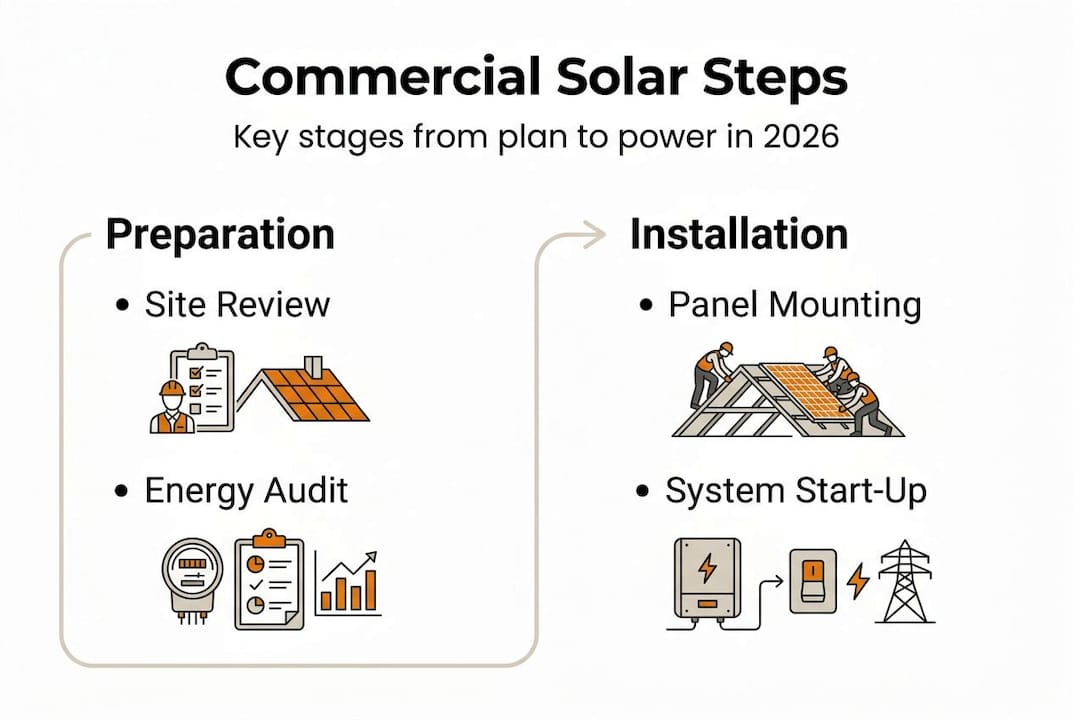
The installation process follows industry-standard best practices and local codes to ensure your system is safe, efficient, and built to last. Here is what to expect from start to finish.
- Site preparation: The crew secures the work area, sets up scaffolding or lifts as needed, and protects your building and landscaping during the process.
- Mounting system installation: Racking hardware is anchored to the roof structure or ground foundation. This is the backbone that holds your panels in place for decades.
- Panel placement: Solar panels are secured to the racking in the optimized layout determined during your site assessment.
- Electrical wiring: Panels are wired together in strings and connected to the combiner box. All wiring follows local electrical codes.
- Inverter installation: The inverter converts direct current (DC) electricity from your panels into alternating current (AC) that your building uses. For larger systems, multiple inverters or a central inverter may be used.
- Grid connection setup: Your system is wired to your main electrical panel and prepared for commercial net metering, which lets you send excess power back to the grid for credits.
- Inspection and approval: A city inspector reviews the installation to confirm it meets all code requirements.
- Final activation: Once approved, your utility completes the interconnection and your system goes live.
For a detailed overview of installation standards, the install solar panels overview from the U.S. Department of Energy is a useful reference.
Safety note: Commercial solar installation involves high-voltage electrical work and rooftop activity. Always use a licensed, insured installer. Do not attempt any part of this process without professional oversight.
Estimated timeframes by installation stage
| Stage | Estimated duration |
|---|---|
| Site assessment and design | 1 to 2 weeks |
| Permitting and approvals | 4 to 8 weeks |
| Physical installation | 1 to 3 weeks |
| Inspection and interconnection | 1 to 2 weeks |
| System activation | 1 to 3 days |
If you ever need panels temporarily removed for roof work, our solar removal and installation service handles that process carefully. And if you want to ensure you are maximizing solar ROI from day one, system design choices made during installation matter a great deal.
Pro Tip: Schedule the physical installation during off-peak hours or slower business periods. A good installer will work with your schedule to minimize disruptions to your operations.
Once your panels are installed, keeping them running optimally is just as important.
Maintenance, monitoring, and troubleshooting for your solar system
Regular cleaning and monitoring maximize the performance and savings from commercial solar panels. A well-maintained system consistently outperforms a neglected one, often by a meaningful margin over time.
Here are the core maintenance tasks every commercial solar owner should prioritize:
- Panel cleaning: Dust, pollen, bird droppings, and debris reduce output. In San Antonio’s dry and dusty conditions, panels may need cleaning every 2 to 4 months.
- Visual inspections: Walk the perimeter regularly and look for cracked panels, loose wiring, or debris accumulation.
- Inverter checks: Your inverter display or app will show error codes if something is wrong. Address alerts promptly.
- Roof condition monitoring: Check for signs of water intrusion or damage around panel mounts after heavy storms.
- Battery storage checks: If you have integrated battery storage, monitor charge cycles and capacity. Understanding battery storage lifespan helps you plan for replacements before performance drops.
Modern solar systems come with monitoring software that tracks output in real time. You can see how much power your system is generating, compare it to historical data, and spot underperformance quickly. If a single panel or string drops off, your monitoring dashboard flags it before it becomes a costly problem.
Common issues and how to address them:
- Output lower than expected: Check for shading, dirty panels, or inverter faults
- Inverter error codes: Refer to the manufacturer guide or call your installer
- Physical damage after a storm: Contact your installer and insurance provider promptly
- Connectivity issues with monitoring app: Restart the gateway device or contact tech support
Scheduled inspections matter: The maintenance guide from the U.S. Department of Energy recommends annual professional inspections to catch issues that routine visual checks miss. For commercial systems, this is not optional. It is how you protect a significant capital investment.
Our solar panel cleaning service keeps your system producing at its best, and our ongoing solar support team is available when you need professional help.
Pro Tip: Set up automated alerts in your monitoring software so you get notified immediately if output drops below a set threshold. Catching a problem on day one costs far less than discovering it months later.
Having mastered the essentials, consider this key perspective for long-term solar success.
What most businesses overlook about solar savings in San Antonio
Here is something we see repeatedly: businesses invest in a quality solar system, celebrate the installation, and then largely forget about it. They assume the savings will take care of themselves. Sometimes they do. But the businesses that get the most out of their solar investment are the ones that treat it like any other critical business asset.
The biggest hidden ROI with solar does not come from the hardware. It comes from what you do after installation. Monitoring data tells you exactly when your system underperforms and why. Businesses that review this data regularly catch issues early, maintain peak output, and often discover opportunities to expand their system or add battery storage at the right time.
We recommend assigning a specific staff member or team to own your solar outcomes. Give them access to the monitoring dashboard, set a monthly review cadence, and make sure they know who to call when something looks off. This small operational habit can recover thousands of dollars in lost production over a system’s lifetime. Maintenance contracts with your installer also pay for themselves, because proactive care consistently beats reactive repairs.
Partner with experts for commercial solar success
Ready for long-term savings and sustainability? Choosing the right installation partner makes a real difference in both the quality of your system and the support you receive after it is live.
At Alpha Solar Solutions, we specialize in San Antonio commercial solar installation from initial site assessment through final activation and beyond. Our team handles permitting, custom system design, professional installation, and ongoing support so you never have to figure it out alone. We also offer solar panel cleaning services to keep your system producing at its peak, and we can help you evaluate whether battery storage is the right next step for your business. Reach out today and let’s build a plan that works for your property and your goals.
Frequently asked questions
How long does it take to install commercial solar panels in San Antonio?
Timeline varies based on approvals and business hours, but most commercial installations are completed within 1 to 3 weeks once permits are in hand. The full process from first consultation to system activation typically takes 2 to 4 months.
What incentives are available for businesses installing solar in San Antonio?
Incentives and tax credits can lower project costs significantly. In 2026, businesses can access the 30% federal Investment Tax Credit, MACRS accelerated depreciation, and CPS Energy rebate programs.
Do commercial solar panels require a lot of maintenance?
Regular maintenance maximizes efficiency and return on investment, but the workload is manageable. Routine cleaning every few months and an annual professional inspection are the core requirements for most commercial systems.
Can solar panels provide backup power during outages?
Yes. Battery storage technologies offer backup protection when paired with your solar system, allowing your business to keep critical operations running during grid outages.