
TL;DR:
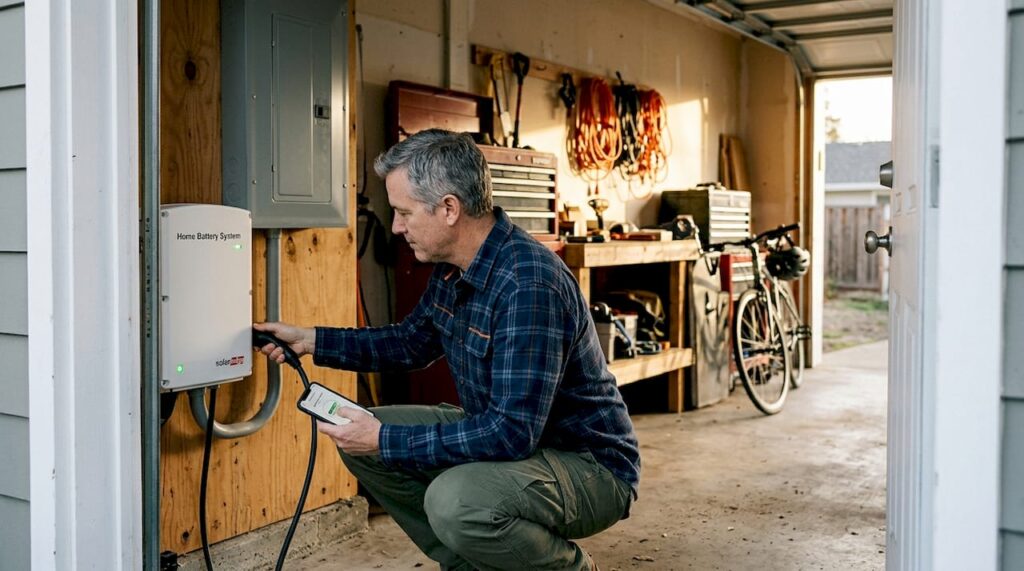
- Solar batteries store excess daytime energy for nighttime use and backup during outages.
- LFP batteries offer better heat stability and durability for Texas summers compared to NMC.
- Properly sized batteries can significantly reduce CPS Energy bills and enhance energy independence.
Most San Antonio homeowners assume solar panels solve their electricity problems completely. They don’t. Panels only produce power when the sun is shining, which means your home still pulls from the grid every night and during every outage. That’s where solar battery storage changes everything. It captures the energy your panels generate during the day and holds it for when you actually need it most: evenings, cloudy stretches, and those moments when CPS Energy’s grid goes down. This guide walks you through how battery storage works, which technology fits Texas homes best, and what real savings look like for homeowners right here in San Antonio.
Table of Contents
- How solar battery storage works
- Battery chemistries, efficiency, and safety
- Solar battery storage benefits for San Antonio homes
- Installation, sizing, and practical limitations
- A smarter path to energy freedom in San Antonio
- Upgrade your home’s energy independence
- Frequently asked questions
Key Takeaways
| Point | Details |
|---|---|
| Solar battery storage enables independence | With batteries, homeowners can use solar power even at night and during grid outages. |
| LFP batteries offer reliable performance | Lithium Iron Phosphate batteries are safer and last longer, especially in hot climates like San Antonio. |
| Significant bill savings possible | Peak-rate shaving can reduce CPS Energy bills by up to 60% and pay for itself in 5-8 years. |
| Careful sizing and planning is essential | Sizing for your goals—backup, peak-shaving, or self-supply—ensures the best return and avoids unnecessary costs. |
How solar battery storage works
Solar panels generate electricity whenever sunlight hits them. Without a battery, any power your home doesn’t use in that exact moment gets sent back to the grid. You might earn a small credit for it, but you lose control of that energy. A battery changes that equation entirely.
Solar battery storage is a rechargeable system that captures excess electricity generated by solar panels during the day, stores it in batteries, and discharges it for home use at night, during peak pricing, cloudy weather, or grid outages. Think of it as a reservoir that fills up during the day and feeds your home on demand.
Here’s how the cycle works in practice:
- Charge: Your solar panels generate more electricity than your home needs during daylight hours. The excess flows into the battery bank instead of back to the grid.
- Store: The battery holds that energy in chemical form, ready to be released whenever your home needs it.
- Discharge: When the sun goes down or your demand spikes, the battery releases stored electricity to power your lights, appliances, and HVAC.
When the grid goes down, a properly configured battery system with a transfer switch automatically disconnects your home from the grid and keeps your essential circuits running. You won’t even notice the outage in some cases. This is called islanding mode, and it’s what separates a battery-equipped home from a standard solar home during a blackout.
“A solar battery system doesn’t just store energy. It gives you the ability to decide when and how you use the power your panels produce, rather than letting the grid make that decision for you.”
For San Antonio homeowners who want to dig deeper into how panels feed the storage system, exploring solar panel insights and renewable energy tips can help you understand the full picture before making a purchase decision.
Battery chemistries, efficiency, and safety
Not all solar batteries are built the same. The chemistry inside the battery determines how long it lasts, how safely it handles Texas heat, and how much of the stored energy you can actually use.
The two main types you’ll encounter are Lithium Iron Phosphate (LFP) and Nickel Manganese Cobalt (NMC). Here’s how they compare:
| Feature | LFP | NMC |
|---|---|---|
| Cycle life | 6,000 to 10,000 cycles | 1,000 to 4,000 cycles |
| Depth of discharge | 90 to 100% | 80 to 90% |
| Round-trip efficiency | 85 to 95% | 90 to 95% |
| Thermal stability | Excellent | Moderate |
| Best for Texas heat | Yes | Less ideal |
| Relative cost | Slightly higher upfront | Lower upfront |
As the expert battery advice confirms, LFP chemistry delivers 6,000 to 10,000 cycles with 90 to 100% depth of discharge tolerance and 85 to 95% round-trip efficiency, compared to NMC’s 1,000 to 4,000 cycles and lower thermal stability. Round-trip efficiency means how much of the energy you put in actually comes back out. A 90% efficient battery returns 9 kWh for every 10 kWh stored.
For San Antonio specifically, thermal stability is not a minor detail. Summer temperatures regularly push into the triple digits, and batteries stored in garages or utility rooms can experience sustained heat stress. LFP batteries handle that environment significantly better than NMC options, which can degrade faster and carry a slightly higher risk of thermal issues in extreme heat.
Pro Tip: When comparing battery quotes, ask for the cycle life warranty, not just the year warranty. A battery warrantied for 10 years but only 3,000 cycles may not hold up under daily use in a high-demand Texas home.
For homeowners exploring which solar solutions pair best with LFP batteries, the chemistry choice often comes down to your usage goals and where the battery will be physically installed.
Solar battery storage benefits for San Antonio homes
San Antonio homeowners face a specific set of challenges that make battery storage especially valuable. CPS Energy uses time-of-use (TOU) pricing structures, which means the rate you pay per kilowatt-hour (kWh) changes depending on the time of day.
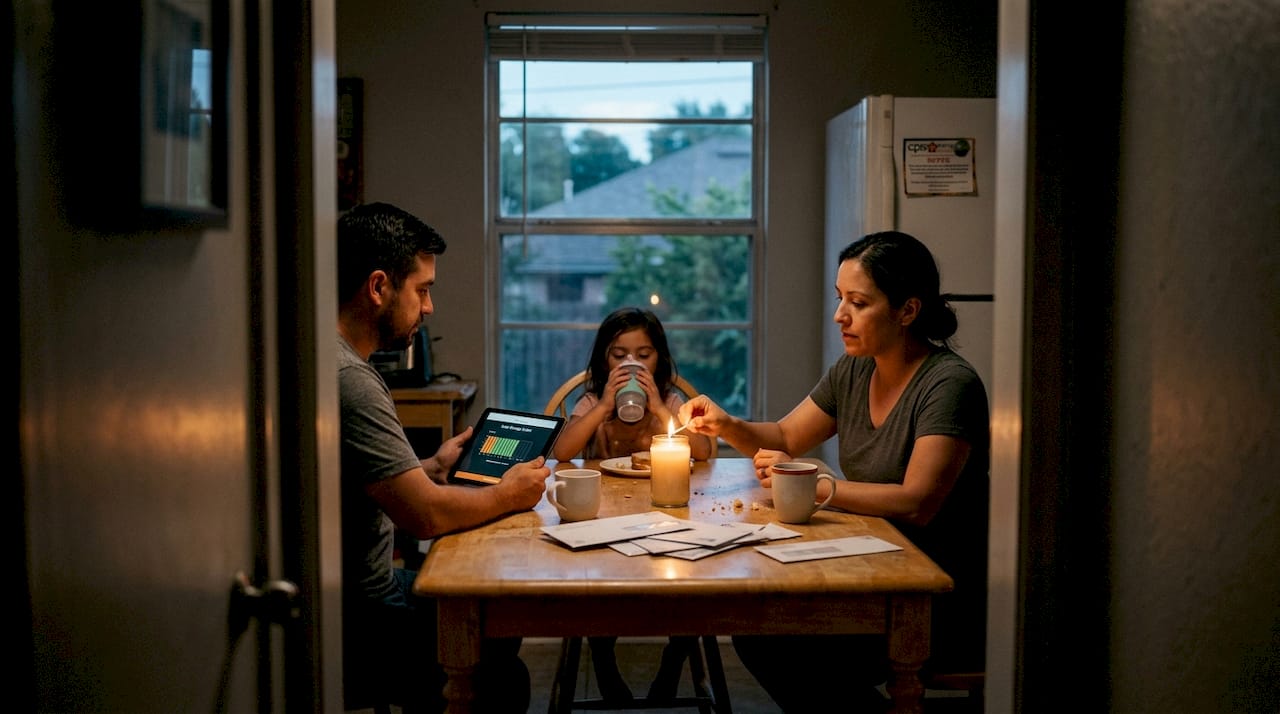
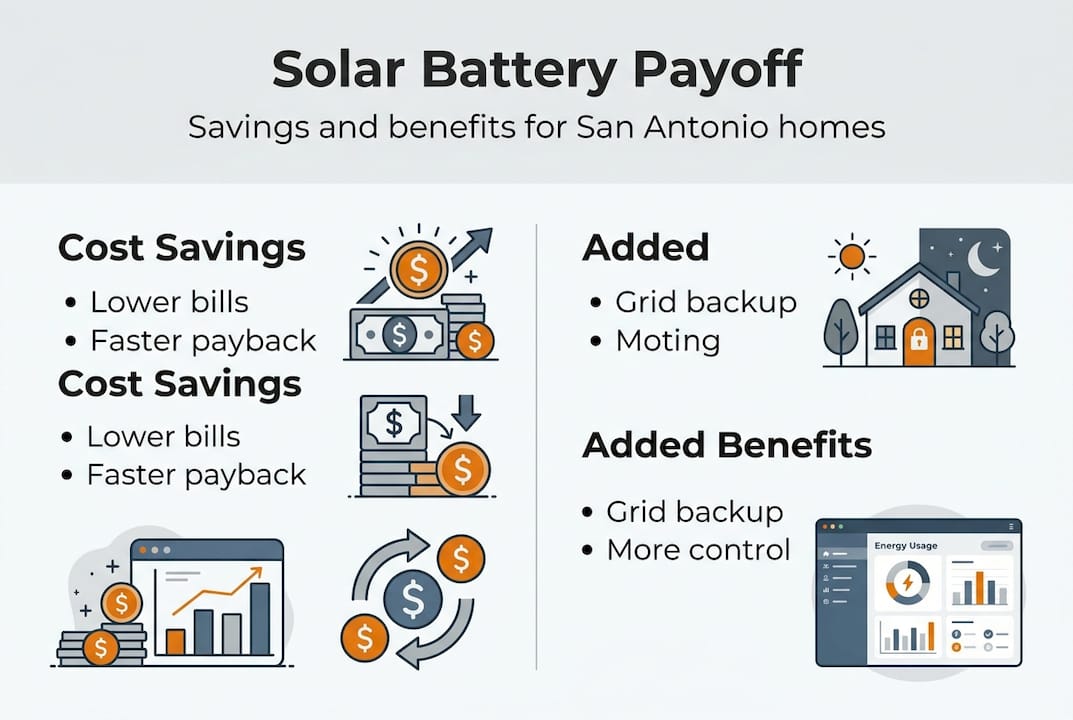
During peak hours, typically between 2 PM and 8 PM in summer, rates can reach 18 to 42 cents per kWh. Off-peak rates drop to around 8 to 12 cents per kWh. Peak shaving by storing daytime solar and discharging during those 2 to 8 PM peaks can reduce bills by 30 to 60% when combined with solar panels.
Here are the four biggest benefits San Antonio homeowners see:
- Lower monthly bills. Using stored solar during peak hours instead of drawing from the grid at premium rates cuts your CPS Energy charges significantly.
- Backup power during outages. Texas grid events, including the 2021 winter storm and summer demand spikes, have shown that grid reliability isn’t guaranteed. A battery keeps your essentials running.
- Energy independence. The less you rely on the grid, the less exposed you are to rate increases, which have trended upward in recent years.
- Federal tax credit eligibility. Battery storage installed with solar qualifies for the 30% federal investment tax credit in 2026. You can learn more through solar tax credit info.
For sizing, a 10 kWh battery covers essential loads like refrigeration, lighting, and phone charging for 8 to 12 hours. A 20 to 30 kWh system can support HVAC and more demanding appliances. For full home backup protection, sizing depends on your specific load profile and how long outages typically last in your area.
Payback period snapshot:
| Scenario | Estimated payback |
|---|---|
| TOU pricing with solar | 5 to 8 years |
| Full net metering available | 10 to 15 years |
| Outage-focused sizing only | Varies by usage |
Installation, sizing, and practical limitations
The practical benefits are clear, but getting solar battery storage right depends on careful planning and avoiding common pitfalls.
First, understand the difference between DC coupling and AC coupling. DC-coupled systems connect the battery directly to the solar panels before the inverter, which is more efficient for new installations. AC-coupled systems connect after the inverter and are easier to add to existing solar setups as a retrofit. If you already have panels, AC coupling is usually the simpler path.
Sizing is where many homeowners go wrong. There are three common approaches:
- Outage-only sizing: A smaller battery (10 to 13 kWh) keeps critical loads running during blackouts without trying to power everything.
- Peak-shaving sizing: A medium battery (13 to 20 kWh) focuses on discharging during CPS Energy’s peak rate hours to maximize bill savings.
- Self-supply sizing: A larger system (20 kWh or more) aims to cover most of your daily usage from stored solar, reducing grid dependence significantly.
There are also real limitations to plan for. Edge cases include HOA restrictions, inverter compatibility issues, permitting requirements for hazardous materials, limited backup duration without solar recharging, high upfront costs, and heat sensitivity during Texas summers. These aren’t reasons to avoid batteries, but they are reasons to work with an installer who knows San Antonio’s permitting process and HOA landscape.
Pro Tip: Before signing any contract, confirm that your installer will pull the required permits with CPS Energy and the City of San Antonio. Unpermitted battery installations can create insurance and resale complications.
For maintenance, LFP batteries require very little hands-on attention. Keep them out of direct sunlight, ensure ventilation in the installation space, and monitor performance through the system’s app. Check solar panel services to understand how battery maintenance fits into a broader system care plan. Staying current with AlphaSolarSA updates also helps you catch any firmware or performance advisories.
A smarter path to energy freedom in San Antonio
Here’s something most battery sales pitches won’t tell you: the return on investment for a solar battery depends almost entirely on how you size and use it, not just on whether you buy one.
Homeowners who size for full off-grid capability almost always overbuild. You don’t need to replace the grid entirely. You need to reduce your dependence on it strategically. A well-sized battery that targets peak-hour discharge and outage backup will outperform a massive system sized for theoretical self-sufficiency every time.
The payback reality is this: strong ROI of 5 to 8 years is achievable with TOU pricing and limited net metering, but payback stretches to 10 to 15 years when full net metering is available and peak-shaving isn’t the primary goal.
Texas grid events taught a hard lesson: reliability has real financial and personal value that doesn’t always show up in a simple payback calculation. Sizing for your essentials first, then layering in savings goals, is the approach we recommend for most San Antonio homeowners. Don’t let a salesperson talk you into more capacity than your actual goals require.
Upgrade your home’s energy independence
You’ve now got a solid foundation for understanding solar battery storage, from how it works to what it actually costs and saves. The next step is getting a system designed around your home’s specific needs, not a one-size-fits-all package.

At Alpha Solar Solutions, we design and install custom residential solar installation systems and backup power solutions built specifically for San Antonio homes and CPS Energy rate structures. Whether you’re starting fresh or adding battery storage to existing panels, we handle permitting, installation, and long-term support. Want to know exactly how long your battery will last under real Texas conditions? Our battery lifespan analysis gives you the honest numbers. Reach out today for a free consultation.
Frequently asked questions
How long does a solar battery last during a power outage?
A typical 10 kWh battery can power essential home loads for 8 to 12 hours, and that duration extends significantly if your solar panels are recharging the battery during daylight hours.
What are the main types of solar batteries for homes?
Most home systems use lithium-ion batteries, with LFP being preferred for its 6,000 to 10,000 cycle life and superior safety in hot climates, while NMC offers higher energy density but fewer cycles and lower thermal stability.
Do solar batteries save money on CPS Energy bills in San Antonio?
Yes. Charging during off-peak hours and discharging at evening peak rates can reduce bills 30 to 60% with solar, and payback periods of 5 to 8 years are realistic under TOU pricing structures.
Are there restrictions or pitfalls when installing solar battery storage in San Antonio?
Homeowners may face HOA rules, permit requirements, inverter compatibility challenges, and heat-related performance considerations, all of which a qualified local installer can help you navigate before you commit.