
TL;DR:
- San Antonio homeowners can save $1,380 to $2,180 annually with solar.
- Incentives like the federal ITC and local exemptions make solar investments highly cost-effective.
- Proper system design and timing maximize savings and long-term home value.
San Antonio homeowners who switch to solar can save between $1,380 and $2,180 every single year. That is not a best-case scenario. That is a realistic range for a properly sized system in our city. Yet many homeowners still assume solar is too expensive, too complicated, or just not worth the trouble. The truth is, San Antonio’s sunshine, rising CPS Energy rates, and today’s available incentives make this one of the most financially sound home improvements you can make. This article walks you through the real numbers, the local programs, how the technology works, and the expert strategies that help you get the most from your investment.
Table of Contents
- The economics of solar in San Antonio: Real savings and ROI
- Incentives and local programs: Maximizing your investment
- How solar works in San Antonio: Essential mechanics and system choices
- Expert strategies: Getting the most value from solar in San Antonio
- Why San Antonio homeowners should act now: Our unique take
- Ready to switch? Connect with San Antonio’s solar experts
- Frequently asked questions
Key Takeaways
| Point | Details |
|---|---|
| Substantial savings | Switching to solar can save San Antonio homeowners $1,380-$2,180 per year on electricity. |
| Strong financial incentives | Federal, state, and local programs help offset installation costs and maximize payback. |
| Optimize system design | Sizing your solar system to match household use delivers the best savings in San Antonio. |
| Durability and long-term value | Quality panels last over 25 years and increase home value by 4-6.8%. |
| Act before incentives fade | The biggest savings and credits are available if you install solar while federal, state, and local programs remain strong. |
The economics of solar in San Antonio: Real savings and ROI
Now that you know solar can change your bottom line, let’s break down exactly how those savings stack up.
A standard 11-kilowatt (kW) system in San Antonio can deliver annual savings of $1,380 to $2,180, with a 25-year return on investment (ROI) that can exceed 300%. That means for every dollar you put in, you get back more than three over the life of the system. Those are numbers most stock portfolios would envy.
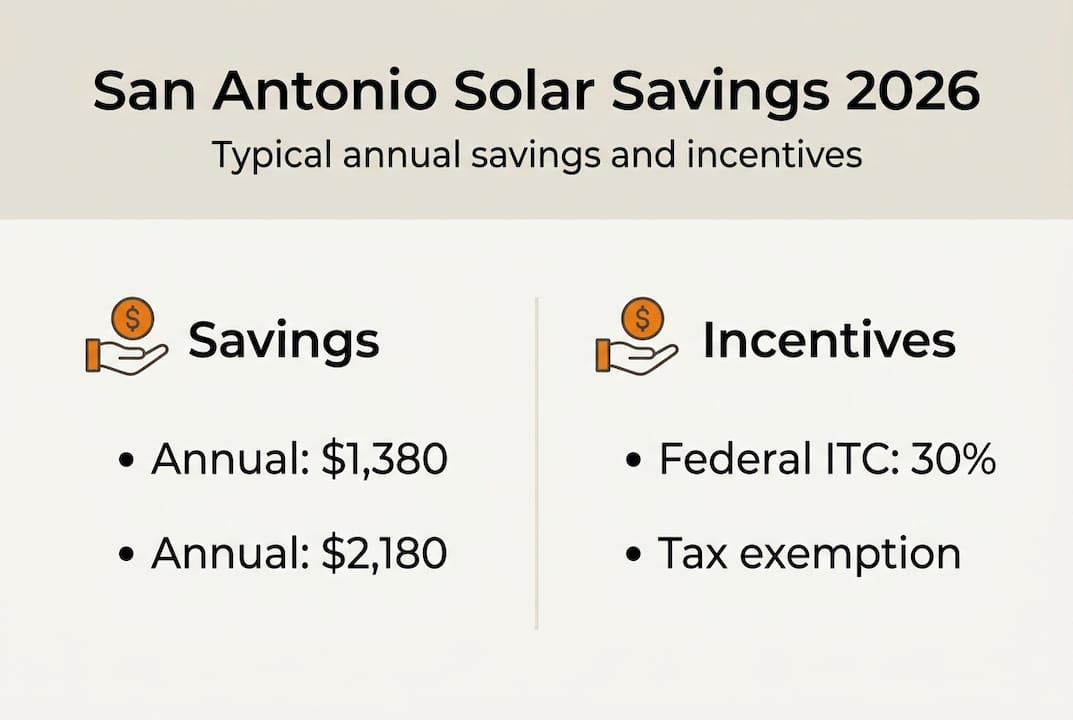
Here is a simplified look at how the numbers break down:
| Factor | Typical value |
|---|---|
| System size | 11 kW |
| Estimated annual savings | $1,380 to $2,180 |
| Average payback period | 8 to 12 years |
| 25-year ROI | Over 300% |
| System lifespan | 25 to 30 years |
The payback period, meaning the time it takes for savings to cover your upfront cost, typically falls between 8 and 12 years. After that, every year of production is essentially free electricity. Understanding the solar panel cost insights for your specific home size and usage is the best first step.
One key factor is CPS Energy’s net billing program. When your panels produce more electricity than you use, the surplus goes back to the grid. CPS credits you for that power, which reduces your monthly bill further. The credit rate is lower than what you pay for power, so the real savings come from using as much of your own solar as possible during the day.
Rising electricity rates also work in your favor over time. CPS Energy rates have climbed steadily, and locking in solar production now means you are protected from rising rates for decades. Every rate hike that affects your neighbors costs you less when your roof is generating power.
Key savings drivers to keep in mind:
- Self-consumption of solar (using what you generate) delivers the highest savings
- Net billing credits reduce but do not eliminate your bill
- Rate increases amplify your savings over time
- A properly sized system avoids waste and maximizes value
Pro Tip: Run your last 12 months of CPS bills before getting a quote. A good installer will size your system to your actual usage, not just a generic estimate. Explore the full range of solar benefits to see how they apply to your home.
Incentives and local programs: Maximizing your investment
Making solar affordable means knowing which incentives and programs are available. Here is how San Antonio homeowners can make every dollar count.
The single biggest financial lever is the federal Investment Tax Credit (ITC). In 2026, the ITC covers 30% of your total system cost. On a $30,000 system, that is $9,000 back on your federal taxes. You claim it the year your system is installed and operational, so timing matters.
Texas adds two more layers of financial protection:
- Property tax exemption: The added home value from your solar system is 100% exempt from property taxes. Your home is worth more, but your tax bill does not go up.
- Sales tax exemption: Solar equipment purchases are exempt from Texas sales tax, saving you roughly 8.25% on hardware costs.
Here is a side-by-side look at the available incentives:
| Incentive | Amount | Who provides it |
|---|---|---|
| Federal ITC | 30% of system cost | Federal government |
| Property tax exemption | 100% of added home value | State of Texas |
| Sales tax exemption | ~8.25% on equipment | State of Texas |
| CPS Energy buyback | Credit per kWh exported | CPS Energy |
For 2026, CPS Energy does not offer a direct cash rebate for new solar installations. However, their solar buyback program still credits you for surplus power sent to the grid. The rate fluctuates, which is why self-consumption remains your strongest savings tool.
To claim the federal ITC, your system must be installed and generating power before December 31 of the tax year. Work with a qualified installer and a tax professional to make sure your paperwork is in order. You can learn more about solar tax credits and how to apply them correctly. Also check Texas solar rebates for any updated local programs before you sign a contract.
Review the solar tax credit details to understand what qualifies and what documentation you will need at tax time.
How solar works in San Antonio: Essential mechanics and system choices
Once the economics and incentives are clear, understanding how your system will operate day-to-day gives you confidence in making the switch.
Here is how a standard grid-tied solar setup works in San Antonio:
- Solar panels capture sunlight and convert it into direct current (DC) electricity.
- An inverter converts DC to AC (alternating current), the type your home uses.
- Your home uses that power first. Lights, appliances, and HVAC all run on solar during the day.
- Surplus power flows to the grid. CPS Energy’s dual-register meter tracks what you send out and what you pull back.
- At night, you draw from the grid as normal, offset by your net billing credits.
The dual-register meter is the key piece of hardware that makes net billing possible. It measures both directions of power flow, so CPS can calculate your net usage accurately each month.
“The most efficient solar home is one that uses power when the sun is shining. Shift your dishwasher, laundry, and EV charging to daytime hours and you will see a noticeable difference in your bill.”
What about battery storage?
Batteries are optional in San Antonio. Most homeowners achieve strong savings without them. Batteries make sense if you want backup power during outages, which San Antonio does experience during severe weather. They add cost, typically $8,000 to $15,000, so weigh that against how often you lose power.
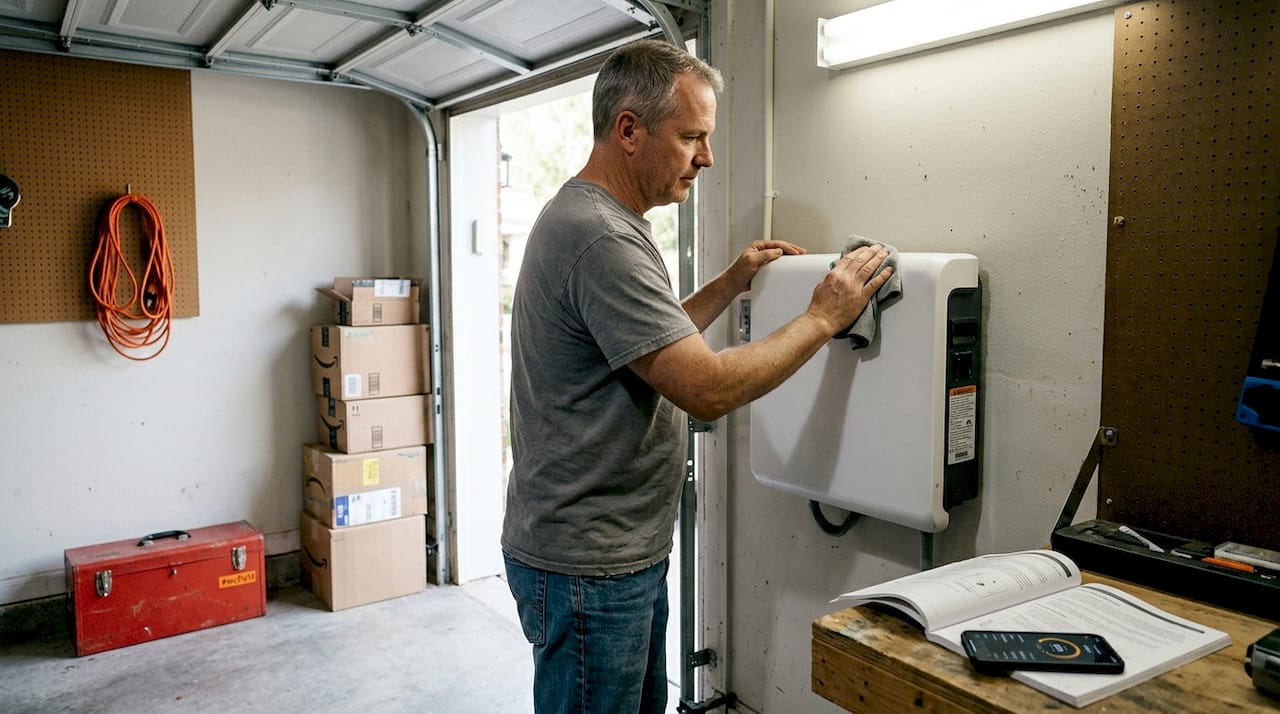
Solar panels last 25 to 30 years and are built to handle Texas heat, hail, and wind. Quality panels carry performance warranties guaranteeing at least 80 to 90% output after 25 years.
Practical considerations:
- Shading from trees or neighboring structures reduces output significantly
- Most roofs in good condition are suitable; age and material matter
- HOA rules in Texas are limited by state law, giving you more flexibility than you might expect
Pro Tip: Ask your installer for a shading analysis before signing. Even partial shade on one panel can reduce the output of an entire string of panels. Learn more about how solar panels work and what clean energy choices are available for your home.
Expert strategies: Getting the most value from solar in San Antonio
To make your investment work at its peak, here is how experts in San Antonio optimize their solar installs.
Sizing your system correctly is the single most important decision you will make. The goal is to cover 80 to 100% of your electricity consumption. Going larger than that means you are producing power at the lower buyback rate instead of displacing power at the full retail rate. That math rarely works in your favor.
Home values rise 4 to 6.8% with a solar installation, which means your investment pays off whether you stay or sell. Buyers increasingly look for homes with solar already installed, especially as electricity rates climb.
Expert tips for maximizing your San Antonio solar investment:
- Orientation matters. South-facing panels produce the most power in San Antonio. Southwest is a close second. Avoid north-facing placement.
- San Antonio averages 220 sunny days per year. That is exceptional solar production potential compared to most U.S. cities.
- Avoid oversizing. A system that produces far more than you use will earn low export credits, not high savings.
- Schedule annual cleaning. Dust, pollen, and bird droppings reduce panel output. Clean panels perform noticeably better.
- Check your HOA rules early. Texas law limits HOA restrictions on solar, but some associations still have guidelines on panel placement and aesthetics. Review HOA and solar rules in Texas before installation.
- Time your install before year-end to capture the federal ITC for that tax year.
Pro Tip: If you are planning a roof replacement, coordinate it with your solar install. Doing both at once avoids the cost of removing and reattaching panels later, which adds expense. Check out solar installation cost breakdowns to plan your budget accurately.
Maintenance is minimal but not zero. Panels need occasional cleaning and an annual system check. Inverters typically last 10 to 15 years and may need replacement during the panel’s lifetime. Factor that into your long-term budget. Explore clean energy home strategies that pair well with a solar investment.
Why San Antonio homeowners should act now: Our unique take
Most solar guides focus on the numbers. We want to share something most guides skip over entirely.
Waiting costs you money in two ways. First, every month you delay is another month of full CPS Energy bills with no offset. Second, the federal ITC at 30% is available now, but policy can change. Locking in this year means you capture the full benefit with certainty.
From our experience working with San Antonio homeowners, the biggest misconception we see is that batteries are necessary for solar to be worth it. They are not. Most of our customers achieve strong savings with a grid-tied system and no battery at all. Batteries are a great add-on for peace of mind, but they should not be the reason you delay going solar.
CPS Energy’s export rates are also frequently misunderstood. Some homeowners assume they will earn significant income from exporting power. The reality is that self-consumption is where the real value lives. We design systems around your actual usage patterns, not theoretical export income.
The homeowners who get the best results act before rates rise further and while incentives are fully intact. Protecting against utility hikes is not just a financial strategy. It is a practical decision that gets more valuable every year you hold it.
Ready to switch? Connect with San Antonio’s solar experts
If you are ready to turn expert advice into meaningful savings, here is your next step.
At Alpha Solar Solutions, we design custom solar systems for San Antonio homeowners based on your actual energy usage, roof layout, and financial goals. Whether you are starting from scratch or looking to add battery backup, we handle everything from permits to final inspection.
Get started with a residential solar install consultation, or if you already have panels, our solar cleaning services keep your system performing at its best. Ready to see your numbers? Book a free solar quote and we will walk you through exactly what solar looks like for your home, your bill, and your budget.
Frequently asked questions
How much can San Antonio homeowners save annually with solar?
Annual savings range from $1,380 to $2,180 for a typical 11kW system, with most of your CPS utility bill offset by solar production. Your exact savings depend on your usage, system size, and how much power you self-consume.
What incentives are available for San Antonio solar in 2026?
The federal ITC provides 30% off your total system cost, Texas offers a 100% property tax exemption on added home value plus sales tax savings on equipment, and CPS Energy’s buyback program credits surplus power sent to the grid.
How long do solar panels last in San Antonio’s climate?
Panels typically last 25 to 30 years and retain over 90% of their output after 20 years. They are tested and rated for hail, heat, and high-wind conditions common in Texas.
Is battery storage necessary for solar cost savings?
Batteries are optional and most savings come from self-consumed solar power, not from stored energy. Batteries are most useful for backup power during outages rather than as a primary savings tool.
Do HOAs in Texas restrict solar panels?
Texas law limits HOA authority over solar installations, meaning most homeowners can install panels with minimal interference. Some HOAs may have placement or aesthetic guidelines, so it is worth reviewing your specific association’s rules before installation.
Recommended
- 5 Reasons Why San Antonio Homeowners Should Switch to Solar in 2025 🌞 – Alpha Solar Solutions, LLC
- Benefits Archives – Alpha Solar Solutions, LLC
- Renewable Energy Archives – Alpha Solar Solutions, LLC
- 6 ventajas clave de techos solares en 2026 para hogares – Sunflowers Energy LLC A Roofing and Solar Companys