

In most cases, you should leave your solar panels with the house you’re selling. Relocating an existing system usually costs more than it saves, and it rarely beats the economics of installing a new system at your next address. Moving solar panels to a new house only makes financial sense in a narrow set of circumstances.
Here’s the quick rule of thumb before you decide either way:
- You own the system outright, with no active loan tied to a UCC financing statement and no lease restricting removal.
- The system is new (roughly under two years old) with a warranty that transfers under National Electrical Code (NEC)-compliant equipment.
- The new roof matches the array’s orientation and pitch without requiring costly structural upgrades.
Alpha Solar Solutions helps homeowners in the San Antonio area work through this exact decision, from relocation quotes to fresh installs.
Key Takeaways
Leaving solar panels with the house you’re selling is usually the more cost-effective choice; relocating only makes sense with a new, fully owned system and a well-matched new roof.
| Point | Details |
|---|---|
| Default answer | Leave panels with the house in most sales; relocation rarely beats new-install economics. |
| Check ownership first | Confirm no active UCC financing statement or lease restricts removal before planning a move. |
| Budget realistically | Expect $4,000 to $15,000 for a typical residential relocation, plus four to ten weeks for permits and inspections. |
| Protect your warranty | Contact your installer and manufacturer in writing; relocation commonly voids site-tied warranty coverage. |
| Get expert help | Alpha Solar Solutions offers removal, reinstallation, and new-install services in San Antonio, plus structural assessments to compare both paths. |
This article is general information, not a substitute for advice from a qualified financial advisor. Consult a qualified financial professional about your own circumstances before acting on anything here.
Table of Contents
- Should You Move Your Solar Panels to a New House?
- What Does It Cost to Relocate a Solar Panel System?
- Will Moving Solar Panels Void Your Warranty or Financing Terms?
- How Do Professionals Remove and Reinstall Solar Panels?
- Will Your New Roof Actually Support the Same Panels?
- What Should You Check Before Committing to a Move?
- What Happens to Panels If You Sell the House Without Moving Them?
- Does the Research Support Leaving Panels Behind?
- Get a Relocation or New-Install Quote From a Local Team
- Sources
Should You Move Your Solar Panels to a New House?
The decision hinges on three things: what you owe, what you own, and where you’re headed. Skip the guesswork and run through this short checklist first.
Ownership and contract status. If you financed the system with a solar loan, your lender likely filed a UCC financing statement that treats the panels as collateral. You can’t legally remove them until the loan is paid off or the lender signs off in writing. Leased systems are usually even simpler to sort out: the leasing company owns the hardware, so it typically stays put or the lease transfers to the buyer.
System age and warranty status. A system installed within the last year or two, with documented manufacturer and installer warranties, is a much stronger candidate for relocation than a ten-year-old array nearing the end of its production curve.
Roof and site fit. Your new roof’s orientation, pitch, and structural capacity have to accommodate the existing array, or you’ll be paying for upgrades that erase any savings from moving panels instead of buying new ones.
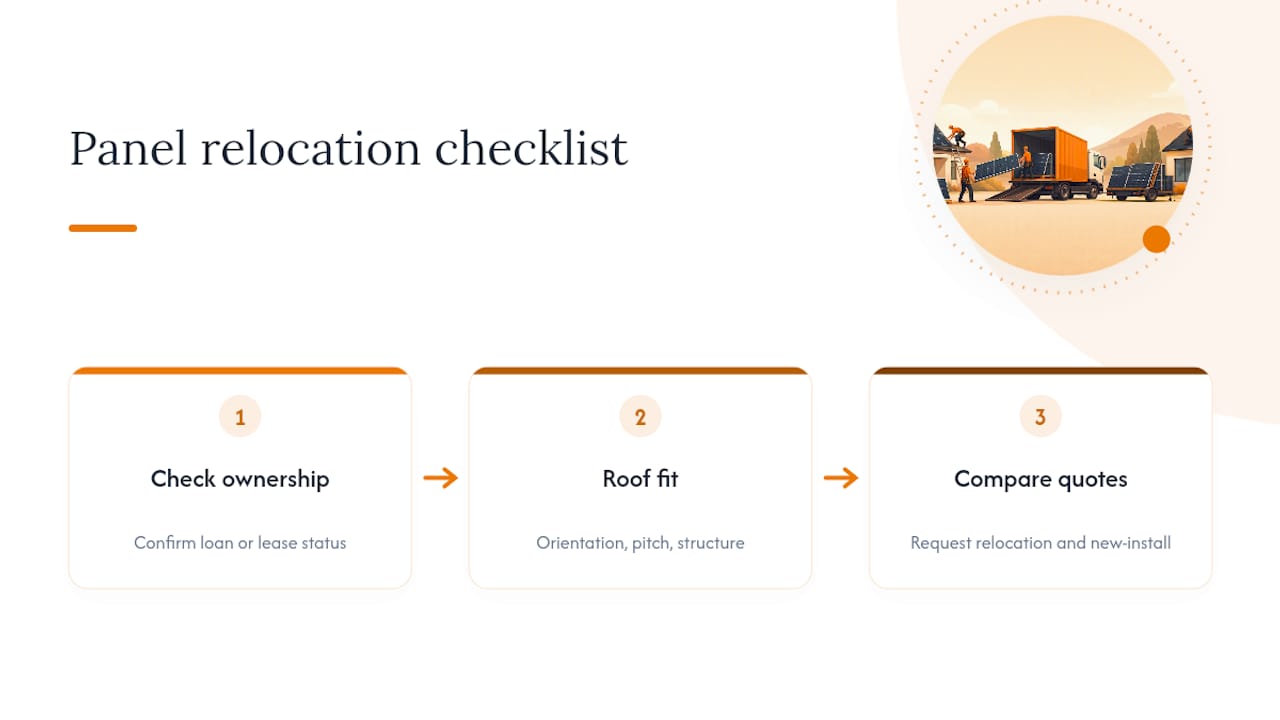
Run the numbers with a simple three-step flow: check ownership and loan status, check whether the new roof actually fits the array, then request both a relocation quote and a new-install quote before committing to either.
Pro Tip: Photograph your entire array, label each panel and cable, and pull the original spec sheets and serial numbers before anyone touches a wrench. Installers consistently point to this step as the one homeowners skip, and it’s the one that saves the most time during reinstallation.
What Does It Cost to Relocate a Solar Panel System?
Cost is usually the deciding factor, so let’s put real numbers on the table. Relocating a rooftop system involves several line items that add up fast:
- Removal labor (disconnecting, unbolting, and staging panels safely)
- New racking hardware and roof flashings at the destination
- Crating and transport to protect panels from micro-cracks in transit
- Reinstallation labor, wiring, and system testing
- Electrical upgrades to meet current code at the new site
- Permitting and inspection fees at the new jurisdiction
- Structural or engineering assessment of the new roof
- Transit insurance to cover damage during the move
Published cost guides put per-panel removal and reinstall labor in the several-hundred-dollar range per panel, with total relocation costs for a typical residential system landing somewhere between $4,000 and $15,000 depending on system size and site complexity.
For context, a small residential system (roughly 8 to 12 panels) tends to sit at the lower end of that range. A mid-size system (18 to 24 panels) with a straightforward roof match lands in the middle. A larger system, or one requiring structural upgrades and a full electrical panel change at the new house, pushes toward the top of the range or beyond it.
Timeline matters just as much as cost. From your first call to an installer to your permission-to-operate at the new address, expect anywhere from four to ten weeks. Permitting is usually the long pole: building departments treat a relocated system as a new installation for permitting purposes, which means fresh permits, a full inspection, and new interconnection paperwork with your utility, not a quick swap.
Will Moving Solar Panels Void Your Warranty or Financing Terms?
This is where homeowners get burned if they skip the paperwork. Relocating a rooftop system commonly voids the original manufacturer’s warranty, because many warranties are tied to the original installation site and to installation by an approved technician, according to the Department of Energy’s homeowner guide to rooftop solar.
If you financed the panels, your lender may have recorded a UCC financing statement against the equipment; also, note that relocating your solar panels might affect your roof warranty, so see this guide on Do Solar Panels Void Roof Warranty? for more details. That filing can legally block removal until the loan balance is cleared or the lender authorizes the move in writing. Leased systems and power purchase agreements (PPAs) work differently: the hardware belongs to the developer, so your options are typically a lease transfer to the buyer, a system buyout, or coordinating a developer-managed relocation.
Before anyone unbolts a single panel, work through this contact list:
- Your loan servicer or lender (confirm UCC status and get written release if needed)
- Your lease or PPA provider (confirm transfer or buyout terms)
- The original installer (only some installers preserve warranty coverage during a move)
- The panel manufacturer (confirm warranty terms tied to installation site)
- Your closing attorney or real estate agent (confirm how the system is handled in the sale contract)
How Do Professionals Remove and Reinstall Solar Panels?
This isn’t a weekend DIY project. Rooftop arrays carry high-voltage DC current even when the sun is barely up, and mishandling live wiring is a genuine safety hazard. Here’s what a licensed crew actually does:
- De-energize and safely disconnect the system from the electrical panel.
- Unbolt each panel and label it against your documentation.
- Remove racking, mounts, and roof flashings.
- Crate panels for transport, protecting against micro-cracks.
- Prepare the new roof: install fresh flashing and racking hardware.
- Reattach panels in their documented configuration.
- Rewire the system and run full electrical testing.
- Schedule building department and electrical inspections.
- Coordinate with your utility for meter verification and permission-to-operate.
Two things worth flagging:
- Roofers and solar crews need to coordinate closely on timing. Poor collaboration between roofer and solar installer is the most common cause of costly rework when panels come off for a reroof or relocation.
- Utility sign-off is the final gate. You can’t legally run the system until the utility confirms interconnection and permission-to-operate, even if every physical step is finished.
Will Your New Roof Actually Support the Same Panels?
A “lift-and-place” move sounds simple until you check the fine print on your new roof. Orientation, pitch, and shading all shift the math on expected annual production, sometimes enough to make the relocated system underperform what it did at your old house.
Structural load matters too. Older roofs, or roofs with a different framing style, may need an engineering letter or reinforcement before they can carry the same racking and panel weight. And code compliance isn’t static: older systems sometimes lack rapid-shutdown features or inverter specs that meet current NEC requirements, which means an upgrade before your new local building department will sign off.
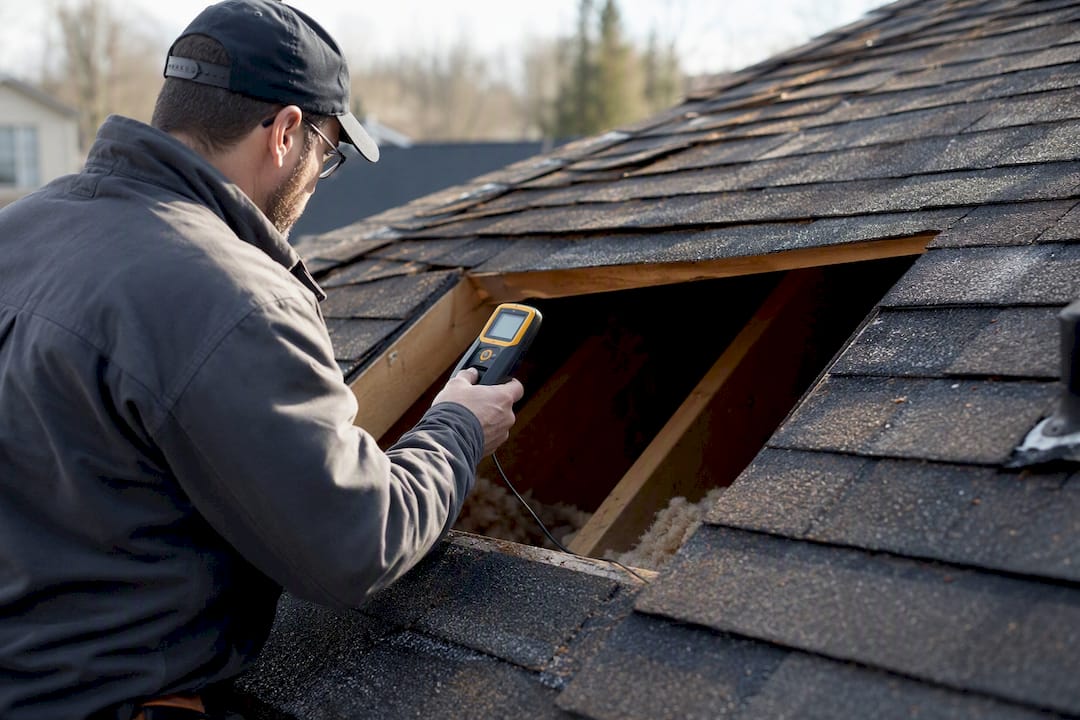
Pro Tip: Get a production estimate for the specific roof at your new address before you commit to a relocation quote. A roof-specific assessment tells you whether the move actually pencils out or whether new equipment at the new roof pitch produces more power for similar cost.
What Should You Check Before Committing to a Move?
Before you sign anything, work through this pre-move list. It’s the difference between a smooth relocation and a costly surprise mid-project.
- Locate original spec sheets, serial numbers, and any as-built drawings for the array.
- Photograph the full array layout and flashing details before removal begins.
- Request warranty transfer rules from your installer and manufacturer, in writing.
- Order a structural assessment for the new roof before requesting removal quotes.
- Get detailed, itemized quotes from licensed installers for both removal and reinstallation.
Then confirm with each party on your contact list: your lender (UCC status), your original installer (whether their crews can preserve warranty coverage), the new jurisdiction’s building department (permit requirements), your utility (interconnection rules), and your insurer (transit coverage for the move itself).
Budget time as well as money here. Engineering reports typically take one to two weeks to schedule and complete, and detailed installer quotes can take several days to a week to turn around, especially during peak solar season.
What Happens to Panels If You Sell the House Without Moving Them?
If you’re leaving the system behind, treat it like any other fixture. Panels bolted to a roof are presumed real property under most sale contracts unless the purchase agreement specifically carves them out. If you genuinely intend to remove them before closing, say so explicitly: language like “Seller to remove solar panel system prior to closing; roof penetrations to be professionally sealed” avoids a dispute at the final walkthrough.
Financed or leased systems need special handling in the contract. Spell out whether the buyer assumes the loan or lease, whether the seller pays it off at closing, and who handles the transfer paperwork with the lender or developer.
For sellers keeping the system with the house, hand buyers a complete file: original installation records, warranty documents, and the original installer’s contact information. That paperwork does more to reassure a buyer than any verbal promise about system performance.
Does the Research Support Leaving Panels Behind?
The math consistently favors leaving panels with the house for most homeowners. U.S. Census mobility data show that a meaningful share of homeowners move every year, so this isn’t a rare edge case. Yet relocating an existing array is often less economical than leaving the system in place and installing a new one at the destination, since new systems arrive with current warranties, current code compliance, and site-specific incentive eligibility, according to one complete relocation guide for homeowners.
A few points sum up why the math tips this way:
- Relocation runs $4,000 to $15,000 for a typical residential system, per published cost guidance, often rivaling a chunk of new-install pricing.
- State and utility incentive programs are tied to your address, not your hardware. DSIRE’s incentive database confirms that eligibility and registration generally don’t follow the panels to a new location.
- Warranty coverage frequently resets or voids entirely on relocation, stripping away protection a new system would include from day one.
A practical note on when relocation actually works
I’ve seen homeowners talk themselves into moving panels out of sentimental attachment to a system they just paid off, and I get the instinct. But the cases where relocation genuinely pencils out are narrow: a system installed within the last year or two, a documented and transferable installer warranty, an excellent match at the new roof, and a relocation quote that meaningfully undercuts a new install. Outside that combination, use a single local installer for both ends of the job when you can, and get every guarantee in writing before a panel comes off the roof.
Get a Relocation or New-Install Quote From a Local Team
If you’re weighing a move, the biggest risk isn’t the decision itself, it’s splitting the job between two vendors who don’t talk to each other. Alpha Solar Solutions handles the whole process under one roof: removal and reinstallation, structural assessments for your new roof, permitting and utility interconnection paperwork, and transit insurance coordination for the move itself.

Hiring one vendor for both ends of the job protects your warranty coverage and cuts the risk of mismatched hardware or missed inspection steps. If a fresh start makes more sense for your new address, our residential solar installation team can design a system built around your new roof’s actual orientation and shading, not your old one. Ready to compare your options? Request a written estimate for both a relocation and a new install, ask us about warranty-transfer procedures on your current system, and we’ll schedule an engineering assessment to tell you which path actually saves you money.
Sources
Recommended
- Solar Panel Disposal Steps: A Homeowner’s Guide
- Roof Replacement with Solar Panels? Here’s Everything You Need to Know About Removing and Reinstalling Your Solar System – Alpha Solar Solutions, LLC
- Solar Panel Removal & Reinstallation in San Antonio, TX- Alpha Solar Solutions, LLC
- Roof Archives – Alpha Solar Solutions, LLC