
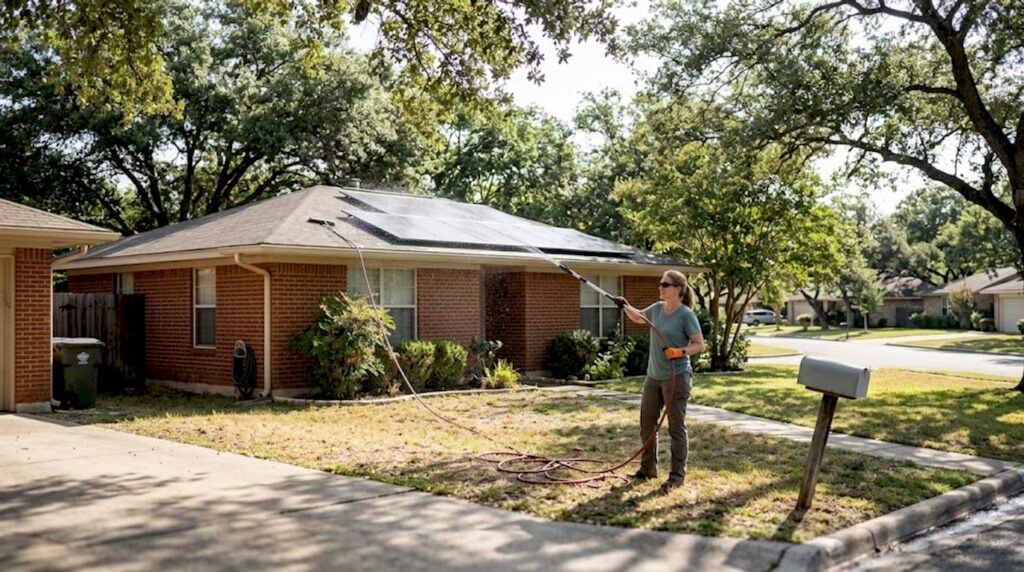
TL;DR:
- National data shows owned solar increases home value by 3 to 7 percent.
- In San Antonio, solar adds about 4 percent to home value but appraisals often fall short.
- Owning solar benefits homeowners through energy savings, while leased systems complicate sales.
Many San Antonio homeowners assume that installing solar panels automatically delivers a dramatic boost to their home’s sale price. The reality is more nuanced than that. Yes, solar can add meaningful value to your home, but how much depends on factors that are specific to your system, your neighborhood, and how the local real estate market responds. This guide breaks down what national data actually shows, how San Antonio compares to the rest of the country, and what you need to know before making decisions about solar and your property’s long-term worth.
Table of Contents
- National data: How much value does solar add?
- San Antonio specifics: What makes the local market unique?
- Owned vs. leased solar: Why ownership matters for value
- Key factors that influence solar’s value in Texas homes
- Our take: The real story behind solar and San Antonio home values
- Ready to boost your home’s value and savings with solar?
- Frequently asked questions
Key Takeaways
| Point | Details |
|---|---|
| Ownership is key | Owned solar systems are required to add significant value when selling your home. |
| Local market gaps | San Antonio appraisals often undervalue solar due to a lack of comparable sales data. |
| Beyond appraisal | Solar panels boost buyer appeal and offer energy savings, even when not fully reflected in appraisals. |
| Quality and documentation | System age, efficiency, and strong documentation maximize potential resale benefits. |
National data: How much value does solar add?
The good news is that solar panels do add real, documented value to homes across the United States. Multiple major research organizations have studied this, and the numbers are consistently encouraging for homeowners who own their systems outright.
Owned solar panels increase home values by 3 to 7% nationally, which translates to approximately $15,000 to $29,000 for homes near the national median price. These findings come from studies by Zillow, Lawrence Berkeley National Laboratory, and SolarReviews, and they represent one of the strongest cases for solar as a home investment.
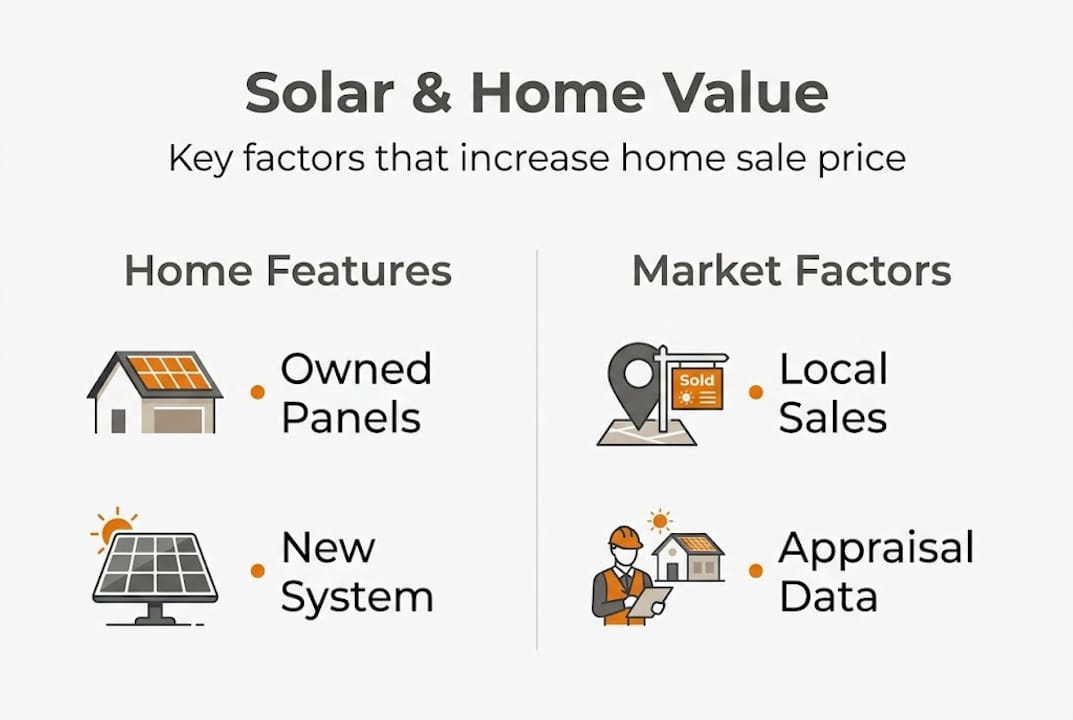
The Lawrence Berkeley National Laboratory conducted one of the most rigorous studies on this topic, analyzing over 22,000 home sales across eight states. Their findings showed a $4 per watt premium for solar homes in California and approximately $3 per watt in other states. For a typical 5-kilowatt solar system (enough to power most average-sized homes), that works out to around $15,000 in added value outside California.
Here is a quick summary of how those national premiums break down:
| System size | Value premium (CA) | Value premium (other states) | Approx. national range |
|---|---|---|---|
| 5 kW | $20,000 | $15,000 | $15,000 to $29,000 |
| 7 kW | $28,000 | $21,000 | $21,000 to $35,000 |
| 10 kW | $40,000 | $30,000 | $30,000 to $50,000 |
A few things consistently show up in the research:
- Ownership is everything. The value premium only applies to systems that are fully owned, not leased or financed with a lien on the property.
- Newer systems perform better. Panels installed within the last five years tend to receive more credit from appraisers and attract stronger buyer interest.
- Efficiency ratings matter. Higher-efficiency panels, meaning those that convert more sunlight into electricity, are viewed more favorably by buyers and appraisers alike.
- Buyer education plays a role. In markets where buyers are more familiar with solar, the premium tends to land at the higher end of the range.
If you want to increase home value through solar, national data gives you a solid foundation of optimism. But national averages don’t tell the full story for San Antonio homeowners. Local conditions create a more complicated picture.
San Antonio specifics: What makes the local market unique?
While national numbers seem promising, it is critical to understand how San Antonio’s local market presents different realities. This does not mean solar is a bad investment here. It means you need to go in with accurate expectations rather than assumptions built on national headlines.
In San Antonio and South Texas, solar adds about 4% to home value on average, which on a $400,000 home equals roughly $16,000. That is a meaningful number. The problem is that appraisals in this market often do not reflect that full amount, and in some cases, appraisers grant little or no additional value to solar-equipped homes at all.
Why does this happen? The answer comes down to how appraisers work. They rely on comparable sales, often called “comps,” which are recent sales of similar homes in the same area. When there are not enough solar homes selling nearby to establish a clear market pattern, appraisers have no solid basis to assign a premium. And in many San Antonio neighborhoods, that data is still limited.
“The appraiser’s job is to reflect what the market is doing, not predict what it might do. In areas where solar-equipped sales are rare, there simply isn’t enough data to justify a premium.”
This creates a gap between what buyers may be willing to pay for a home with solar and what an appraiser puts on paper. Buyers shopping in energy-conscious circles may genuinely value lower monthly bills. But if the appraiser can not support that value with comps, the financed purchase price may be capped below what a seller hoped to get.
A few local factors that shape outcomes here:
- CPS Energy rates in San Antonio are relatively low compared to national averages, which reduces the perceived savings buyers would enjoy from solar and can dampen the premium they are willing to pay.
- System age and condition are scrutinized more carefully by local appraisers when comparable data is thin.
- Buyer expectations in San Antonio are growing, especially among younger buyers, but the market has not yet reached the solar-awareness levels seen in California or the Northeast.
Pro Tip: Before you sell, ask your real estate agent to search for recent solar home sales in your zip code. If there are at least three to five recent comps with solar, your appraiser has a stronger basis to credit the system’s value. You can also refer your agent to the Texas homeowner solar guide for background on how solar works in this market.
The takeaway here is not pessimism. It is preparation. Going into a sale with realistic expectations gives you better negotiating power and helps you communicate solar’s real benefits to buyers even when the appraisal falls short.
Owned vs. leased solar: Why ownership matters for value
One crucial factor that influences actual value is whether the solar system is owned outright or financed. This distinction is one of the most important things any San Antonio homeowner can understand before deciding how to go solar.
When you own your system, it is considered part of the real property, similar to an updated kitchen or a new roof. Appraisers and buyers can factor it into the home’s value because there are no strings attached. A buyer purchasing your home inherits a clear-cut energy asset.
When you lease solar panels, however, the situation changes completely. The panels are technically owned by the solar company, not by you. Leased or financed systems rarely add appraised value and can actually complicate the sale process, since buyers must agree to assume the existing lease or loan contract.
Consider what that means practically:
- Buyers may walk away. Not every buyer wants to take on a multi-year lease obligation, even if the monthly payments are low. Some lenders will not finance a home with a leased solar system if the solar company holds a lien.
- Lease transfers take time. The process of reassigning a solar lease to a new buyer can add weeks to closing, creating friction in an otherwise smooth transaction.
- You lose bargaining power. If a buyer views the lease as a liability rather than a perk, they may ask for a price reduction to offset it, which cuts directly into any energy value you hoped to recoup.
- Loan payoff may be required. If your solar is financed with a home improvement loan or a PACE loan (a special type of property financing), it may need to be paid off at closing before the title can transfer cleanly.
The contrast is stark. Owned systems qualify for the premium that national and local research documents. Leased systems often add zero to the appraised value and introduce complications that can slow or derail a sale.
If you are evaluating solar panel costs and deciding between buying or leasing, the home value equation is one more reason to consider ownership seriously. A cash purchase or a standard home improvement loan that does not attach to the title protects both your equity and your future flexibility.
Pro Tip: Always ask your solar installer whether the financing option they are offering places a lien on your property. If it does, make sure you understand how that lien will be handled if you decide to sell.
Key factors that influence solar’s value in Texas homes
To understand how much solar could add to your home, consider these factors that weigh most heavily in appraisals and in buyers’ minds.
1. Comparable sales in your area
The single biggest driver of appraised solar value is whether your appraiser can find recent sales of solar-equipped homes in your neighborhood. Without those comps, the appraisal is limited. As more San Antonio homeowners go solar and those homes sell, this data pool will grow, making it easier for appraisers to credit solar value consistently.
2. System age and remaining useful life
A solar system installed two years ago with a 25-year manufacturer warranty is a very different asset than a 12-year-old system with aging panels and a warranty that has mostly run its course. Appraisers consider how many productive years remain. Newer installations with strong warranty documentation receive more favorable treatment.
3. Panel efficiency and technology
Not all solar panels are created equal. Higher-efficiency panels (those rated above 20% efficiency) produce more electricity per square foot of roof space. Buyers and appraisers increasingly recognize this distinction. Modern monocrystalline panels (the premium type used in most new residential installations) are viewed more favorably than older polycrystalline technology.
4. Documentation of energy savings
One of the most persuasive things you can present to a buyer or an appraiser is a clear record of your monthly electricity bills before and after solar installation. If you can show that your $200 monthly CPS Energy bill dropped to $20 or $30 after solar, that is a tangible, verifiable benefit. Those solar panels savings translate directly into buyer confidence.
5. Buyer values and eco-consciousness
The green benefits of solar matter to a growing segment of buyers. Energy independence, reduced carbon footprint, and protection against rising utility rates are all real selling points. Even when appraisals are conservative, motivated eco-conscious buyers may be willing to pay above appraisal for a well-maintained solar home.
“In Texas, where electricity rates have climbed steadily, buyers who understand solar’s long-term impact on their monthly bills often factor that into what they are willing to offer, even when the appraiser doesn’t.”
6. System size relative to home energy use
A solar system that fully offsets your home’s electricity consumption is more valuable than one that only covers 40% of your usage. A right-sized system demonstrates that the installation was thoughtfully designed, and it makes the energy savings argument much easier to support with real numbers.
Our take: The real story behind solar and San Antonio home values
Having covered the data and practical factors, here is our candid opinion on what San Antonio homeowners should really know.
The national 3 to 7% solar premium is real, but San Antonio often lands closer to the bottom of that range, and appraisals frequently fall short even of the 4% local estimate. That is not a reason to avoid solar. It is a reason to stop treating home value as the primary argument for going solar here.
The stronger, more reliable case for solar in San Antonio is energy savings and long-term cost control. When you own your system, your electricity costs become predictable and, in many months, near zero. That is real money staying in your pocket every month, regardless of what any appraiser says.
What we have seen consistently is that homeowners who go solar for the right reasons, meaning bill reduction and energy independence, end up happiest with their investment. The potential long-term solar success in Texas is built on savings accumulated over years, not a one-time appraisal bump.
Appraisals will catch up as more San Antonio homes with solar sell and create the comparable sales data that appraisers need. That trend is already moving in a positive direction. But today, the most honest message we can offer is this: buy solar for savings first, and view the home value increase as a meaningful bonus rather than the main payoff.
Ready to boost your home’s value and savings with solar?
If you are thinking about adding solar or optimizing an existing system, the right installation and design make all the difference, both for your monthly savings and for how the system is perceived by future buyers and appraisers.

At Alpha Solar Solutions, we design custom solar systems built around your home’s actual energy needs and your long-term goals. Whether you are starting fresh with residential solar installation or need to keep an existing system performing at its best with professional solar panel cleaning, we are here to help you get the most out of your investment. Our team works with San Antonio homeowners every day, and we understand exactly what makes solar work in this market. Reach out to us to start building the system that protects your energy costs and strengthens your home’s appeal.
Frequently asked questions
How much do owned solar panels increase home value in San Antonio?
In San Antonio, owned solar adds approximately 4% to home value, which equals around $16,000 on a $400,000 home, though the actual appraised value may be lower due to limited comparable sales in the area.
Do leased solar panels add value to my house?
Leased or financed systems rarely add appraised value and can complicate the sale process because buyers must take over the existing lease or loan agreement, which some buyers and lenders find unattractive.
Will my home appraisal always reflect the added value of solar panels?
Not in Texas. Appraisals rely on comparable solar home sales in your area, and when that data is limited, appraisers often grant little or no credit for your system even if buyers are willing to pay more.
Who benefits most from adding solar, buyers or sellers?
Sellers may be able to list their home at a higher price, but buyers often benefit more over time through consistently lower electricity bills and protection against future utility rate increases.
How do I maximize my home’s solar value before selling?
Own your system outright, keep the panels professionally cleaned and well maintained, and document your monthly energy savings in writing so both buyers and appraisers can see exactly what the system delivers.