
TL;DR:
- Regular cleaning in dusty San Antonio reduces soiling losses of 5 to 10% and maximizes savings.
- Proper inverter choice and roof shading analysis enhance system performance and energy output.
- Ongoing maintenance, including annual professional cleaning and system monitoring, ensures long-term efficiency.
Most San Antonio homeowners assume solar panels are a “set it and forget it” investment. You install them, the sun shines, and the savings roll in automatically. That’s partially true, but there’s a detail that surprises many people: soiling losses of 5 to 10% are common in dusty Texas environments when panels aren’t cleaned regularly. That’s real money left on the table every single month. This guide walks you through exactly how solar panels work, what technology choices matter for San Antonio rooftops, and what you can do to keep your system performing at its best year after year.
Table of Contents
- The basics: How solar panels generate electricity
- The solar system: Components and inverter choices
- Panel performance: Efficiency, durability, and local factors
- Care and maintenance: Maximizing lifetime savings
- Why most homeowners overlook panel maintenance — and why you shouldn’t
- Ready to maximize your San Antonio solar investment?
- Frequently asked questions
Key Takeaways
| Point | Details |
|---|---|
| Panels create electricity | Photovoltaic cells turn sunlight into usable energy for your home. |
| Inverter choice matters | String and microinverters suit different roof types and shade conditions. |
| Regular cleaning boosts efficiency | Removing Texas dust and debris prevents 5-10% output loss in panels. |
| Panel durability is high | Modern panels last over 25 years, with gradual declines in output. |
| Maintenance delivers savings | Simple upkeep ensures maximum electricity production and lower bills. |
The basics: How solar panels generate electricity
Understanding how your panels create electricity doesn’t require an engineering degree. The process follows a clear, predictable path from sunlight to the outlets in your home.
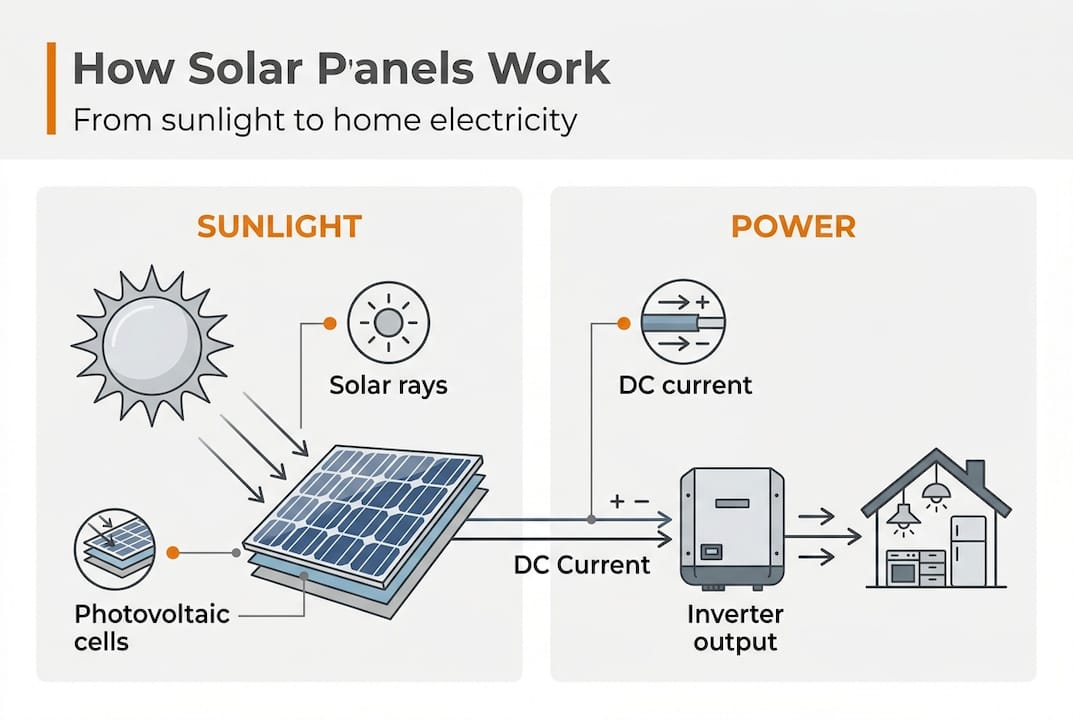
Each solar panel is made up of dozens of small photovoltaic (PV) cells. “Photovoltaic” simply means “light to voltage,” and that’s exactly what these cells do. They’re made mostly from silicon, a material that reacts when light hits it by releasing electrons. Those electrons start moving, and moving electrons are electricity.
Here’s the step-by-step process:
- Sunlight hits the PV cells. Photons from the sun knock electrons loose inside the silicon layers of each cell.
- Electrons begin to flow. The cell’s design channels those electrons in one direction, creating a flow of electricity called direct current (DC).
- DC travels to the inverter. Your home runs on alternating current (AC), not DC. The inverter converts the raw solar electricity into a form your appliances can actually use.
- AC powers your home. From the inverter, electricity flows through your breaker panel just like it does from the grid.
- Excess goes back or gets stored. Any electricity you don’t use immediately either feeds back into the grid (earning you credits through net metering) or charges a battery backup system if you have one installed.
San Antonio is genuinely well-suited for solar generation. The city averages more than 220 sunny days per year, and that consistent sun exposure allows panels to produce meaningful amounts of electricity across every season. Even on partly cloudy days, panels continue to generate electricity, just at reduced levels.
One thing to keep in mind: the sun’s position changes throughout the year. Panels installed at the right angle and direction, typically south-facing in the northern hemisphere, capture the most energy over the full year. A well-designed system accounts for this from day one.
When it comes to solar panel electricity generation, the quality of your installation setup matters just as much as the panels themselves. Poorly angled panels or incorrectly sized systems leave efficiency on the table.
As for lifespan, you can expect solar panels to remain productive for a long time. Research shows that panels maintain 80 to 90% output over 25 or more years, with most of the degradation happening gradually and predictably. That’s a durable, long-term asset working on your behalf.
The solar system: Components and inverter choices
Having covered how panels turn sunlight into electricity, it’s important to understand the supporting components and technology choices that bring the whole system together.
A solar system isn’t just panels on a roof. It’s a collection of components that work together as a unit. Understanding each part helps you make smarter decisions when comparing quotes or evaluating upgrades.
The core components of a solar system include:
- PV panels — the cells that capture sunlight and produce DC electricity.
- Inverter(s) — the device (or devices) that convert DC to AC for home use.
- Mounting hardware — the racking system that holds panels securely on your roof.
- Wiring and conduit — the electrical pathway connecting components safely.
- Monitoring system — typically an app or web portal that shows your system’s output in real time.
- Main service panel connection — the point where solar power enters your home’s existing electrical system.
The inverter decision is one of the most impactful choices you’ll make. There are two main technologies to compare:
| Feature | String inverter | Microinverter |
|---|---|---|
| Cost | Lower upfront cost | Higher upfront cost |
| Shading sensitivity | High (one shaded panel affects all) | Low (each panel works independently) |
| Monitoring | System-level | Panel-level |
| Best for | Simple, unshaded roofs | Complex or partially shaded roofs |
| Maintenance | Single unit to service | Multiple units (one per panel) |
String inverters connect all your panels in a series circuit. They’re cost-effective and reliable for simple rooftop setups. The downside is that if one panel underperforms due to shade from a tree or chimney, it can drag down the output of the entire string. Think of it like old-fashioned Christmas lights where one bad bulb dims the whole strand.
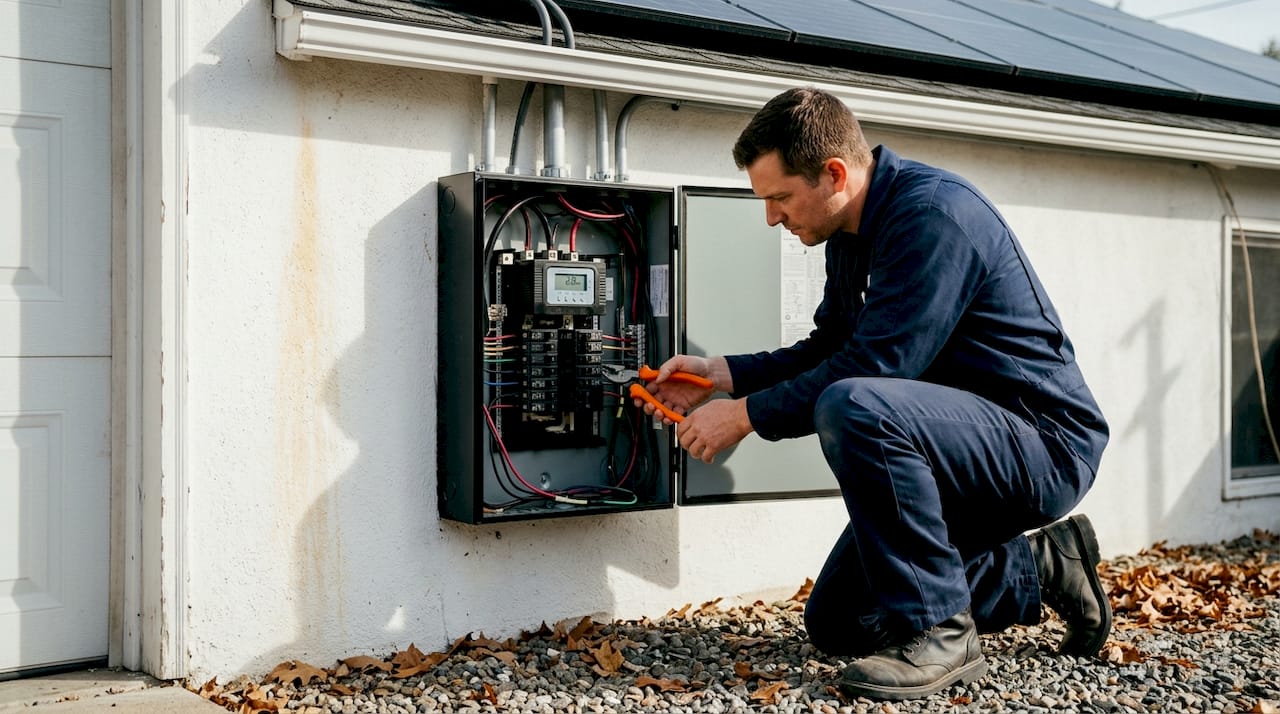
Microinverters work differently. Each panel gets its own small inverter mounted directly on the back of it. If one panel sits in shade while the others are in full sun, the shaded panel is the only one affected. The rest keep producing at full capacity.
For San Antonio homeowners, this distinction matters more than you might expect. Many local homes have complex roof solar solutions to consider, including multiple roof planes, dormers, attic vents, or mature trees nearby. In those situations, microinverters typically deliver better overall production and give you cleaner panel-level data through monitoring apps.
Pro Tip: Before choosing an inverter type, ask your installer to map out your roof’s shading pattern throughout the year. A few minutes of shade analysis can save you years of reduced output.
The monitoring component deserves special mention. Most modern systems come with an app that shows you how much electricity your system is producing, how much your home is consuming, and what’s going back to the grid. Checking this regularly is one of the easiest ways to catch performance problems early.
Panel performance: Efficiency, durability, and local factors
Once the system is installed, performance depends on both technology and local conditions. Not all panels age the same way, and San Antonio’s environment introduces specific factors that can quietly reduce your output.
Panel type makes a real difference over time. Solar panels are broadly categorized as P-type or N-type, based on how the silicon is processed. N-type panels are considered the better choice for durability and long-term efficiency. N-type panels degrade less because they experience less light-induced degradation (LID), which is a natural reduction in output that occurs when new panels are first exposed to sunlight. P-type panels are more susceptible to this effect.
Here’s how panel degradation typically breaks down:
| Period | Typical output loss |
|---|---|
| First year | 1 to 3% (light-induced degradation) |
| Each subsequent year | 0.4 to 0.55% annually |
| After 25 years | Still producing 80 to 90% of original output |
Research confirms that panels last 25 years or more, maintaining most of their original output well into their third decade. That gradual decline is predictable and already factored into most financial projections your installer provides.
Local conditions in San Antonio add another layer. Texas is dusty. Pollen seasons are intense. Cedar, oak, and mountain cedar release massive amounts of pollen that settles on rooftops and, yes, on your panels. Add in summer dust storms, construction debris from the region’s ongoing growth, and bird activity, and your panels can accumulate a grimy film faster than you’d expect.
Key factors that affect panel performance in San Antonio:
- Dust and pollen buildup reduce the amount of light reaching PV cells, cutting output by 5 to 10%
- Bird droppings create concentrated spots of blockage that can cause localized heat buildup (called hot spots), potentially accelerating cell wear
- Heat itself doesn’t directly dirty panels, but extreme summer temperatures can slightly reduce efficiency; panels actually perform best in bright but cooler conditions
- Hail can cause micro-cracks in cells over time, though modern panels are tested for significant impact resistance
Statistic to know: Soiling alone can reduce a San Antonio system’s annual output by 5 to 10%, which translates to real dollars missing from your savings. A 10-kilowatt system producing $1,800 worth of electricity per year could be leaving $90 to $180 on the table simply from dirty panels.
One more reassuring note on safety: PV modules are durable by design. Standard solar panel maintenance tips often include this clarification — panels don’t leach toxic materials under normal conditions. Only if a panel were physically pulverized or chemically treated in extreme ways would there be any environmental concern. For everyday homeowners, panels are safe and stable.
If you want to go deeper on solar panel cleaning practices specific to Texas climates, it’s worth reading up on seasonal timing and what products are safe to use on panels. And for a full look at maximizing efficiency in San Antonio, local conditions and proven strategies are covered in detail elsewhere on our site.
Care and maintenance: Maximizing lifetime savings
Performance is only maximized with ongoing care. Here’s how to keep your panels working at their best across San Antonio’s varied seasons.
The good news is that solar panels don’t require a lot of maintenance. But “not a lot” doesn’t mean “none.” A simple, consistent routine can recover a significant portion of lost output and protect your long-term investment.
What a solid maintenance routine looks like:
- Visual inspections after storms. High winds, hail, and heavy rain can deposit debris, leaves, and broken branches on your panels. A quick look from the ground after major weather events catches problems early.
- Check for bird nesting under panels. Birds sometimes nest in the gap between panels and the roof. Nesting materials can block airflow and even damage wiring over time.
- Monitor your system’s output app. If your daily production drops unexpectedly and the sky is clear, that’s a signal worth investigating. A drop of 10% or more on a sunny day often points to soiling or a technical issue.
- Compare your utility bill. If your electricity purchases from the grid creep up over time without a change in your usage habits, your panels may be underperforming.
- Schedule professional cleanings. Especially during heavy pollen season (spring) and after dry summer months, a professional cleaning removes deposits that a light rain won’t fully wash away.
Clean panels regularly to prevent soiling losses in dusty Texas conditions. This is one of the simplest, most cost-effective steps you can take to protect your solar investment.
“Regular cleaning is the lowest-cost, highest-impact maintenance action available to most solar homeowners. In dusty climates like San Antonio, it’s not optional — it’s essential.”
For expert solar cleaning tips on what products and methods work best without damaging your panels, there are specific techniques that make a real difference. Knowing when to clean solar panels is equally important — cleaning too infrequently lets losses accumulate, while cleaning at the wrong time (like midday heat) can cause thermal shock to the glass.
Pro Tip: Never use abrasive brushes or high-pressure washers on your panels. These can scratch the anti-reflective coating, reducing how much light the cells absorb. A soft brush, gentle water pressure, and a mild soap solution are all you need, or leave it to a professional to be safe.
Professional solar cleaning services in San Antonio are readily available, affordable, and worth scheduling at least once or twice a year. If your system is on a steep roof or hard-to-reach section, professional service also eliminates the safety risk of working at height.
Why most homeowners overlook panel maintenance — and why you shouldn’t
Here’s something we’ve learned from working with San Antonio homeowners over many installations: the “set and forget” expectation is one of the most common and costly assumptions in solar ownership. It’s understandable. Solar is sold on simplicity, and the technology truly is reliable. But reliability isn’t the same as zero upkeep.
We’ve seen systems that were producing noticeably less after just one full year, not from equipment failure, but from accumulated grime on the panels. After a professional cleaning, output bounced back significantly. The homeowners were surprised. They hadn’t noticed any problem because the decline was gradual.
That’s the trap. A 1% drop here, a 2% drop there, and suddenly your system is producing 8% less than it should. Over a full year, that adds up to real money. Consistent solar panel maintenance wisdom suggests building a simple schedule: a visual check each month, an app review weekly, and a professional clean at least once a year, ideally twice in San Antonio’s dusty conditions.
The homeowners who treat their solar system like a living investment, one that rewards attention, consistently see better long-term returns than those who assume the panels will take care of themselves.
Ready to maximize your San Antonio solar investment?
Now that you know how solar panels work and how to keep them at peak performance, your next step is simple.
Whether you’re installing your first system or looking to get more from the one you already have, we’re here to help. At Alpha Solar Solutions, we design and install San Antonio residential solar systems that are matched to your roof layout, energy goals, and budget. We also offer professional solar panel cleaning services to help you recover lost efficiency and protect your system’s long-term output.
Don’t leave 5 to 10% of your solar savings on the table. Reach out to our team today for a consultation or cleaning appointment. We make it easy to own your energy in San Antonio.
Frequently asked questions
How long do solar panels typically last in San Antonio?
Solar panels generally last over 25 years, maintaining 80 to 90% of their original output throughout that lifespan. San Antonio’s consistent sunshine supports strong performance for decades.
What panel type is best for minimizing efficiency loss?
N-type panels are the preferred choice because they degrade less over time and resist light-induced degradation better than P-type panels. This makes them a smarter long-term investment for most homeowners.
How often should I clean my solar panels in San Antonio?
In San Antonio’s dusty climate, panels should be cleaned at least once or twice a year to prevent 5 to 10% soiling losses. After heavy pollen seasons or dry summer months, more frequent cleanings may be beneficial.
Is solar panel maintenance necessary for optimal performance?
Yes. Regular maintenance, especially cleaning, is essential to maintaining full system efficiency and ensuring your investment pays off as projected. Skipping it can silently cost you hundreds of dollars in lost savings each year.