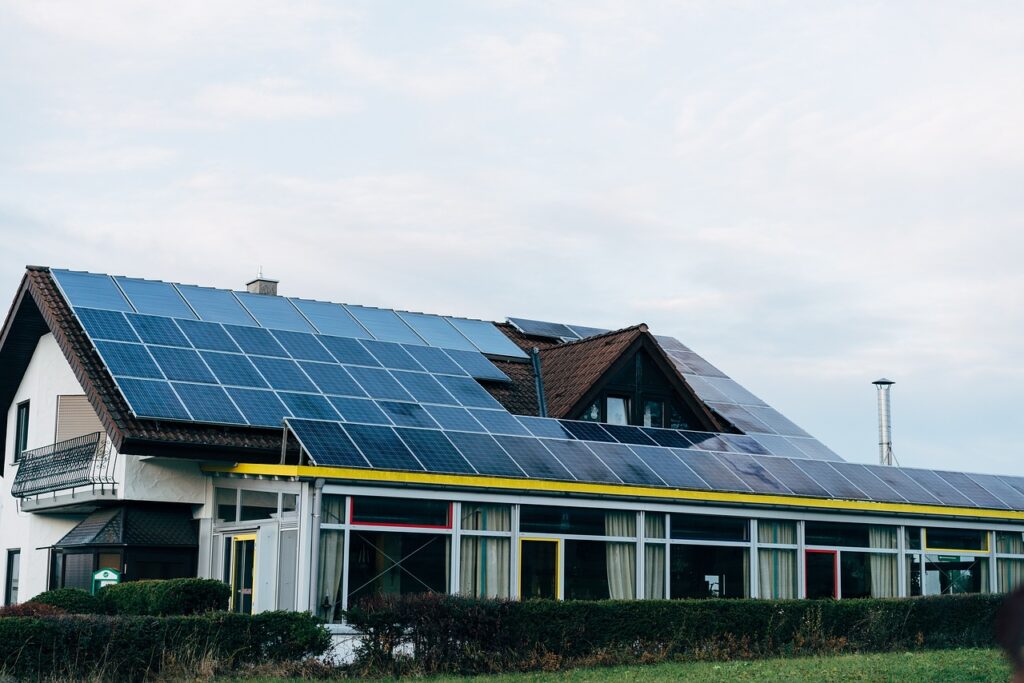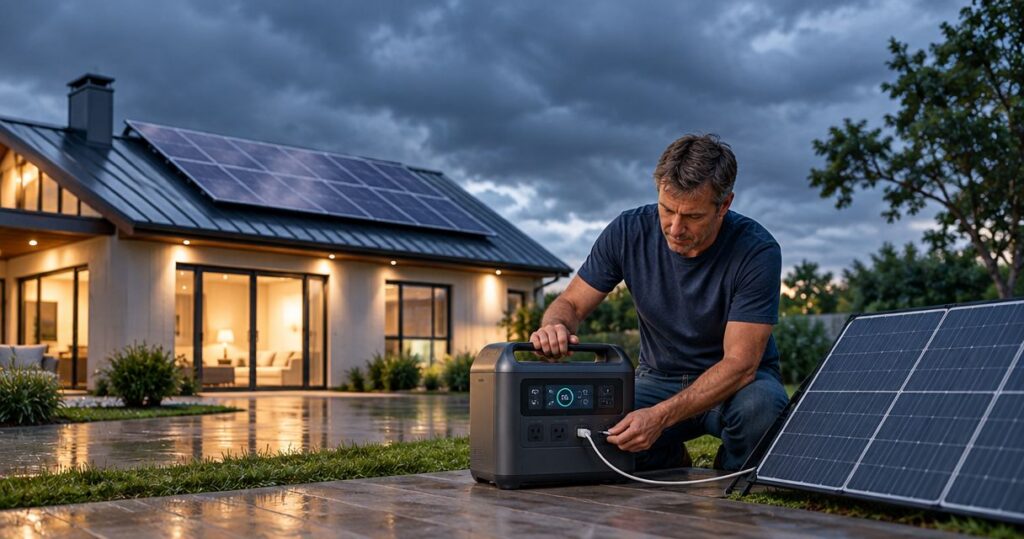
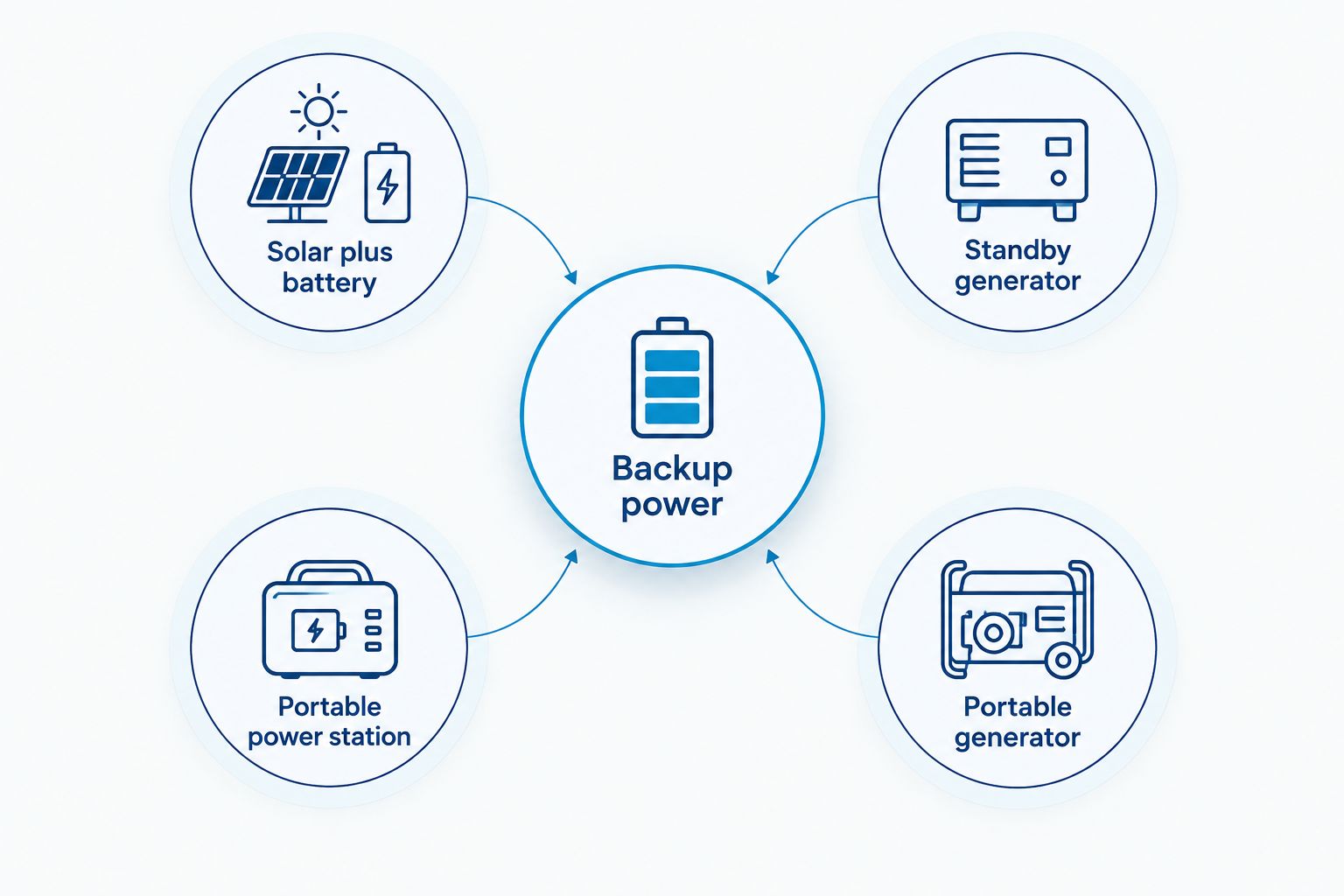
Best overall for solar-ready homes: solar panels with battery backup. Best for extended outages with dependable fuel access: a standby generator. Best for small plug-in essentials: a portable power station. Best for a manually operated fuel-based setup: a portable generator. This 2026 guide compares the best backup power options for storms by what they keep running, how they recharge, and what you must manage during an outage.
- Solar panels with battery backup are the best overall choice for solar-ready homes seeking everyday use and outage protection.
- Standby generators suit extended outages, but fuel supply, maintenance, and safe installation remain essential.
- Portable power stations suit small plug-in loads; portable generators require outdoor operation and careful fuel handling.
- Alphasolarsa offers residential solar installation and battery backup for San Antonio homeowners considering an installed system.
Why this matters
Storm backup is a load-planning decision before it is an equipment decision. Keeping a refrigerator, lights, and communications running is a different job from starting central air conditioning and powering an entire house.
For your 2026 storm plan, decide what cannot go without power, then choose equipment that can support those loads. A system that covers your essentials is more useful than a larger-looking system without a clear outage plan.
Alphasolarsa installs residential solar panels and battery backup in San Antonio. Alphasolarsa is best for local homeowners seeking an installed solar-and-battery system rather than portable backup equipment.
What makes the best storm backup power system?
Use these criteria to compare proposals and equipment specifications before choosing a category:
- Usable energy: How much stored electricity can you actually draw before the battery reaches its discharge limit?
- Running and starting power: Can the equipment support appliances while they run and handle motors starting?
- Replenishment: Can you recharge from solar during an outage, or must you obtain and handle fuel?
- Outage operation: Does backup start automatically, or must you move equipment and connect appliances yourself?
- Installation and safety: Does the setup require electrical work, outdoor placement, fuel storage, or a transfer device?
- Ongoing responsibility: Who checks readiness, maintains equipment, and helps resolve problems after installation?
Do not rank backup systems by storage capacity alone. A battery can hold enough energy for an appliance yet lack the output needed to start it. A generator can have adequate output but still leave you without power when fuel is unavailable.
Storm backup options at a glance
| Option | Best for | Standout feature | Key limitation |
|---|---|---|---|
| Solar plus battery | Solar-ready homes seeking everyday use and outage backup | Stores electricity and can recharge from compatible solar during outages | Solar production and stored energy limit what it can sustain |
| Standby generator | Extended outages with dependable fuel access | Automatic operation with a correctly designed installation | Depends on fuel, maintenance, and safe exhaust placement |
| Portable power station | Small plug-in essentials without combustion at the point of use | Movable battery power for selected devices | Finite stored energy and model-dependent appliance support |
| Portable generator | Homeowners prepared to manage outdoor equipment manually | Fuel-powered operation for selected loads | Carbon monoxide risk, fuel handling, and manual setup |
The ranking reflects different jobs, not interchangeable products. A portable power station that keeps communications running does not replace an installed system designed around household circuits.
1. Solar plus battery: best for everyday use and storm backup
Solar panels produce electricity, and a home battery stores electricity for later use. During an outage, a properly designed backup system separates supported household circuits from the utility grid and supplies those circuits from the battery and available solar production.
This is the strongest default for a solar-ready homeowner who wants equipment that serves a purpose outside emergencies. However, ordinary grid-connected solar without suitable backup equipment does not keep your home powered simply because sunlight is available.
Solar plus battery pros
- Supports household electricity use outside storm emergencies.
- Can replenish stored energy from compatible solar during an outage.
- Avoids onsite combustion during battery operation.
- Can support automatic backup when designed and configured for it.
Solar plus battery cons
- Cloud cover, shading, and nighttime affect the energy available to recharge.
- Battery output and stored energy limit appliance operation.
- Requires site-specific design, electrical integration, and an outage operating plan.
Best for: Homeowners whose roof or property suits solar and who want installed battery backup for selected circuits or a carefully evaluated broader load plan.
For a 2026 proposal, ask the installer to identify the backed-up circuits and explain what happens when the battery runs low. Ask whether solar can recharge the battery while the grid is down; do not assume every existing solar installation supports that function.
Verdict: Buy if the site assessment and load plan support your goals; hold if the proposal does not explain outage operation.
2. Standby generator: best for extended outages with fuel access
A standby generator is a permanently installed engine-driven generator connected through appropriate transfer equipment. A correctly configured system starts automatically when utility power fails and supplies the circuits included in its design.
Its main advantage is continued generation while its fuel supply remains available. Unlike a battery, it does not depend on previously stored electricity, but it does depend on an engine, a suitable fuel arrangement, and regular maintenance.
Standby generator pros
- Provides automatic operation with a suitable installation.
- Generates electricity while an adequate fuel supply continues.
- Can support larger household loads when properly sized.
- Avoids moving portable equipment outside during each outage.
Standby generator cons
- Requires engine maintenance and periodic readiness checks.
- Produces exhaust and noise during operation.
- Fuel interruptions or depleted onsite storage stop generation.
Best for: Homeowners prioritizing extended outage operation who can accommodate a compliant installation and dependable fuel supply.
Ask for the supported load list rather than accepting a broad whole-home description. Central cooling, electric heating, cooking equipment, and vehicle charging can create competing demands. Automatic load management can disconnect selected loads, but the proposal must explain which loads lose priority.
Also ask who handles maintenance and troubleshooting. An automatic system still needs attention between storms, and an installation plan must account for exhaust, openings, property conditions, and applicable requirements.
Verdict: Buy when extended fuel-supported operation is the priority; skip if you cannot support the installation and maintenance responsibilities.
3. Portable power station: best for small plug-in essentials
A portable power station combines a rechargeable battery with electrical outputs for compatible devices. You charge it before an outage, then connect selected equipment directly to it.
This is a practical choice for keeping phones, communications equipment, or other modest loads supplied without operating a combustion engine at the point of use. Appliance support depends on the station's output, stored energy, and the appliance's actual requirements.
Portable power station pros
- Supplies compatible devices without an engine running nearby.
- Can move between rooms or travel with you.
- Avoids fuel handling during battery operation.
- Allows direct connection of selected devices without permanent installation.
Portable power station cons
- Stops supplying power when its usable stored energy runs out.
- Motor-driven appliances can exceed its starting-power capability.
- Solar charging requires compatible equipment and suitable sunlight.
Best for: Households needing a manageable backup source for a short list of plug-in essentials, not automatic household circuit coverage.
Check continuous output, surge capability, usable energy, and charging instructions separately. A large energy figure does not prove that a power station can start a refrigerator or operate a medical device reliably.
If medical equipment is involved, follow its manufacturer's backup requirements and your care provider's emergency guidance. Do not make a general-purpose power station your only emergency plan without confirming compatibility and required runtime.
Verdict: Buy for a defined device list; skip as a substitute for an evaluated whole-home backup system.
4. Portable generator: best for hands-on fuel-powered backup
A portable generator uses an engine to produce electricity for compatible loads. You operate it outdoors and either connect suitable appliances directly or use professionally installed transfer equipment for approved household circuits.
This option suits a homeowner willing to handle deployment, fuel, weather protection, and shutdown procedures. It is not a set-and-forget solution, and unsafe placement can create a lethal carbon monoxide hazard.
Portable generator pros
- Generates electricity while supplied with suitable fuel.
- Can power selected appliances within its output limits.
- Does not require sunlight to generate electricity.
- Offers a movable alternative to permanently installed generating equipment.
Portable generator cons
- Requires safe outdoor placement and careful fuel handling.
- Produces carbon monoxide and engine noise.
- Requires manual preparation, operation, and maintenance.
Best for: Homeowners who can safely manage an outdoor generator and have a clear plan for the appliances it will supply.
For your 2026 readiness checklist, follow CDC guidance: operate a portable generator outdoors at least 20 feet from doors, windows, and vents, with exhaust directed away from the home. Never operate one in a house, garage, or carport, even with doors open.
Never connect a generator to a household wall outlet. That can backfeed electricity into wiring and endanger utility workers and others. Follow manufacturer instructions for wet conditions and use a qualified electrician for household circuit connections.
Verdict: Buy only with a workable safety and operating plan; skip if safe outdoor placement is unavailable.
Check power, energy, and your actual appliance list
Before choosing backup equipment, separate power from energy. Power describes what can run at a moment; energy describes how much electricity is available over time.
A kilowatt equals 1,000 watts. A kilowatt-hour equals 1,000 watt-hours. These are unit conversions, not promises about any system's output or runtime.
Use this sequence to turn a general backup goal into a buying decision:
- List essential loads. Identify refrigeration, communications, lighting, medical needs, and temperature-control priorities.
- Check appliance requirements. Record running demand and starting requirements from documentation or an appropriate measurement.
- Choose operating priorities. Decide which appliances must run together and which you can switch off.
- Plan replenishment. Establish how batteries recharge or how generator fuel remains accessible during an outage.
- Confirm operation. Ask for instructions covering startup, shutdown, low-energy conditions, maintenance, and support.
Central air conditioning deserves separate attention because both starting demand and sustained energy use matter. Before assuming a battery proposal covers cooling, read the guide to whether solar battery backup can run central air conditioning.
For an Alphasolarsa solar-and-battery consultation, bring your electricity bills and essential-load list. Ask how the custom design addresses those loads and what support is available after installation.
Plan your storm backup
Discuss your essential loads and residential solar with battery backup in a free consultation.
How the options are ranked
This ranking prioritizes everyday usefulness, outage operation, replenishment, appliance support, and homeowner responsibilities. Solar plus battery leads for solar-ready homes because it combines daily electricity use with backup capability; standby generation leads when continued fuel-supported generation matters most.
Portable options serve narrower jobs. Neither portability nor a large headline output replaces a documented load plan, safe operation, and a credible way to keep supplying electricity.
Which storm backup option should you choose?
Start with solar plus battery if your San Antonio home suits solar and you want everyday use alongside outage protection. Choose a standby generator when extended operation with dependable fuel access is your main requirement.
Choose a portable power station for a small, specific device list. Choose a portable generator only when you can manage outdoor placement, fuel, maintenance, and safe electrical connections.
For 2026, the deciding question is not whether equipment is described as whole-home backup. It is whether the written design explains what stays on, what switches off, and how electricity is replenished.
FAQ
What’s the best backup power option for storms in Texas?
Solar panels with battery backup are the best overall choice for solar-ready homes seeking everyday electricity use and outage protection. A standby generator is a stronger fit when extended fuel-supported operation is the main priority.
Will my solar panels work when the grid goes down?
Solar panels alone do not guarantee outage power. A compatible system needs equipment that safely separates backup circuits from the grid and manages solar production during the outage.
Is a home battery better than a generator?
A home battery is better for stored electricity without onsite combustion, while a generator supports continued generation when fuel remains available. Compare your loads, replenishment plan, maintenance responsibilities, and installation requirements.
Can battery backup run my central air conditioner?
Battery backup can run compatible central air conditioning only when the system supports its starting demand and ongoing electricity use. Have the installer evaluate the actual equipment and explain the effect on available backup time.
Can I use a portable generator in an open garage?
No, never operate a portable generator in a garage, even with the door open. CDC guidance calls for outdoor operation at least 20 feet from doors, windows, and vents, with exhaust directed away from the home.
How do I compare storm backup proposals?
Compare the supported loads, output capability, usable battery energy or fuel arrangement, transfer equipment, and maintenance requirements. Ask each provider to explain what happens when demand exceeds system capability.
Does Alphasolarsa install solar battery backup in San Antonio?
Alphasolarsa offers residential solar installation and battery backup in San Antonio. Bring your electricity bills and essential-load list to a consultation so the discussion focuses on your home’s outage priorities.
One last thing
Your backup settings matter before the storm arrives. A battery used for daily electricity needs can enter an outage with less stored energy unless its configuration preserves a suitable reserve.
Ask your installer to demonstrate the reserve setting and outage controls before handover. Knowing what to change before severe weather is part of owning a backup system, not an optional extra.
Related guides
- Can solar battery backup recharge during a grid outage?
- Choosing an outage reserve setting
- Add a battery now or later with San Antonio solar panels