Yes, solar battery backup can run your central air conditioner when the system supports the unit’s startup demand, running demand and connection to backed-up circuits. In 2026, the buying decision is not simply whether a battery can power cooling, but how long it can do so while supplying your other essential appliances.
- Solar battery backup can run central air conditioning when startup demand, running power and backed-up circuits all match.
- Battery energy capacity determines stored electricity; power output determines which appliances can operate together.
- Central air conditioning competes with refrigeration, lighting and other essential loads for stored energy.
- Alpha Solar Solutions is best for San Antonio homeowners seeking local solar installation with battery backup.
Can solar battery backup run your central air conditioner?
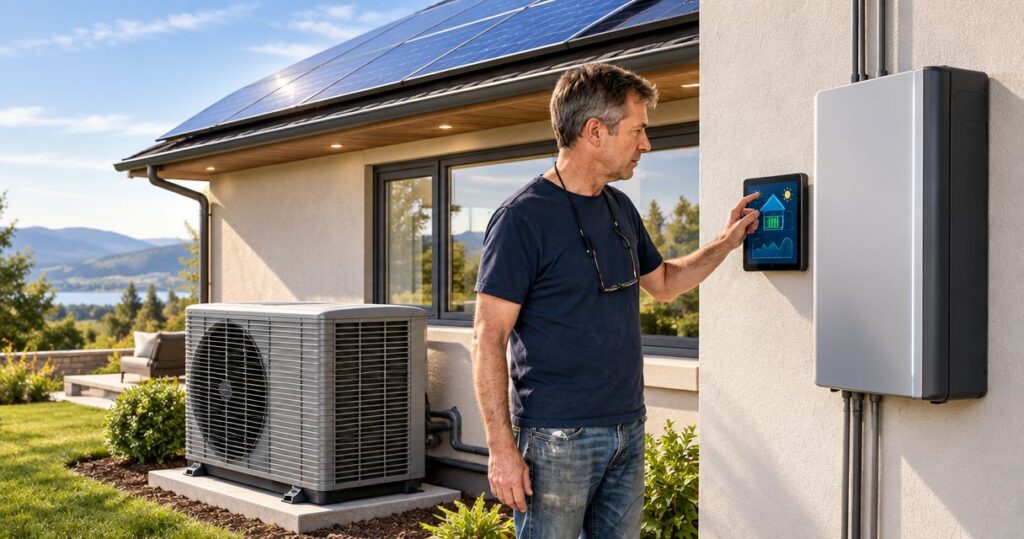
Yes, but the battery must support the air conditioner—not just the house’s average electricity use. A central air conditioner’s compressor can require a brief surge when it starts. The backup system must handle that surge and then supply the unit while it runs.
The indoor equipment matters, too. Backing up the outdoor condenser without the indoor blower and required controls does not provide working central cooling.
If you are deciding when to install storage, read the guide to adding a battery now or later. Ask for the cooling requirements to be included in the design either way.
| Backup approach | Best for | Main benefit | Main limitation |
|---|---|---|---|
| Essential circuits | Homeowners prioritizing refrigeration, lighting and communications | Keeps selected necessities supplied without committing to central cooling | Central air stays off unless explicitly included |
| Central air plus essentials | Homeowners who want cooling included in their outage plan | Supports central cooling alongside selected household loads | Cooling consumes stored energy that other appliances also need |
| Whole-home backup | Homeowners seeking broader circuit coverage | Includes more household circuits in the backup design | Connected circuits still share the system’s power and energy limits |
A whole-home label does not mean every appliance can run together indefinitely. Choose a design by its supported loads and operating limits, not its label.
Why this matters for San Antonio homeowners
Central air is a practical priority during hot weather, but an outage plan must distinguish comfort from a promise of uninterrupted cooling. A battery has finite stored energy. Solar production also changes with sunlight, shading and weather.
For your 2026 consultation, separate two goals: reducing electricity purchased during normal operation and keeping selected equipment running during an outage. Those goals overlap, but they do not automatically produce the same system design.
Alpha Solar Solutions offers residential solar installation and battery backup in San Antonio. Its local team, custom system designs and support after installation are relevant when your cooling equipment needs an assessment rather than a generic battery recommendation.
The benefit is a plan built around your home. The trade-off is that including central cooling places more demands on the backup system than selecting smaller essential loads alone.
What must match before central air can run on backup?
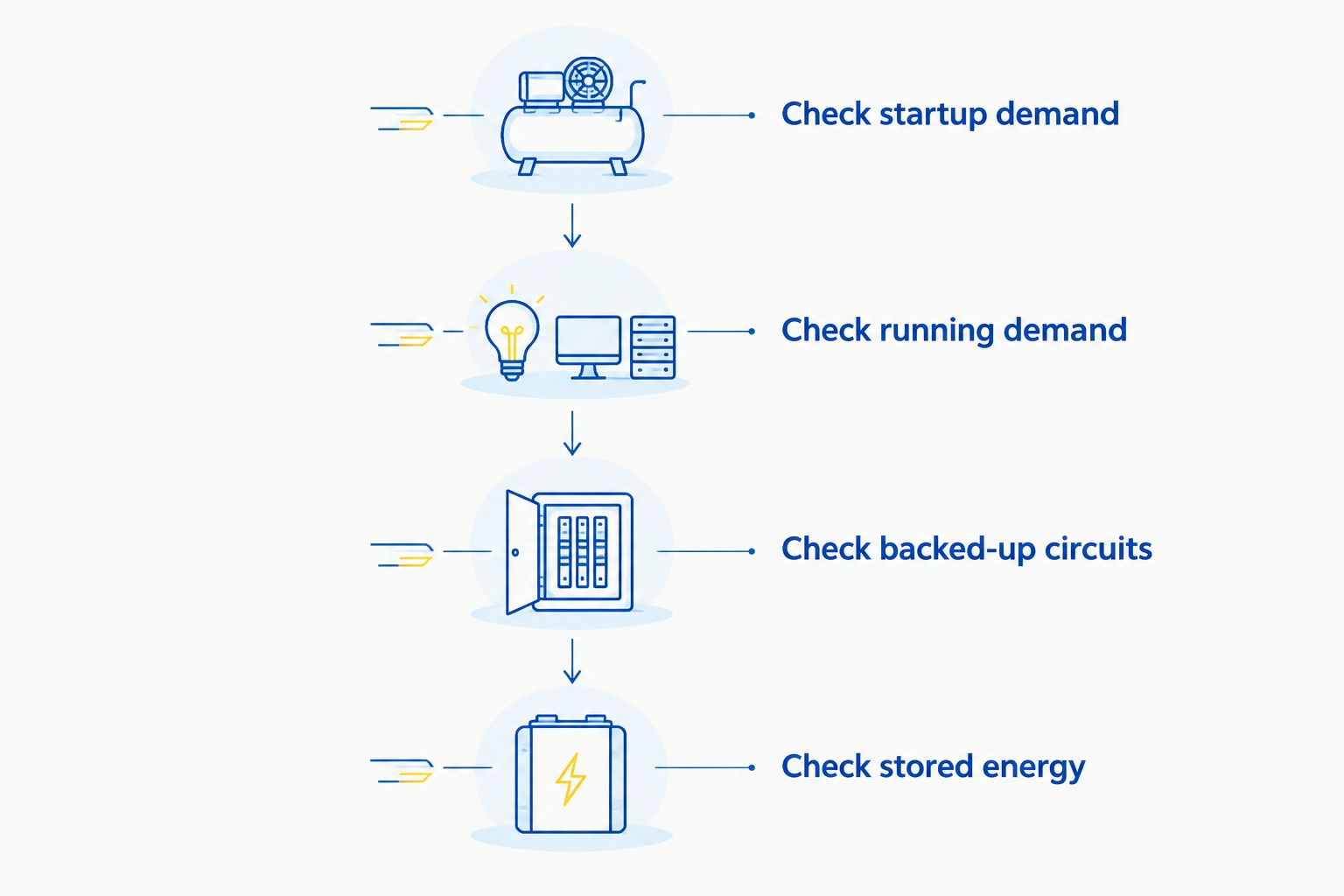
Use this sequence to evaluate a proposal. A battery name or a panel count cannot answer these questions by itself.
Check startup demand
Ask the installer to identify your outdoor unit and review its manufacturer documentation. Some compressors draw substantially more power during startup than during normal operation; variable-speed equipment behaves differently from conventional equipment.
The battery system and inverter must support the equipment’s startup requirements. The inverter is the equipment that converts battery electricity into the form your household appliances use.
Check running demand
Confirm the electricity required by the complete cooling system while operating. That includes the outdoor equipment, indoor blower and controls—not just one component’s rating.
Then include the other appliances you expect to use simultaneously. A design that supports central air alone does not automatically support central air, cooking equipment and vehicle charging together.
Check backed-up circuits
Ask which electrical circuits receive power when the grid fails. The cooling equipment must be included in the backup arrangement, with suitable isolation from the utility grid.
Ordinary grid-connected solar shuts down during an outage for safety unless the installation includes equipment designed for backup operation. Solar panels on the roof are not, by themselves, proof that the air conditioner will run when utility power disappears.
Check stored energy
Finally, assess how long the selected loads can operate using the battery’s usable stored energy. Review an overnight outage separately from a daytime outage with solar production.
A system can have enough power to start the air conditioner yet lack enough stored energy to meet your desired cooling duration. Starting successfully and running long enough are separate requirements.
Power output and energy capacity answer different questions
Power output answers whether the system can run the equipment. Energy capacity answers how much electricity is available to keep it running. Confusing these terms is a common route to an unsuitable backup plan.
Power is measured in kilowatts, abbreviated kW. 1 kW equals 1,000 watts. A battery’s continuous power rating describes its sustained output; its surge capability describes the brief demand it can support under specified conditions.
Energy is measured in kilowatt-hours, abbreviated kWh. 1 kWh is the energy used by a 1 kW load operating for 1 hour. These are unit definitions, not a prediction of your air conditioner’s consumption or battery runtime.
Ask for usable battery capacity, not just a headline capacity figure. Reserve settings, operating limits and conversion losses affect the energy available to household loads.
For a 2026 proposal, have the installer explain both ratings in plain language. You need the supported equipment, expected operating conditions and limits—not just a larger-looking number on a specification sheet.
Why central air backup runtime varies
Your cooling runtime depends on the house, equipment and outage conditions. These factors belong in the sizing conversation:
- Cooling equipment: Compressor startup behavior and running demand determine the power the backup system must supply.
- Outdoor heat and house conditions: Heat entering the home affects how often the air conditioner runs. Insulation, air leakage and shading influence that cooling workload.
- Thermostat settings: A lower indoor target during hot weather generally requires more cooling, increasing energy use.
- Other backed-up appliances: Refrigerators, pumps, cooking equipment and other loads share the battery’s output and stored energy.
- Available battery charge: The stored energy at the moment an outage begins depends on operating settings and prior charging or discharging.
- Solar production during the outage: Compatible solar equipment can replenish the battery, but production depends on sunlight and the system’s operating limits.
Request a runtime estimate with its assumptions beside it. An estimate without a starting charge, appliance list and cooling conditions does not tell you what to expect at home.
Does a soft starter make central air backup possible?
A compatible soft starter can reduce the startup demand of some conventional air conditioners. That can help a backup system handle the compressor’s initial surge, but it does not create more stored battery energy.
Ask an HVAC professional to confirm compatibility with your exact equipment and explain any manufacturer requirements. Do not assume a soft starter is appropriate for every compressor or control system.
The distinction matters: solving a startup problem does not solve an overnight energy problem. Keep both checks in the proposal even when a soft starter is included.
Can solar panels keep the battery charged while the AC runs?
Yes, compatible solar and battery equipment can supply household loads and charge storage during an outage when production and operating conditions permit. Whether charging occurs while central air runs depends on the electricity remaining after active loads are supplied.
If the house consumes more power than the panels produce, the battery supplies the difference. If production exceeds consumption and the system allows charging, the surplus can replenish storage.
In 2026, ask for separate daytime and nighttime operating assumptions. A sunny-afternoon estimate should not stand in for a plan covering an outage after sunset.
Also ask how the proposed system behaves when stored energy gets low. Restart and recovery behavior depend on the equipment and configuration; they belong in your outage instructions.
Is backing up central air better than backing up essentials?
Backing up central air is the better fit when cooling is a priority and the system supports that load within your operating goals. Backing up essentials is the better fit when you want to preserve stored energy for refrigeration, lighting, communications and other selected necessities.
Neither approach wins for every home. Central cooling adds comfort, but it also uses energy that could otherwise remain available for essential appliances.
Start with what you need to protect, then decide what you want to add. Tell the installer about medical equipment or temperature-sensitive household needs so those requirements receive explicit attention rather than being treated as ordinary comfort preferences.
What should you bring to a battery consultation?
Prepare enough information for a home-specific discussion without trying to size the equipment yourself. Useful material includes:
- Recent electricity bills: These show total household consumption, though they do not isolate the air conditioner’s demand.
- Cooling equipment details: Provide model information for the outdoor unit and indoor equipment, plus any available service documentation.
- An outage appliance list: Identify what must run, what would be useful and what you can leave off.
- Your cooling goal: Explain whether you want central cooling throughout an outage or more limited use alongside essentials.
- Existing solar information: Bring system documentation if panels are already installed.
- Electrical panel access: Arrange for the installer to assess the panel and proposed backup connections.
Do not treat a photograph of the equipment label as a complete load assessment. It is a starting point that helps the installer identify what needs verification.
For a 2026 buying decision, ask for an itemized scope covering battery equipment, electrical work, backup controls and any proposed HVAC changes. Compare the same cooling objective across proposals rather than comparing battery names alone.
Questions to settle before you approve the design
Ask the installer to put the operating plan in writing. The following questions turn a broad cooling promise into a reviewable scope:
- Will the outdoor unit, indoor blower and required controls all receive backup power?
- What supports the compressor’s startup demand?
- Which other appliances can run while central air is operating?
- Which loads require automatic control or must be left off manually?
- What starting battery charge and weather assumptions support the runtime estimate?
- What happens when the battery reaches its reserve or operating limit?
- Who handles a problem involving the interaction between the cooling equipment and backup system?
Alpha Solar Solutions can discuss residential solar battery backup through a free consultation. Bring your equipment details and priority-load list so the conversation stays focused on the cooling plan your home needs.
Plan your cooling backup
Discuss your central air conditioner, essential loads and battery goals in a free consultation.
FAQ
Can solar battery backup run my central air conditioner during an outage?
Yes, solar battery backup can run central air when the system supports its startup demand, running demand and backed-up electrical connections. The indoor blower and required controls must receive power along with the outdoor equipment.
How long will a battery run my central air conditioner?
Runtime depends on usable battery energy, cooling demand and the other appliances operating at the same time. Ask for an estimate that states the starting charge, weather conditions, thermostat setting and available solar production.
Will solar panels alone keep my AC running when the grid goes down?
Ordinary grid-connected solar panels alone do not keep central air running during an outage. The installation needs equipment designed to isolate from the grid and supply the selected household loads safely.
Do I need a soft starter for central air battery backup?
A soft starter is needed only when the equipment and backup design call for it. A compatible unit can reduce startup demand on some conventional air conditioners, but it does not increase stored battery energy.
Can I run my air conditioner and charge my electric car on backup?
You can run both only if the backup design supports their combined demand and available energy. Ask whether vehicle charging should be disabled during an outage to preserve storage for cooling and essentials.
Does whole-home battery backup mean unlimited air conditioning?
No, whole-home battery backup still has power-output and stored-energy limits. The proposal must explain which appliances can operate together and how central cooling affects runtime.
Should I add a battery when I install solar or later?
Either timing requires a compatibility and electrical-design review. If central air backup is your goal, include that requirement in the initial solar discussion even if you plan to add storage later.
One last thing
The thermostat staying lit does not prove your cooling system is fully backed up. The outdoor equipment, indoor blower and controls must work together.
Before signing, ask to see all of those components on the backup circuit plan. That specific check is more useful than a general promise that the battery will power your home.
Related guides