

If your CPS Energy bill climbs every summer, you are not imagining it. San Antonio homeowners face some of the most intense cooling demands in Texas, and those months of triple-digit heat translate directly into higher monthly charges. The good news is that you have real options. From simple behavioral changes to rebate programs and solar installations, there are proven ways to take back control of what you pay for electricity. This guide covers the specific programs, numbers, and strategies that work for San Antonio homes, so you can stop guessing and start saving.
Table of Contents
- Understand your electric bill and energy use
- Quick wins: Proven energy efficiency upgrades
- Going solar: How panels cut your bill in San Antonio
- Smart habits: Behavioral changes that pay off
- What most energy-saving advice gets wrong in San Antonio
- Make your San Antonio home more energy efficient today
- Frequently asked questions
Key Takeaways
| Point | Details |
|---|---|
| Efficiency upgrades pay off | Simple weatherization and appliance upgrades can lower electric bills by 20–40% for San Antonio homes. |
| Solar locks in savings | Solar panels reduce reliance on rising power rates and offer predictable, long-term savings. |
| Behavior matters | Smart thermostat settings and daily habits deliver quick, noticeable bill reductions. |
| Local rebates help | San Antonio’s Casa Verde and CPS Energy rebates cut upgrade costs for nearly all homeowners. |
Understand your electric bill and energy use
Before you can cut your bill, you need to know what is driving it. A typical CPS Energy bill includes a base charge, an energy charge based on kilowatt hours (kWh) used, and sometimes additional fees for fuel adjustments or demand. The energy charge is where most of your savings opportunity lives.
A kilowatt hour is simply the amount of electricity used when a 1,000-watt appliance runs for one hour. Your air conditioner, water heater, and dryer are the biggest consumers in most San Antonio homes.
Here is where energy typically goes in a San Antonio home:
| Appliance | Estimated share of bill |
|---|---|
| Air conditioning and heating | 45 to 70% |
| Water heater | 12 to 18% |
| Washer and dryer | 5 to 8% |
| Refrigerator | 4 to 6% |
| Lighting | 3 to 5% |
| Other electronics | 5 to 10% |
The average San Antonio home uses about 1,000 kWh per month and pays around $170, with cooling consuming up to 70% of that in peak summer months. That single fact tells you where to focus first.
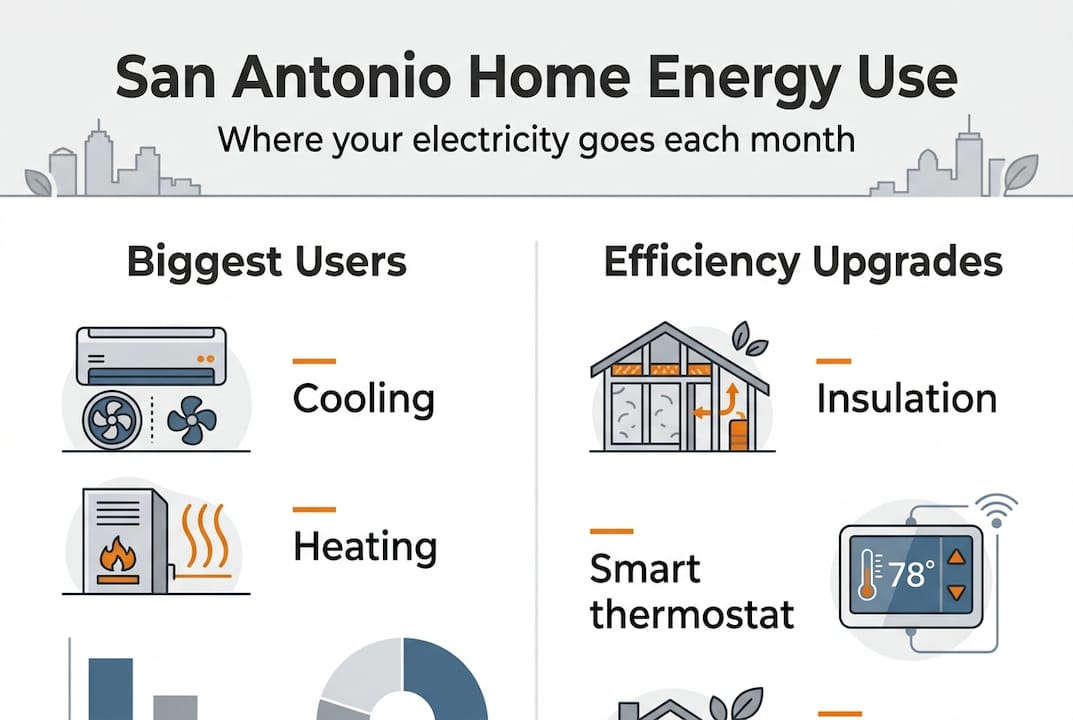
To track your own usage, log into your CPS Energy account online. You can view your monthly kWh history, compare year over year, and spot the months where your bill spikes. Look for patterns. Did your bill jump after a guest stayed for a week? Did it drop when you were out of town? Those clues point directly to the habits and appliances worth targeting.
You can also find cut energy bill tips that help you connect your usage data to specific actions. The goal at this stage is simply to understand your bill before spending a dollar on upgrades.
Key things to review on your bill each month:
- Total kWh used versus the same month last year
- Average daily use (listed on most CPS Energy statements)
- Any demand charges if you are on a time-of-use rate plan
- Fuel adjustment charges, which vary with market conditions
Knowing your baseline is the foundation of every strategy that follows.
Quick wins: Proven energy efficiency upgrades
Once you know where your energy goes, you can target the upgrades that deliver the fastest return. Some cost almost nothing. Others require an upfront investment but pay back quickly through rebates and lower bills.
Here is a prioritized order for most San Antonio homes:
- Seal air leaks with weather-stripping around doors and windows. This is a weekend project that costs under $50 and stops conditioned air from escaping.
- Switch to LED bulbs throughout the home. LEDs use about 75% less energy than incandescent bulbs and last years longer.
- Install a programmable or smart thermostat. Smart thermostats cut 10 to 15% off your cooling bill by adjusting temperatures automatically when you are asleep or away.
- Add attic insulation. In San Antonio’s climate, this is one of the highest-impact upgrades. Attic and wall insulation can cut up to 25% of your cooling costs.
- Upgrade your HVAC system to an ENERGY STAR rated unit if yours is more than 12 to 15 years old. Older systems lose efficiency steadily over time.
- Improve windows with low-E coatings or add window film to reduce solar heat gain.
The CPS Energy Casa Verde program offers rebates for insulation, HVAC upgrades, windows, and appliances that can result in a 20 to 40% reduction in your electric bill. Income-qualified homeowners may receive free weatherization services through the same program.

| Upgrade | Estimated savings | Rebate available? |
|---|---|---|
| Smart thermostat | 10 to 15% | Yes, via CPS Energy |
| Attic insulation | Up to 25% | Yes, Casa Verde |
| ENERGY STAR HVAC | 15 to 20% | Yes, Casa Verde |
| LED lighting | 5 to 8% | Varies |
| Window improvements | 5 to 12% | Yes, Casa Verde |
For a broader look at how these upgrades connect to long-term savings, the solar savings guide walks through the full picture. You may also qualify for federal energy tax credits on certain upgrades, which adds another layer of savings on top of utility rebates.
Pro Tip: CPS Energy offers a free home energy audit that identifies exactly which upgrades will save you the most money based on your specific home. Schedule one before spending anything on improvements.
Going solar: How panels cut your bill in San Antonio
Energy efficiency gets you part of the way there. Solar takes you further. San Antonio sits in one of the sunniest regions in the country, which means your panels produce more power per dollar invested than in most other cities.
Here is what solar looks like for a typical San Antonio homeowner:
- A properly sized system offsets 80 to 100% of your annual electricity use
- Most homeowners see payback in 7 to 10 years, with systems lasting 25 to 30 years
- After payback, the electricity your panels produce is essentially free
- Net metering allows you to send excess power back to the grid and receive credits on your CPS Energy bill
Net metering means your meter runs backward when your panels produce more than you use. On sunny days, you bank credits. On cloudy days or at night, you draw from those credits. The result is a dramatically lower monthly bill, sometimes close to zero.
HOAs in Texas cannot block solar installations, which removes a barrier many homeowners worry about. Solar also locks in your power costs for 20 or more years, protecting you from the utility rate increases that have pushed bills higher almost every year.
Before committing, it helps to calculate your solar payback using your actual usage data. You can also review solar panel savings breakdowns and net metering benefits to understand how credits work in practice.
For lower-income households, equity-focused solar programs are expanding access to these savings across San Antonio.
Pro Tip: Check your roof’s age and shade coverage before getting solar quotes. Panels on a roof that needs replacement in five years will require removal and reinstallation, which adds cost. Pair both projects if your roof is aging.
Smart habits: Behavioral changes that pay off
Technology upgrades matter, but your daily habits move the needle faster than most people expect. These five changes cost nothing and can show up on your next bill.
- Set your thermostat to 78°F in summer. Each degree above 72°F saves 6 to 8% on your cooling costs. At 78°F, that adds up to 10% or more in annual savings.
- Run laundry and dishwashers after 9 p.m. CPS Energy’s time-of-use rates charge less for electricity used during off-peak hours. Shifting these loads saves money and reduces grid strain.
- Unplug electronics when not in use. Devices in standby mode draw what is called phantom load. Televisions, gaming consoles, and chargers left plugged in can add 5 to 10% to your bill without you noticing.
- Close blinds and curtains during peak sun hours. South and west-facing windows let in the most heat between noon and 4 p.m. Blocking that solar gain reduces how hard your AC works.
- Schedule regular AC maintenance. A dirty filter or low refrigerant makes your system work harder and use more electricity. A $20 filter change every 30 to 60 days pays for itself quickly.
“Setting your thermostat at 78°F in summer can save 10% or more per year on your electric bill, and using ceiling fans allows you to feel comfortable at higher temperatures without increasing AC load.”
In winter, the same logic applies in reverse. Lower your thermostat at night, use natural sunlight to warm south-facing rooms, and seal any drafts that let cold air in. San Antonio winters are mild, but even small heating costs add up over the season.
For more ideas on daily energy choices, explore these green energy habits that San Antonio homeowners use year-round. Small changes, done consistently, produce real results on your monthly statement.
What most energy-saving advice gets wrong in San Antonio
Most energy-saving guides hand you a generic checklist and call it a day. The problem is that a 1960s ranch home in Alamo Heights and a new build in Stone Oak have almost nothing in common when it comes to energy loss. What saves 20% in one home might save 5% in another. Advice that ignores your specific building, rate plan, and household habits is only marginally useful.
There is also an overestimation problem with behavioral savings. Researchers call it the rebound effect: when people save money on one energy habit, they often spend it elsewhere, like running the AC a little longer because the bill looks better. Real savings require consistent follow-through, not a one-time fix.
Equity matters here too. Demand response programs can create health risks for low-income families who cannot safely reduce cooling during extreme heat events. Energy savings programs need to account for who can actually participate without putting their household at risk.
Our take at Alpha Solar Solutions is that solar and efficiency upgrades should expand options for San Antonio homeowners, not pressure them into decisions that do not fit their budget or living situation. Explore renewable energy insights that reflect the full range of what is possible for different households.
Pro Tip: Start with a free or low-cost home energy assessment before making any major investment. The data you get will make every dollar you spend more effective.
Make your San Antonio home more energy efficient today
You now have a clear picture of where your energy dollars go and what you can do about it. Whether you start with a programmable thermostat or move straight to a solar installation, every step you take builds toward a lower, more predictable electric bill.

At Alpha Solar Solutions, we design custom solar systems and efficiency solutions specifically for San Antonio homes. Our team helps you estimate your solar savings before you commit to anything. If you are ready to explore your options, check out our residential solar installation services or book a free energy savings quote in minutes. The sooner you start, the sooner your bill reflects what energy should actually cost.
Frequently asked questions
Will installing solar panels really make my electric bill zero in San Antonio?
Solar can offset most or nearly all of your bill, but actual results depend on system size, your home’s energy use, and CPS Energy’s net metering policies. Solar locks in costs long term and can significantly reduce or nearly eliminate monthly utility charges for many homeowners.
How much can I save with the Casa Verde weatherization program?
Eligible homeowners save about $450 per year on average, with qualifying upgrades cutting 20 to 40% off electric bills depending on the improvements made.
What thermostat setting saves the most on energy bills in San Antonio?
Setting your thermostat to 78°F during summer is the most effective balance of comfort and savings, with each degree above 72°F reducing cooling costs by 6 to 8%.
Do I need to remove my solar panels if I replace my roof?
Yes, panels must be removed and reinstalled during a roof replacement. Planning both projects at the same time reduces labor costs and avoids paying for the removal twice.