

TL;DR:
- Panel shading blocks sunlight from solar panels and causes energy losses beyond the shaded area. It impacts entire string systems due to the series wiring, making proper placement and shading analysis essential. Shading mitigation includes strategic placement, advanced hardware, and regular cleaning to maximize solar system performance.
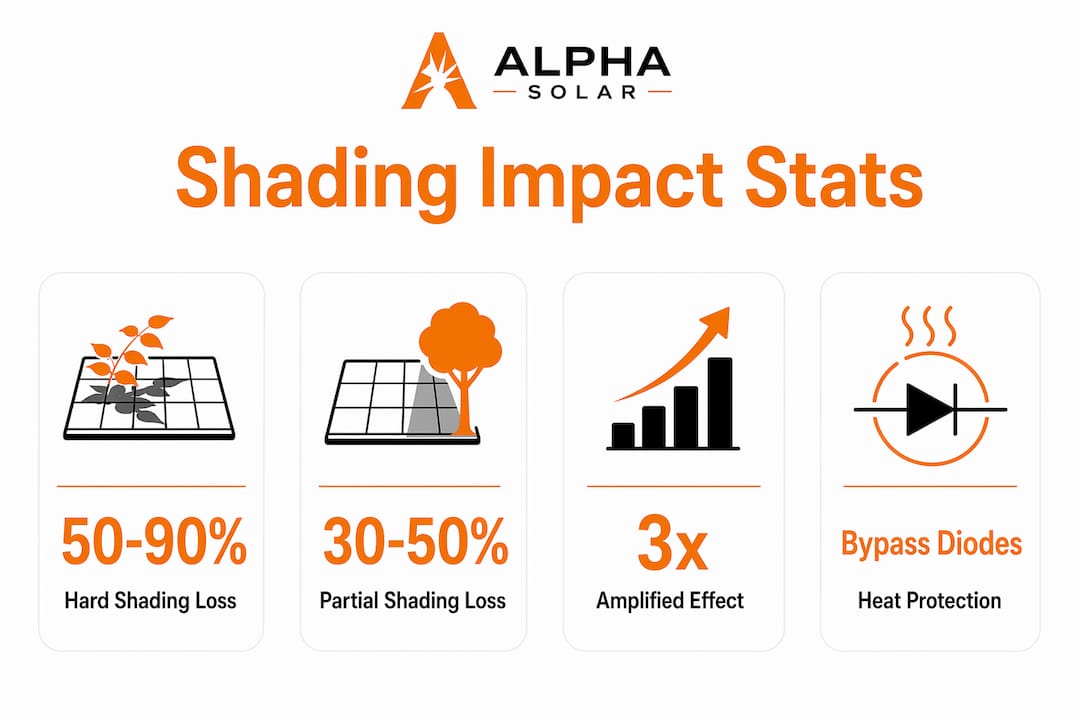
Panel shading is defined as any obstruction that blocks direct sunlight from reaching photovoltaic (PV) cells on a solar panel, causing energy output to drop far beyond what the shaded area alone would suggest. If you are considering solar panels for your home, shading is one of the most important factors to understand before you install. A shadow covering just 10% of a panel’s surface can trigger a 30–50% energy loss for the entire string of panels connected to it. That kind of loss comes from the way solar cells are wired together electrically, not from the size of the shadow itself. Understanding this upfront helps you make smarter decisions about panel placement, equipment, and system design.
What is panel shading and why does it matter so much?
Panel shading matters because solar cells in a standard string system are connected in series, meaning electricity flows through each cell one after another like links in a chain. When one cell is shaded, it produces less current. The entire string then operates at that lower current level, not just the shaded cell. This is the core reason why shading losses are amplified, not proportional, to the shaded area.
Think of it like a garden hose with a kink. The kink does not just slow down water at that one spot. It slows down the entire flow from the source to the end. One shaded cell creates the same bottleneck for your whole solar string.
The electrical term for this is “current mismatch.” It is the reason why a small chimney shadow falling across one corner of your roof can cost you a significant portion of your daily solar production. Recognizing this early is what separates a well-designed solar system from one that underperforms for years.
How does shading work electrically in a solar system?
The series wiring problem
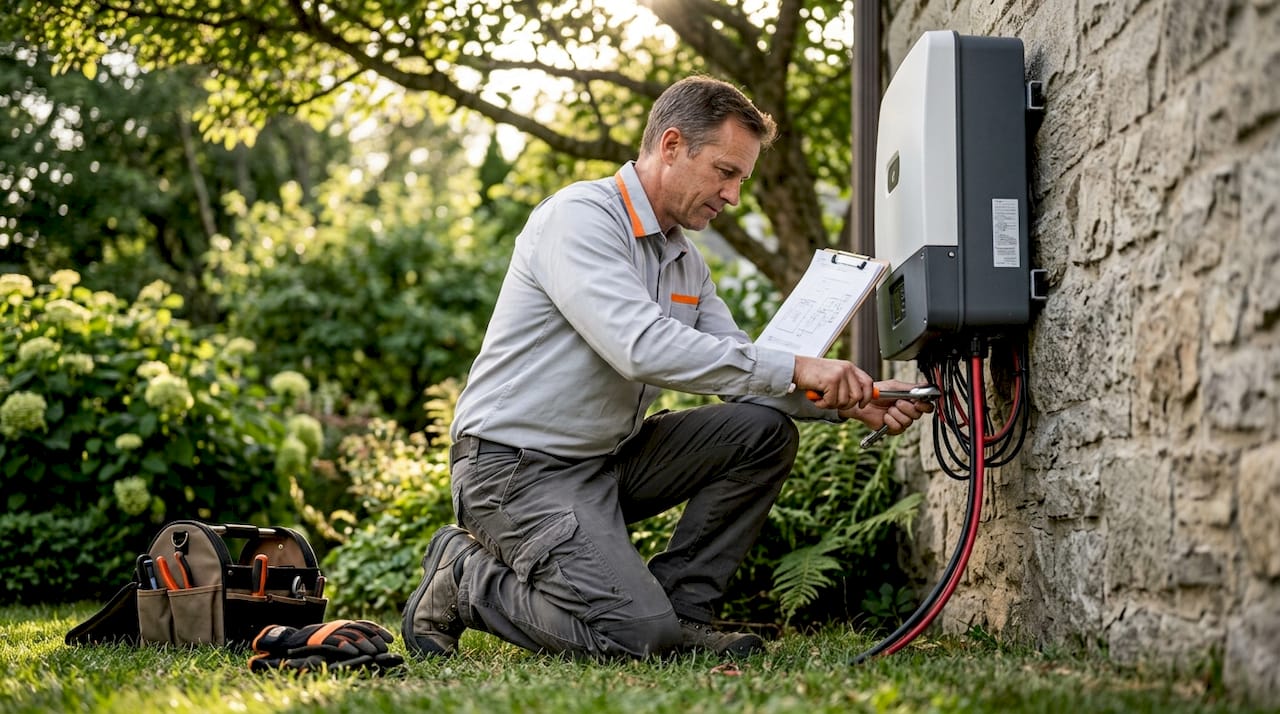
Most residential solar systems use a string inverter, where panels are wired in a series circuit. The current through the entire string is limited by the weakest panel. Series wiring causes cascading failure where one shaded panel throttles the entire string’s current output. This is not a flaw in the inverter. It is a fundamental property of series electrical circuits.
The role of bypass diodes
Panels include bypass diodes as a built-in safety feature. When a cell group is shaded, the bypass diode redirects current around that group. This protects the panel from heat damage and hot spots, but bypass diodes do not restore lost power. The bypassed section simply stops contributing to output. You avoid damage, but you still lose production.
Types of shading and their loss ranges
Not all shading is equal. The industry recognizes three main categories:
- Hard shading: A solid object like a chimney, tree branch, or roof vent casts a sharp, defined shadow. This is the most damaging type, causing 50–90% output loss in the affected area. Hard shading also creates hot spots that degrade panel components over time.
- Soft shading: Clouds, haze, or atmospheric diffusion reduce light uniformly across the panel. Losses are milder, typically 10–30%, because soft shade does not create current mismatch the same way a hard shadow does.
- Soiling: Dust, bird droppings, pollen, and debris settle on the panel surface and act like partial shading. Soiling can reduce output by 5–25% and is the most preventable type.
Pro Tip: If you have trees near your roof, check their shadow pattern at different times of day and across seasons. A tree that clears your panels in summer may cast a long shadow in winter when the sun sits lower in the sky.
What are the most common shading sources for residential solar?
Homeowners in suburban and urban settings face shading from several predictable sources. Knowing these helps you plan your installation more effectively.
- Chimneys and roof vents: These cast hard shadows that move across panels throughout the day. Even a small chimney can shade multiple panels during morning or late afternoon hours.
- Nearby trees: Deciduous trees lose their leaves in winter, which reduces shading seasonally. Evergreen trees shade year-round and are a more serious concern for panel placement.
- Neighboring structures: Tall fences, adjacent buildings, or second-story additions on neighboring homes can block low-angle morning or evening sun.
- Roof features: Satellite dishes, HVAC units, and skylights placed near panels create recurring hard shade patterns.
- Atmospheric conditions: Clouds and haze produce soft shading with uniform output reductions that are less severe than hard shadows but still reduce daily production.
San Antonio homeowners generally benefit from strong sun exposure, but even in a sunny climate, a single poorly placed tree or chimney can quietly drain your system’s output year after year. Identifying these sources before installation is far easier than correcting them afterward.
What technologies reduce the impact of shading?
The solar industry has developed several design strategies and hardware solutions that limit how much shading hurts your system. Here are the most effective options, ranked from foundational design to advanced hardware:
-
Strategic panel placement: Placing panels on roof sections with the least shading during peak sun hours (roughly 9:00 AM to 3:00 PM) is the single most effective step. Good solar panel placement reduces the need for expensive mitigation hardware.
-
Half-cut cell panels: These panels split each cell into two smaller halves and use a split-circuit design. Half-cut cell panels improve shade tolerance because shade on one half affects only that half’s circuit, not the entire panel. This is now a standard feature in many quality residential panels.
-
Power optimizers: A power optimizer attaches to each individual panel and performs maximum power point tracking (MPPT) at the panel level. Microinverters and power optimizers limit shading losses to roughly 15–20% per shaded panel, compared to much larger system-wide losses in a standard string setup.
-
Microinverters: Instead of one central inverter for the whole string, microinverters convert DC to AC at each panel independently. This completely eliminates the series current-limiting problem. Microinverters cost more upfront but pay back through better output in partially shaded conditions.
-
Separate string design: When some shading is unavoidable, a qualified installer can wire shaded panels onto a separate string from unshaded panels. This prevents shaded panels from dragging down the output of the unshaded ones.
Pro Tip: Ask your installer to show you a shading simulation report before finalizing your system design. Tools like site-specific 3D shade analysis can model your roof’s shading patterns across every hour of the year.
| Technology | Best use case | Shading loss reduction |
|---|---|---|
| Half-cut cell panels | Mild partial shading | Moderate improvement |
| Power optimizers | Mixed shading conditions | Significant per-panel isolation |
| Microinverters | Frequent or complex shading | Maximum per-panel independence |
| Separate string design | Predictable, localized shade | Prevents string-wide losses |
Practical steps to minimize shading before and after installation
Taking action at the right time makes a real difference in your system’s long-term performance. Here is what you can do:
- Get a professional 3D shade analysis. A professional shade analysis before installation prevents major energy losses and improves your return on investment. It maps shadow patterns across your roof for every season and time of day.
- Trim trees and manage foliage. Cutting back branches that overhang your roof is one of the lowest-cost ways to reduce hard shading. Schedule trimming before installation and repeat it every few years.
- Keep panels clean. Soiling reduces output by 5–25%, and professional cleaning recovers that loss. In San Antonio, dust and pollen accumulate quickly, making regular cleaning a practical part of your maintenance plan.
- Choose shading-tolerant equipment. When your roof has unavoidable shading from a chimney or vent, specify half-cut cell panels and power optimizers or microinverters in your system design.
- Monitor your system output regularly. Most modern inverters provide app-based monitoring. A sudden drop in one panel’s output often signals a new shading issue, such as a growing tree branch or debris buildup. Catching it early through regular solar maintenance prevents months of silent energy loss.
Key Takeaways
Panel shading causes disproportionate energy losses in solar systems because series-wired cells limit the entire string’s output to the weakest shaded cell, making shade analysis and shading-tolerant design non-negotiable before installation.
| Point | Details |
|---|---|
| Shading losses are amplified | A 10% shaded area can cause 30–50% output loss due to series wiring. |
| Bypass diodes protect, not restore | Diodes prevent damage but do not recover lost production from shaded cells. |
| Hard shading is the most damaging | Chimneys, trees, and vents cause 50–90% losses and long-term thermal damage. |
| Technology reduces but does not replace design | Microinverters and power optimizers help most when good placement is not enough. |
| Cleaning prevents soiling losses | Regular panel cleaning recovers 5–25% output lost to dust and debris. |
Why shading analysis is the most underrated step in solar design
I have seen homeowners spend weeks comparing panel brands and inverter warranties, then skip the shade analysis entirely because it felt like an extra cost. That is the wrong call every time.
The systems that disappoint homeowners most are almost never the result of bad equipment. They are the result of panels placed where a tree or chimney casts a shadow during peak sun hours. The series wiring problem means that one shaded panel does not just lose its own output. It pulls down every panel connected to it. I have watched systems produce well under half their rated capacity because of a single roof vent that nobody mapped before installation.
The good news is that this is entirely preventable. A proper 3D shade analysis costs a fraction of what you will lose in energy over a 25-year system life if shading is ignored. Pairing that analysis with half-cut cell panels and power optimizers gives you a system that performs close to its rated output even when conditions are not perfect. Shading is a design priority, not an afterthought. The homeowners who treat it that way are the ones who see their solar investment pay off on schedule.
— Anthony
How Alphasolarsa designs around shading for San Antonio homeowners
Shading is one of the first things Alphasolarsa evaluates when designing a residential solar system. Every installation starts with a professional site and shade assessment that maps your roof’s sun exposure across all seasons.
Alphasolarsa’s team specifies shading-tolerant equipment, including half-cut cell panels and panel-level power electronics, when your roof has unavoidable obstructions. The goal is a system that produces what it is designed to produce, year after year. If you are ready to see what a properly designed solar system looks like for your home, get a residential solar assessment from Alphasolarsa and find out exactly how much shading affects your specific roof.
FAQ
What is the panel shading definition in solar energy?
Panel shading is the obstruction of direct sunlight on photovoltaic cells by objects like trees, chimneys, or clouds. It reduces solar energy output far beyond the size of the shaded area due to the series electrical connections between cells.
How does shading affect a whole solar string?
Because cells are wired in series, the entire string operates at the current level of the weakest shaded cell. A shadow on one panel can reduce output for every panel in that string by 30–50%.
Do bypass diodes fix shading problems?
Bypass diodes protect panels from heat damage caused by shading but do not restore lost energy. They redirect current around shaded cell groups, which prevents hot spots but still results in reduced power output.
What is the difference between hard shading and soft shading?
Hard shading comes from solid objects casting sharp shadows and causes 50–90% output loss in the affected area. Soft shading from clouds or haze reduces output uniformly by 10–30% without creating the severe current mismatch that hard shading produces.
Can cleaning panels reduce shading losses?
Yes. Soiling from dust, pollen, and bird droppings acts like partial shading and can reduce output by 5–25%. Professional panel cleaning services recover that lost production and keep your system performing at its best.