

TL;DR:
- Proper solar panel disposal involves assessing whether panels are reusable, recyclable, or hazardous and coordinating with certified recyclers. Homeowners should document disposal processes, understand hazardous waste classifications, and hire professionals to ensure safe removal and compliance. Recycling recovers most materials and prevents environmental contamination, making early planning essential.
Solar panel disposal steps are a structured, multi-stage process that begins with assessing whether your panels can be reused and ends with verified recycling or compliant waste disposal. Most homeowners don’t think about end-of-life planning when they install a system, but panels typically last 25 to 30 years, and what you do at the end matters legally, financially, and environmentally. Skipping steps or assuming you can toss old panels in a dumpster can result in regulatory violations, hazardous waste penalties, and unnecessary landfill waste. This guide walks you through every decision point so you can handle the process with confidence.
What are the solar panel disposal steps?
The solar panel end-of-life process follows a clear decision tree: assess condition, classify waste type, arrange professional removal, and coordinate with a certified recycler or disposal facility. Effective disposal starts with determining whether panels are reusable, recyclable, or require hazardous waste management, with documentation maintained throughout to protect you legally.
Getting this right from the start saves time and money. Panels that still generate power, even at reduced efficiency, may have resale value through secondary markets or donation programs. Panels that are cracked, delaminated, or simply obsolete need a different path. The industry term for this overall process is photovoltaic (PV) module end-of-life management, and understanding that term helps you communicate clearly with installers, recyclers, and regulators.
How do you decide whether to reuse, recycle, or dispose?
The first question to answer is whether your panels still function. A panel producing 70% or more of its original rated output is often still viable for resale, donation to a community solar project, or use in a lower-demand application like a shed or RV setup. Panels below that threshold, or those with physical damage, are candidates for recycling or disposal.
Here is a quick checklist to guide your classification:
- Functioning panels (70%+ output): Contact your original installer or a solar resale marketplace to explore take-back or resale options.
- Damaged panels (cracked glass, burn marks, delamination): These require recycling or disposal. Do not attempt to resell damaged panels.
- Obsolete but intact panels: Older technology panels may still be recyclable even if no longer efficient enough for your roof.
- Leased systems or PPAs: Check your contract first. If you have a Power Purchase Agreement, the provider owns the equipment and is responsible for disposal. Unauthorized removal could breach your contract.
Pro Tip: Contact your original installer before doing anything else. Many manufacturers and installers offer take-back programs or can direct you to certified recyclers in your area, which simplifies the entire process.
Reaching out early also gives you time to gather warranty documents, installation records, and any manufacturer guidelines that affect your disposal options.
Does hazardous waste classification affect how you dispose of panels?
Yes, and this is the step most homeowners overlook. The Toxicity Characteristic Leaching Procedure, known as TCLP, is the standard US method used to determine whether a solar panel qualifies as hazardous waste. Hazardous classification can raise disposal costs by roughly 10 times compared to standard recycling, so knowing your panel type matters before you call a hauler.
Thin-film panels, particularly cadmium telluride (CdTe) and copper indium gallium selenide (CIGS) types, are more likely to test as hazardous due to their heavy metal content. Standard crystalline silicon panels are less likely to fail TCLP testing, but this is not guaranteed. The risk of incorrect classification is high without proper testing, and incorrect hazardous waste handling can lead to costly compliance failures and legal penalties.
What this means practically:
- Non-hazardous panels can typically go through standard e-waste recycling channels or certified PV recyclers.
- Hazardous panels require licensed hazardous waste transporters, specific storage conditions, and documented manifests.
- All panels require some form of documentation, regardless of classification.
Keeping clear paperwork is not optional. Recycling certificates, waste manifests, and disposal records protect you legally, especially if you manage multiple properties. Documentation and compliance records are the foundation of legal defensibility in solar panel disposal.
Local rules add another layer. Some US counties allow solar panel disposal in regular trash under specific conditions, while others prohibit it entirely. Always confirm your municipality’s rules before arranging pickup.
How to safely remove and prepare panels for recycling
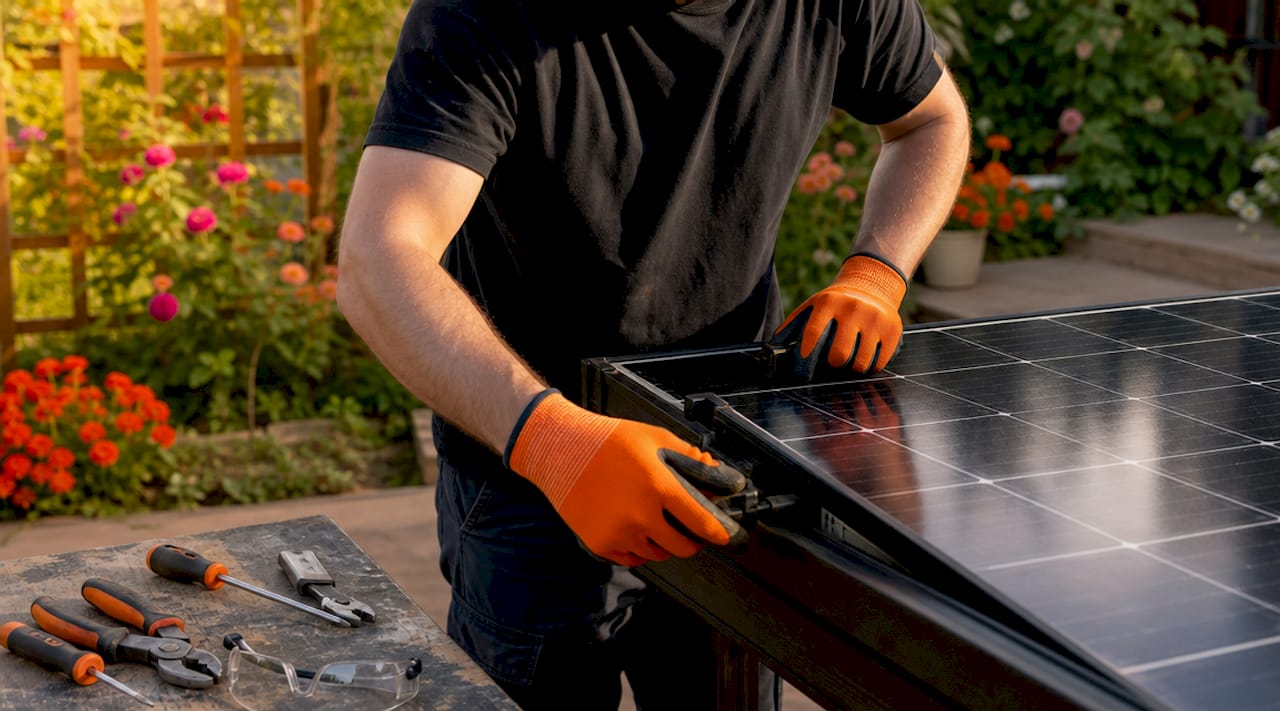
Safe removal is not a DIY project. Professional removal is strongly preferred because climbing on a roof to disconnect a live electrical system carries real injury risk, and improper disassembly can crack panels and release hazardous materials. Alphasolarsa handles safe panel removal in San Antonio and coordinates the downstream steps so you don’t have to manage multiple vendors.
Follow these steps once you’ve decided to proceed with disposal:
- Contact your installer or a certified solar removal company. Provide your system specs, panel brand, and installation date. This helps them prepare the right equipment and identify any manufacturer take-back options.
- Do not break, crush, or disassemble panels yourself. Broken panels can release lead solder, cadmium, or other materials. This is both a safety hazard and a potential regulatory violation.
- Disconnect the system properly. A licensed electrician or solar technician must shut down the inverter, disconnect the DC wiring, and de-energize the system before any panel is touched.
- Package panels for transport. Intact panels should be palletized and wrapped to prevent breakage during shipping. Recyclers often specify packaging requirements, so confirm before loading.
- Handle warranty replacements and insurance claims separately. If panels are being replaced under warranty or an insurance claim, document the damage thoroughly with photos and follow the manufacturer’s or insurer’s specific disposal instructions before arranging removal.
- Obtain a recycling certificate or disposal manifest. This is your proof of compliant disposal and should be kept with your property records.
Pro Tip: If you’re also replacing your roof, coordinate panel removal and reinstallation as a single project. Alphasolarsa offers solar detachment services that protect your panels during roofing work and reduce total project cost.
What happens to solar panels after they are collected?
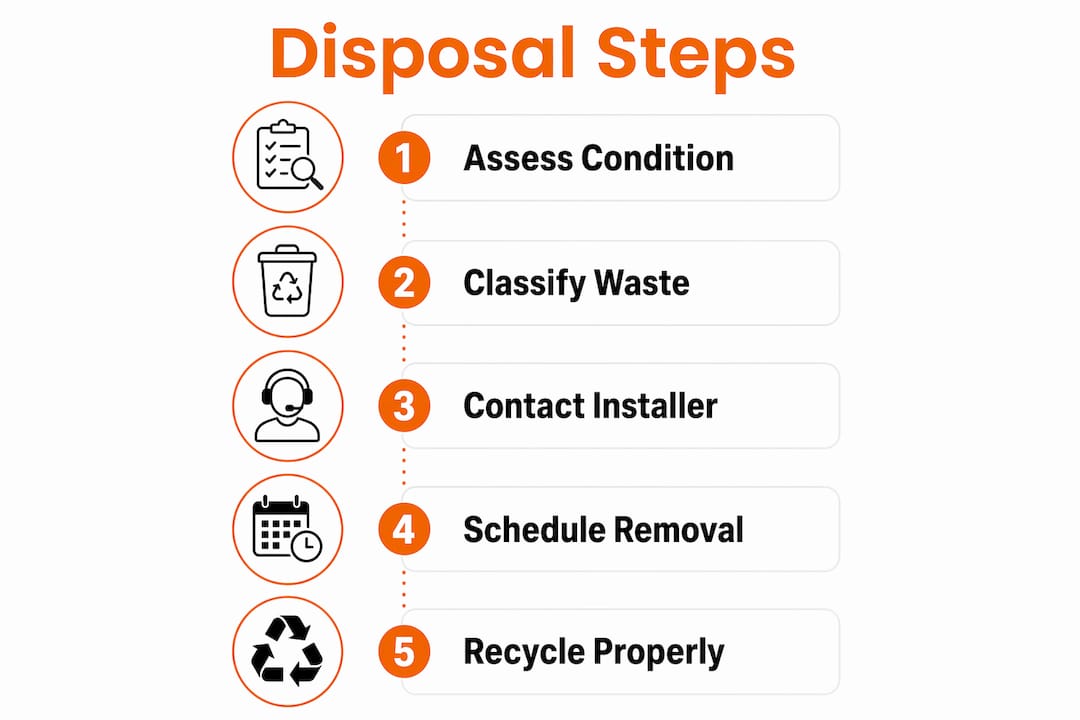
Once panels reach a certified recycling facility, the process separates valuable materials from waste through a combination of mechanical, thermal, and chemical methods. Recycling can recover 85 to 95% of a panel’s materials, including glass, aluminum, silicon, copper, and silver. That recovery rate makes recycling far preferable to landfill disposal, both environmentally and economically.
Here is what the solar panel recycling process looks like at a facility:
| Stage | What happens | Materials recovered |
|---|---|---|
| Mechanical disassembly | Aluminum frame and junction box are removed | Aluminum, copper wiring |
| Thermal processing | Heat separates the encapsulant from the glass | Glass (up to 90% of panel weight) |
| Chemical processing | Silicon wafers are etched and purified | Silicon, silver |
| Final sorting | Remaining metals are separated and graded | Copper, tin, lead (contained) |
The glass alone accounts for the majority of a panel’s weight, and recovered glass is used in new panels or construction materials. Silicon and silver have direct reuse value in electronics and new PV manufacturing. Sending panels to landfill wastes all of that material and, for hazardous panels, creates long-term soil and groundwater contamination risk.
In the UK, solar panels cannot go to landfill under WEEE regulations, and producers are legally required to offer free collection and recycling. The US has no equivalent federal mandate yet, but several states are moving toward producer responsibility frameworks. Understanding UK producer responsibility schemes gives US homeowners a useful preview of where domestic regulation is heading.
Key takeaways
Responsible solar panel disposal requires classifying panel condition, testing for hazardous waste status, arranging professional removal, and verifying recycling through documented certificates.
| Point | Details |
|---|---|
| Classify before you act | Determine if panels are reusable, recyclable, or hazardous before contacting any hauler. |
| TCLP testing matters | Hazardous classification can raise disposal costs by 10x, so know your panel type early. |
| Never DIY the removal | Professional disconnection prevents injury and avoids regulatory violations. |
| Documentation protects you | Keep recycling certificates and waste manifests with your property records permanently. |
| Recycling recovers most materials | Up to 95% of panel materials are recoverable, making recycling the clear environmental choice. |
Why I think most homeowners wait too long to plan for disposal
I’ve worked with enough homeowners in San Antonio to know that disposal planning almost never happens at installation. People are focused on savings and system performance, which makes complete sense. But the panels going on your roof today will need to come off someday, and the regulatory environment around solar waste management is tightening every year.
The homeowners who handle this best are the ones who ask their installer two questions upfront: “What is your take-back policy?” and “How do I document disposal when the time comes?” Those two questions save significant headaches 20 years later when the original company may no longer exist and local rules may have changed entirely.
The hazardous waste piece genuinely surprises people. Most assume that because solar is a green technology, the panels are automatically safe to discard. Thin-film panels in particular contain materials that require careful handling. Getting a TCLP test done on your specific panel model before disposal is not expensive, and it tells you exactly which compliance path to follow.
My honest recommendation: treat disposal planning the same way you treat your roof warranty. File the paperwork, note the panel brand and model, and revisit the plan every five years. When the time comes, work with a professional who handles both removal and recycling coordination. It’s a much smoother process than trying to piece it together yourself at the last minute.
— Anthony
Ready to remove your panels the right way?
When your solar panels reach end of life, or when you need them removed for a roof replacement or system upgrade, Alphasolarsa handles the entire process from disconnection to transport coordination. Our team is trained in safe removal procedures that protect your roof, your panels, and your compliance standing.
We work with homeowners and property managers across San Antonio to make panel removal straightforward. Whether you’re upgrading your system, replacing your roof, or decommissioning panels entirely, our solar removal and reinstallation service covers every step. Contact Alphasolarsa today to schedule a consultation and get a clear plan for your panels’ next chapter.
FAQ
What is the first step in solar panel disposal?
The first step is to assess whether your panels are still functional or at end of life, then contact your installer or a local recycling agency. Classify your panel condition before arranging any removal or transport.
Can solar panels go in the trash?
In most US jurisdictions, solar panels cannot go in regular trash, particularly if they contain hazardous materials. Some counties permit disposal under specific conditions, so always confirm local rules with your waste hauler before proceeding.
How much does solar panel recycling cost?
Costs vary by panel type and hazardous waste classification. Non-hazardous crystalline silicon panels typically cost less to recycle than thin-film panels, which may require licensed hazardous waste handling at significantly higher rates.
Who is responsible for disposing of leased solar panels?
If your system is under a lease or Power Purchase Agreement, the provider owns the equipment and is legally responsible for disposal. Review your contract carefully and contact the provider before arranging any removal.
What materials are recovered when solar panels are recycled?
Certified recyclers recover aluminum frames, copper wiring, glass, silicon, and silver through mechanical, thermal, and chemical processes. Recovery rates of 85 to 95% make recycling the most environmentally responsible disposal option available.