
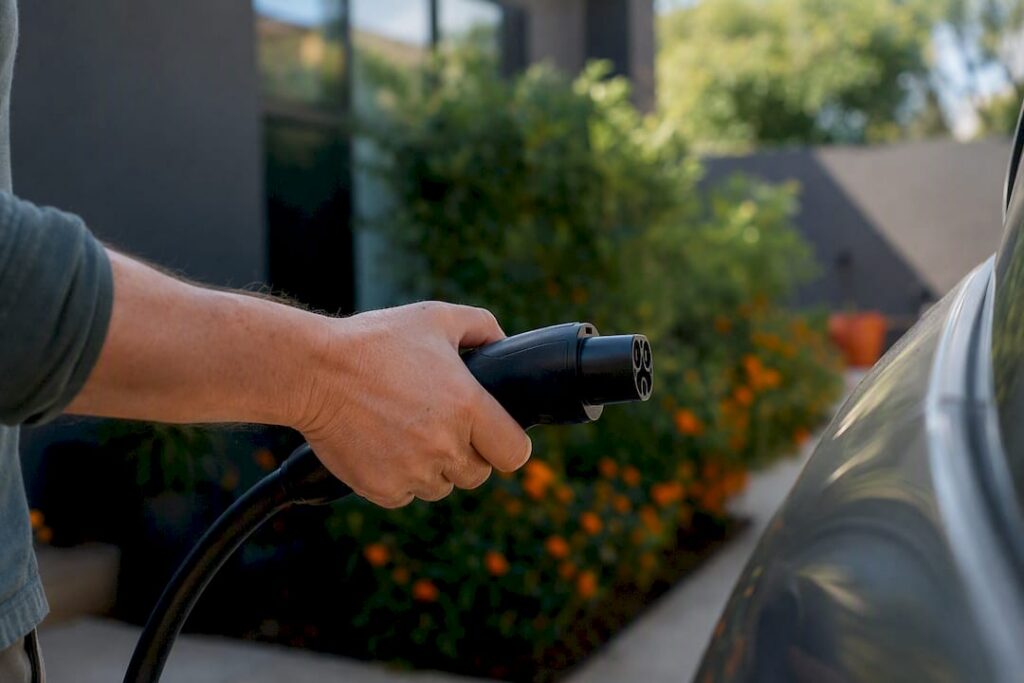
NACS is where the North American charging market is headed, and CCS is what most existing EVs still use, which means both connectors matter to you right now. If you’re buying a new EV, native NACS gives you the simplest path to charging. If you own or plan to buy a used CCS vehicle, an OEM adapter and a growing number of dual-cable stations keep you covered. Base your decision on how you actually drive, not on which acronym sounds newer.
TL;DR:
- Most high-power DC fast chargers can support up to 350 kW regardless of connector type, but actual charging time depends on vehicle onboard limits and battery state of charge.
- NACS offers a more compact, lighter plug with integrated latch capability suitable for daily use, while CCS has a bulkier, less ergonomic design with an external release trigger.
- Adapters primarily translate connector shape and communication handshake, with OEM-certified options like UL 2252 offering better safety and compatibility guarantees.
- Newly installed or updated charging stations are increasingly dual-compatible due to recent infrastructure funding, reducing the importance of connector choice for daily driving.
- When installing a home charger, choosing dual-ready or NACS-compatible equipment provides better future flexibility, especially if planning to switch EV models or vehicle types.
Table of Contents
- NACS vs CCS: Connector Design and Real-World Charging Performance
- Where Can You Actually Charge With NACS or CCS?
- How Do NACS and CCS Adapters Actually Work?
- Buying and Home Charging Decisions to Make Before You Commit
- The Standards Behind the Plug: SAE J3400, ISO 15118, and UL 2252
- What a San Antonio Installer Notices About This Transition
- Get Your Home Charger Installed Right the First Time
- Sources
NACS vs CCS: Connector Design and Real-World Charging Performance
The physical differences between these two connectors show up the moment you grab the cable. NACS uses a single, compact plug for both AC home charging and DC fast charging, a design SAE International standardized as J3400 after Tesla opened the connector to the rest of the industry. It’s noticeably lighter in your hand than a CCS1 cable, and most NACS handles include an integrated button on the grip that pops the latch when you’re ready to unplug. That sounds like a small thing until you’re standing in the rain at 9 p.m. trying to disconnect a stiff, cold cable with gloves on.
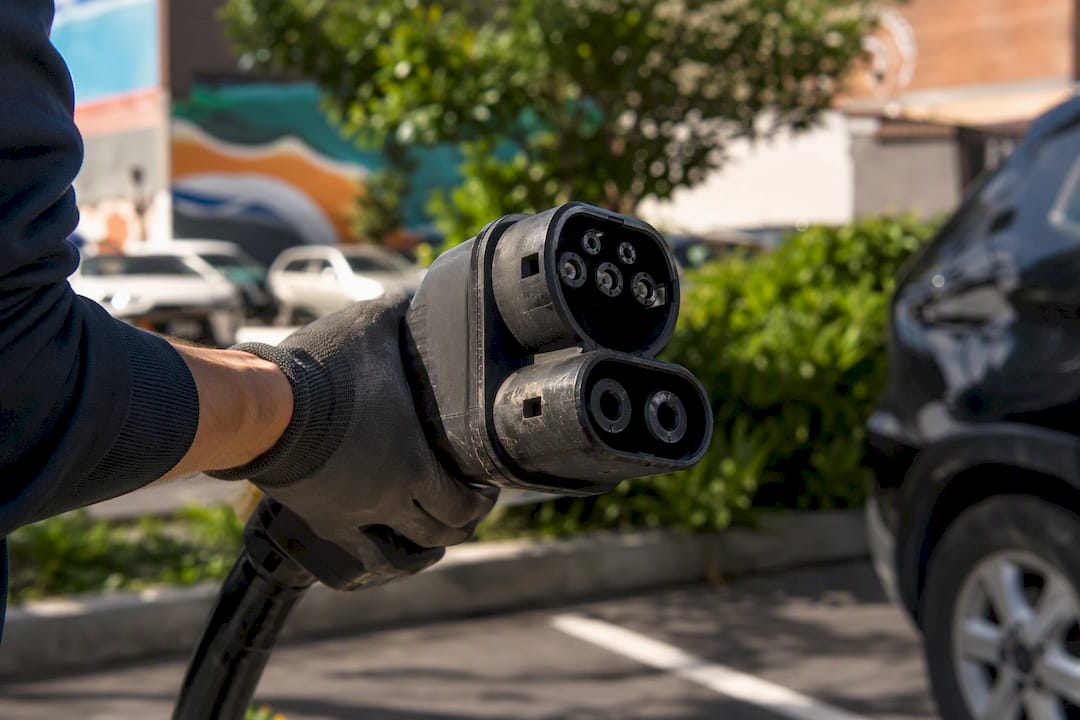
CCS1 takes a different approach. It’s built on the older J1772 AC connector and stacks two additional DC pins underneath it, which is why the plug looks bulkier and the cable tends to be heavier and less flexible. There’s no standardized integrated latch button on most CCS handles, so unlatching often means finding a small release trigger separately. None of this is a dealbreaker, but if you’ve only ever driven a Tesla and then rent a CCS-equipped EV for a road trip, the ergonomics will feel like a step backward.
Power delivery is where a lot of shoppers get confused, because the connector itself isn’t usually the bottleneck. Both NACS and CCS1 can support DC fast charging up to roughly 350 kW in practice, but what actually happens during your charging session depends on two other things: what the station’s hardware can output and what your specific vehicle’s battery can accept. A station rated at 350 kW does nothing for you if your car’s onboard charging system caps out at 150 kW, and a fresh battery accepts power much faster than one that’s already at 70% state of charge, regardless of which plug you’re using.
Here’s what that looks like in practice:
- A well-matched DC fast charging session at a high-power station can add well over 100 miles of range in 20 to 30 minutes for many current EVs.
- Older CCS vehicles with lower peak charging rates may need closer to 40 to 45 minutes for a similar range boost.
- Charging speed tapers sharply after roughly 80% battery capacity on nearly every EV, connector aside.
Pro Tip: Don’t judge a charging network by its advertised kW number alone. Check your specific vehicle’s peak DC charging rate in the owner’s manual, then compare that to the station’s output. That comparison tells you more about your actual charging time than the connector type ever will.
The Alternative Fuels Data Center tracks the growing national footprint of charging infrastructure across both connector types, and that expansion is exactly why the choice between NACS and CCS matters less for daily driving than it does for long trips where station availability decides your route.
Where Can You Actually Charge With NACS or CCS?
Connector compatibility on paper is one thing. Finding a working, available charger on a road trip is another, and that’s where network coverage decides how much this debate affects you day to day.
Tesla’s Supercharger network was built around NACS from the start and remains the largest fast-charging network in North America, but it isn’t exclusively NACS anymore. A subset of Supercharger locations, often called Magic Dock sites, include a permanently attached CCS1 adapter built into the cable, letting non-Tesla CCS vehicles charge without carrying their own adapter. That coverage is real, but it’s still a minority of Supercharger stations, not the default at every location.
Electrify America and EVgo, historically CCS-first networks, are rolling out NACS connectors alongside their existing CCS1 cables at a growing number of sites. Federally funded NEVI infrastructure projects generally require new stations to accommodate both connector standards, which is accelerating the shift toward dual-cable hardware everywhere rather than a hard cutover to one plug.
A few habits make travel planning easier during this stretch:
- Check a charging app before you leave to confirm whether a specific Supercharger location actually has Magic Dock support, since it isn’t universal.
- If your automaker offers a factory adapter, keep it in the car permanently rather than assuming every stop will have dual-cable equipment.
- Favor newer stations when you have a choice. NEVI-funded sites installed in the past year or two are far more likely to offer both connectors than older CCS-only hardware.
How Do NACS and CCS Adapters Actually Work?
Adapters solve a mechanical problem, not an electrical one. A CCS-to-NACS or NACS-to-CCS adapter translates the physical connector shape and passes through the communication handshake between car and charger. It doesn’t step voltage up or down. If you drive a CCS vehicle and want Supercharger access, you need a CCS-to-NACS adapter. If you drive a newer NACS-native EV and occasionally need a CCS-only station, you need the reverse.

That handshake passthrough works because both standards commonly rely on the same underlying communication protocols, ISO 15118 and DIN SPEC 70121, so an adapter mainly has to get the mechanical fit and safety certification right rather than reinvent how the car and charger talk to each other.
Safety certification is where adapter quality actually matters. UL 2252, published in 2025, is the first dedicated safety standard covering electrical performance, thermal behavior, and mechanical durability for EV charging adapters. Tesla’s own CCS1-to-NACS adapter, sold directly through its shop, is the kind of OEM-backed option worth prioritizing over an unbranded version from an unfamiliar seller. OEM-supplied adapters generally offer better compatibility guarantees and warranty protection than aftermarket alternatives.
Before you buy any adapter, run through this:
- Confirm the direction you need (CCS to NACS, or NACS to CCS), since they aren’t interchangeable.
- Look for the UL 2252 mark on the packaging or product listing.
- Verify the adapter is listed as compatible with your exact vehicle make, model, and year.
- Buy from your automaker or a recognized retailer rather than an unverified marketplace listing.
Some third-party adapters throttle charging power as a safety margin, and a handful of charging networks have policies restricting non-OEM adapters at certain stalls, so confirm compatibility before you’re relying on it 200 miles from home.
Buying and Home Charging Decisions to Make Before You Commit
The NACS vs CCS comparison stops being theoretical the moment you’re signing a purchase agreement or scheduling a home charger install. Here’s how to think through it.
If you’re buying new: Most 2025 and newer models from Ford, GM, Hyundai, Kia, Rivian, BMW, Toyota, Mercedes, and Volvo now ship with native NACS ports. That gets you direct Supercharger access without carrying an adapter, plus a simpler, lighter plug for daily home charging. Ask your dealer explicitly whether a CCS adapter is included in the purchase or sold separately, since policies vary by automaker and even by model year.
If you’re buying used: A CCS vehicle isn’t a liability, but it does require a bit more homework. Check whether the manufacturer offers an official adapter for that model, confirm current pricing and availability, and map the CCS and dual-cable charging stations along routes you drive regularly. A CCS vs NACS breakdown from CarBuzz confirms CCS will remain relevant for years given the size of the existing vehicle fleet, so a used CCS EV isn’t getting stranded anytime soon.
Home charging setup: This is where you can genuinely future-proof without overspending. If you’re installing a Level 2 charger now, ask your installer about NACS-ready or dual-provisioning equipment rather than locking into a single connector standard. Alpha Solar Solutions’ guide to home EV chargers walks through which current units support flexibility as the market shifts, and if you’re planning to charge from a home solar array, pairing solar with your EV charging schedule can meaningfully change what a full charge actually costs you.
If you manage a fleet or rental property: Standardize on dual-cable charging hardware wherever your budget allows, keep a small inventory of certified adapters on hand for whichever connector your equipment lacks natively, and use charge-management software that can track sessions across mixed-connector vehicles without manual reconciliation.
The Standards Behind the Plug: SAE J3400, ISO 15118, and UL 2252
None of this works safely without a few unglamorous technical standards operating quietly in the background. SAE J3400 is the formal specification that turned Tesla’s proprietary connector into an open industry standard, giving other automakers a documented spec to design against instead of reverse-engineering a plug. ISO 15118 and DIN SPEC 70121 govern the digital handshake between vehicle and charger, the conversation that authenticates the session, negotiates charging rate, and in many cases handles payment.
Adapters can pass that handshake through relatively easily because both connector ecosystems already lean on the same communication protocols. The harder engineering problem isn’t the software conversation. It’s making sure the physical adapter holds up mechanically and thermally under real charging loads.
UL 2252 exists because that mechanical and thermal reliability is exactly where cheap adapters fail, whether through connector pins overheating under sustained high-current draw or a housing that cracks after repeated use. If you’re buying an adapter, the UL 2252 certification is the single most reliable proxy for whether that housing is going to hold up. A non-certified, unbranded adapter might work on the first charge and still create a real risk down the line, and it can void manufacturer warranty coverage or run afoul of a network’s stated adapter policy.
What a San Antonio Installer Notices About This Transition
Almost every homeowner asks the same question during a site visit right now: “Should I install a charger that only works with my current car, or plan ahead?” Our answer usually comes down to your electrical panel’s available capacity and whether the conduit run allows for a future circuit upgrade without tearing into drywall again.
We generally recommend dual-ready equipment when panel capacity allows for it, since it protects you regardless of which connector your next vehicle uses. But that recommendation only holds after a real load assessment. Guessing at amperage leads to either an underpowered charger or an expensive panel upgrade you didn’t need. Get the assessment first, then pick the hardware.
— Anthony
Get Your Home Charger Installed Right the First Time
Skip the adapter guesswork and the panel-capacity uncertainty. Alpha Solar Solutions installs home EV chargers throughout San Antonio and handles the electrical load assessment upfront, so you know exactly what your panel can support before any equipment gets mounted on your wall.
A typical installation starts with that load assessment, then moves into recommending equipment that fits your vehicle now and stays flexible if your next EV switches connector standards. That includes NACS-ready and dual-provisioning setups where your panel supports it, along with proper circuit sizing and weatherproof mounting for outdoor installs. If you’re also thinking about pairing your charger with a home solar system to cut your per-mile charging cost, we can scope that at the same visit. Request a quote or schedule a site visit through our EV charger installation page and get a straight answer on what your home actually needs.