
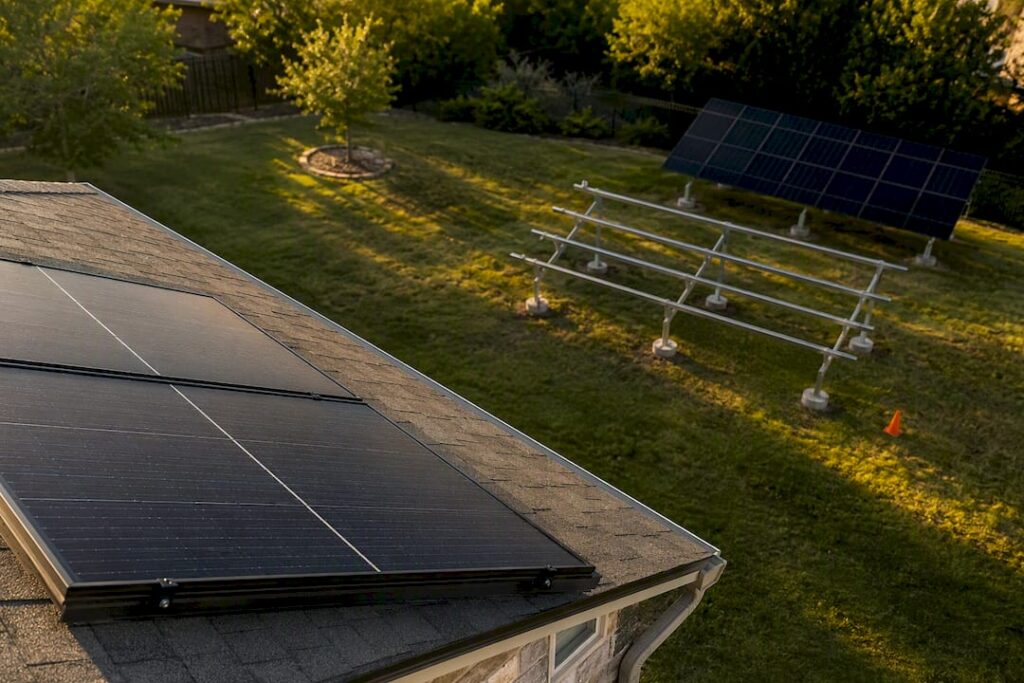
For most homeowners with a roof under 15 years old, decent southern exposure, and no major shading, roof-mounted solar wins on cost and simplicity. Ground-mounted systems pull ahead when your roof needs replacing soon, faces the wrong direction, or can’t fit the system size you need. Before ruling out either option, check three things: roof age, roof orientation, and how much usable yard space you actually have.
TL;DR:
- Ground-mounted systems can produce 5% to 15% more energy than roof mounts but often cost 20% to 50% more upfront due to foundation and trenching expenses.
- Roof systems typically benefit from faster permits, lower installation costs, and use space already owned by the homeowner, while ground mounts offer more design flexibility, scalability, and easier maintenance access.
- A poor roof orientation or a roof with less than 10 to 15 years of remaining lifespan can negate the cost savings of roof-mounted solar, making ground systems more favorable if space permits.
- Zoning, HOA restrictions, and longer approval times are more challenging for ground mounts, requiring additional planning for trenching, soil testing, and community review.
- Running both system models in advance is crucial, as the lower upfront cost of roof mounts often outweighs ground systems’ higher energy output, especially for well-oriented, south-facing roofs.
Table of Contents
- Ground vs Roof Solar: The Quick Comparison
- The Real Advantages and Drawbacks of Roof-Mounted Solar
- Ground-Mounted Solar: Fixed Racks, Pole Mounts, and Trackers
- What Ground vs Roof Solar Actually Costs Over Time
- Permits, HOAs, and the Hidden Work Nobody Mentions Upfront
- A Practical Checklist for Choosing Between Roof and Ground
- What We See on the Ground in San Antonio
- An Installer’s Take on the Roof vs Ground Debate
- Get a Modeled Quote for Your Property
- Tools Worth Bookmarking
- Sources
- FAQ
Ground vs Roof Solar: The Quick Comparison
The choice usually comes down to what your property already gives you versus what you’re willing to build from scratch. Here’s how the two stack up on the factors that matter most.
- Upfront cost: Roof mounts typically run lower per watt; ground mounts often cost $3,000 to $5,000 more for a comparable residential system once foundations and trenching are added.
- Production: A well-sited ground system can outproduce a constrained roof array by 5% to 15%, with trackers pushing that gain higher in sunny regions.
- Space: Roof mounts use space you already have. Ground mounts need open, unshaded land, usually a few hundred square feet depending on system size.
- Permits and HOAs: Rooftop systems generally clear permitting faster and get more legal protection from state solar-rights laws. Ground mounts often face extra zoning, setback, and HOA review.
- Maintenance: Roof systems are harder to reach for cleaning or repairs. Ground systems sit at eye level, which makes upkeep easier but adds a security consideration.
Neither option is universally cheaper or universally better. It depends on what your roof, your lot, and your local permitting office are willing to give you.
The Real Advantages and Drawbacks of Roof-Mounted Solar
Putting panels on your roof is still the default for a reason: it uses space you’re already paying property tax on, and it keeps wiring runs short.
What works in its favor:
- Lower installation cost since there’s no foundation, racking structure, or trenching to build.
- Shorter conduit runs between the panels and your electrical panel, which cuts labor time and material cost.
- Faster permitting in most jurisdictions, since building departments treat rooftop arrays as a standard electrical addition rather than a new structure.
- No land sacrificed. Your yard stays a yard.
What can bite you later:
- You’re locked into whatever tilt and orientation your roof gives you. A roof facing east-west instead of true south loses production you can’t recover without a full re-engineering.
- If your roof is more than 10 to 15 years old, you’re staring down a real risk: needing a full roof replacement a few years after installation, which means paying to remove and reinstall the array.
- Getting on the roof for cleaning or repair work is harder and sometimes requires specialized access equipment.
- Your roofing warranty and your solar installer’s workmanship warranty need to be coordinated carefully, or you risk a gap where neither one covers a leak.
Pro Tip: Get your roof inspected before you sign a solar contract, not after. If a roofer tells you that roof has under 10 years of life left, handle the replacement first. Removing and reinstalling a mounted array later typically costs far more than doing the roof work up front, a point ENERGY STAR backs with the same sequencing advice.
Ground-Mounted Solar: Fixed Racks, Pole Mounts, and Trackers
Ground mounts trade the convenience of your existing roof for total control over how the system is built and aimed.
Where ground mounts pull ahead:
- Full control over tilt and azimuth. You point the array exactly where the sun spends the most time, instead of accepting whatever angle your roof happens to have.
- Room to scale up. If your energy needs exceed what your roof can physically hold, ground mounts let you add capacity that a rooftop layout simply can’t accommodate, including larger commercial-format modules.
- Tracker options. Single-axis trackers follow the sun through the day and can add meaningful production in high-irradiance climates, though they come with more moving parts to maintain.
- Easier access for cleaning, snow removal, and repairs since everything sits at ground level.
Where the tradeoffs show up:
- Foundation and racking work (driven piles or poured concrete piers) adds cost that a roof installation never touches.
- Trenching to run conduit from the array to your house adds labor, and the price swings a lot depending on soil type and whether you have to bore under a driveway or sidewalk.
- Zoning and HOA rules frequently treat ground mounts as a new structure, not a simple equipment upgrade, which can mean extra review and stricter setback requirements.
- Fixed-tilt racks are the practical residential default. Trackers make sense mainly when your site has strong, consistent sun exposure that justifies the added mechanical complexity, according to industry guidance on tracker versus fixed-tilt tradeoffs.
What Ground vs Roof Solar Actually Costs Over Time
Sticker price tells you almost nothing about which system pays for itself faster. You need to weigh installed cost against what each system will actually generate over 20 to 25 years.
Roof mounts generally cost less per watt because they skip foundation work, racking structures built from scratch, and long trenching runs. Ground mounts add those costs on top of the panels and inverter, which is why installed ground-mount systems often run 20% to 50% higher before any installer discounts. The two biggest line items driving that premium are the racking and foundation work, and trenching, which varies wildly based on soil conditions and whether the crew has to bore under a paved surface. On many residential sites, trenching alone moves the needle more than the racking hardware does.
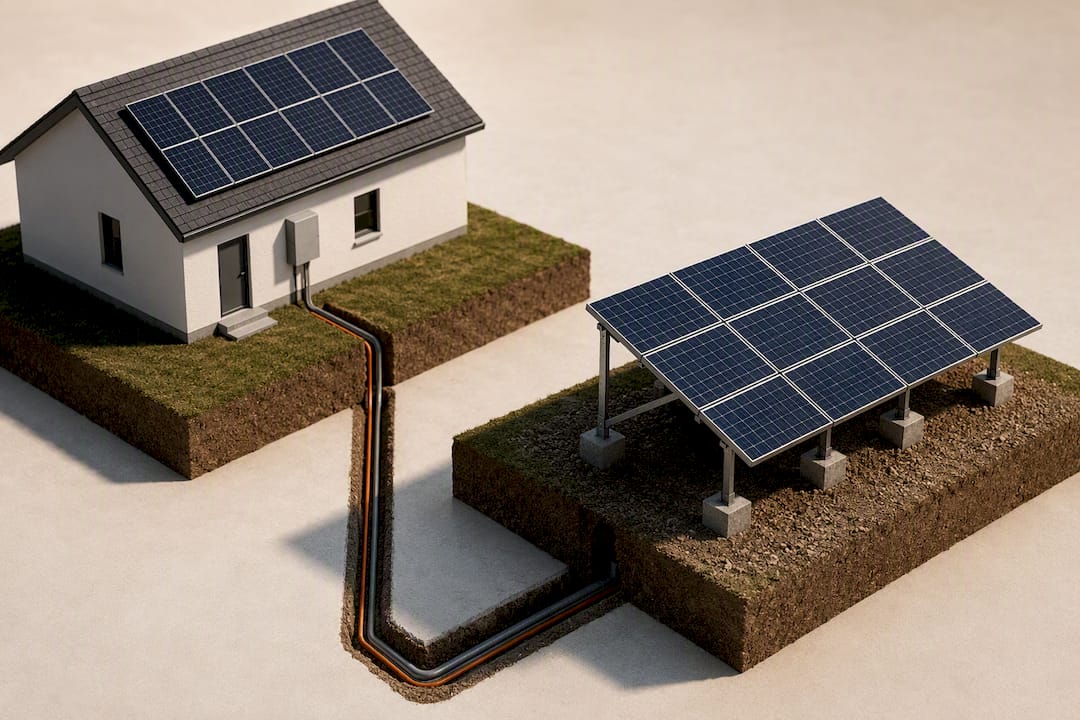
Where it gets interesting: that extra upfront cost can pay for itself through production. A ground mount optimized for angle and orientation can produce 5% to 15% more energy annually than a roof system boxed in by a bad-facing roof plane, based on modeling comparisons from SolarReviews. But a homeowner with a good south-facing roof and high electricity rates often still comes out ahead with rooftop, since the lower installed cost outweighs a modest production gap.
If you want a real answer instead of a guess, run both scenarios through NREL’s PVWatts calculator, adjusting for your system size, local electricity rate, and expected panel degradation over time. That’s the only way to see which option actually wins for your specific address.
Permits, HOAs, and the Hidden Work Nobody Mentions Upfront
Ground mounts almost always take longer to get approved, and the paperwork is a bigger factor than most homeowners expect going in.
Rooftop solar generally moves through a standard electrical and building permit process. Ground mounts, by contrast, are frequently classified as a new permanent structure, which triggers zoning review, setback compliance, and sometimes grading permits that roof installs never face. That difference alone can add weeks to your timeline.
HOA rules complicate things further. State solar-rights laws in many states specifically protect rooftop installations from HOA interference, but those same protections often don’t extend to ground-mounted structures, leaving them subject to your community’s covenants.
Before you commit to a ground mount, budget time and money for:
- Conduit trenching from the array location to your electrical panel or meter.
- Potential boring under driveways, walkways, or other paved surfaces.
- Soil testing or geotechnical review if your installer needs to confirm foundation depth.
- An HOA approval cycle that can run longer than the permit process itself.
A Practical Checklist for Choosing Between Roof and Ground
Run through these steps in order before you commit to either option:
- Check your roof’s remaining life. If a roofing contractor says you have fewer than 10 years left, plan for roof replacement before or alongside solar, not after.
- Run a shading and orientation check. Use PVWatts or a satellite tool like Google’s Project Sunroof to estimate your peak sun hours and see how much shading actually hits your roof plane.
- Measure your available yard space. Walk the property and estimate the distance from a potential ground-mount site to your electrical panel. Longer runs mean more trenching cost.
- Ask installers to model both configurations. A serious installer can run numbers for a roof system and a ground system side by side, showing you the payback timeline for each.
Pro Tip: Don’t accept a single quote for one configuration. Ask your installer to price both options and show you the break-even year for each. The difference often surprises homeowners who assumed roof was automatically cheaper in the long run.
What We See on the Ground in San Antonio
Alpha Solar Solutions handles the parts of this decision that trip homeowners up most: roof prep, panel removal and reinstallation when a roof needs work after solar is already installed, and ground-mount engineering when a property calls for it. We also integrate battery backup and EV charger installation into either configuration, since more homeowners are pairing solar with storage. Our biggest field lesson: coordinate roof replacement before installation, get warranty terms in writing, and insist on a modeled comparison instead of guessing which option costs less.
An Installer’s Take on the Roof vs Ground Debate
The rule we lean on: if the roof has good bones and good sun, it wins on economics almost every time. What homeowners miss is how much a bad roof timeline, not panel efficiency, drives the real cost difference between the two options.
— Anthony
Get a Modeled Quote for Your Property
Guessing which option pencils out for your address is the expensive way to find out. Alpha Solar Solutions runs a site assessment that models both roof and ground configurations for your property, factoring in your roof’s condition, available yard space, and local permitting realities before you spend a dollar.

If your roof is due for replacement, our solar panel removal and reinstallation service handles that sequencing so you’re not paying twice. If your property calls for a ground-mount system instead, we handle the foundation and trenching work directly rather than subcontracting it out, which keeps your timeline tighter and your point of contact singular. We also install EV chargers and battery backup alongside either configuration, so your system is sized for where your energy needs are headed, not just where they are today. Homeowners weighing storage options as part of that plan can also review this battery backup buying guide for a broader look at sizing and selection. Request a site assessment and get a side-by-side modeled quote for both roof and ground before you decide anything.
Tools Worth Bookmarking
Run your own numbers with NREL’s PVWatts calculator for production estimates and EnergySage for current market cost snapshots.
Sources
- Ground-Mounted Solar Panels: If You Have The Space, Go For It | EnergySage
- Your Guide To Solar Panel Mounts In 2026 | SolarReviews
- Solar panel roof cost vs ground mount guide | GreenEnergyCalc
FAQ
Is It Cheaper to Put Solar on the Ground?
No. Ground-mounted systems typically cost $3,000 to $5,000 more than roof-mounted systems of similar size, mainly due to foundation, racking, and trenching costs.
What Is the 33% Rule for Solar Panels?
There’s no single universal “33% rule” in the industry; the figure varies depending on which state incentive, financing calculation, or installer’s rule of thumb is being referenced, so ask your installer to clarify the specific context before relying on it.
What Are the Disadvantages of Ground-Mounted Solar Panels?
Ground mounts carry higher upfront costs from foundations and trenching, often face stricter zoning and HOA review than rooftop systems, and can lose some of the state solar-rights protections that rooftop installations typically get.
What Is the 20% Rule for Solar Panels?
This isn’t a standardized industry term either. Some installers use it informally to describe sizing a system to offset roughly 20% above current usage for future growth, but the definition varies by installer and region.
How Do I Know If My Roof Can Handle Solar?
A qualified installer or roofer should assess your roof’s remaining lifespan, structural condition, and orientation. If your roof needs replacement within the next 10 years, plan that work before or alongside your solar installation to avoid paying for removal and reinstallation later.
Recommended
- Homeowners: Tile Roof Solar Takes 30–50% Longer, Plan for Flashing
- Protect Your Roof: 3 Flat Roof Solar Mounting Choices for Homeowners
- Roof preparation for solar: requirements, costs, and best practices
- Roof Replacement with Solar Panels? Here’s Everything You Need to Know About Removing and Reinstalling Your Solar System