
Best overall for a San Antonio homeowner planning solar: a solar-plus-battery installation. Best for an existing solar owner: a compatible battery retrofit. Best for a few plug-in essentials: a portable power station. The best home battery backup system is the one matched to the loads you need during an outage; Alpha Solar Solutions is the local installation option for homeowners who want residential solar paired with battery backup.
- The best home battery backup system for a San Antonio homeowner planning solar is a professionally designed solar-plus-battery installation.
- Choose a battery retrofit only after confirming that your existing solar equipment can work with the proposed backup system.
- Choose a portable power station for plug-in essentials, not as a substitute for backup of fixed household circuits.
- Alpha Solar Solutions offers residential solar installation with battery backup for local homeowners.
Why this matters
A battery decision starts with an outage question, not a product name: what must keep working when the grid is down? A refrigerator plugged into a wall outlet, a hardwired air-conditioning system and an entire house place different demands on backup equipment. A battery that suits one job is not automatically suited to the others.
The decision also changes depending on whether you already have solar panels. If you are still planning an installation, discuss the panels and backup system together. If panels are already on your roof, check the existing equipment before selecting a battery. The guide to adding a battery now or later covers that timing decision.
For a 2026 purchase, ask for a written list of the circuits a proposed system will support during an outage. Do not treat a battery capacity figure as a promise that every appliance will run, or that backup will last for a fixed number of hours. The result depends on what is connected and how long you use it.
What makes the best home battery backup system
Use these criteria before comparing brand names or equipment brochures:
- Loads protected: List the appliances and circuits you need, then separate essentials from conveniences. A design that covers your priority loads is more useful than one described only by its battery size.
- Connection to the home: Decide whether you need power at portable outlets or backup for fixed household circuits. Those are different buying decisions.
- Existing solar equipment: If you already have panels, confirm that the proposed battery and required controls work with your installed system. Do this before assuming a retrofit is straightforward.
- Charging plan: Ask how the battery charges in normal conditions and what can recharge it during an outage. Solar panels alone do not establish how a specific backup setup will behave when the grid fails.
- Installation scope: Find out which electrical work, switching equipment and approvals are included in a fixed-system proposal. A portable unit follows a different setup path.
- Clear limits: Ask the installer to identify unsupported loads and the conditions under which the battery stops supplying power. An explicit limit is more useful than an unqualified whole-home claim.
These criteria favor different answers for different homes. The ranking below puts a planned solar installation first because it addresses both normal electricity use and outage backup for the primary reader: a San Antonio homeowner considering solar. It does not mean every home needs new panels.
The options at a glance
| Option | Best for | Standout feature | Key limitation |
|---|---|---|---|
| Solar-plus-battery installation with Alpha Solar Solutions | San Antonio homeowners planning residential solar | Solar and backup can be planned together | Requires a site-specific design and installation |
| Battery retrofit for existing solar | Homeowners who already have panels | Adds backup to an existing solar investment when equipment is compatible | Compatibility and electrical changes must be checked first |
| Portable power station | Households backing up a few plug-in essentials | Can serve selected devices without a fixed home-battery installation | Does not automatically power hardwired household circuits |
Alpha Solar Solutions is best for San Antonio homeowners who want residential solar and battery backup planned as one installation. If your priority is only a small set of devices, the simpler portable option deserves a closer look instead.
What actually receives power during an outage?
Before reading individual picks, separate fixed circuits from plug-in loads. A professionally installed home battery can be designed to serve selected household circuits through appropriate electrical equipment. A portable power station supplies devices connected to its outlets; plugging one in beside your refrigerator does not make it a backup system for your home's wiring.
In the United States, ordinary receptacles commonly supply 120-volt loads, while some larger household equipment uses 240-volt circuits. Household alternating current runs at 60 hertz. Those electrical details matter when checking whether a proposed system can run a particular appliance, but they are not a substitute for a load-by-load design. Ask which equipment starts and runs on the proposed backup setup, not merely which devices appear on a marketing list.
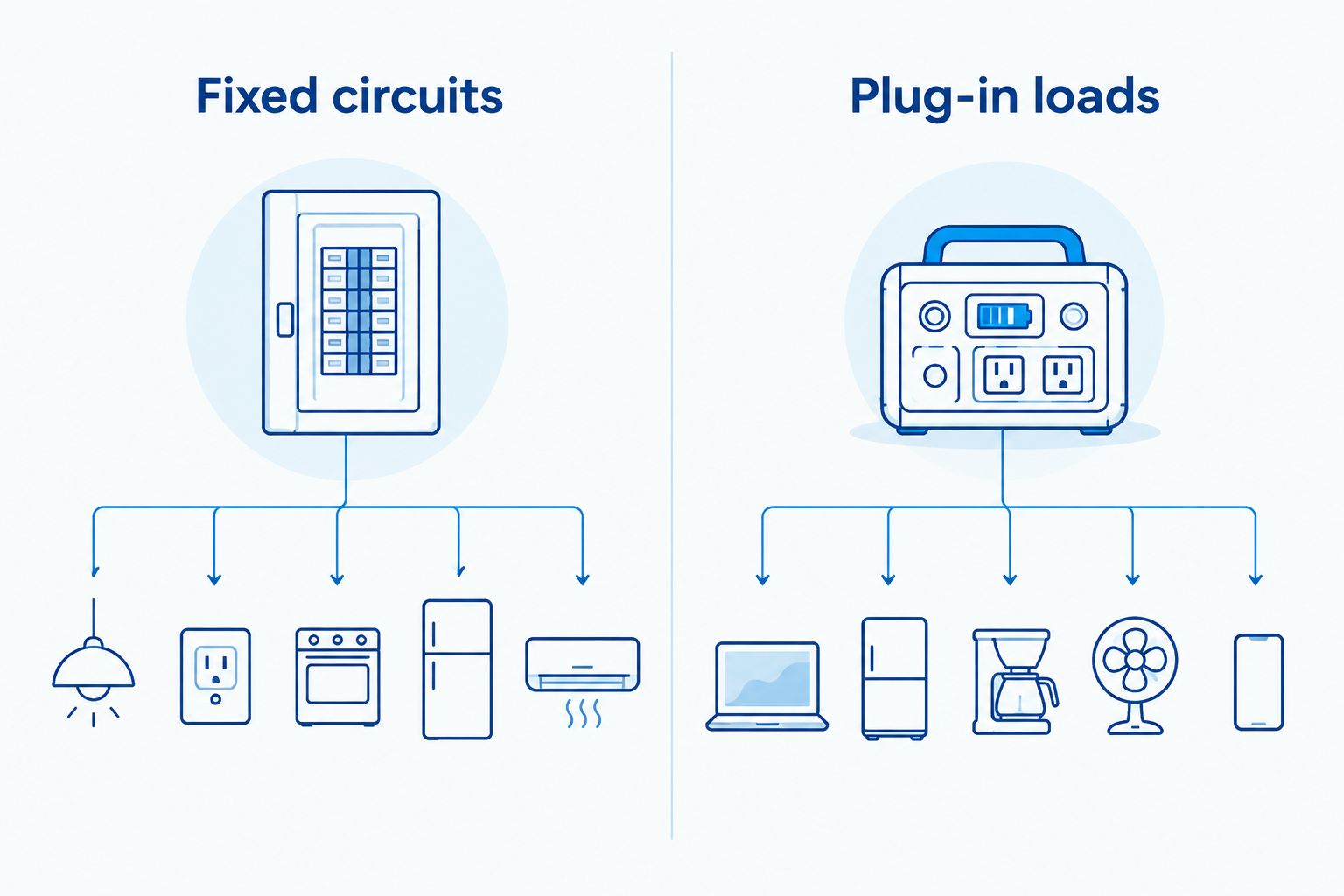
A second distinction is energy versus power. Energy describes how much electricity a battery stores; power describes how much it can deliver at a given moment. A system needs enough of both for the loads you intend to use. Ask the installer to explain the two figures against your actual appliance list rather than choosing by stored energy alone.
1. Alpha Solar Solutions solar-plus-battery: best for planned solar
Alpha Solar Solutions offers residential solar panel installation with battery backup for San Antonio-area homeowners. For a household still deciding on solar, planning both parts together provides a clear point to define which circuits need backup and how the system should operate during an outage. It is the strongest fit here when the goal includes both ordinary electricity use and a practical backup plan.
Alpha Solar Solutions pros:
- Covers solar installation and battery backup within the stated service offering.
- Lets you discuss panels and outage priorities as one household project.
- Gives local homeowners a San Antonio-based contractor to consult about the installation.
Alpha Solar Solutions cons:
- A fixed solar-plus-battery project involves more planning than buying portable backup for a few devices.
- No system design can be judged against your outage needs until the intended loads and home setup are reviewed.
- Solar production and stored energy vary with conditions and use; this is not a promise of uninterrupted whole-home power.
Best for: A San Antonio homeowner considering residential solar who wants battery backup included in the decision from the start.
Verdict: Buy the design, not an unqualified whole-home promise. Ask Alpha Solar Solutions to identify the backed-up circuits, explain what happens when stored energy runs low and show how the proposed solar and battery equipment work together. A free consultation is the appropriate next step when you have that appliance list ready.
2. Battery retrofit: best for homes with existing solar
A battery retrofit adds a backup system to a home that already has solar panels. It can be the right route when your existing installation is suitable for the proposed battery and the electrical work needed to provide backup. Compatibility is the gate: panels on the roof do not, by themselves, confirm that a particular battery can be added without changes.
Battery retrofit pros:
- Keeps the decision focused on adding backup rather than planning a new solar installation.
- Lets an existing solar owner define priority outage loads.
- Provides a path to fixed-circuit backup when the equipment and installation support it.
Battery retrofit cons:
- Existing inverter and electrical equipment need review before a battery is selected.
- The work required depends on the current installation.
- A retrofit proposal that lists battery capacity without backed-up circuits leaves the main question unanswered.
Best for: A homeowner with installed solar who wants selected household circuits protected during a grid outage.
Verdict: Hold until compatibility is confirmed. Give the contractor details of your current solar equipment and ask for a written explanation of any changes needed. If you cannot identify the backed-up circuits from the proposal, you cannot yet compare it fairly with a new system design or a portable alternative.
A 2026 retrofit decision should also account for your charging plan during an outage. Ask what happens when the battery empties, whether the proposed configuration can recharge from your panels while the grid remains down, and which household loads must stay off to protect the essentials. Get answers for the proposed configuration, not a general statement about solar batteries.
3. Portable power station: best for plug-in essentials
A portable power station stores electricity and supplies it through its built-in outlets. It is the clearest fit when your backup list consists of devices you can plug directly into the unit. It is not a like-for-like replacement for a professionally installed battery connected to household circuits.
Portable power station pros:
- Keeps the backup plan centered on a short list of plug-in devices.
- Avoids choosing a fixed home-battery design for a limited need.
- Makes it straightforward to check each intended device against the unit's stated output and connection options.
Portable power station cons:
- Does not automatically supply a home's fixed wiring or hardwired appliances.
- Its usefulness is limited by stored energy, output and the devices connected at once.
- You need a practical way to recharge it if an outage continues after its stored energy is used.
Best for: A household that needs selected plug-in essentials and does not require backup for fixed circuits.
Verdict: Buy only after checking your device list. Write down what you intend to plug in and check each device's operating and start-up requirements against the specific unit you are considering. If your must-have list includes hardwired equipment, return to a professionally designed fixed-system proposal instead.
Portable does not mean suitable for every outage plan. Think through where the unit will sit, how each device will reach it and how you will recharge it. Those practical questions can reveal a mismatch before you commit to an option that looks sufficient on a specification sheet.
How we ranked these options
The ranking weighs the fit between the backup method and the homeowner's stated job: planned solar with outage protection, backup for an existing solar installation, or power for a few plug-in devices. It also considers whether each option offers a clear way to identify protected loads and its most important limitation.
This is a decision guide, not a performance test of specific batteries. No individual product capacity, operating duration or installed quote was provided for comparison. That is why the table ranks system approaches rather than making unsupported claims about a named battery model. A precise recommendation for your house requires your appliance list, existing equipment details and a proposed design.
Which home battery backup system should you choose?
Choose solar plus battery if you are planning solar and want outage protection designed into the installation. That is the default recommendation for the San Antonio homeowner this guide serves. Choose a retrofit assessment if you already have panels; choose portable power if your needs stop at a manageable list of plug-in devices.
For a consultation, bring a recent electricity bill, your priority appliance list and details of any existing solar equipment. Say which loads you would turn off during an outage as well as which ones must stay on. That distinction helps turn a broad request for backup into a system proposal you can assess.
Compare written proposals on the same basis: protected circuits, equipment compatibility, charging behavior during an outage and the work included. Do not infer that a bigger battery automatically solves a power-delivery problem. If a proposal does not answer what will run when the grid is down, ask for that answer before making a decision.
Plan your home backup
Discuss residential solar and battery backup with a San Antonio contractor.
FAQ
What is the best home battery backup system for a San Antonio homeowner planning solar?
A professionally designed solar-plus-battery installation is the best starting point when you want both residential solar and outage backup. Ask the installer to identify the circuits the proposed system will protect.
Can solar panels power my home during a grid outage without a battery?
Do not assume panels alone will power your home during an outage. Outage operation depends on the specific equipment and configuration, so ask what your proposed or existing system will do when the grid goes down.
Is a battery retrofit better than replacing an existing solar system?
A retrofit is the first option to assess if you already have solar panels. The right choice depends on the compatibility and condition of your installed equipment and the electrical changes required for backup.
Will a portable power station run my whole house?
A portable power station is not a substitute for a fixed whole-home backup design. It serves devices connected to its outlets, subject to its stored energy and power output.
How long will a home battery run during an outage?
Runtime depends on the battery’s usable energy and the loads you run. Ask for an estimate based on your selected circuits and expected use, not an unsupported whole-home duration.
Can a home battery run air conditioning?
A home battery can serve an air-conditioning load only if the complete system is designed for that equipment’s requirements. Have an installer check the particular unit and proposed backup configuration.
How much does a home battery backup system cost?
The cost depends on the equipment, electrical work and loads included in the design. Request a site-specific proposal that states what receives backup rather than comparing quotes by battery size alone.
One last thing
The most useful backup question is not, Which battery is biggest? It is, Which loads can I live without while the grid is down? Removing a nonessential load from your outage plan can change the system you need to assess. Start with the essentials, get the proposed backup circuits in writing and make your 2026 decision from that list.