
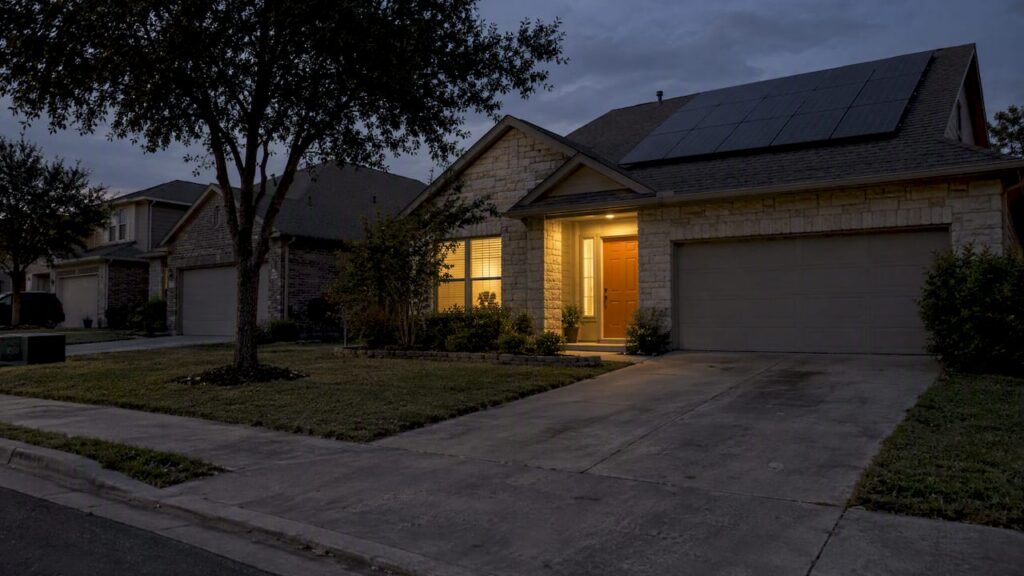
If you live in Texas, charge your devices now, pack a short emergency kit, and know your utility’s outage alerts, because when ERCOT calls an Energy Emergency Alert Level 3, controlled outages can follow with little warning. EEA 3 is declared only when conditions get genuinely tight, so for lasting peace of mind we recommend a professionally installed battery backup or a safely integrated generator system rather than relying on short-term fixes alone.
TL;DR:
- ERCOT declares EEA Level 3 when reserves fall below 1,500 megawatts or frequency drops under 59.8 hertz; utilities cycle outages every 10 to 45 minutes.
- Households with electrically dependent medical equipment should register with their utility beforehand; never run grills, camp stoves, or generators indoors because of carbon monoxide.
- Power banks and UPS units keep phones, routers, and medical monitors running for a few hours; portable generators require fuel, supervision, and outdoor placement.
- Battery systems can automatically power selected circuits without fuel, but proper sizing, permits, and a licensed installer help prevent overloads and dangerous grid backfeeding.
- Store several days of food and water, including one gallon per person per day, and keep medications, flashlights, charged power banks, and outage alerts ready.
Table of Contents
- What ERCOT rolling blackouts actually mean for your home
- What to do the moment an outage is announced
- Comparing your household backup power options
- Why battery backup is often the smarter long-term investment
- Running a generator safely during an outage
- How to choose the right backup option for your household
- Build a Texas-ready emergency kit before you need it
- What installers see homeowners get wrong
- Get professional backup power support in San Antonio
- FAQ
- Sources
What ERCOT rolling blackouts actually mean for your home
A rolling blackout, or controlled outage, is not a grid failure. It is a deliberate, short-term shutoff that utilities cycle across different neighborhoods to protect the larger system from a complete collapse. ERCOT allocates the required reduction in megawatts, and local transmission and distribution utilities carry out the actual feeder cycling in their service areas.
These events happen under Energy Emergency Alert Level 3, which ERCOT declares when operating reserves drop below a defined threshold or grid frequency falls under 59.8 Hz. That threshold exists precisely so outages stay a last resort rather than a routine response to high demand. Historical ERCOT guidance has pointed to cycles lasting roughly 10 to 45 minutes before power shifts to restore one group of customers and shut off another, a pattern designed to spread the burden evenly rather than let any single area go dark for an extended stretch.

What to do the moment an outage is announced
Your first priority is people, not appliances. If anyone in your household depends on a medical device like an oxygen concentrator or a dialysis machine, check on them immediately and make sure your utility has your medical-needs registration on file before an emergency, not during one.
- Charge phones, laptops, and power banks the moment an alert goes out.
- Keep the refrigerator and freezer closed to preserve cold air, and move anything highly perishable into a cooler if the outage stretches on.
- Place carbon monoxide alarms on every level of your home, and never run a grill, camp stove, or outdoor heater indoors for warmth or cooking.
- Unplug sensitive electronics to avoid damage from the power surge that often comes when service restores.
- Keep a small go bag ready with medications, identification, and a flashlight near the door.
One MW of generation serves roughly 250 residential customers at peak demand, which is part of why even a modest reserve shortfall can force ERCOT to cut power to thousands of homes at once.
Comparing your household backup power options
Not every backup solution fits every budget or situation, so it helps to know what each one actually covers before you buy.
- Power banks and UPS units keep phones, routers, and medical monitors running for a few hours with zero maintenance and no fuel, but they can’t touch a refrigerator or air conditioner.
- Portable generators can power several appliances for as long as you have fuel, though they require careful placement, regular refueling, and supervision while running.
- Whole-home standby generators kick on automatically and can carry an entire house, but they need professional installation, routine maintenance, and a steady fuel supply.
- Battery backup, with or without solar panels, powers chosen circuits automatically and silently, recharges from the grid or sunlight, and carries no carbon monoxide risk.
Household backup decisions are separate from the large-scale emergency directives covered in DOE and ERCOT market notices, which apply to identified industrial and commercial facilities, not individual homes. Whatever you choose, permits and code compliance matter: a system tied into your home’s wiring needs a transfer switch or dedicated subpanel to avoid backfeeding the grid, a job best left to a licensed installer.
Why battery backup is often the smarter long-term investment
A properly sized battery system keeps your essential circuits, think refrigerator, Wi-Fi router, a few lights, and phone chargers, running automatically through an outage, with an automatic transfer switch handling the changeover in a fraction of a second. There’s no fuel to store, no carbon monoxide risk, and no need to run an extension cord through a window.
Sizing comes down to two numbers: kilowatts (kW), which measure how much power you can draw at once, and kilowatt hours (kWh), which measure how long that power lasts. A refrigerator, router, and a couple of lights might draw around 1 kW combined, so a battery with several kWh of capacity can usually carry that load through a multi-hour rolling blackout.
- Permits and inspections are required for any battery or generator integration under NEC and UL safety standards.
- A professional load audit prevents undersizing, since appliances like refrigerators briefly draw two to three times their running wattage on startup.
- Pairing a battery with solar panels lets it recharge during daylight hours even if the grid stays down.
Pro Tip: Ask any installer you’re considering to walk you through their permitting process before you sign, since handling that paperwork correctly is what keeps your system both legal and insurable.
We handle this kind of custom design and permitting work for homeowners across the San Antonio area, and our battery backup services are built around exactly this kind of real-world resilience planning.
Running a generator safely during an outage
A portable or standby generator can be a reliable backup, but only when it’s set up and operated the right way.
- Place the generator outdoors, at least 20 feet from doors, windows, and attached garages, and keep it dry at all times.
- Install carbon monoxide alarms on every level of your home before you ever run a generator.
- Connect individual appliances with heavy-duty outdoor-rated extension cords, and never attempt to power your whole house by plugging the generator into a wall outlet.
- Have a licensed electrician install a transfer switch if you want to power circuits throughout the house, since backfeeding the grid can injure utility workers and damage your own equipment.
- Let the engine cool completely before refueling, and shut down non-essential appliances before restart to avoid a power surge.
A portable generator suits short, occasional outages where you’re comfortable monitoring it. A standby generator or a battery system makes more sense if you want backup power that works automatically, even when you’re not home.
How to choose the right backup option for your household
Start by listing your essential loads: medical equipment, refrigeration, heating or cooling, and communication devices. Then decide how long you actually need backup to last, a few hours is a very different problem than several days.
- If your main concern is keeping phones and a router alive, a power bank or UPS covers it for a modest cost.
- If you occasionally lose power for a few hours and have someone available to manage fuel and cords, a portable generator can work well.
- If you want whole-home coverage without supervision, a standby generator or a battery system, especially one paired with solar, is worth a professional assessment.
- Factor in permitting costs, ongoing maintenance, fuel logistics, and whether your homeowner’s insurance requires notification of new equipment.
For most Texas households, the next step is simple: pick up a power bank or basic kit today, and schedule a site assessment with a licensed installer if you’re considering anything that ties into your home’s electrical system.
Build a Texas-ready emergency kit before you need it
Ready keeping several days of food and water on hand, with a guideline of one gallon of water per person, per day. Pair that with a plan your whole household understands.
- Water, non-perishable food, a flashlight, extra batteries, and a NOAA weather radio.
- Phone chargers and fully charged power banks, plus a basic first-aid kit.
- Medical-needs registration filed with your utility ahead of time, and clear outage alerts set up on your phone.
- A car kit with blankets, water, and a phone charger, since your vehicle can double as a charging station in a pinch.
| Item category | Examples | Why it matters |
|---|---|---|
| Water and food | Bottled water, canned goods, manual can opener | Covers basic needs for several days without power |
| Light and communication | Flashlights, batteries, NOAA radio | Keeps you informed and safe after dark |
| Power | Charged power banks, car charger | Maintains phone access for alerts and calls |
| Medical | Medications, first-aid kit, device registration | Protects anyone dependent on electric medical equipment |
What installers see homeowners get wrong
The most common mistake we run into is a generator with no transfer switch, which means it either sits unused during an outage or gets connected in a way that risks backfeeding the grid. The second is underestimating refrigerator startup load, which can trip a smaller system that looked fine on paper.
A few quick wins go a long way: a dedicated UPS for your router and modem, a prewired critical-circuit panel ready for a future battery, and a simple annual maintenance check on whatever backup system you already own. If you’re planning anything that ties into your home’s wiring, working with a certified local installer keeps the project code-compliant from day one.
— Anthony
Get professional backup power support in San Antonio
We offer design and installation of battery backup systems, solar-plus-battery setups, and generator integrations, and assist with permitting and paperwork.

A typical assessment starts with a review of your home’s essential loads and current electrical panel, followed by a clear estimate and a permit timeline specific to your property. We also provide EV charger installation, solar panel cleaning and maintenance, and panel removal and reattachment services. If a rolling blackout has you thinking seriously about backup power, schedule a battery backup assessment with our team and find out what a system sized for your home would look like.
FAQ
Can the US power grid go out nationwide?
A truly nationwide blackout is extremely unlikely because the US grid operates as several interconnected regional systems rather than one single network. Localized or regional outages, like the ones ERCOT manages in Texas, are far more common than any widespread national failure.
Is the Texas power grid currently holding up under demand?
ERCOT monitors reserves continuously and declares Energy Emergency Alert levels when reserves run low or frequency drops, using controlled outages only as a last resort. The threshold for the most serious level, EEA 3, is reserves below 1,500 megawatts or frequency under 59.8 Hz.
Does ERCOT still use rolling outages during emergencies?
Yes, ERCOT can direct transmission and distribution utilities to implement controlled outages once it reaches EEA Level 3. These outages are cycled across different areas in short intervals rather than leaving one area without power indefinitely.
Why do rolling blackouts happen in Texas?
Rolling blackouts happen when electricity demand threatens to outpace available supply, pushing operating reserves or grid frequency past ERCOT’s emergency thresholds. Cycling outages across neighborhoods protects the broader grid from a more serious, uncontrolled failure.
What backup power option works best for a typical Texas home?
The right choice depends on your essential loads and how long you need backup to last, but a professionally installed battery system, especially one paired with solar, offers automatic, fuel-free coverage for critical circuits. Homes with simpler needs may do fine with a portable generator or even a basic power bank for phones and routers.