
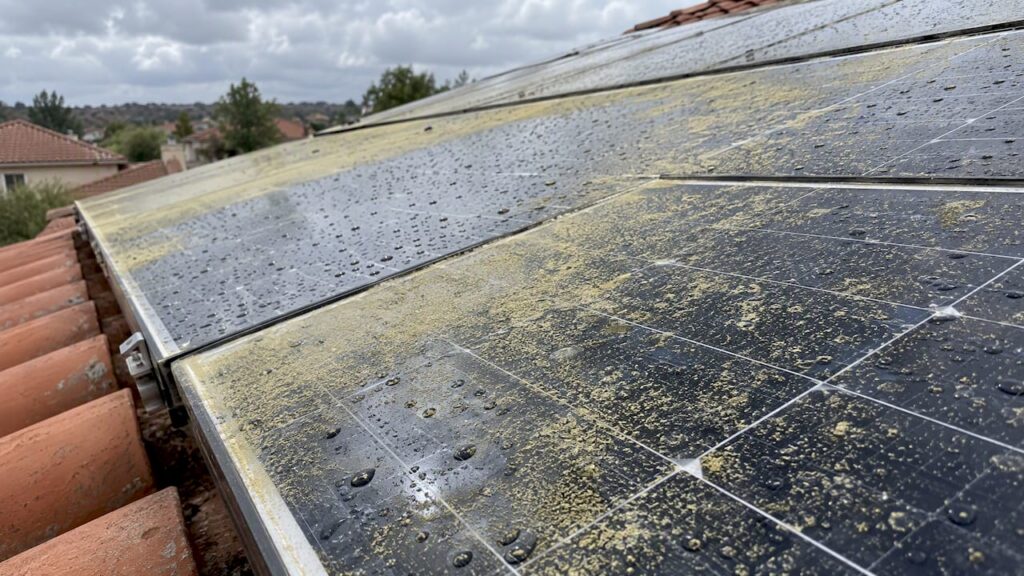
Yes, pollen and dust in San Antonio often cut solar output enough that homeowners commonly benefit from targeted cleaning. Inspect your panels after peak pollen season and schedule a professional wash if you notice a visible film or a sustained drop in production. For homeowners who prefer a safe, warranty-aware option, professional cleaning service is recommended rather than a DIY fix on the roof.
TL;DR:
- Research found output losses above 15% during peak pollen season; rain did not reliably restore production, while manual cleaning recovered only a modest share.
- Inspect panels every three months, and plan one or two professional cleanings yearly, adding a visit after pollen season, dust storms, or prolonged drought.
- Yellow or green film and unexplained output drops signal soiling; shaded homes and shallow roofs need more checks than open, steeply angled installations.
- Use soft brushes and temperature matched water for light buildup; leave steep roofs, hot spots, or work required by your warranty to a professional.
Table of Contents
- Why San Antonio’s Climate and Landscape Make Panels Prone to Buildup
- What Research Says About Pollen and Dust Impact on Solar Output
- When to Clean: Inspection Triggers and a San Antonio Schedule
- Safe Cleaning Methods: DIY Steps and When to Call a Pro
- What We See on San Antonio Roofs Season After Season
- Professional Cleaning and Maintenance for San Antonio Homes
- FAQ
- Sources
Why San Antonio’s Climate and Landscape Make Panels Prone to Buildup
San Antonio’s seasonal rhythm sets up two distinct soiling waves each year. Spring brings heavy oak and cedar pollen that blankets rooftops in a fine yellow or green dust, and summer’s dry spells and gusty winds kick up loose soil and construction debris that settles on anything tilted toward the sky, including your panels.
A few local factors make this worse for some homes than others:
- Tree canopy: homes shaded by live oaks or near cedar breaks collect heavier pollen loads each spring.
- Nearby construction or landscaping: fresh dirt work and lawn maintenance throw extra particulate into the air.
- Regional dust episodes: dry stretches and wind events occasionally carry dust from well beyond the city.
Panel tilt and orientation also matter. A steeper tilt sheds loose dust faster, while a low-slope roof holds onto pollen longer. Panels mounted close to overhanging branches collect buildup at a noticeably faster rate than those on open rooflines.
What Research Says About Pollen and Dust Impact on Solar Output
The science on this is more specific than most homeowners expect. A multi-site study published in IEEE Journal of Photovoltaics found that performance losses exceeded a significant threshold at utility-scale PV plants during peak pollen season, and rainfall did not reliably restore that lost output. Manual cleaning at the same sites recovered a modest portion of production, a gap that rain alone never closed.
Pollen loss can be substantial during peak season, and rain alone often fails to fix it. That same research points to a mechanism worth understanding: fine pollen grains can combine with dew and humidity to form a thin film on the glass surface. Once that film sets, it behaves less like loose dirt and more like a coating, which is why a light rain shower often does little.
Broader findings reinforce the pattern. A global analysis in Nature Sustainability found that deposited particulate matter and ambient aerosols meaningfully reduce PV generation, and that cleaning frequency is one of the strongest levers homeowners and operators have to limit those losses. Doubling the gap between cleanings can sharply increase production losses in dusty regions.
For your panels, this translates into two practical mechanisms: scattered sunlight that never reaches the solar cells, and localized hot spots where thick buildup blocks light unevenly across a panel’s surface. Neither resolves on its own with weather.

When to Clean: Inspection Triggers and a San Antonio Schedule
You don’t need to guess. A few concrete signals tell you when it’s time to act, and a simple baseline schedule covers most San Antonio homes.
- Inspect quarterly. A quick visual check every three months catches buildup before it becomes a real efficiency problem.
- Plan for one to two professional cleanings per year. Local guidance from San Antonio cleaning specialists commonly recommends cleaning roughly every six months, with an extra pass after pollen season or a major dust event.
- Watch for visible deposits. Yellow or green film across the panel surface is your clearest sign that pollen has accumulated beyond what rain will clear.
- Check your monitoring app for unexplained drops. A kilowatt-hour output that falls without a clear weather or seasonal explanation often points to soiling.
- Clean after dust storms or prolonged drought. Both conditions deposit more particulate than a normal week, especially on homes near construction or bare soil.
Homes shaded by trees or sitting on a lower roof pitch need more frequent checks than open, steeply angled installations.
Pro Tip: Photograph your panels and note your system’s output before and after each cleaning. That record makes it easy to see whether a wash actually moved the needle on your production.
Safe Cleaning Methods: DIY Steps and When to Call a Pro
Light, occasional buildup is something many homeowners can manage safely from the ground. Heavier soiling, steep roofs, or any sign of a deeper problem call for a trained technician instead.
For minor cleaning you can handle yourself:
- Inspect from the ground or a low, stable ladder rather than walking on the roof.
- Wear fall protection if you need any elevation at all.
- Use a soft brush or a squeegee designed for glass, never anything abrasive.
- Rinse with lukewarm or deionized water at a temperature close to the panel’s own surface temperature to avoid thermal shock.
- Skip harsh chemicals, dish soap, or anything with grit.
High-pressure washers and stiff brushes carry real risk. Technical guidance on module soiling recommends soft-bristle contact cleaning and deionized water near module temperature specifically because pressure and abrasion can crack glass, force moisture past sealed edges, and trigger electrical faults that a manufacturer’s warranty won’t cover.
Call a professional when your roof is steep or hard to access safely, your array is large or wired in a complex configuration, you notice signs of a hot spot or discoloration on a panel, or your equipment’s warranty terms specify professional maintenance. A technician who follows soft-contact methods and temperature-matched water protects both your system’s output and its warranty coverage.

What We See on San Antonio Roofs Season After Season
Every spring, the same pattern plays out across San Antonio neighborhoods: a dusting of oak and cedar pollen settles in, homeowners assume the next rain will handle it, and production quietly dips for weeks longer than it should. The process starts with a site inspection, moves to a soft-tool wash using temperature-matched water, and may include a detach-and-reattach option when a panel needs a more thorough clean than an in-place wash allows. Jobs typically finish with a post-clean production check so the difference can be seen in monitoring data.
Before hiring anyone to get on your roof, ask about insurance coverage, hands-on experience with your panel type, and whether they can show before-and-after production numbers if available.
— Anthony
Professional Cleaning and Maintenance for San Antonio Homes

A clean system is a producing system, and professional cleaning using soft tools, temperature-matched water, and a process built to protect warranties is recommended rather than risking it with improper methods. If your roof has a metal standing-seam profile, walking it safely for a DIY clean gets trickier, which is one more reason professional roof-compatible cleaning methods matter.
Here’s what our service includes:
- A full inspection to check for pollen film, dust buildup, and any early signs of hot spots.
- A safe wash using soft brushes and water matched to your panel’s surface temperature.
- Panel removal and reinstallation when a thorough clean or roof work calls for it.
- A production check after cleaning so you can see the measurable difference.
If you’ve noticed a dip in your system’s output this pollen season, request a solar panel cleaning and we’ll get your panels back to full production.
FAQ
Why are my allergies so bad right now in San Antonio?
Heavy spring pollen from oak and cedar trees drives most seasonal allergy flare-ups in San Antonio, and the same pollen that irritates your sinuses settles on your roof and panels. Dry, windy stretches can add dust on top of that pollen load, compounding both allergy symptoms and panel soiling at the same time.
What allergen is high right now in San Antonio?
Oak and cedar pollen are the dominant allergens through much of the spring season in San Antonio, with grass pollen adding to the mix later in the year. These same particles are the main contributors to the film that builds up on solar panels each spring.
Is Sahara dust reaching San Antonio?
Saharan dust events periodically reach Texas during summer months, adding to the particulate load that already settles on rooftops from local sources. When a dust event passes through, it’s a good trigger to check your panels for a visible film even outside your normal cleaning schedule.
How bad is the pollen in Texas right now?
Pollen levels in Texas vary by season and location, with oak and cedar pollen typically peaking in late winter through spring. For your solar system, the practical takeaway matters more than the exact count: peer-reviewed research found performance losses exceeding 15% during peak pollen season, which is reason enough to inspect your panels regardless of the day’s pollen count.
How much does solar panel cleaning cost in San Antonio?
Pricing for solar panel cleaning depends on your system size and roof access, and we provide a quote after a quick site assessment. You can request an inspection to get a specific price for your home.
Sources
- An Investigation on the Pollen-Induced Soiling Losses in Utility-Scale PV Plants (IEEE Journal of Photovoltaics)
- Global reduction of solar power generation efficiency due to aerosols and panel soiling | Nature Sustainability
- How Often Should You Clean Your Solar Panels in San Antonio? – ThirdClover
- Photovoltaic Module R&D Considerations for Soiling Mitigation (NLR technical report)