
TL;DR:
- Preventive solar care involves routine inspections, cleaning, and monitoring to keep panels operating efficiently and extend system lifespan. Most homeowners only need one to two professional cleanings annually and regular app-based checks to prevent efficiency losses. Consistent maintenance and data-driven decisions help avoid costly system failures and preserve energy production.
Preventive solar care is the routine set of inspections, cleanings, and monitoring steps that keep your solar panels producing at their best and extend the life of your entire system. Most homeowners are surprised to learn that solar panels are largely set-and-forget devices when installed correctly. That said, “mostly” is doing a lot of work in that sentence. Skipping a basic preventive solar care guide means you could lose 5%–15% of your annual output to something as simple as accumulated dust. Tools like SolarEdge Monitoring and Enphase Enlighten make it easier than ever to catch problems before they cost you real money.
What does a preventive solar care guide actually include?
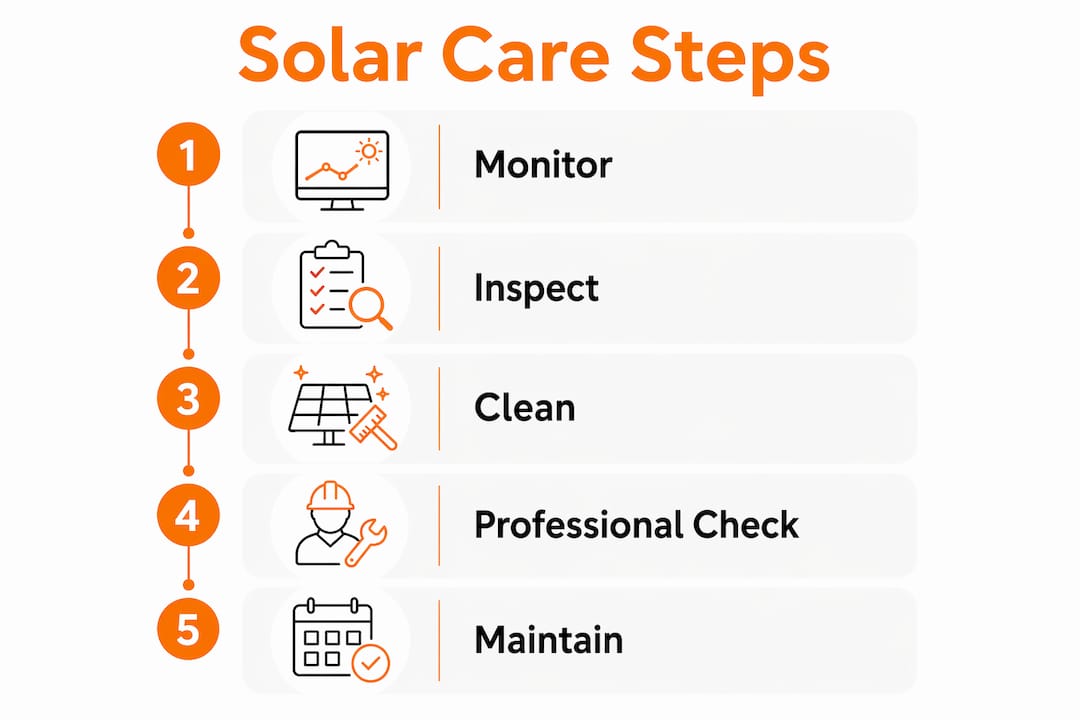
Preventive solar care covers four core activities: routine monitoring, visual inspections, cleaning, and periodic professional checkups. Each one serves a different purpose, and together they protect your investment year after year. The good news is that most of the work is simple and takes less time than you might expect.
Monitoring is your first line of defense. Apps like SolarEdge Monitoring and Enphase Enlighten show your daily and monthly production in real time. A drop over 10% without a weather explanation is your signal to investigate further. Many simple inverter faults clear up with a five-minute power cycle, so always try that before calling anyone.
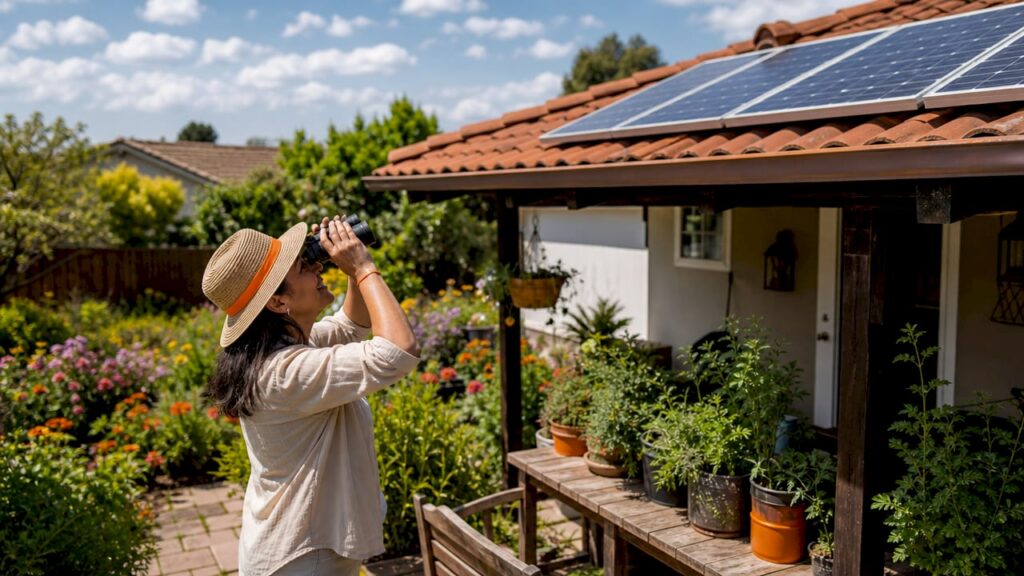
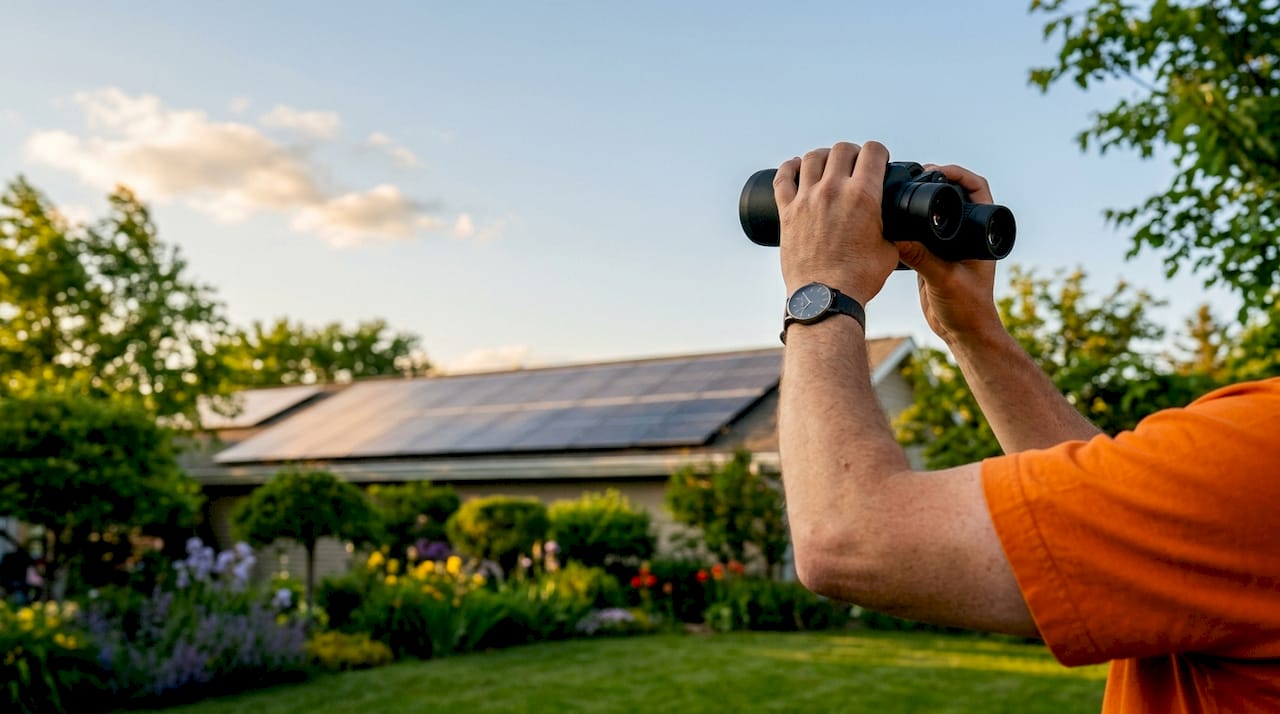
Visual inspections come next. You do not need to climb on the roof. A quarterly walk around your property with binoculars is enough to spot debris buildup, bird activity, or visible panel damage. Catching a bird nest early costs nothing. Ignoring it until it causes cable corrosion costs significantly more.
What routine tasks should homeowners do regularly?
The most effective maintenance schedule combines monthly monitoring checks with biannual cleaning and quarterly visual inspections from the ground. Here is what that looks like in practice:
- Monthly monitoring checks: Open your inverter app and compare this month’s output to the same month last year. Flag any unexplained drop over 10% for follow-up.
- Quarterly visual inspections: Walk the perimeter of your home and look up at the panels. Watch for leaves, bird droppings, nesting material, or cracked glass.
- Biannual cleaning: Clean panels twice a year in most climates. San Antonio homeowners dealing with heavy pollen in spring and dust in summer may benefit from a third cleaning.
- Vegetation management: Trim any branches that cast shade on your panels. Shading from trees often reduces output more than dirt does, and it is one of the most overlooked maintenance tasks.
Pro Tip: Never clean your panels in direct midday sun. Cold water on hot glass causes thermal shock, which can crack cells or damage the anti-reflective coating. Clean in the early morning or evening instead.
When you do clean, use a soft brush and deionized or purified water. Abrasive cleaning methods scratch the anti-reflective coating and permanently reduce how much light your panels absorb. Skip the pressure washer entirely. And never walk on the panels. Even light foot traffic causes micro-cracks that create permanent power loss you cannot see with the naked eye.
When should you schedule professional solar maintenance?
Professional maintenance fills the gaps that homeowner checks cannot. Most residential systems need one professional cleaning and visual inspection per year. If you live in a dusty area or have heavy bird activity, a second visit is worth the cost.
Here is a straightforward schedule to follow:
- Annual professional cleaning and inspection: A technician checks panel surfaces, mounting hardware, wiring connections, and the inverter. This visit typically costs a few hundred dollars and catches issues your ground-level inspection would miss.
- Electrical testing every 3–5 years: Thermal imaging detects micro-cracks, failing bypass diodes, and inverter health problems that are invisible to the eye. Drone thermal inspections typically cost $150–$400 and represent the most reliable way to find hidden defects before they become failures.
- After major weather events: Hail, high winds, and heavy storms warrant an unscheduled inspection. Do not wait for your next annual visit if something looks off.
Regional factors matter too. The table below shows how environment affects cleaning frequency:
| Environment | Recommended cleanings per year | Key concern |
|---|---|---|
| Urban or suburban (low dust) | 1–2 | Pollen, general grime |
| Rural or agricultural | 2–3 | Dust, crop residue |
| High bird activity area | 2–3 | Droppings, nesting debris |
| Coastal or industrial | 2–3 | Salt, particulate buildup |
San Antonio falls into the rural and high-dust category for much of the year, which is why Alphasolarsa recommends two cleanings annually for most local homeowners.
How do you read monitoring data to make maintenance decisions?
Your monitoring app is not just a dashboard. It is a maintenance decision tool. Knowing what the numbers mean saves you from cleaning panels that do not need it and from ignoring panels that do.
Here is what to watch for:
- Soiling loss above 3%: This is your cleaning trigger. Cleaning below this threshold is often not cost-effective. Wait until the data tells you it is time.
- Sustained production drop over 10%: If output falls significantly without a weather explanation, schedule an inspection. Do not assume it will resolve on its own.
- Single-panel underperformance: Panel-level monitoring systems like Enphase Enlighten detect faults within days. String-level systems can take weeks to surface the same problem. Panel-level data gives you a faster, clearer picture of where the issue lives.
- Inverter error codes: Many codes clear with a simple restart. If the same code returns within a week, call a professional.
Pro Tip: Screenshot your monitoring app on the same date each month and save the images in a folder. This gives you a visual production history that makes year-over-year comparisons fast and easy.
Solar system monitoring is the single biggest upgrade most homeowners can make to their maintenance routine. It turns guesswork into data, and data into confident decisions.
What common problems can preventive care help you avoid?
Most solar system failures are preventable. The issues that cause the most damage are also the easiest to catch early with a consistent maintenance routine.
Bird nesting is the most underestimated threat. Birds nest under panels because the space is warm, sheltered, and undisturbed. Nesting debris causes accelerated cable corrosion and can lead to arc faults, which are a fire risk. Anti-bird mesh installed around the panel perimeter eliminates the problem at the source. Pair it with a quarterly underside inspection and you have the issue fully covered.
Thermal shock from improper cleaning is another common and entirely avoidable mistake. Never clean hot panels in direct sunlight. The temperature difference between cold water and a sun-heated panel can crack the glass or damage the cells beneath it. Morning and evening cleaning windows exist for exactly this reason.
Shading from vegetation creeps up slowly. A branch that was not a problem last summer may now block two hours of peak sun each day. Regular trimming keeps your output where it should be. Vegetation management is a high-impact task that costs little and pays back quickly.
Preventive care is not about fixing problems. It is about making sure problems never get the chance to start.
For more detail on safe and effective cleaning methods, the solar panel cleaning tips resource from Alphasolarsa covers the full process step by step.
Key takeaways
A consistent preventive maintenance routine is the single most effective way to protect your solar system’s output and extend its lifespan.
| Point | Details |
|---|---|
| Monitor monthly | Check your app for drops over 10% and investigate any unexplained decline promptly. |
| Clean based on data | Soiling losses under 3% do not justify cleaning costs; let performance data guide your schedule. |
| Schedule annual professional visits | A yearly professional inspection catches wiring, mounting, and inverter issues you cannot see from the ground. |
| Use thermal imaging every 3–5 years | Drone thermal inspections find micro-cracks and failing diodes before they cause major output loss. |
| Prevent bird nesting early | Anti-bird mesh and quarterly underside checks stop cable corrosion and arc faults before they start. |
What I have learned from years of watching homeowners maintain their systems
Most homeowners overcomplicate solar maintenance or ignore it entirely. Both approaches cost money. The truth is that a well-installed system needs very little from you month to month. What it does need, it needs consistently.
The biggest shift I have seen in how homeowners approach maintenance is the move from calendar-based cleaning to data-driven cleaning. Cleaning twice a year because someone told you to is fine. Cleaning when your monitoring app shows a 4% soiling loss is better. You save money when you do not need to clean, and you act faster when you do.
I also want to be direct about one thing: do not attempt electrical repairs yourself. Checking your app, trimming a branch, rinsing panels in the morning, these are all safe homeowner tasks. Opening your inverter, touching wiring, or climbing on your roof without proper equipment are not. The cost of a professional visit is always less than the cost of an injury or a voided warranty.
The homeowners I see getting the most from their systems are the ones who spend ten minutes a month on their monitoring app and schedule one professional visit per year. That is genuinely all it takes for most systems in San Antonio.
— Anthony
Alphasolarsa keeps your panels performing year-round
Your solar system works hard for you every day. Keeping it clean and well-maintained is how you protect that investment for the long term.
Alphasolarsa provides professional solar panel cleaning in San Antonio tailored to local conditions, including dust, pollen, and bird activity. Our team also handles full residential solar maintenance consultations for homeowners who want a complete picture of their system’s health. Whether you need a one-time cleaning or a recurring maintenance plan, we make it easy to schedule and stress-free to manage. Reach out to Alphasolarsa and let us handle the details so your system keeps delivering.
FAQ
How often should solar panels be cleaned?
Most residential systems need one to two professional cleanings per year. Homeowners in dusty or high bird-activity areas like San Antonio may benefit from a third cleaning, guided by monitoring data showing soiling losses above 3%.
What happens if I never clean my solar panels?
Neglected soiling can reduce annual output by 5%–15%. Over a full system lifetime, that loss adds up to a significant reduction in the energy savings you paid for.
Can I clean my own solar panels?
Yes, with the right approach. Use a soft brush, deionized water, and clean only in the early morning or evening. Never use a pressure washer, abrasive materials, or walk on the panels.
What does a professional solar inspection include?
A professional visit covers panel surfaces, mounting hardware, wiring connections, and inverter function. Every 3–5 years, thermal imaging adds a deeper layer of inspection that catches micro-cracks and failing diodes invisible to the eye.
How do I know if my panels need maintenance right now?
Open your monitoring app and compare current output to the same period last year. A sustained drop over 10% without a weather explanation is a clear signal to schedule an inspection or cleaning.