
TL;DR:
- Getting solar permits in Texas involves local regulations, requiring separate building and electrical permits that vary by city. Completing all documentation accurately and promptly is essential to avoid delays, with new laws enabling third-party review and automated permitting platforms to accelerate approval timelines. Coordinating utility approval and inspections simultaneously with permit applications helps ensure a smoother installation process and quicker system energization.
Getting solar on your roof in Texas is one of the smartest financial moves you can make. But solar permits and regulations trip up more homeowners and contractors than almost any other part of the process. Texas has no statewide solar permit form, which means every city and county plays by its own rules. Miss a step in San Antonio and you might wait weeks longer than necessary. Skip a document in Houston and face a costly resubmission. This guide gives you a clear, practical path through every stage of the Texas permitting process, from documentation to final utility approval.
Table of Contents
- Key Takeaways
- Solar permits and regulations: what Texas requires
- Documentation and code compliance for permit applications
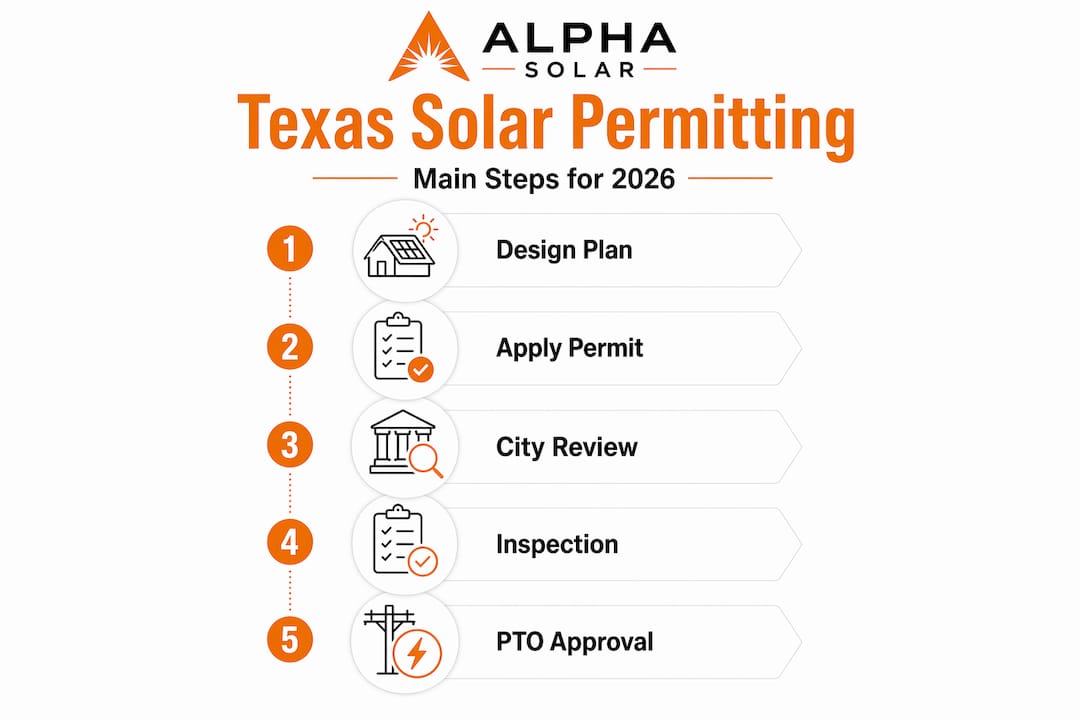
- How permitting workflows and timelines actually work
- Faster approvals: third-party review and SolarAPP+
- Step-by-step solar permit application process for Texas
- My honest take on Texas solar permitting
- Get your Texas solar project done right with Alphasolarsa
- FAQ
Key Takeaways
| Point | Details |
|---|---|
| No statewide permit exists | Texas delegates permit authority locally, so rules vary by city and county. |
| Two permits are usually required | Most residential systems need both a building permit and a separate electrical permit. |
| Documentation must be complete | Incomplete submittals are the top cause of delays; prepare all documents before applying. |
| New law speeds up approvals | Texas SB 1202 allows third-party reviewers to accelerate plan review and inspections. |
| Utility PTO is a separate step | Permission to Operate from your utility is required before your system can legally energize. |
Solar permits and regulations: what Texas requires
Texas does not have a single, unified solar permit system. Permit authority is delegated locally, which means the city of San Antonio, Harris County, the city of Austin, and hundreds of other jurisdictions each set their own fees, timelines, and submission requirements. That decentralization is the first thing every homeowner and contractor needs to accept before starting a project.
For most residential solar installations, you will need two distinct permits:
- Building permit: This covers the physical installation. Think roof attachment methods, racking systems, structural load calculations, and anything that affects the integrity of your home’s structure. The building department reviews whether your roof can handle the panels safely.
- Electrical permit: This covers all wiring from the panels to the inverter, the main service panel connections, and the utility meter. In Texas, this work must be performed and signed off by a licensed electrician or licensed master electrician, depending on jurisdiction.
- Utility interconnection approval: This is separate from both permits above. Before your solar system can send power to the grid or even energize, your utility, whether that is CPS Energy in San Antonio or Oncor in Dallas, must approve the interconnection. Energizing without this approval is both unlawful and unsafe.
- HOA considerations: Texas law prohibits homeowners associations from outright banning solar panels, but HOAs can regulate placement and aesthetics. Check your HOA’s deed restrictions before finalizing your panel layout.
Pro Tip: Contact your local building and development services office before you finalize your system design. Some Texas cities have specific racking or equipment requirements that can affect what your installer proposes.
Documentation and code compliance for permit applications
Submitting a complete permit package the first time is the single biggest factor in getting approved without delays. Permitting is a safety checkpoint, and jurisdictions reject incomplete submittals without exception. Here is what you will typically need to gather.
Required documents for most Texas solar permit applications:
- Site plan: A scaled drawing of your roof showing panel placement, orientation, dimensions, and setback distances from edges and obstructions.
- Electrical single-line diagram: A schematic showing how power flows from the panels through the inverter to your electrical panel and the utility meter. This must reflect the actual equipment being installed.
- Structural calculations: Required by most jurisdictions, and mandatory with a licensed professional engineer’s stamp for systems larger than 10 kW. These calculations confirm the roof framing can support the added load.
- Equipment specification sheets: Manufacturer datasheets for your solar panels, inverter, racking system, and any battery storage. Jurisdictions use these to verify code compliance.
- Contractor license information: Your installer’s TDLR (Texas Department of Licensing and Regulation) license number and, for electrical work, the electrician’s license number.
The codes most Texas jurisdictions apply are the National Electrical Code (NEC) and the International Building Code (IBC), sometimes with local amendments. San Antonio, for example, follows the 2020 NEC with local modifications.
Here is a quick comparison of what typically triggers extra scrutiny:
| Situation | Extra requirement |
|---|---|
| System over 10 kW | Licensed PE structural stamp required |
| Battery storage added | Additional electrical diagrams and fire setback documentation |
| Flat or low-slope roof | Waterproofing and drainage details needed |
| Historic district property | Separate review board approval often required |
| High wind zone location | Wind load engineering calculations required |

Pro Tip: Have your installer provide a permit-ready plan set before you sign a contract. Reputable installers in Texas prepare complete permit documentation as part of their standard process, not as an add-on.
How permitting workflows and timelines actually work
Knowing what to expect at each stage prevents the frustration that derails a lot of projects. The process involves multiple stops, and they do not always move at the same speed.
Here is how the overall process flows in most Texas jurisdictions:
- Submit permit application: You or your contractor submits the completed permit package, either online or in person, along with the required fee.
- Plan review: The jurisdiction reviews your documents for code compliance. Typical review times across major Texas cities range from 5 to 20 business days, depending on system complexity and workload. Austin and Dallas tend to run slower than smaller cities with lower application volumes.
- Permit issuance: Once approved, the permit is issued. No installation should begin before this step, even if your panels are already on-site.
- Installation: Your contractor installs the system per the approved plans. Any deviation from the approved design can require a revised submittal.
- Rough-in inspection: For some jurisdictions, an inspector must visit during installation before the electrical work is covered or enclosed. This is common for ground-mounted systems.
- Final inspection: After installation is complete, both a building inspector and an electrical inspector must sign off. Some jurisdictions combine these into one visit; others require separate appointments.
- Utility permission to operate (PTO): Once inspections pass, your contractor submits final documentation to the utility. This is a distinct approval step from the building and electrical permits. CPS Energy in San Antonio typically processes PTO within 5 to 10 business days after receiving complete documentation.
Permit fees by city (approximate ranges):
| City | Typical fee range | Avg. review time |
|---|---|---|
| San Antonio | $75 to $350 | 5 to 10 business days |
| Houston | $50 to $200 (varies by size) | Same-day to 5 days with SolarAPP+ |
| Austin | $150 to $600+ | 10 to 20 business days |
| Dallas | $100 to $400 | 7 to 15 business days |
Coordinating your utility interconnection application at the same time as your permit submission saves weeks. The two processes run in parallel, not in sequence.
Faster approvals: third-party review and SolarAPP+
Texas has introduced two significant tools that can cut your permitting timeline substantially. Neither is universally available, but both are worth knowing about before you plan your project schedule.
Texas SB 1202 and third-party permitting
Texas SB 1202, effective in 2025, allows solar installers to hire a qualified third-party reviewer to handle plan review and inspections instead of waiting in the standard AHJ queue. Once the third party completes their review, they notify the local authority having jurisdiction (AHJ), which then must issue final approval within 3 business days. This pathway is optional, not mandatory, so AHJs are not required to speed up their own review timelines. But for contractors managing large project pipelines, it provides a reliable alternative when local queues are backed up.
One important detail: installers using the third-party pathway need to track which code version the AHJ has adopted. If the AHJ is slow to adopt a new code edition, there are fallback provisions, but understanding them upfront prevents resubmissions.
SolarAPP+ automated permitting platform
SolarAPP+ is an online platform developed with DOE support that automates code compliance checking and permit issuance for qualifying residential systems. SolarAPP+ has reduced permitting timelines by an average of 12 business days compared to traditional processes. Houston is one of Texas’s most prominent adopters, offering same-day permit approvals for qualifying systems through the platform.
However, eligibility matters. Systems located in windborne debris regions, historic districts, or properties with unusual structural conditions are typically excluded and require traditional review. Always check address eligibility before relying on SolarAPP+ in your project timeline.
“Automated permitting tools and third-party review pathways are cutting real weeks off project timelines for Texas installers who know how to use them. The contractors seeing the fastest turnarounds are the ones who qualify projects upfront rather than discovering exclusions after submission.”
Pro Tip: Before assuming SolarAPP+ is available for your address in Houston or another participating city, run an eligibility check first. A failed submission costs time you could have spent on the traditional pathway.
Step-by-step solar permit application process for Texas
Whether you are a homeowner managing your own project or a contractor pulling permits daily, following a consistent process keeps projects moving.
- Identify your local jurisdiction. Confirm whether your project falls under city or county authority. Some properties near San Antonio sit in unincorporated Bexar County, which has different rules than the city itself.
- Check current requirements and fees. Visit your local building department’s website or call them directly. Requirements change, and what applied last year may have been updated. Review the solar energy savings workflow to understand how permitting fits into your overall installation timeline.
- Engage licensed professionals early. Your installer should include permit preparation in their contract scope. For larger systems, confirm that a licensed professional engineer will provide structural calculations and stamp the drawings.
- Prepare a complete document package. Use the documentation checklist from the previous section. Include every required item before submission. Incomplete packages are returned without review in most Texas jurisdictions, costing you a full review cycle.
- Submit and track your application. Most Texas cities now accept online submissions. Keep a copy of your submission confirmation and note the expected review date. Follow up if you do not hear back within the stated review window.
- Schedule inspections proactively. Once the permit is issued, do not wait until installation is complete to think about inspections. Some inspection slots in busy cities like Austin book out a week or more in advance.
- Submit your utility interconnection application in parallel. Do not wait for the final inspection to contact your utility. Start the roof preparation and structural review process alongside your permit application to avoid stacking delays.
- Receive PTO and energize. After inspections pass and the utility grants Permission to Operate, your system can legally turn on. Document everything, including inspection reports and PTO letters, for your records and any future home sale disclosures.
My honest take on Texas solar permitting
Working with Texas homeowners and contractors across different cities, I’ve seen one pattern repeat itself over and over. Projects that hit long delays almost always trace back to one of two causes: an incomplete initial submittal or a contractor who underestimated how much variation exists between jurisdictions.
What I’ve learned is that the rules in Austin are genuinely different from the rules in San Antonio, which are different again from what you’ll find in Conroe or Seguin. I’ve seen experienced contractors pull permits in Houston for years and then get surprised by a requirement they didn’t know about when they took on a project in a smaller Texas municipality. The decentralized system rewards people who do their homework upfront.
My honest advice: use SolarAPP+ when your project qualifies, and seriously consider the third-party review pathway for larger systems or tight timelines. These are not theoretical improvements. The time savings from SolarAPP+ are real and documented. But don’t assume they apply automatically. Verify eligibility first, every time.
The other thing I’d tell both homeowners and contractors is to treat the utility interconnection application as a permit in its own right. It runs on its own timeline, and stacking it behind the permit process instead of running them simultaneously adds unnecessary weeks to every project.
— Anthony
Get your Texas solar project done right with Alphasolarsa
Navigating Texas solar permits does not have to slow you down. At Alphasolarsa, we handle the full permit process for your installation, from preparing code-compliant plan sets to coordinating with your local jurisdiction and utility.

Our team works across San Antonio and surrounding Texas markets, and we know the specific requirements for Bexar County, the City of San Antonio, and neighboring jurisdictions. Whether you are a homeowner ready to go solar or a contractor looking for a reliable installation partner, our residential solar installation services include full permit management from start to PTO. Need solar for a commercial property? Our commercial solar services cover permit preparation and installation for businesses across the San Antonio area. Reach out to Alphasolarsa today and get your project moving with confidence.
FAQ
Do you always need a permit for solar panels in Texas?
Yes. Local governments require permits and inspections before a solar system can legally operate on the grid in Texas. There are no statewide exemptions for residential systems.
How long does the solar permit process take in Texas?
Review times typically range from 5 to 20 business days depending on the city, system size, and whether you use an expedited pathway like SolarAPP+. Austin tends to run longer than Houston or smaller municipalities.
What documents are needed for a Texas solar permit application?
Most jurisdictions require a site plan, electrical single-line diagram, structural calculations, and equipment specification sheets. Systems over 10 kW also require a licensed professional engineer’s stamp on structural drawings.
What is Permission to Operate (PTO) and why does it matter?
PTO is the utility’s approval to energize your solar system. It is a separate step from your building and electrical permits, and your system cannot legally turn on without it.
Can a third party handle my solar permit in Texas?
Yes. Under Texas SB 1202, qualified third-party reviewers can handle plan review and inspections, with the local AHJ required to issue final approval within 3 business days of notification. This is an optional pathway, not a replacement for local authority oversight.