
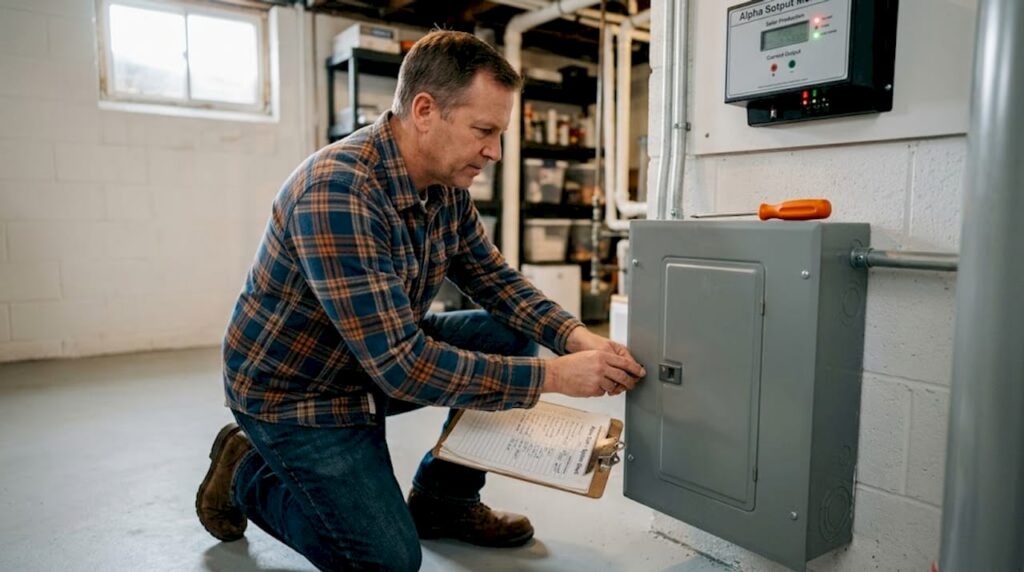
TL;DR:
- Most homeowners mistakenly believe their solar panels require minimal maintenance, but fire risks have increased by 60% between 2022 and 2024, highlighting the need for safety awareness. Choosing high-quality components, conducting routine inspections, and understanding emergency protocols significantly reduce potential hazards and improve system safety. Proper installer selection, regular professional maintenance, and homeowner education are essential to prevent electrical faults and ensure safe solar energy use.
Most homeowners assume their solar panels are basically set-and-forget. They’re not. Solar panel fires increased 60% between 2022 and 2024, outpacing the growth of new installations by a wide margin. That’s not a reason to avoid solar. It’s a reason to take solar system safety guides seriously and understand exactly what you’re responsible for once those panels go on your roof. This article gives you the practical framework: what risks to watch for, how to choose safe equipment, what maintenance actually looks like, and what to do when something goes wrong.
Table of Contents
- Key takeaways
- Solar system safety guides: understanding your real risks
- Choosing safe components and qualified installers
- Routine maintenance to prevent hazards
- Emergency protocols and weather preparedness
- My take on what homeowners actually get wrong
- Safe solar starts with the right partner
- FAQ
Key takeaways
| Point | Details |
|---|---|
| Fire risk is real and rising | Solar fires increased 60% from 2022 to 2024, making proactive safety habits non-negotiable. |
| Component quality matters from day one | Choosing UL-listed hardware and LFP batteries significantly reduces your long-term risk profile. |
| Routine inspections catch most problems early | Biannual professional inspections combined with system monitoring prevent the majority of electrical faults. |
| Know your rapid shutdown switch | Every homeowner should locate and understand their RSD switch before an emergency occurs. |
| Never DIY electrical repairs | Attempting electrical fixes yourself risks injury, voids warranties, and can worsen the fault. |
Solar system safety guides: understanding your real risks
Before you can protect your system, you need to know what you’re actually protecting it against. The risks are specific and knowable. They are not vague or random.
Electrical faults and fire hazards
The most serious risk in any residential solar system is an electrical fault leading to fire. The three most common causes are inverter failures, faulty DC connectors, and damaged wiring. DC electricity, which is what your panels produce before the inverter converts it to usable household current, is particularly hazardous because panels generate voltage as long as they’re in sunlight. You cannot simply flip a breaker to stop the current during an emergency. That’s why proper system design and component quality are so critical.
Manufacturing quality is also a bigger factor than most homeowners realize. 30% of solar manufacturers show junction box failures in standard reliability testing. A junction box is the small enclosure on the back of each panel where wiring connects. When these fail, they create heat that can ignite surrounding materials.
Battery storage systems add another layer of risk if not chosen carefully. Lithium-ion batteries, particularly older chemistries, can experience thermal runaway. That’s a chain reaction where heat causes more heat, potentially leading to fire.
Structural and weather-related risks
Your roof carries the weight and heat load of your panels for 25 or more years. Two structural risks are frequently overlooked.
- Roof load: Panels add weight. If your roof structure wasn’t assessed before installation, you may have undetected stress on rafters or decking.
- Ventilation clearance: Maintaining a 10 cm gap between the roof and panels is critical. Without it, heat builds up under the array, which degrades both the panels and your roof’s fire resistance rating.
- Weather damage: Hail, high winds, and flooding can crack panels, loosen mounts, and expose wiring. Designing systems for one-in-100-year weather events significantly reduces long-term failure risk.
One common myth worth addressing: many homeowners believe that if their system passed the original inspection, it’s permanently safe. Inspections verify installation at a point in time. Weather, aging components, and physical wear create new risks every year.
Choosing safe components and qualified installers
The safest solar system starts with the right equipment and the right people. This is where many of the problems we see could have been avoided entirely.
Hardware that reduces risk
Not all solar hardware is equal from a safety standpoint. Here’s a straightforward comparison of the choices that matter most:
| Component | Lower-Risk Option | Why It Matters |
|---|---|---|
| Inverter type | Microinverters | Microinverters reduce high-voltage DC wiring hazards compared to central string inverters |
| Battery chemistry | Lithium iron phosphate (LFP) | LFP batteries are the safest lithium chemistry for residential use, with lower thermal runaway risk |
| Mounting hardware | UL-listed racking systems | Certified mounting reduces structural failure and wind uplift risk |
| Panels | Tier 1, IEC-certified panels | Reduces the junction box failure rate seen in lower-quality manufacturing |
Microinverters convert DC to AC at each individual panel rather than running high-voltage DC wiring across your entire roof to a central unit. This significantly reduces the length and voltage of dangerous DC wiring in your system.
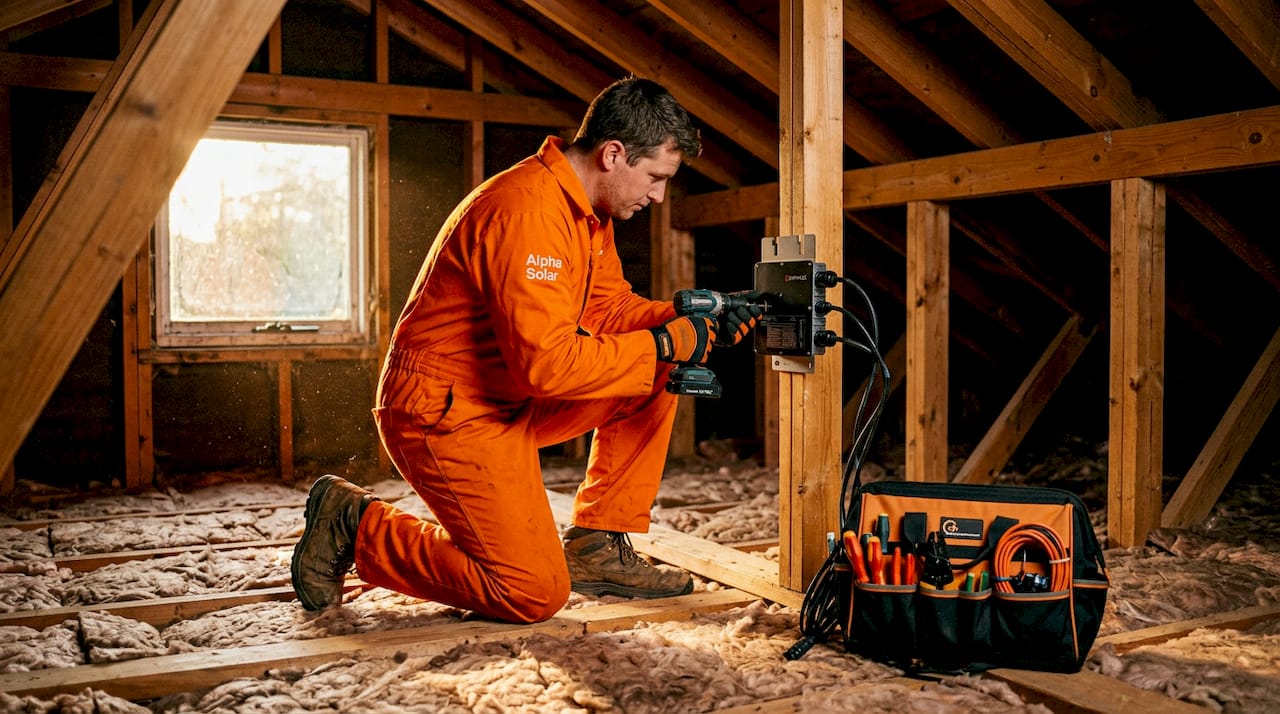
Pro Tip: Ask your installer specifically whether they use UL-listed mounting hardware and what battery chemistry they recommend. If they can’t answer clearly, that tells you something important about their standards.
What to look for in an installer
Permits and inspections are not bureaucratic formalities. They are your safety net. A properly permitted system goes through local authority review and a final inspection by a licensed official. Any installer who suggests skipping permits to save time or money is creating a liability for you, not a convenience.
Look for installers who are certified through the North American Board of Certified Energy Practitioners (NABCEP). This is the industry’s most recognized professional credential. Verify that your installer pulls permits for every job, coordinates the utility interconnection inspection, and provides you with a complete set of as-built system documents when the job is done.
Routine maintenance to prevent hazards
A solar system that runs without visible problems can still be developing faults you can’t see. Consistent maintenance is how you catch those problems before they become emergencies.
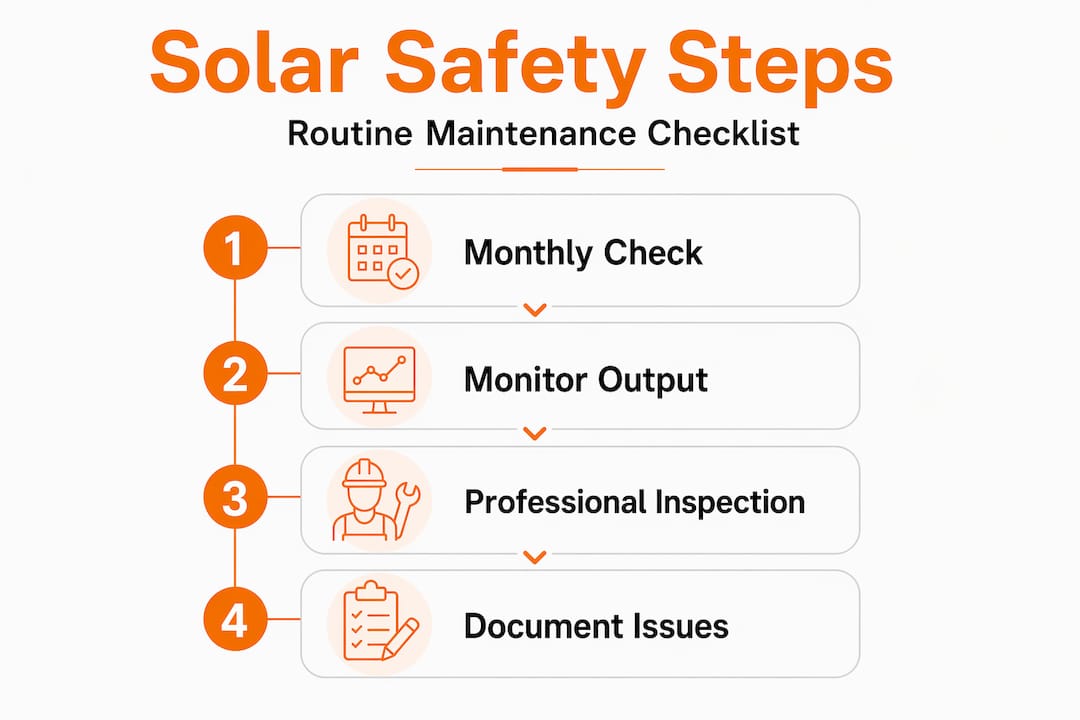
Your maintenance schedule
Follow this sequence to keep your system safe year after year:
- Every six months: Schedule a professional visual inspection of all panel surfaces, mounting hardware, and visible wiring. Look specifically for loose mounts, cracked panels, and any discoloration around connectors.
- After any major storm: Conduct a visual inspection from the ground. If you see shifted panels, exposed wiring, or debris lodged under the array, call a professional before operating the system.
- Annually: Have a certified technician inspect the inverter, check all electrical connections, and review system monitoring data for anomalies.
- As needed: Schedule professional panel cleaning when you notice significant dust, bird droppings, or debris buildup. Dirty panels don’t just lose efficiency. They can create uneven heating that stresses cells over time.
Pro Tip: Set up your system’s monitoring app to alert you when daily production drops more than 15% from your typical baseline. That drop is often the first sign of a developing fault, long before anything is visible.
Monitoring software is one of the most underused safety tools available to homeowners. Tracking your system’s output in real time lets you spot performance drops that indicate wiring issues, shading from debris, or inverter problems weeks before a physical inspection would catch them.
One rule that cannot be overstated: never perform electrical solar maintenance yourself. This applies to replacing connectors, adjusting wiring, or investigating the inverter cabinet. The risks include electrocution, fire, and voiding your equipment warranty. If something looks wrong electrically, the correct step is to shut down the system using your rapid shutdown switch and call a licensed technician.
A critical gap that surprises many homeowners: thermal imaging alone misses 79% of high-risk connector and fuse issues. This means a technician who only uses a thermal camera during inspection is leaving most electrical faults undetected. Ask your maintenance provider whether they combine thermal imaging with high-resolution visual inspection of connectors and fuses.
Emergency protocols and weather preparedness
Knowing what to do before an emergency happens is what separates a manageable situation from a dangerous one.
Your rapid shutdown switch
The rapid shutdown device, or RSD, is one of the most important safety features in a modern residential solar system. The NEC mandates RSD switches on residential solar systems to protect first responders by stopping electricity production quickly during an emergency. Your RSD switch is typically located near your main electrical panel or at a clearly labeled point on the exterior of your home.
Every adult in your household should know where it is and how to use it. Label it clearly. If your system was installed before RSD requirements were standard in your area, ask your installer whether an upgrade is appropriate.
“Firefighters responding to a solar-involved fire need to know your system can be shut down safely. The DOE STEP program has trained over 10,000 firefighters to manage solar emergencies, but your local department may not have that training. Giving them a clear system diagram and RSD location can make a real difference in how they respond.”
What to do in an emergency
- If you smell burning or see smoke near your panels or inverter: Activate your RSD switch immediately, leave the building, and call 911. Do not attempt to investigate the source yourself.
- If you suspect an electrical fault: Shut down the system using the RSD, do not touch any wiring or equipment, and contact your installer or a licensed electrician.
- After a major storm: Do not go on the roof. Inspect from the ground for visible damage. If panels are shifted, cracked, or wiring is exposed, shut down the system and call a professional before re-energizing.
- Communicate with first responders: Keep a one-page system summary near your electrical panel that includes the RSD location, battery storage location, and your installer’s emergency contact number.
Insurance experts recommend integrating extreme weather criteria into your system design from the start and standardizing post-storm inspections as a regular practice. If your system wasn’t designed with local weather extremes in mind, that’s worth discussing with your installer at your next service visit.
My take on what homeowners actually get wrong
I’ve worked alongside homeowners and property managers long enough to notice a pattern. The safety steps people skip are almost never the dramatic ones. Nobody skips calling 911 during a fire. What people skip is the unglamorous middle ground: the biannual inspection they keep meaning to schedule, the monitoring app they installed but never configured for alerts, the RSD switch location they meant to show their spouse.
In my experience, the homeowners who have the fewest problems are not the ones with the most expensive systems. They’re the ones who treat their solar installation the way they treat their HVAC system: scheduled maintenance, professional service, and a clear understanding of what they’re responsible for versus what requires a specialist.
The detection gap issue genuinely concerns me. Most homeowners assume a professional inspection means their system was thoroughly checked. But if that inspection relied only on thermal imaging, most connector faults went undetected. Ask specifically what methods your technician uses. A good answer includes both thermal and detailed visual inspection of balance-of-system components.
Rapid shutdown technology has made modern systems meaningfully safer than systems installed even five years ago. If your home has an older system without RSD capability, I’d put that upgrade near the top of your priority list. It’s not expensive relative to the safety benefit, and it matters most in the moments when you have the least time to think.
The long-term view is this: a well-maintained solar system is one of the safest energy sources you can have on your home. The risks are real but manageable. The guidelines for solar safety exist precisely because following them works.
— Anthony
Safe solar starts with the right partner
At Alphasolarsa, we design and install residential solar systems in San Antonio with safety built into every decision, from component selection to final inspection. Our team uses UL-listed hardware, pulls every required permit, and walks you through your system’s safety features before we leave the job site. We also offer professional panel cleaning and ongoing maintenance services to keep your system running safely year after year. If you’re ready to invest in solar the right way, or if you want a safety review of your existing system, our residential installation team is ready to help. Reach out to Alphasolarsa for a consultation and let’s make sure your solar investment is as safe as it is smart.
FAQ
What are the main causes of residential solar panel fires?
The leading causes are inverter faults, faulty DC connectors, and poor-quality junction boxes. 30% of solar manufacturers show junction box failures in reliability testing, making component quality a critical safety factor from the start.
How often should I have my solar system professionally inspected?
A professional inspection every six months is the recommended baseline, with an additional check after any major storm. Annual electrical inspections by a certified technician are also advisable to catch inverter and wiring issues early.
What is a rapid shutdown switch and do I need one?
A rapid shutdown switch stops your solar system’s electricity production quickly during an emergency. The NEC requires RSD switches on residential solar systems to protect first responders, and every household member should know where it is located.
Can I clean or repair my solar panels myself?
You can rinse panels with water from the ground, but electrical maintenance of any kind should always be handled by a licensed professional. Performing electrical solar repairs yourself risks electrocution, fire, and voiding your equipment warranty.
Which battery type is safest for home solar storage?
Lithium iron phosphate, known as LFP, is widely considered the safest battery chemistry for residential solar storage. LFP batteries have a significantly lower risk of thermal runaway compared to other lithium-ion chemistries, making them the preferred choice for home installations.