
TL;DR:
- Many San Antonio homeowners overlook the importance of custom solar system design, which accounts for roof orientation, energy habits, and local utility rules to optimize performance. Tailored batteries are crucial for balancing load shifting and backup needs, with sizing based on specific household critical loads and desired resilience. Custom solutions, supported by thorough site assessments and proper permitting, ensure maximum savings, protection, and adaptability amidst changing utility policies.
Most San Antonio homeowners who look into solar assume the process is straightforward: pick a panel brand, get a quote, and start saving. But that assumption leaves a lot of money and protection on the table. Generic solar installs often ignore your home’s specific roof orientation, your household’s actual energy habits, and San Antonio’s particular utility rate structures. The result? Systems that underperform, batteries that are the wrong size, and homeowners left wondering why their bill didn’t drop as much as they expected. This guide walks you through how truly custom solar and battery solutions work, who benefits most, and how to take the right next steps for your home.
Table of Contents
- Why customization matters in residential solar systems
- How custom battery storage shapes your solar experience
- Financial factors: ROI, payback, and when customization is ‘worth it’
- Practical steps to getting a custom solar system in San Antonio
- Our take: The real path to value with custom solar solutions in San Antonio
- Ready to build your custom solar solution?
- Frequently asked questions
Key Takeaways
| Point | Details |
|---|---|
| Tailored for you | Custom solar systems maximize energy savings by matching design to your home’s unique needs. |
| Battery role clarity | Decide upfront if your battery is for bill savings, backup, or both to size it right and avoid disappointment. |
| Local factors matter | Permitting, local grid rules, and rate structures in San Antonio all influence your system’s value. |
| ROI is not universal | Batteries are a smart investment mainly when rate plans and incentives line up with your needs. |
| Step-by-step success | Start with goals, get expert assessment, and rely on experienced installers to navigate approvals and maximize benefits. |
Why customization matters in residential solar systems
Having set the stage for why standard solutions often fall short, let’s break down how customization directly impacts your home solar results.
A custom solar system is not just a matter of choosing a premium panel brand. It means designing your entire system from scratch based on your specific home, your energy use, your roof’s structure, and the local rules that govern how your system connects to the grid.
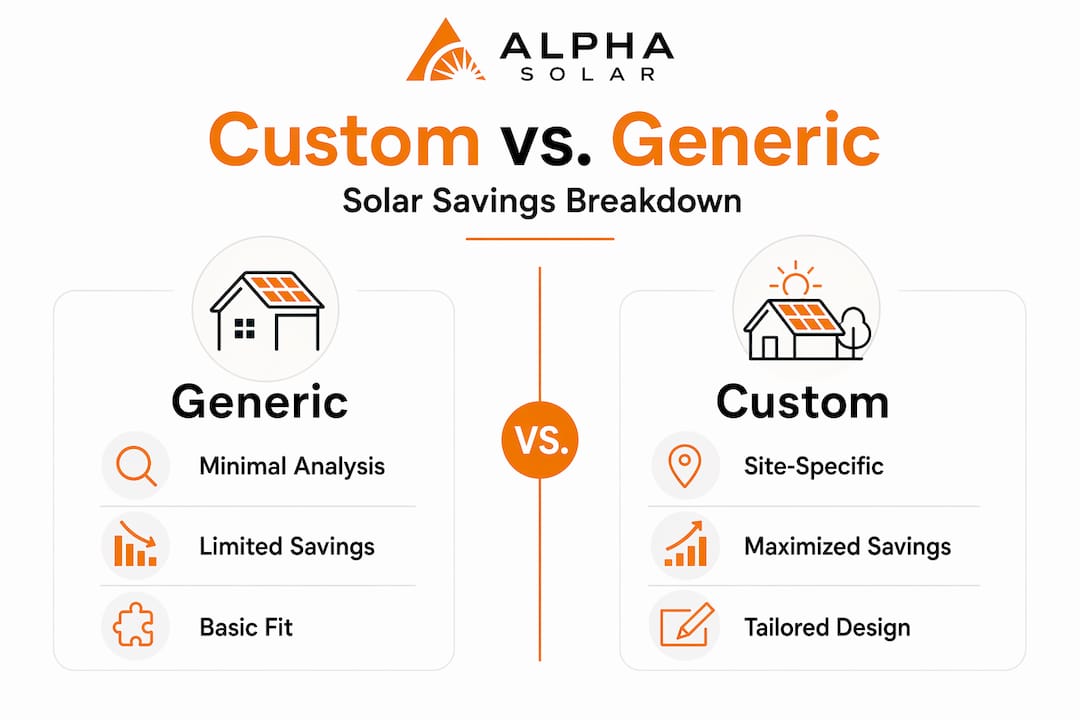
Here’s what sets a custom design apart from a generic install:
- Site-specific engineering: Your roof’s pitch, orientation, and shading from trees or neighboring structures all affect how much electricity your panels will actually generate. A custom design accounts for all of these variables.
- Load analysis: Your home’s energy consumption patterns, including when you use the most power and which appliances matter most to you, shape the system’s capacity and battery sizing.
- Backup configuration: Do you want to keep your whole home running during an outage, or just essential circuits like your refrigerator, lights, and medical equipment? That decision fundamentally changes the design.
- Local compliance: San Antonio and Bexar County have specific codes, and CPS Energy (your local utility) has its own interconnection requirements. A custom installer navigates all of that upfront.
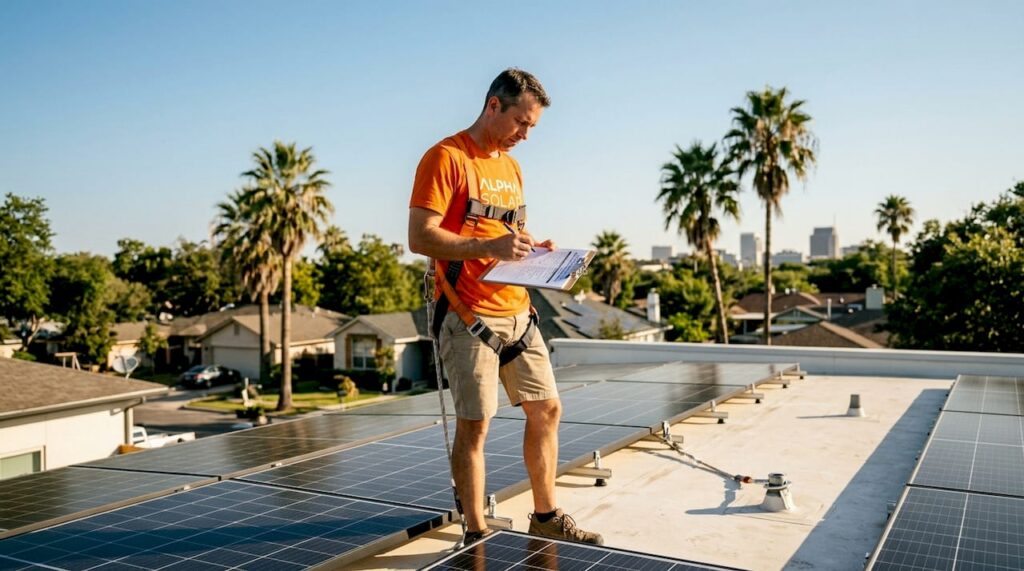
The installer-led process typically starts with a physical assessment of your roof and sun exposure, followed by a custom system design and the handling of local permits and utility approvals before any work begins. That process matters more than most homeowners realize.
“Custom solar system design also affects permitting and approvals and the practical integration details, such as wiring, interconnection, and grid-tie versus backup modes, that determine whether the system operates as intended.” — Mercury Insurance Solar Guide
Compare how these two approaches stack up:
| Feature | Generic system | Custom system |
|---|---|---|
| Roof and shading analysis | Minimal or skipped | Full site assessment |
| Battery sizing | Standard package | Goal-based sizing |
| Permit handling | Basic filing | Full utility and HOA navigation |
| Backup circuit design | Usually excluded | Tailored to critical loads |
| Performance monitoring | Generic alerts | Site-specific baseline |
You can explore real-world solar design examples to see how these differences show up in actual San Antonio homes. For homes that also want battery protection, proper solar battery integration from the start is key to avoiding expensive retrofits later.
How custom battery storage shapes your solar experience
With a foundation in customization, now see how tailored battery solutions affect real-world solar performance and peace of mind.
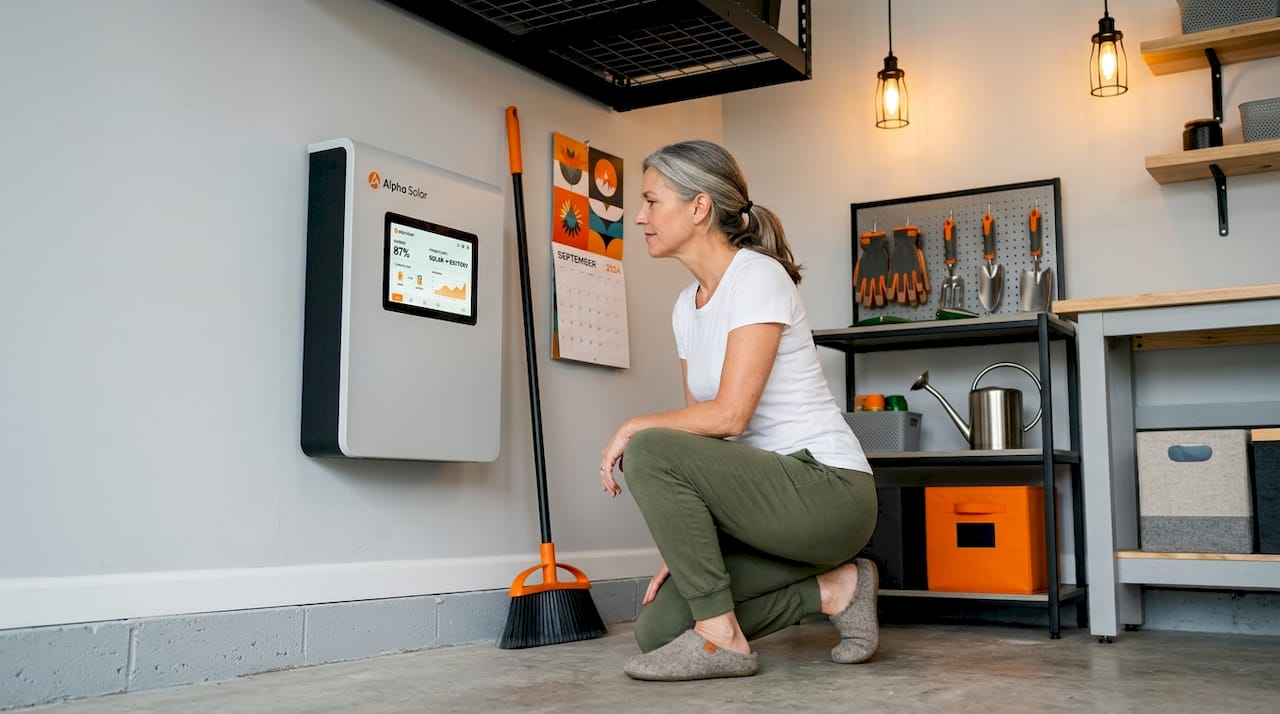
Batteries do two very different jobs in a solar setup. Knowing which job you need them to do is the single most important factor in sizing them correctly.
Role 1: Energy shifting (lower bills)
Your solar panels generate power during daylight hours. Without storage, any excess energy you don’t use gets sent back to the grid. With a battery, you store that excess and use it in the evening when utility rates can be higher. This is called load shifting, and it works best when your utility charges more during peak evening hours.
Role 2: Backup power (resilience)
If the grid goes down, a properly configured battery system keeps your home running. This is especially relevant in San Antonio, where summer heat waves and the memory of February 2021’s winter storm have made power resilience a real priority for many families.
According to a BESS sizing methodology guide, the role of battery storage in backed-up designs is to shift solar energy to later hours and provide resilience during outages. Critically, how a battery is sized depends entirely on whether your primary goal is load shifting and bill savings, or true backup autonomy.
Here’s a simplified look at how those goals translate into system specs:
| Goal | Primary metric | Typical sizing focus |
|---|---|---|
| Bill savings / load shifting | Energy (kWh) | Match daily excess solar production |
| Whole-home backup | Power (kW) + Energy (kWh) | Cover peak load and outage duration |
| Critical loads only | Power (kW) | Cover refrigerator, lights, outlets |
The steps to figuring out your battery needs work like this:
- List your critical loads. Refrigerator, medical devices, internet router, a few lights. Know what you cannot live without for 24 hours.
- Estimate their combined wattage. Add up the running watts of each device.
- Multiply by desired backup hours. If you want 12 hours of critical backup, multiply by 12 to get your minimum kWh target.
- Add a buffer. Batteries shouldn’t be fully discharged regularly. Plan for 20 to 30 percent overhead capacity.
- Check your inverter’s power rating. The battery must be paired with an inverter (the device that converts stored DC power to usable AC power) that can handle your peak demand.
Pro Tip: Before you request any solar proposals, write down your primary battery goal: bill savings, whole-home backup, or critical-loads-only backup. Share that with every installer you speak with. It immediately filters out systems that won’t serve your actual needs.
A well-planned battery integration guide will walk you through these decisions in context of San Antonio’s specific grid conditions and CPS Energy policies.
Financial factors: ROI, payback, and when customization is ‘worth it’
Once your system and batteries fit your home, the next logical question is: is it financially sensible for your situation?
The honest answer is that it depends on several factors that are specific to your household, your utility rate plan, and how much you value energy independence. Let’s break down the key drivers.
What shapes your solar ROI in San Antonio:
- Your current electricity rate. The higher your rate, the faster solar pays back. CPS Energy rates have been rising, which generally improves the solar value case over time.
- Net metering policy. Texas doesn’t mandate net metering statewide, but CPS Energy does offer a buyback program. The credit rate you receive for exported energy affects your annual savings.
- Federal tax incentive. The federal Investment Tax Credit (ITC) currently allows you to deduct 30 percent of your system cost from your federal taxes, which significantly shortens payback timelines.
- System size and energy offset. A well-sized system that offsets 90 percent of your usage will pay back faster than one that offsets 50 percent.
- Battery’s role in your rate structure. If CPS Energy charges you more during peak evening hours (time-of-use rates, or TOU), your battery earns its keep by storing cheap midday solar and replacing expensive evening grid power.
The battery storage value calculation is more nuanced than many online calculators suggest. As one industry analysis puts it, whether batteries are worth it depends heavily on rate structure, demand charges, TOU pricing, outage value to the homeowner, and policy incentives. In Texas, with moderate electricity rates compared to states like California or Hawaii, battery payback can take longer.
That doesn’t mean batteries aren’t worth it. It means you should approach the decision clearly.
Two ways to think about battery investment:
- Financial investment: If your rate structure rewards evening discharge and you have favorable TOU pricing, your battery contributes measurably to your annual savings.
- Resilience investment: If your rates are flat and your savings from shifting power are modest, your battery’s primary value is peace of mind during outages. That’s still real value, especially in Texas.
For a deeper look at the numbers behind long-term ownership, review this guide on Texas solar savings and solar payback in Texas. Both help you set realistic expectations before signing any contract.
Practical steps to getting a custom solar system in San Antonio
You’ve weighed needs and financials. Here’s how you can practically move from idea to a tailored installation.
Getting a custom solar system isn’t complicated when you know what to expect. Here is a practical roadmap built for San Antonio homeowners:
-
Assess your home’s solar suitability. Walk around your property and identify which roof sections face south or west, since those get the most sun in San Antonio. Note any large trees or neighboring structures that cast shade between 9 a.m. and 3 p.m., when sun intensity peaks.
-
Audit your energy use. Pull your last 12 months of CPS Energy bills and note your highest and lowest monthly usage. This tells an installer how large your system needs to be to make a meaningful dent in your costs.
-
Define your primary goals early. Are you building solar to cut your electricity bill? To protect your family from outages? To charge an electric vehicle affordably at home? Your goals shape every design decision that follows.
-
Research your roof’s condition. A reputable installer will assess this anyway, but it helps to know your roof’s age and material beforehand. Solar panels last 25 or more years, so a roof that needs replacement in five years should be addressed before installation.
-
Request multiple custom proposals. Don’t accept a quote that doesn’t include a site visit or a detailed load analysis. Generic proposals are a red flag.
-
Understand the permitting process. Your installer should handle permits with the City of San Antonio, CPS Energy interconnection approval, and any HOA documentation your neighborhood requires. According to the installer-led process, these steps happen before work begins, ensuring your system is fully compliant from day one.
-
Plan for EV charging if relevant. If you drive or plan to drive an electric vehicle, this is the ideal time to add a Level 2 EV charger to your installation. Doing it alongside solar avoids a second permitting cycle and reduces overall cost.
Pro Tip: Ask each installer to walk you through their interconnection timeline with CPS Energy. Experienced local installers know what documentation the utility requires and can give you a realistic timeline from signed contract to system activation.
For a broader look at how solar connects to your home’s electrical system, this solar electrical system guide explains the components and their roles in plain terms.
Our take: The real path to value with custom solar solutions in San Antonio
Let’s step back and examine what the numbers and roadmaps might miss, and why deep customization is more than just a trend.
We’ve installed and designed solar systems across San Antonio for years. The homeowners who are consistently happiest with their investment are not necessarily the ones with the highest ROI on paper. They’re the ones whose systems were built to match their actual lives.
A neighbor who works from home and runs medical equipment cannot afford a single-day outage. A family with three teenage drivers moving toward EVs needs a system sized for a very different future load than today’s. A retiree on a fixed income needs the most aggressive bill offset possible, not the flashiest battery configuration.
Cookie-cutter installs often serve none of these homeowners well. They’re designed for the average home and the average use case, which means they fall short for anyone whose situation doesn’t fit neatly into that box.
We also believe this: batteries are not just a financial product. Many online guides correctly note that battery storage worth it analysis depends on TOU and demand charges, and that in moderate-rate states like Texas, the financial ROI of a battery alone may be modest. We agree. But we’ve also seen what happens when a family loses power for four days in August heat without backup. No spreadsheet captures that experience.
Customization protects you from both financial missteps and real-world vulnerability. A good installer helps you understand what your battery will and won’t do financially, and then helps you decide if the resilience value justifies the cost. That’s honest advising.
The other thing we consistently tell San Antonio homeowners: utility policy will keep changing. Electricity rates will keep rising. A system sized and designed correctly today, with room to grow, positions you far better for those shifts than a minimum-spec install does. Explore the full picture of long-term solar savings when planning for a 10 to 25 year ownership horizon.
Ready to build your custom solar solution?
At Alpha Solar Solutions, we design every system around your home, your goals, and your San Antonio neighborhood’s specific conditions. Whether you’re focused on trimming your CPS Energy bill, staying protected during Texas grid events, or charging your EV with clean power, we build a plan that fits your real life.

Our team handles everything from the initial site assessment through permitting, CPS Energy interconnection, and full battery setup. No guesswork, no generic packages. You can explore our residential solar installation options or learn more about your backup protection options to see how we tailor each project. When you’re ready to take the next step, we’ll start with a thorough conversation about your goals before we ever talk about products.
Frequently asked questions
How do custom solar systems differ from standard solar setups?
Custom systems are uniquely engineered for your home’s roof, electrical needs, and backup requirements, unlike standard solar kits that use a one-size-fits-all approach. A site-specific install process includes a full roof and sun exposure assessment, custom design, and management of permits and utility approvals before any work starts.
What are the most important factors in sizing a home battery system?
Sizing depends on whether you want the battery for bill savings or as backup, with power (kW), energy (kWh), and your list of critical loads all playing a role. Battery sizing methodology centers on whether your goal is load shifting or backup autonomy, which drives very different configurations.
Does adding a battery to a custom solar system always increase ROI in Texas?
Not always. Whether a battery pays back quickly depends on rate structure, demand charges, TOU pricing, and how much you value backup protection. In Texas, many homeowners find battery value comes primarily from resilience rather than fast financial returns.
What’s involved in getting permits and approvals for custom solar in San Antonio?
Your installer typically handles site assessment, system design, permits, CPS Energy interconnection approvals, and HOA documentation to keep your project fully compliant. Custom system design directly affects these integration details, including wiring, grid-tie configuration, and backup mode setup.