
TL;DR:
- Pairing solar with batteries maximizes self-consumption and provides backup during outages.
- Costs after incentives typically range from $30,900 to $32,900 with payback around 6.9 years.
- Proper system design, including BMS features, ensures efficient, long-lasting energy storage.
Most San Antonio homeowners assume that going solar means their electricity bills will drop dramatically — almost overnight. The reality is a little more nuanced. Solar incentives in Texas show that net metering pays you very little for excess electricity you send back to the grid, which means solar panels alone may leave savings on the table. The real power comes when you pair solar with battery storage. In this guide, we break down why integration matters, what it costs, how batteries work, and how you can set up your home for EV charging and reliable backup power.
Table of Contents
- Why integrate solar and battery in San Antonio
- Costs, incentives, and payback for solar+battery systems
- Battery technology and performance essentials
- EV charging and backup power: integration benefits
- The crucial mistake most Texas homeowners make with solar and batteries
- Take the next step with expert integration support
- Frequently asked questions
Key Takeaways
| Point | Details |
|---|---|
| Maximize savings with batteries | Batteries help you use your own solar power instead of selling it at low rates. |
| Incentives still matter | The 30% federal solar tax credit greatly reduces upfront costs for homeowners. |
| Integrated EV and backup power | A combined system can charge your EV off-grid and keep essentials running during outages. |
| Smart setup prevents pitfalls | Optimizing batteries for self-consumption avoids increasing emissions and maximizes value. |
Why integrate solar and battery in San Antonio
San Antonio’s energy landscape has shifted in recent years. CPS Energy, the city’s primary utility, has pulled back on incentives for homeowners who export solar power to the grid. That means the classic model — install panels, sell what you don’t use, watch the credits pile up — simply doesn’t pay off like it once did. If you’re sending power back to the grid, you’re getting wholesale-rate credits that are far below what you pay for electricity when you pull from the grid later.
Batteries change the equation entirely. Instead of exporting cheap and buying back expensive, you store what your panels produce and use it yourself. This is called self-consumption, and it’s the single most effective way to maximize your solar investment.
Here’s what battery integration actually gives you:
- Higher self-consumption rates: Use the solar power you generate instead of giving it away at low rates.
- Backup power during outages: Texas storms and grid instability are real. A battery keeps your lights and critical appliances running.
- Smarter EV charging: Store solar during the day, charge your car overnight using your own clean energy.
- Lower peak demand charges: Discharge your battery during high-rate evening hours to avoid premium grid pricing.
The energy savings workflow for Texas homes is straightforward: generate, store, use, and only pull from the grid when necessary. That cycle is where the real savings live.
“The goal isn’t to produce the most solar power — it’s to use the most of what you produce.” This simple shift in thinking changes how you design your entire system.
Pro Tip: Talk to your installer about setting your battery to prioritize self-consumption mode. Many systems default to grid-export settings, which actually reduces your savings in CPS Energy territory.
Understanding why battery storage matters is step one. Step two is knowing what this all costs.
Costs, incentives, and payback for solar+battery systems
Let’s talk numbers. A typical San Antonio home runs on an 11kW solar array costing around $33,000 before incentives, and adding a battery storage system runs an additional $12,000 to $14,000. That puts your starting investment around $45,000 to $47,000 before any credits kick in.
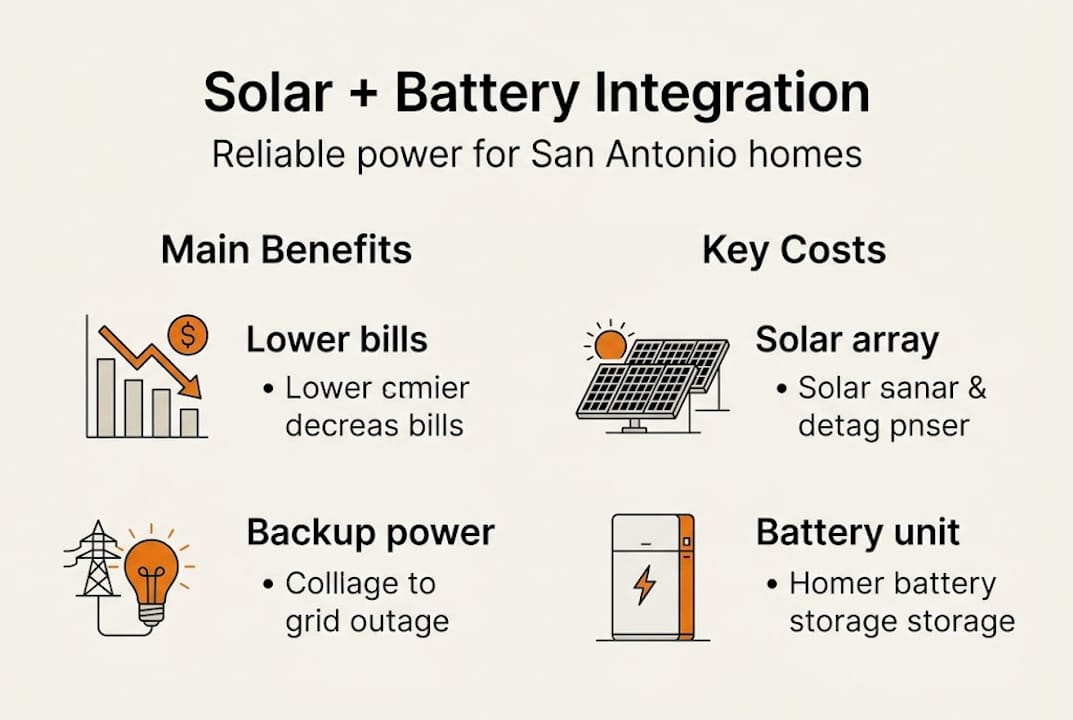
Here’s where the math gets encouraging:
| Cost item | Estimated amount |
|---|---|
| 11kW solar array (before incentives) | $33,000 |
| Battery storage addition | $12,000 to $14,000 |
| Federal 30% ITC credit (solar + battery) | Up to $14,100 |
| Estimated net cost | $30,900 to $32,900 |
| Estimated payback period | ~6.9 years |
The federal ITC offers 30% off your total system cost, and in 2026, that includes batteries when they’re charged primarily by solar. Local CPS Energy rebates have been reduced, so the federal credit is your biggest lever.
You can explore detailed solar panel cost details to see how system size affects your numbers, and review available solar tax credits before you commit.
Here’s a simple three-step approach to estimate your own payback:
- Calculate your annual electricity spend. Multiply your average monthly bill by 12. Most San Antonio homeowners spend $1,800 to $2,400 per year on electricity.
- Estimate your system’s annual output. A well-designed 11kW system in San Antonio typically generates 14,000 to 16,000 kWh per year, covering most or all of a typical home’s usage.
- Subtract your incentive-adjusted cost from your annual savings. Divide the net system cost by your yearly savings to get your payback period.
For more guidance on managing help with costs, our blog covers financing options and what to watch out for when comparing installer quotes.
Battery technology and performance essentials
Not all batteries are the same. The most reliable option for home energy storage right now is the lithium-iron phosphate battery, commonly called LFP. These batteries offer 90 to 97% round-trip efficiency and an energy density of 250 to 350 watt-hours per kilogram, making them both powerful and compact. More importantly, LFP chemistry is safer and longer-lasting than older lithium-ion options.
Here are the key specs you need to understand before choosing a battery:
- Capacity (kWh): How much energy the battery can store. A 10 to 13 kWh battery covers most essential loads during an outage.
- Depth of discharge (DoD): How much of the battery you can actually use. Most LFP batteries allow 80 to 100% DoD without shortening the battery’s life.
- Round-trip efficiency (RTE): The percentage of stored energy you actually get back when you discharge. Higher is better. LFP wins here.
- Cycle life: How many charge and discharge cycles the battery can handle. LFP batteries typically last 3,000 to 6,000 cycles.
Performance can suffer in certain conditions. High ambient temperatures, which San Antonio summers definitely bring, can reduce battery efficiency. Deep daily cycling can also wear cells faster if your system isn’t calibrated correctly. Proper thermal management and a quality Battery Management System (BMS) help prevent these issues.
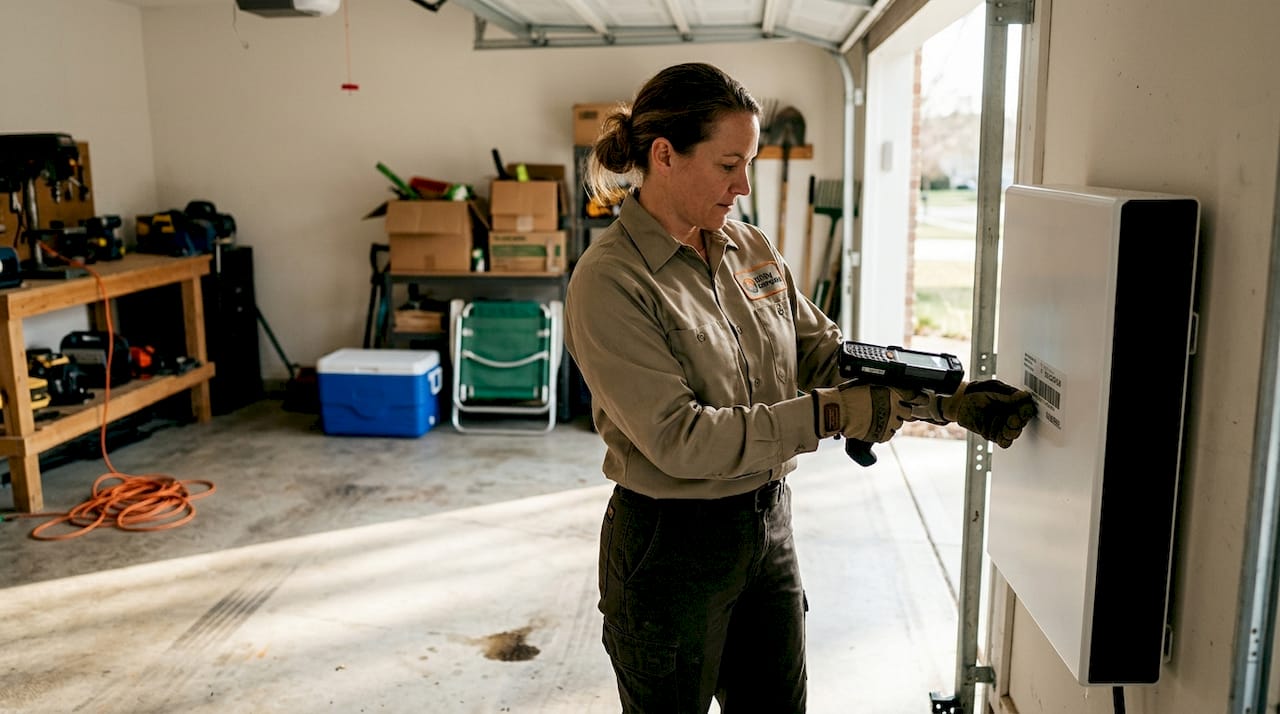
A BMS is essentially the battery’s brain. It monitors temperature, voltage, and current to keep everything operating safely. Modern systems include advanced BMS features that can alert you to issues before they become problems.
Learn more about how long batteries last under real-world Texas conditions.
Pro Tip: When comparing battery options, ask specifically about BMS features and thermal management. A slightly higher price for a better-managed battery is almost always worth it over a 10-year horizon.
EV charging and backup power: integration benefits
One of the most practical benefits of solar and battery integration is what it does for electric vehicle owners. If you charge your EV from the grid at peak hours, you’re paying some of the highest rates of the day. With a solar-plus-battery setup, you can charge from stored energy overnight or during off-peak windows, cutting your fueling costs significantly.
DC-coupled Level 2 chargers like the Tesla Wall Connector integrate cleanly with home solar systems, enabling efficient overnight charging from your battery bank. Level 2 chargers (240-volt) deliver 20 to 30 miles of range per hour, which means an overnight charge from your stored solar energy is more than enough for most daily driving.
Here’s how to set up your home for both EV charging and outage backup:
- Size your battery for both goals. A 13 kWh battery can handle a partial EV charge and still keep essential home loads running during an outage. Talk to your installer about sizing if you have a larger EV or want full-home backup.
- Schedule your EV charging smartly. Program your charger to run between midnight and 6 a.m., when battery demand from home appliances is lowest. This keeps your battery from being drained too fast.
- Set backup power thresholds. Configure your battery to always hold a reserve charge, like 20 to 30%, that activates only during outages. This way, EV charging uses the surplus, not your emergency reserve.
Explore your options for backup solutions and EV charger installation to see what fits your home.
“An integrated solar and battery system doesn’t just reduce your bill — it turns your home into a small, resilient power station.”
For San Antonio homeowners dealing with summer grid stress, that resilience is not a luxury. It’s practical protection.
The crucial mistake most Texas homeowners make with solar and batteries
Here’s something most solar guides won’t tell you: installing a battery doesn’t automatically make your home greener or more efficient. It depends entirely on how you set it up.
Many homeowners install batteries and leave them configured for grid arbitrage — charging from the grid when rates are low, discharging when rates are high. In Texas, batteries used for grid arbitrage can actually increase overall grid emissions, because the grid mix during charging windows isn’t always clean.
The smarter move is to configure your system for solar self-consumption. Charge from your panels during the day. Discharge for your own home use in the evenings. This reduces both your bill and your actual carbon footprint.
We also see homeowners install solar and batteries without leaving room in their system design for future technology. Smart EV chargers, vehicle-to-home (V2H) systems, and grid-responsive devices are coming fast. A system designed today should have the capacity and flexibility to add those tools later without a full redesign.
Planning for long-term solar savings means thinking beyond your current electric bill. It means designing a system that grows with your life.
Take the next step with expert integration support
Ready to put smart solar and battery integration to work for your home?

At Alpha Solar Solutions, we design and install custom solar and battery systems built specifically for San Antonio homes and the CPS Energy grid. Our team handles everything from initial system design to installation and ongoing support. Whether you’re starting with residential solar installation, adding a battery, or setting up EV charger installation, we make the process straightforward. We also offer backup power solutions so your home stays protected when the grid goes down. Contact us today for a local assessment and a quote tailored to your home’s actual energy needs.
Frequently asked questions
What size solar and battery system do I need for backup power in San Antonio?
For most San Antonio homes, an 11kW array paired with a 10 to 13 kWh battery covers essential loads and provides reliable backup during outages.
Are there any local solar or battery incentives in San Antonio in 2026?
CPS Energy has reduced its direct solar rebates significantly, so the primary incentive available now is the federal 30% Investment Tax Credit, which applies to both solar panels and batteries.
Can I use solar+battery to charge my EV at night?
Yes. Solar and battery systems store energy during daylight hours so you can charge your EV overnight or during off-peak windows using your own clean energy instead of grid power.
How long does a home battery last in Texas climate?
LFP batteries typically retain 70% capacity after 10 years with proper usage, and good thermal management helps maintain performance even through San Antonio’s hot summers.