
TL;DR:
- Rain alone cannot remove pollen, dust, or bird droppings from solar panels in San Antonio.
- Regular cleaning (1-2 times a year) restores efficiency and protects your system’s warranty.
- Using professional cleaning methods with deionized water and soft tools prevents panel damage and maximizes performance.
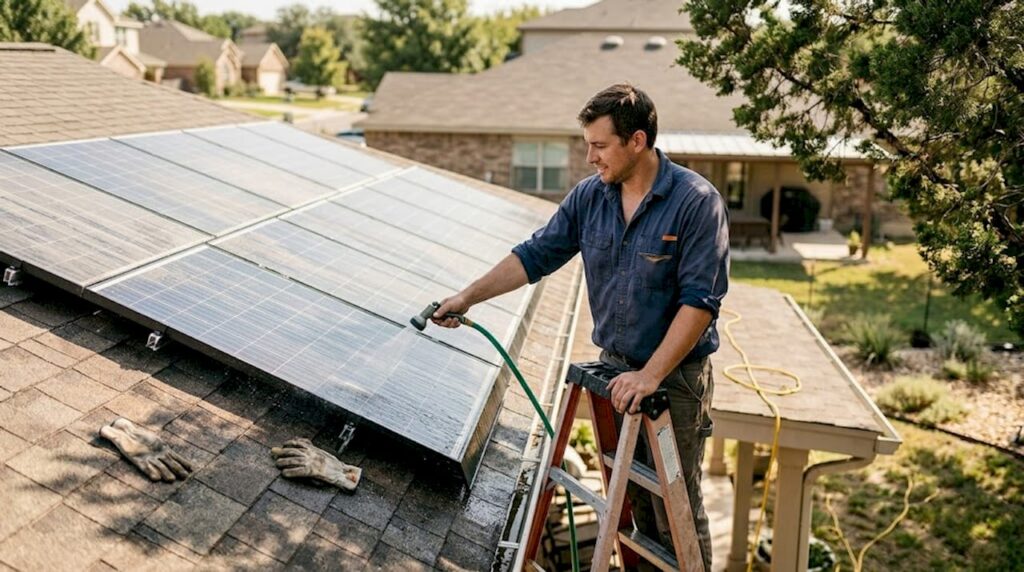
Most San Antonio homeowners assume their solar panels are self-cleaning. After all, it rains here, right? The truth is that rain alone isn’t enough to remove the pollen, dust, and bird droppings that quietly drain your system’s output. San Antonio’s unique climate creates some of the toughest soiling conditions in the country, and ignoring panel maintenance can cost you real money every single month. In this article, we’ll walk you through exactly why cleaning matters here, what happens when you skip it, how often to schedule it, and the safest ways to get it done.
Table of Contents
- Why cleaning is essential for solar panels in San Antonio
- What happens if you don’t clean your panels?
- How often should you clean solar panels in San Antonio?
- Safe and effective ways to clean solar panels
- Our perspective: The biggest mistake San Antonio solar owners make
- Make the most of your solar investment with expert panel cleaning
- Frequently asked questions
Key Takeaways
| Point | Details |
|---|---|
| Rain isn’t enough | San Antonio’s dust, pollen, and droppings require manual or professional cleaning for optimal performance. |
| Efficiency loss is real | Neglected solar panels lose up to 30 percent power and increase energy costs for homeowners. |
| Clean at least twice a year | Bi-annual cleaning is the minimum to protect your investment, and more may be needed during heavy pollen or dust seasons. |
| DIY with care | Safe methods and the right timing prevent damage, but professionals are recommended for steep roofs or thorough cleaning. |
| Cleaning saves money | Regular maintenance extends solar panel lifespan, preserves warranties, and maximizes your utility savings. |
Why cleaning is essential for solar panels in San Antonio
Let’s examine exactly why these local conditions make solar panel cleaning critical.
San Antonio throws a lot at your solar panels. Dust storms roll in from the west, carrying fine particles that coat panel surfaces in a thin, light-blocking film. Spring brings one of the worst cedar and oak pollen seasons in Texas, leaving a thick yellow layer across everything outside, including your panels. And if you’ve ever parked under a tree near a grackle roost, you already know what birds can do to a surface.
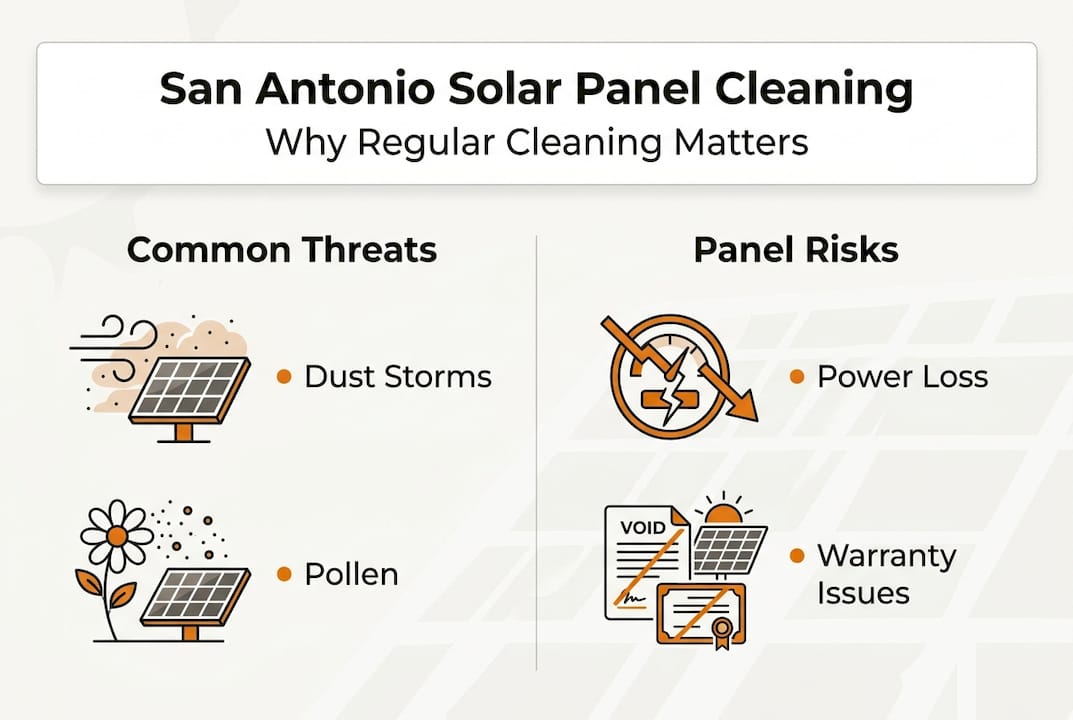
These aren’t minor inconveniences. San Antonio panels lose 5–30% efficiency from soiling and local debris, and efficiency losses up to 30% have been documented in Texas climate studies. That’s not a rounding error. On a typical 10 kW system, a 20% loss means you’re generating 2 fewer kilowatts every hour the sun shines.
Here’s what’s working against your panels on a regular basis:
- Cedar and oak pollen (February through April): coats panels in a sticky, fine layer that rain can’t fully rinse away
- Dust and urban grime: builds up steadily, especially near highways or construction zones
- Bird droppings: acidic and concentrated, they can etch glass and create permanent hot spots
- Hard water residue: sprinkler systems near rooflines leave mineral deposits that block light
- Wildfire smoke and ash: increasingly common in Texas, leaving a fine residue that reduces output
The rain myth is worth addressing directly. Light rain may clear loose dust, but it doesn’t remove pollen, dried bird waste, or mineral deposits. In fact, rain is not enough for pollen removal, particularly in high-pollen regions like Central Texas. Rain can even make things worse by mixing dust and pollen into a muddy film that dries onto the glass.
Beyond efficiency, neglecting cleaning affects your warranty and equipment lifespan. Many manufacturers require documented maintenance to honor warranty claims. Staying on top of solar panel cleaning tips isn’t just about performance, it’s about protecting your investment long term. Knowing when to clean your panels is the first step toward keeping your system running at its best.
What happens if you don’t clean your panels?
Understanding these threats, what actually happens if you skip panel cleaning for months or years?
The short answer: your system quietly underperforms, and the financial losses add up faster than most homeowners expect.
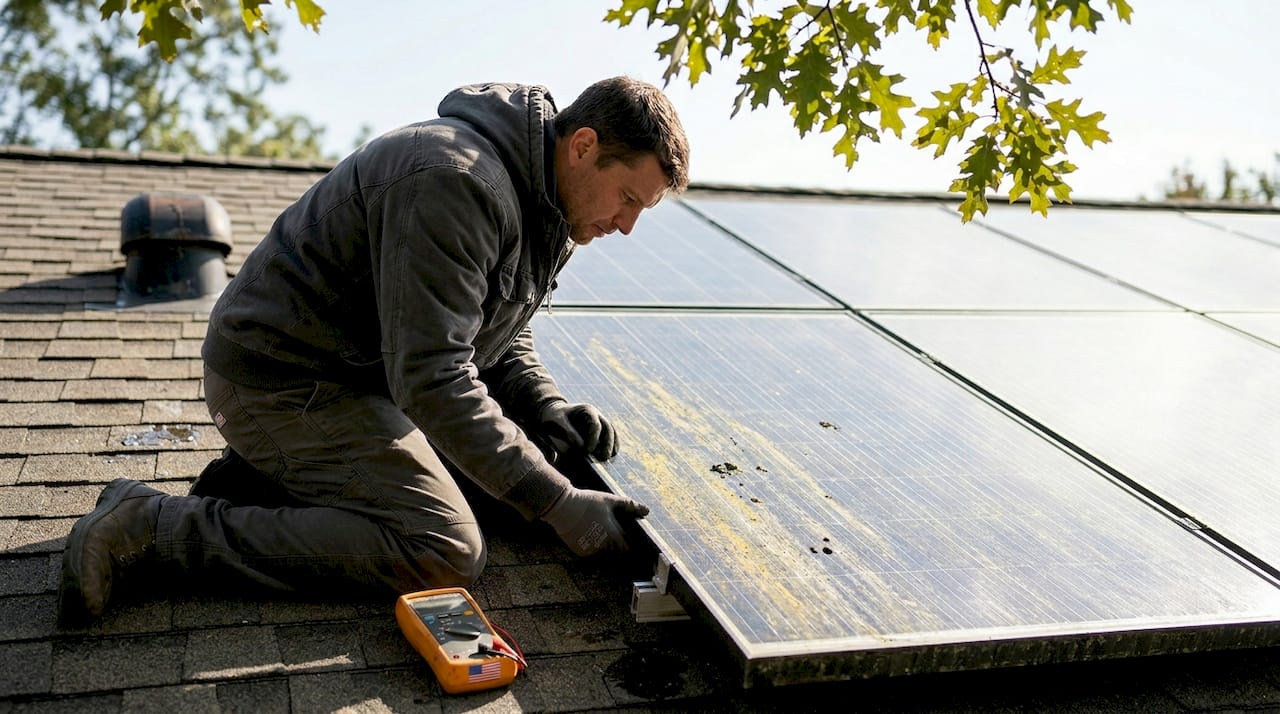
Pollen alone can reduce output by up to 15% during peak seasons, and bird droppings can etch glass permanently if left untreated. A 7.4% annual loss measured over 145 days without cleaning has been documented in dry climate research, with losses reaching up to 40% in especially dusty or arid periods.
Here’s a simple breakdown of what dirty panels actually cost you:
| Soiling level | Estimated efficiency loss | Monthly savings lost (on $150 bill) |
|---|---|---|
| Light dust | 5–10% | $7–$15 |
| Moderate pollen/grime | 10–20% | $15–$30 |
| Heavy soiling/bird droppings | 20–30%+ | $30–$45+ |
The physical damage is just as concerning as the financial hit. Here’s what builds up when panels go uncleaned:
- Hard water spots: mineral deposits from sprinklers or rain runoff bond to glass and reduce light transmission
- Baked-in pollen: after a few hot Texas days, pollen essentially cooks onto the surface
- Bird dropping etching: the acid in droppings eats into the anti-reflective coating over time
- Hot spots: when one section of a panel is shaded by debris, it generates heat instead of power, which can permanently damage cells
Pro Tip: Check your solar monitoring app after San Antonio’s pollen season (usually late March through May). If your output has dropped noticeably compared to the same period last year, dirty panels are likely the cause.
Warranty risk is real, too. Most panel manufacturers expect routine maintenance. If a panel develops a hot spot or coating damage and there’s no record of cleaning, the warranty claim may be denied. Following clean solar panels practices and keeping records of service dates protects you if something goes wrong. For a deeper look at what professional service involves, efficient cleaning tips from local experts are a good starting point.
How often should you clean solar panels in San Antonio?
Given the impact of dirt and pollen, how frequently should San Antonio homeowners clean their solar panels?
The general rule is 1–2 times per year minimum, with 2–4 cleanings recommended for homes near heavy pollen sources, dusty roads, or active bird populations. Quarterly visual inspections are also a smart habit.
Here’s a practical seasonal schedule for San Antonio:
- Late spring (May): Clean after cedar and oak pollen season wraps up. This is the single most important cleaning of the year.
- Late summer (August/September): Clear dust and grime that builds up through the dry summer months.
- Pre-winter (November): Optional but useful, especially if you’ve had smoke events or heavy bird activity.
- Post-storm inspection: After any significant dust storm or heavy rain with debris, do a visual check.
Not every home needs the same schedule. Here’s a quick comparison:
| Property type | Recommended cleanings per year |
|---|---|
| Standard suburban home | 1–2 |
| Near trees or bird roosts | 2–3 |
| Near highway or construction | 3–4 |
| Shaded roof or low tilt angle | 2–4 |
Pro Tip: A low panel tilt angle (less than 15 degrees) means rainwater doesn’t run off as effectively, so debris accumulates faster. If your panels are nearly flat, plan for more frequent cleanings.
For a more detailed approach to timing, cleaning frequency advice from local professionals can help you build a schedule that fits your specific setup. It’s also worth reviewing seasonal preparation tips to make sure your system is ready for each season. Cleaning frequency research also supports more frequent service for Texas homeowners compared to cooler, wetter climates.
Safe and effective ways to clean solar panels
Knowing how often to clean, what’s the safest and most effective way for San Antonio homeowners to do it?
The method matters as much as the frequency. Using the wrong tools can scratch the glass, void your warranty, or even create a safety hazard if you’re working on a steep or tile roof.
Professional best practice uses DI/RO water (deionized or reverse osmosis water), a soft-bristle brush, and mild soap for heavy soiling. About 95% of professional jobs are chemical-free. This matters because tap water leaves mineral deposits, and harsh chemicals can degrade the anti-reflective coating that helps your panels absorb more light.
Here’s what to use and what to avoid:
- Use: soft microfiber cloth or soft-bristle brush, deionized or purified water, mild dish soap for stubborn spots
- Avoid: pressure washers (can crack cells or force water under frames), abrasive scrubbers, ammonia-based cleaners, hard tap water
For homeowners who want to do a basic DIY clean on a single-story home with an accessible roof:
- Choose early morning or evening. Cleaning hot panels in direct sun causes water to evaporate too fast and leaves streaks.
- Rinse panels gently with a garden hose on low pressure.
- Use a soft brush with purified water to loosen pollen or grime.
- Rinse again and let air dry.
- Avoid stepping on panels or leaning heavy equipment against them.
For two-story homes, tile roofs, or systems with heavy soiling, calling a professional is the safer and smarter choice. Pressure washing risks include voided warranties and cracked cells, which are expensive mistakes. Our best cleaning methods guide covers this in more detail, and our local cleaning experts are equipped for all roof types in San Antonio.
Our perspective: The biggest mistake San Antonio solar owners make
Having covered hard facts and evidence, here’s what most guides don’t tell you about solar panel upkeep in San Antonio.
The biggest mistake we see isn’t skipping a cleaning entirely. It’s assuming the problem will show up obviously. Most homeowners wait until their panels look visibly dirty before acting. But by then, the efficiency loss has already been happening for weeks or months. The damage from bird dropping acid or baked-in pollen may already be done.
Rain gives people false confidence. A good thunderstorm feels like it should reset everything. It doesn’t. San Antonio’s pollen is sticky, the dust is fine, and the summer heat bakes it all onto the glass before the next rain has a chance.
We also see DIY attempts go wrong on tile roofs. Tile is fragile and uneven, and one wrong step can crack a tile or dislodge a panel mount. The repair cost far exceeds what a professional cleaning would have cost.
The homeowners who get the most from their solar systems treat cleaning like an oil change. It’s scheduled, documented, and done by someone who knows what they’re doing. Check out real-world service stories from San Antonio homeowners who made the switch to regular professional maintenance.
Make the most of your solar investment with expert panel cleaning
Ready to maximize your solar investment in San Antonio with reliable, results-focused cleaning?

At Alpha Solar Solutions, we use eco-safe, chemical-free methods designed specifically for San Antonio’s climate and roof types. Our professional solar panel cleaning service protects your warranty, restores lost output, and gives you peace of mind without the risk of DIY damage. Whether you need a one-time post-pollen cleaning or a recurring maintenance plan, we make it easy. Get in touch with our team today for a quote, or browse our expert cleaning tips to learn more before you decide. Your panels work hard for you. Let us help them work at their best.
Frequently asked questions
Does rain clean solar panels enough in San Antonio?
No, rain usually isn’t enough. Rain does not clear pollen deposits effectively, and in San Antonio, dust, pollen, and bird droppings build up faster than rainfall can remove them.
How much energy do dirty panels waste in San Antonio?
Panels lose 5–30% output from local soiling, which translates directly into higher electricity bills and reduced return on your solar investment.
Can you pressure wash solar panels safely?
Most experts warn against it. Professional practice avoids pressure washers and harsh chemicals, using deionized water and soft brushes instead to protect the panel glass and coating.
How often should I clean solar panels in San Antonio?
Clean at least 1–2 times per year. Bi-annual cleaning is recommended as a minimum, with 2–4 cleanings per year for homes near heavy pollen, dust, or bird activity.
Does professional cleaning extend solar panel life?
Yes. Neglecting cleanings can lead to panel etching or hotspot damage, both of which can void warranties and permanently reduce the lifespan and output of your system.