
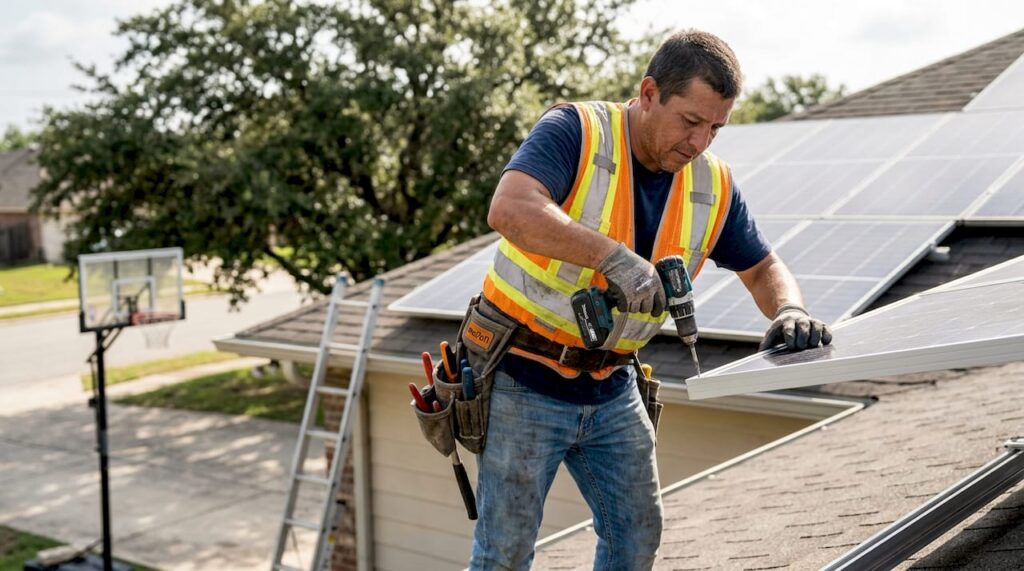
Whether you’re replacing a worn roof, upgrading your system, or preparing to move, removing your solar panels is a job that demands careful planning. Get it wrong and you risk voiding warranties, damaging panels worth thousands of dollars, or running into permit violations. The good news? With the right team and a clear process, solar panel removal in San Antonio is straightforward. Removal costs in Texas typically run $2,000 to $5,000 for a standard 10 to 30 panel system, and insurance often covers it when storm or roof damage is involved. This guide walks you through every step.
Table of Contents
- When and why solar panel removal is necessary
- What you’ll need: Tools, professionals, and permissions
- Breakdown of costs: What to expect in San Antonio
- How the solar panel removal process works: Step-by-step
- Common mistakes and pro tips for smooth removal
- What to expect after removal: Verification, cleanup, and reinstallation
- San Antonio solar removal made simple with Alpha Solar Solutions
- Frequently asked questions
Key Takeaways
| Point | Details |
|---|---|
| Temporary vs. permanent removal | Most homeowners only need temporary removal, not full decommissioning. |
| Hire licensed professionals | Always use licensed solar specialists or electricians for safety and local code compliance. |
| Typical removal costs | Expect to pay $2,000–$5,000 in San Antonio for a standard residential system. |
| Plan for proper permits | Securing local permits is essential and helps avoid future headaches. |
| Coordinate with roofers | Schedule removal and reinstall around roofing work to limit downtime and cost. |
When and why solar panel removal is necessary
Not every homeowner who removes panels is done with solar. Most removals are temporary, meaning the panels come off, the underlying work gets done, and then everything goes back up. Understanding your specific situation helps you plan smarter and avoid unnecessary costs.
Here are the most common reasons San Antonio homeowners need their panels removed:
- Roof replacement or major repair: Panels must come off before roofers can work safely.
- System upgrades: Swapping out older panels for higher-efficiency models requires a full detach.
- Storm or hail damage: San Antonio weather can be rough. Damaged panels or mounting hardware sometimes need removal before repairs.
- Home renovations: Adding a room, changing roofline angles, or installing skylights may require repositioning panels.
- Relocation: Some homeowners choose to take their panels with them when they move.
It’s worth knowing the difference between a temporary detach and reset (panels come off and go back on) and permanent decommissioning (the system is removed for good). Decommissioning differs significantly from a temporary detach, and most homeowners planning a reinstall don’t need to go through the full decommissioning process. If you’re replacing your roof, removing solar panels for roof replacement is the most common scenario we handle.
Pro Tip: Before calling anyone, write down your goal. Are you reinstalling the same panels? Upgrading? Moving? Your answer shapes every decision that follows.
What you’ll need: Tools, professionals, and permissions
With the most common reasons in mind, it’s time to see exactly what you’ll need to prepare. Solar panel removal is not a DIY project. The electrical components alone make it a job for licensed professionals.
Who you need on your team:
- A licensed electrician or certified solar specialist to handle system shutdown and wiring
- A roofing contractor to coordinate timing and inspect the roof once panels are off
- Possibly a permit expediter if your local jurisdiction requires fast turnaround
In San Antonio, NEC Article 690 compliance is required for all solar electrical work, and local permitting rules apply. Working with unlicensed contractors puts you at risk of failed inspections and voided warranties.
| Requirement | Details |
|---|---|
| Licensed electrician | Required for disconnect and wiring |
| Solar specialist | Handles panel detachment and racking |
| Local permit | Required in most San Antonio jurisdictions |
| Utility notification | Needed before system shutdown |
| Roof coordination | Minimizes downtime between removal and reinstall |
Important: Always verify your contractor’s license before signing anything. Ask for proof of insurance and confirm they have experience with solar removal specifically, not just installation.
For finding solar service professionals in San Antonio, look for teams that handle both the electrical and roofing coordination. It saves time and reduces the chance of scheduling gaps. You can also check reliable roofing services for solar to find roofers experienced with solar systems.

Breakdown of costs: What to expect in San Antonio
Before starting the process, let’s break down how much solar panel removal typically costs and what can drive those costs up or down.
San Antonio homeowners generally pay between $2,000 and $5,000 for a full system removal. That range covers most residential systems with 10 to 30 panels. Nationally, the per-panel average runs $200 to $500, which lines up with local pricing.
| Cost factor | Low end | High end |
|---|---|---|
| System size (10 panels) | $2,000 | $2,500 |
| System size (30 panels) | $4,000 | $5,000 |
| Permit fees | $100 | $400 |
| Emergency/urgent removal | Add 20% | Add 30% |
| Storage (if needed) | $50/month | $150/month |
Several factors influence where your quote lands:
- Roof type: Steep or complex roofs cost more to work on safely.
- Panel age and condition: Older systems may have corroded hardware that takes longer to remove.
- Urgency: Rush jobs cost more. Plan ahead when possible.
- Insurance coverage: If removal is tied to storm damage, your homeowner’s insurance may cover a significant portion. Always file a claim before paying out of pocket.
Pro Tip: Get at least two or three quotes from licensed professionals. Check national solar removal cost benchmarks so you know if a quote is reasonable before you commit. You can also review solar service costs in San Antonio for local context.
How the solar panel removal process works: Step-by-step
Now that you know what’s involved financially, here’s your full step-by-step guide to a safe and efficient solar removal job.
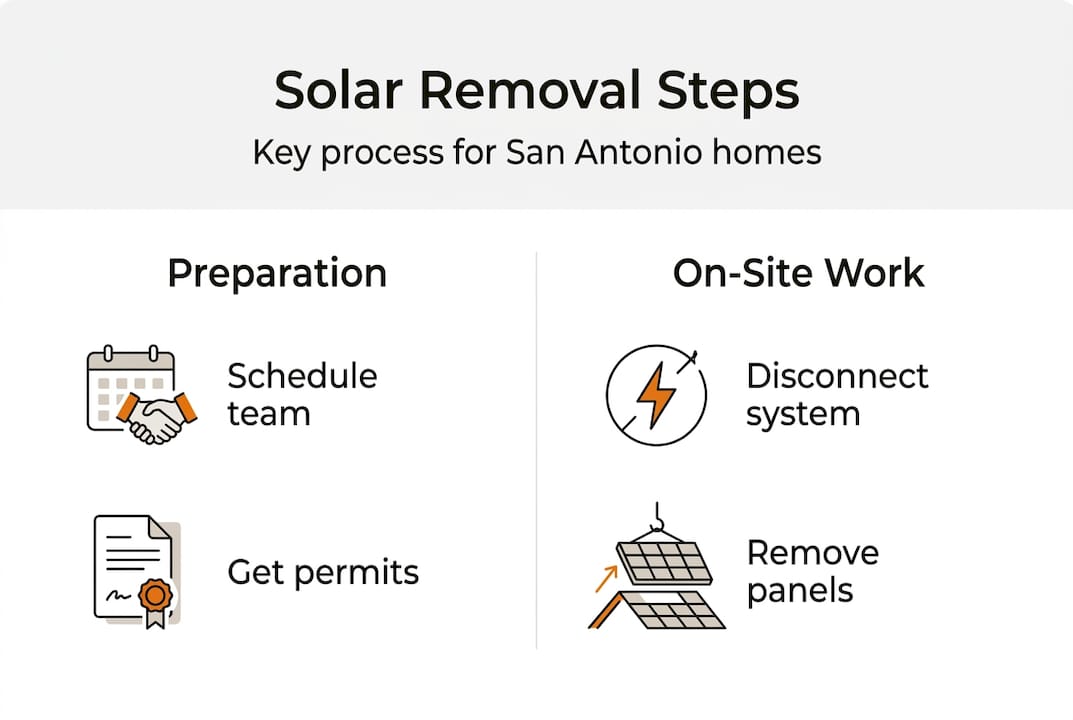
- Initial inspection and planning: Your contractor assesses the system, roof condition, and access points. They confirm permit requirements and schedule utility notification.
- Permit filing: Required paperwork is submitted to the city. This step can take a few days, so plan accordingly.
- Utility notification and system shutdown: The solar system is safely powered down. This includes shutting off the inverter (the device that converts solar energy to usable electricity) and disconnecting from the grid.
- Panel detachment: Panels are carefully unbolted from the racking system (the metal framework that holds them to the roof). Each panel is labeled for easy reinstallation.
- Wiring removal and protection: Electrical wiring is disconnected, capped, and protected to prevent damage during roof work.
- Racking removal (if needed): For full roof replacements, the mounting hardware comes off too. For minor repairs, it may stay in place.
- Safe storage: Panels are stored flat, off the ground, and protected from weather. Proper storage prevents cracking and electrical damage.
- Handoff to roofer: Once the roof is clear, your roofing crew takes over. Coordinating this handoff tightly reduces the time your system is offline.
As noted by licensed solar removal specialists, following NEC Article 690 at every electrical step is non-negotiable for safety and permit approval.
Safety note: Never attempt to disconnect solar wiring yourself. Even with the inverter off, panels can still generate electricity in daylight. This is a job for trained professionals only.
Common mistakes and pro tips for smooth removal
Having the steps down is essential, but real success comes from sidestepping common mistakes. Here’s how to keep your removal hassle-free.
Mistakes that cost homeowners time and money:
- Hiring unlicensed contractors: Saves money upfront but risks permit failures, voided warranties, and unsafe work. Licensed solar specialists are required for compliant removal in San Antonio.
- Skipping utility notification: Failing to notify your utility provider before shutdown can result in fines or grid connection issues.
- Rushing the job: Panels removed too quickly are more likely to crack or have connectors damaged. Slow and methodical wins.
- Ignoring warranty terms: Many panel manufacturers require removal by certified professionals to keep the warranty valid. Check your paperwork before hiring anyone.
- Poor scheduling with roofers: If your roofer shows up before panels are off, or your solar crew arrives before the roof is done, you’re paying for idle time.
Pro Tip: Keep a folder with all your removal documentation, including permits, contractor licenses, photos of the system before and after, and any warranty correspondence. This makes reinstallation and future warranty claims much easier. You can explore expert solar removal services to find teams that handle documentation as part of their process.
What to expect after removal: Verification, cleanup, and reinstallation
Once the panels are off, there are a few more steps to make sure your job ends well and sets you up for easy reinstall or system upgrade.
- Roof inspection: With panels removed, your roofer gets a clear view of the entire surface. Address any hidden damage now before reinstalling.
- Debris cleanup: Old mounting hardware, wire clips, and sealant residue should be fully cleared. A clean surface protects your new roof and makes reinstallation faster.
- Permit closeout: Confirm with your contractor that all open permits are officially closed. This matters for home sales and insurance claims down the road.
- Panel inspection: Before storage or reinstall, have your solar specialist inspect each panel for micro-cracks or connector damage that may have occurred during removal.
- Reinstallation planning: If you’re putting the system back up, schedule reinstall as soon as the roof work is complete. Extended time off the roof means lost energy production and potential storage risks.
- Recycling or disposal: For decommissioned systems, look for certified e-waste recyclers. Many solar panel components contain materials that shouldn’t go to a landfill.
For guidance on reset and reinstallation after roof work, timing is everything. The faster you get your system back online, the sooner you’re generating power again.
Pro Tip: Take photos of your roof and all wiring connections before removal begins. These images serve as a reference map for reinstallation and can speed up the process significantly.
San Antonio solar removal made simple with Alpha Solar Solutions
If you’re ready for a professional touch, here’s how to connect with a trusted local team. At Alpha Solar Solutions, we handle the full process from start to finish, so you don’t have to coordinate multiple contractors or worry about permit compliance.

Our team manages solar panel removal and reinstallation with licensed electricians and full permit support. Whether you need panels off for a roof replacement or want to schedule panel cleaning services before putting everything back up, we’ve got you covered. We work directly with your roofer to minimize downtime and protect your investment. Reach out today for a free quote and let us take the stress out of your solar removal project.
Frequently asked questions
Do I need a permit to remove solar panels in San Antonio?
Yes, most solar removals in San Antonio require a permit and must follow NEC Article 690 electrical standards. A licensed contractor can handle the filing for you.
Will removing panels void my solar warranty?
Not if the work is done by an authorized professional and you keep all documentation. Always review your warranty terms before scheduling removal to confirm who qualifies as an approved contractor.
How long does the solar removal process take?
Most residential removals take one to three days from start to finish. The timeline depends on system size, roof complexity, permit processing speed, and how quickly your roofing crew is ready to begin.
Is insurance likely to cover removal costs?
Yes, in many cases. Insurance often covers removal when it’s tied to storm damage or a covered roof claim. Contact your homeowner’s insurance provider before paying out of pocket to see what your policy includes.
Recommended
- Solar Panel Removal & Reinstallation in San Antonio, TX- Alpha Solar Solutions, LLC
- Roof Replacement with Solar Panels? Here’s Everything You Need to Know About Removing and Reinstalling Your Solar System – Alpha Solar Solutions, LLC
- Solar Energy Tips & Insights | Alpha Solar Blog San Antonio – Alpha Solar Solutions, LLC
- Solar Cost San Antonio (2025): Full Cost Breakdown Guide – Alpha Solar Solutions, LLC