
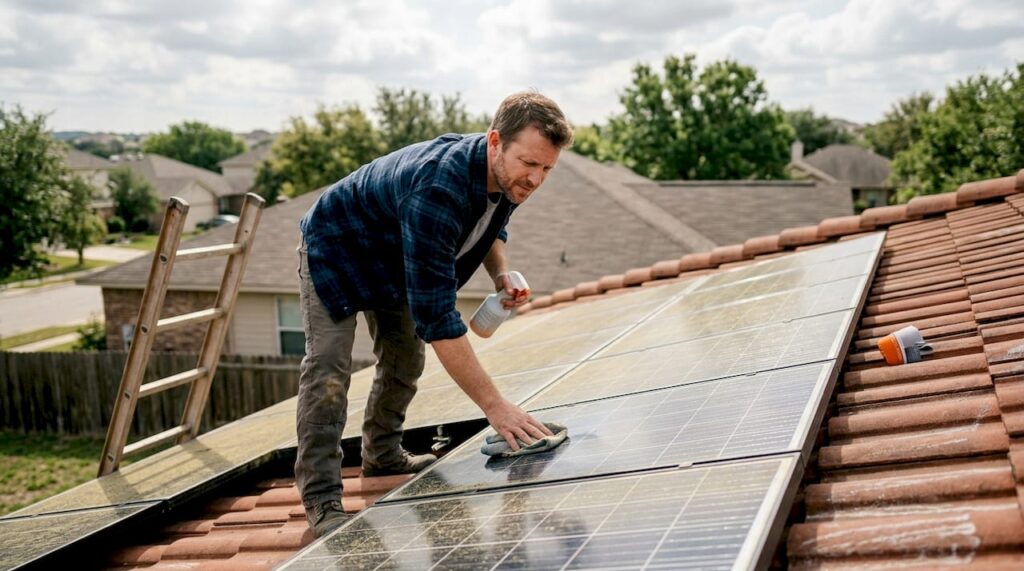
TL;DR:
- Clean solar panels in San Antonio 2 to 4 times annually due to local dust and pollen.
- Pollen and bird droppings cause significant output losses and require manual cleaning.
- Monitoring tools and signs like output drops help determine when cleaning is needed.
Your solar panels are working hard every day under the San Antonio sun, but dirty panels can quietly cost you more than you realize. Soiling losses range from 2 to 25% in energy output depending on how severe the buildup gets. That means higher electricity bills and less return on your investment, often without any obvious warning. The good news is that knowing the signs early puts you back in control. This guide walks you through exactly what to watch for, why San Antonio’s environment makes cleaning more urgent, and how to take action before small problems turn into bigger ones.
Table of Contents
- Why clean solar panels matter in San Antonio
- 6 unmistakable signs your solar panels need cleaning
- How different contaminants impact solar panel efficiency
- Using technology and schedules to know when it is time to clean
- Why ‘set and forget’ is a myth: The real rules for reliable solar performance
- Get local solar panel cleaning help
- Frequently asked questions
Key Takeaways
| Point | Details |
|---|---|
| Watch for output drops | A sudden or unexplained decrease in solar panel output is an early sign that cleaning is needed. |
| Local factors increase soiling | San Antonio’s dust, pollen, and low rainfall demand more frequent panel cleaning than more humid regions. |
| Manual cleaning beats rain | Light rain is rarely enough to remove sticky pollen or bird droppings from solar panels. |
| Use monitoring apps | Monitoring energy output helps you spot subtle losses before they become expensive. |
Why clean solar panels matter in San Antonio
Solar soiling simply means any buildup on your panel surface that blocks sunlight from reaching the solar cells. Less sunlight means less electricity generated. It sounds straightforward, but the impact adds up fast, especially in a city like San Antonio.
San Antonio’s climate creates a perfect storm for panel buildup. The city sits in a region with high dust activity, heavy spring pollen from oak and cedar trees, and a large bird population that leaves droppings on rooftops year-round. On top of that, rainfall here is inconsistent. When rain does come, it often is not enough to wash away the sticky residue that pollen and droppings leave behind.
Local expert insight: Cleaning is recommended 2 to 4 times per year in San Antonio due to these unique local factors, which is more frequent than many other U.S. regions.
Pollen is a particularly sneaky problem. Unlike dust, which sits loosely on the surface, pollen bonds to the glass when wet and then dries into a film. Pollen can cause 10 to 15% output losses even after it rains, because rain alone cannot break that bond.
The consequences go beyond just losing a few kilowatt hours (the unit of energy your system produces). Persistent soiling can raise the operating temperature of your panels, which accelerates wear over time. Your solar maintenance routines should account for these local realities, not just follow a generic national schedule. Following proper clean solar panels guidance tailored to San Antonio conditions is one of the simplest ways to protect your investment.
Once you understand the impact, it is vital to recognize real-world warning signs.
6 unmistakable signs your solar panels need cleaning
Here are the six signs every San Antonio homeowner should know. Catching even one of these early can save you money and prevent long-term damage.
-
Noticeable drop in energy output on sunny days. If your system is producing less power than usual on a clear, sunny day, soiling is often the first thing to investigate. Compare your current output to the same period last month or last year using your monitoring app.
-
Visible dirt, pollen, or bird droppings on the surface. Sometimes the sign is as simple as looking up. A yellow-green film in spring usually means pollen. White or gray streaks point to bird droppings. Both need attention.
-
Streaks or sticky film after the rainy season. Rain can actually make soiling worse in some cases. Water carries dust and pollen across the panel surface and then evaporates, leaving concentrated residue behind.
-
Debris shading part of the panel. Leaves, blossoms, or thick dust buildup can shade sections of your panels. Even partial shading on one panel can reduce output for your entire string of panels.
-
It has been 6 to 12 months or more since your last cleaning. No cleaning for over 6 to 12 months, especially after a dust storm or pollen surge, is a reliable trigger to schedule service regardless of how the panels look.
-
Your inverter or monitoring app is flagging output issues. Your inverter converts solar energy into usable electricity for your home. When it reports unexplained output drops, that is a signal worth acting on. A drop of more than 5% from your normal baseline is a common cleaning trigger used by solar professionals.
Pro Tip: Schedule a visual inspection and cleaning after San Antonio’s spring pollen season (typically March through May) and again after summer dust events. These two windows are when buildup tends to be heaviest. Check out expert solar cleaning tips and solar panel cleaning guides for step-by-step guidance.
Now, with the warning signs in mind, it is helpful to compare exactly how different forms of soiling impact your panel performance.
How different contaminants impact solar panel efficiency
Not all buildup is created equal. Dust, pollen, and bird droppings each affect your panels differently, and knowing the difference helps you prioritize your cleaning schedule.
| Contaminant | Typical output loss | When it peaks | Difficulty of removal |
|---|---|---|---|
| Dust | 2 to 5% (cumulative) | Year-round, worse in summer | Low, often rinses off |
| Pollen | 10 to 15% | Spring (March to May) | Medium, bonds when wet |
| Bird droppings | Up to 15% or more | Year-round | High, requires scrubbing |
Dust is the most common contaminant. It settles gradually and reduces the amount of light reaching your cells. The losses start small but build steadily. The good news is that loose dust is the easiest to remove.
Pollen is a bigger problem than most homeowners expect. Pollen and droppings can cause losses up to 15% and are far harder to remove than dust. When pollen gets wet and dries on the glass, it creates a sticky film that scatters and absorbs light instead of letting it pass through cleanly.
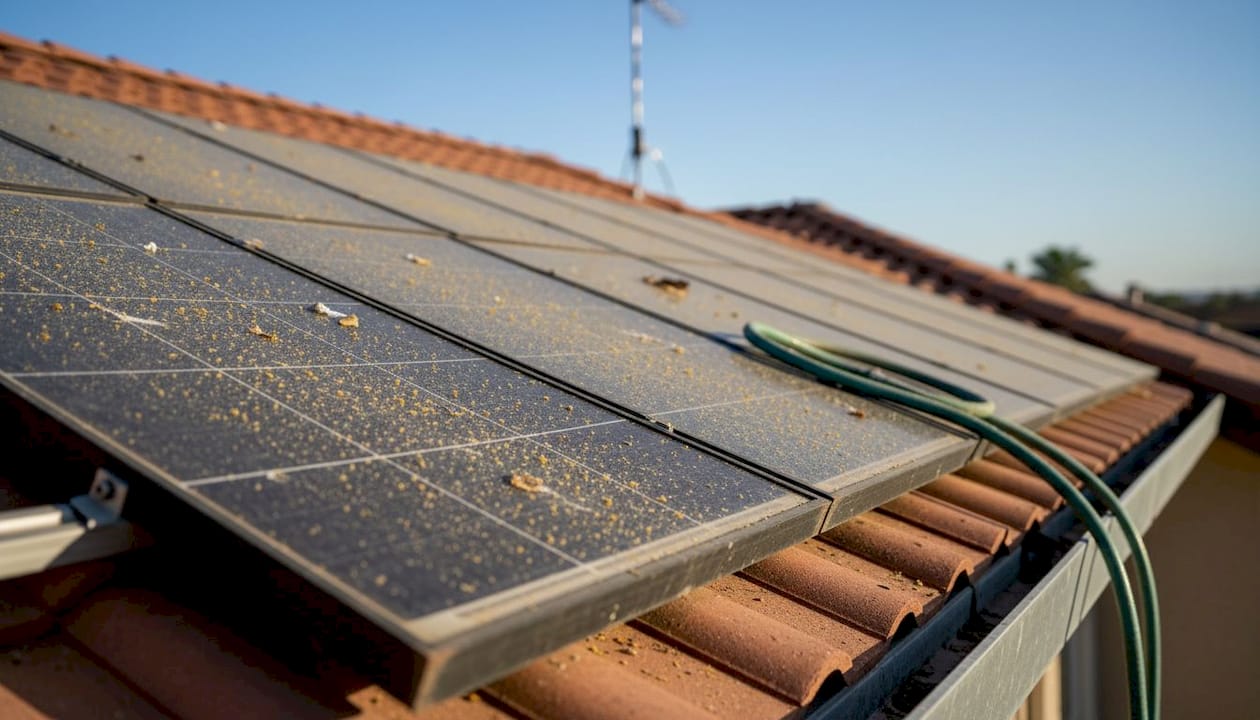
Bird droppings are the most damaging of the three. A dropping that covers even a small section of a panel can block light entirely in that spot. This creates what is called a hot spot, where one area of the panel overheats because it is shaded while the rest stays active. Bird droppings can trigger hot spots that raise cell temperatures and cause lasting damage if left untreated.
Here is what makes this especially relevant in San Antonio:
- Oak and mountain cedar trees produce heavy pollen from January through May.
- Urban bird populations (pigeons, grackles) are dense in residential neighborhoods.
- Summer heat accelerates the bonding of organic residue to panel glass.
The takeaway is that rain alone will not solve your cleaning needs. Sticky residue from pollen and droppings requires manual cleaning, regardless of how much it rains. Explore your cleaning methods to understand the right approach for each type of buildup.
With the science and scenarios clear, see how to make informed cleaning decisions using monitoring tools and sound local schedules.
Using technology and schedules to know when it is time to clean
You do not have to guess when your panels need attention. Modern tools make it easier to catch soiling early, before it affects your monthly bill in a meaningful way.
Energy monitoring apps are your first line of defense. Most solar systems installed in the last several years come with an app that tracks your daily and monthly output. Set a baseline during a clean period, then watch for unexplained drops. A drop of more than 5% from your normal output, not explained by clouds or shade, is a reliable sign that soiling is the culprit.
More advanced systems use soiling sensors and detection algorithms (sometimes called Soiling Ratio Reporting or CODS, which stands for Clean Output Detection System) to flag buildup automatically. These are more common in commercial installations but are becoming more accessible for residential systems.
If you do not have an app, your utility bill and inverter readings can still give you useful data. Compare your bill month over month during similar weather conditions. A creeping increase in grid usage despite normal sun exposure often points to panel soiling.
Recommended cleaning schedule for San Antonio homeowners:
| Region type | Recommended cleanings per year | Key timing |
|---|---|---|
| San Antonio (local) | 2 to 4 times per year | Post-pollen season, post-dust storm |
| National average (humid) | 1 to 2 times per year | Spring and fall |
| Arid/desert regions | 3 to 4 times per year | After dust events |
San Antonio falls closer to the arid schedule than the national average, thanks to its dust exposure and heavy pollen load. Plan accordingly.
Pro Tip: Set automated alerts in your monitoring app to notify you after major weather events like dust storms or heavy pollen days. That way, you never have to remember to check manually. Learn how tech tracks panel health and review the full panel service checklist to stay ahead of maintenance needs.
Armed with this knowledge, let us wrap up with a unique perspective on what truly matters in local solar panel upkeep.
Why ‘set and forget’ is a myth: The real rules for reliable solar performance
A lot of homeowners come to us with the same assumption: solar panels take care of themselves. It is an easy belief to hold, especially when installers mention that rain helps keep panels clean. But that framing leaves out a lot.
Rain removes loose surface dust. That is about it. Sticky pollen, bird droppings, and organic film require manual intervention. IEA PVPS data confirms that soiling costs the solar industry billions per year globally, and residential systems are not immune.
The homeowners who get the most out of their systems are not the ones who installed the best panels. They are the ones who treat maintenance as part of ownership, not an afterthought. In San Antonio specifically, that means a proactive, seasonal approach, not an annual checkup.
Ignoring local cleaning needs leads to surprise output drops, higher bills, and in some cases, premature panel wear that shortens your system’s lifespan. The panels themselves are durable. But they perform best when you stay engaged. Explore deep renewable insights to keep building your knowledge as a solar owner.
Get local solar panel cleaning help
Knowing the signs is the first step. Acting on them is where the real savings happen.
At Alpha Solar Solutions, we offer professional San Antonio solar panel cleaning designed specifically for local conditions. Our team understands San Antonio’s pollen seasons, dust patterns, and bird activity, so we clean with the right methods at the right times. If you want to make sure your system is running at full capacity, check out our solar panel cleaning tips or browse our full range of residential solar services. We are here to help you protect your investment and keep your energy costs predictable.
Frequently asked questions
Does rain clean solar panels enough in San Antonio?
Rain removes light dust but not sticky pollen or bird droppings common in San Antonio, so manual cleaning is often necessary. NREL studies confirm that rain alone frequently leaves sticky pollen and residue behind.
How often should I clean my solar panels in San Antonio?
Plan for 2 to 4 cleanings per year, especially after pollen season or dust storms, to maintain top efficiency. San Antonio’s climate requires more frequent cleaning than most U.S. regions.
What loss in output signals my panels are too dirty?
A drop of over 5% in output compared to your normal baseline, not explained by clouds or shade, means cleaning is due. Solar professionals use this 5% threshold as a standard cleaning trigger.
Will dirty panels damage my solar system long-term?
Persistent soiling, especially from bird droppings, can cause hot spots and reduce your panels’ lifespan. Bird droppings cause shading and hot spots that may permanently damage solar cells if left untreated.