
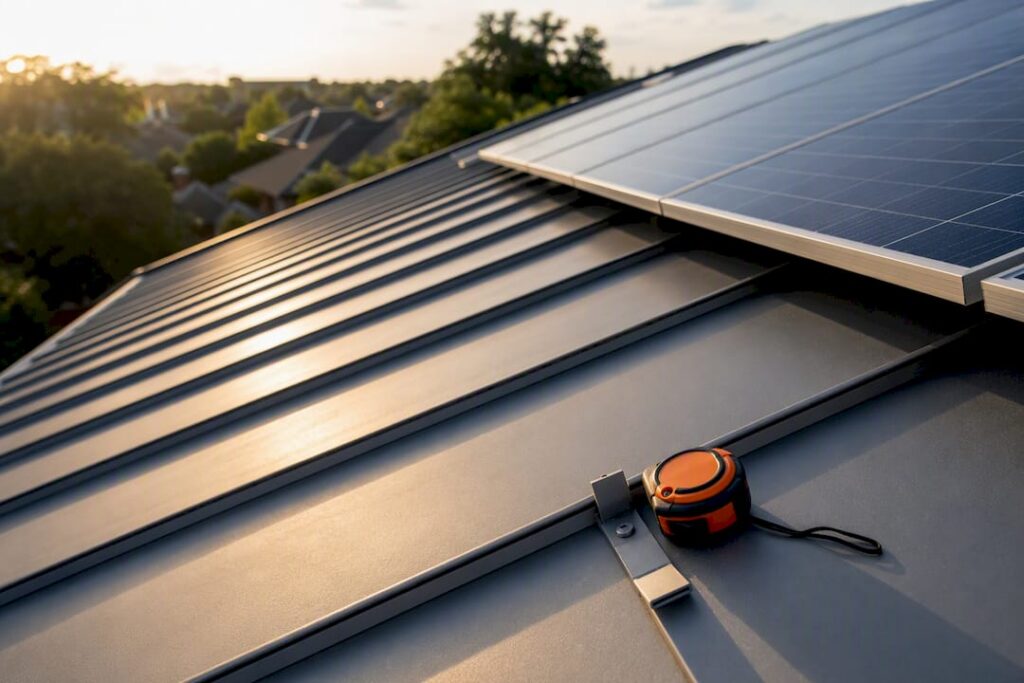
Yes, you can install solar on a metal roof, and standing seam roofs are the easiest to work with because non-penetrating clamps grip the seam without a single hole in the panel. The main tradeoff is a modest hardware premium against far less long-term disruption, since metal roofs typically outlast solar panels by decades. Your next move: identify your roof profile and pull seam photos before you call an installer for a quote.
TL;DR:
- Metal roofs with standing seam profiles allow non-penetrating clamps, reducing installation costs and preserving roof warranties over multiple decades.
- The typical cost for a solar system on a metal roof ranges from $2.80 to $3.50 per watt, about 10-20% higher than asphalt installs, with a 2-3 day installation process.
- Proper clamp selection based on the exact seam profile and current engineering standards is critical to prevent leaks and ensure long-term warranty compliance.
- Incentives do not depend on roofing material, but verifying current local rebates and utility programs with your installer is essential for maximizing benefits.
- Installing on a metal roof can avoid future removal costs if reroofing is needed, especially if the roof still has decades of service left, making timing crucial.
Table of Contents
- Why Metal Roofs Often Make a Great Host for Solar
- Mounting Methods by Roof Type: Standing Seam, Corrugated, and Trapezoidal
- Cost and Timeline: What to Expect on a Metal Roof Install
- Warranty, Structural, and Electrical Checks Installers Must Complete
- What to Prepare and Ask: A Homeowner’s Quote Checklist
- Installer Perspective: What Actually Goes Wrong on Metal Roof Jobs
- Energy Production Efficiency and Shading on Metal Roofs
- Maintenance and Cleaning: Keeping Panels Performing on Metal
- Integrating Solar With Your Home’s Electrical System
- Thermal Performance and Ventilation Effects on Metal Roofs
- Incentives and Rebates for Metal Roof Solar Projects
- The Long-Term Case for Pairing Metal Roofs With Solar
- Alpha Solar Solutions: Metal Roof Solar Done Right
- Sources
Why Metal Roofs Often Make a Great Host for Solar
A metal roof and a solar system age on different clocks, and that mismatch usually works in your favor. Standing seam and other quality metal roofing usually last several decades, while solar panels have warranties in the 20-30 year range. That means your roof will likely outlive at least one full generation of panels, so you never face the expense of tearing off panels to replace a failing roof underneath them.
Metal roofing brings other advantages to a solar array beyond longevity. Reflective coatings can keep the roof deck cooler than dark asphalt shingles, which can modestly improve panel efficiency by reducing cell temperature. The lightweight steel or aluminum panels also reduce structural load compared to heavier roofing materials, giving your rafters and purlins more reserve capacity for racking hardware.
Not every metal roof is a good candidate, though. Watch for:
- Corroded seams or rusted fastener heads may weaken clamp grip and indicate deterioration
- Older exposed-fastener roofs with degraded rubber washers, since those leaks often predate the solar install
- Stone-coated steel shingles without true seams, which often require different mounting brackets involving penetrations.
Mounting Methods by Roof Type: Standing Seam, Corrugated, and Trapezoidal
How your panels attach depends entirely on your roof’s profile, and getting this wrong is the single most common cause of leaks and voided warranties.
- Standing seam roofs use clamp families that grip the vertical seam mechanically, without piercing the metal at all. These clamps transfer wind and snow loads down through the seam into the structural deck, and because nothing punctures the roofing panel, installers can mount solar without roof penetrations while preserving both waterproofing and the manufacturer’s warranty.
- Corrugated and trapezoidal (exposed-fastener) roofs generally require penetrative brackets set into the raised crests, since there’s no continuous seam to clamp onto. Corrugated installs commonly add 8 to 12% to cost versus standing seam because of the extra sealing work, and gasket quality at each penetration determines whether the roof stays watertight for the next twenty years.
- Rail-less, module-to-clamp systems skip the aluminum rail entirely, attaching panels straight to seam clamps. Systems like Unirac’s METAL X® cut part count and labor hours, and because there’s less hardware sitting above the roof plane, they also present a lower wind profile than traditional rail-based racking.
Rail-based systems still make sense on larger commercial arrays or irregular layouts where rails help distribute load across mismatched seam spacing. For a typical residential standing seam roof, though, rail-less setups are increasingly the default because they install faster and use fewer parts that can eventually corrode or loosen.
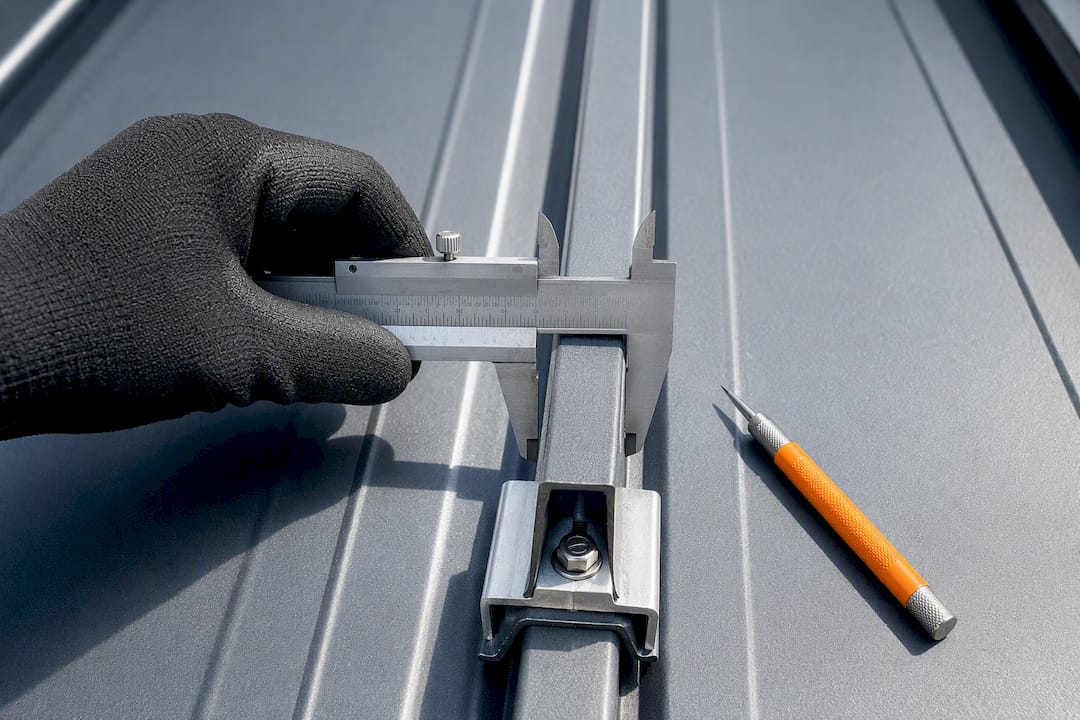
Pro Tip: Never assume one clamp fits your seam. Seam height, width, and shape vary by manufacturer, and using the wrong clamp model is the fastest way to strip a seam or leave hardware loose under wind load. Confirm your exact profile and check that your installer is designing to current ASCE 7-22 span tables, not an outdated wind-load standard.
Cost and Timeline: What to Expect on a Metal Roof Install
Metal roof solar carries a real but modest premium over asphalt installs. Installed costs typically run $2.80 to $3.50 per watt, roughly 10 to 20% above comparable asphalt roof installs. For a typical 8 kW residential system, that works out to a gross cost between $22,400 and $28,000 before any applicable incentives.
By the numbers: An 8 kW system on a metal roof has a gross cost in the tens of thousands, and standing seam mounting often reduces mounting labor time significantly compared to asphalt methods.
That premium comes from three places: specialized clamps engineered for your specific seam profile, additional structural engineering to satisfy your local building department, and sometimes extra inspection steps tied to the roof type. The payoff shows up in the schedule. A standing seam mount typically takes 2 to 3 days for mounting and wiring, often faster than asphalt because clamps install more quickly than lag-and-flash methods. Add extra lead time if your project needs a stamped engineering letter or any roof repair before racking goes up.
Warranty, Structural, and Electrical Checks Installers Must Complete
Before any hardware touches your roof, your installer should hand you paperwork, not just a proposal.
- Written roof manufacturer approval confirming the specific clamp model won’t void your paint or leak warranty. Most reputable manufacturers publish approved attachment lists or will issue a letter on request.
- A stamped structural letter from a licensed engineer when your jurisdiction requires it, referencing current ASCE 7-22 wind-load coefficients. Outdated span tables risk under-designing clamp spacing in corner and edge zones, exactly where uplift forces are highest.
- Grounding and bonding documentation showing how the conductive metal roof and racking tie into system ground. Bonding washers or equivalent lugs at each clamp are the standard method installers use to satisfy NEC 690.43 and 690.45.
Skip any of these three and you’re gambling with a roof that was designed to last twice as long as the panels sitting on it.
What to Prepare and Ask: A Homeowner’s Quote Checklist
Getting comparable quotes starts with giving every bidder the same information up front. Roof prep and timing questions matter just as much as the hardware itself, and our roof preparation guide covers the reroof-timing decision in more depth.
- Take clear photos of your seam or panel profile from multiple angles, plus a wide shot of the full roof.
- Note your roof’s age, the manufacturer’s name if you know it, and any history of leaks or repairs.
- Gather what you know about purlin or deck spacing, especially on older or custom-built roofs.
- Ask each bidder which clamp model they’d use and what torque spec they’ll apply during installation.
- Ask who provides the stamped engineering letter, and confirm it references ASCE 7-22, not an older standard.
- Ask how they anchor for fall protection during the install, since anchor points on a metal roof need their own sealing plan.
- Ask how a future reroof would be handled: will they remove and reinstall panels, and what does that typically cost?
If your roof is already past 30 years old or shows visible wear, reroofing before solar almost always costs less than removing panels twice. Our mounting hardware guide breaks down the hardware families referenced above in more technical detail.
Pro Tip: Send your seam photos to two or three installers before you ask for a formal quote. You’ll immediately see which companies know metal roofs well, because their clamp recommendations will match your profile instead of a generic one-size answer.
Installer Perspective: What Actually Goes Wrong on Metal Roof Jobs
Alpha Solar Solutions has walked enough metal roofs to know the failure points before a project starts. Seam geometry gets photographed and confirmed before any clamp order goes in, because a mismatched clamp is the most common and most preventable mistake we see. Roof-manufacturer sign-off happens before installation day, not after a warranty dispute.
The recurring failure modes are predictable: crews using outdated clamp span tables, penetrative brackets sealed with the wrong gasket, and fall-protection anchors that were never properly sealed back into the roofing system. Alpha Solar Solutions builds documentation for every install, including seam profile photos and structural sign-off, into the standard process rather than treating it as an afterthought.
Energy Production Efficiency and Shading on Metal Roofs
Metal roofs don’t change how much sunlight your panels collect, but their geometry often shapes how you design around shade. Standing seam roofs frequently run in long, uninterrupted planes, which gives installers cleaner sightlines to model shading from nearby trees, chimneys, or dormers using standard solar design software.
Reflective metal roofing also runs cooler than dark asphalt shingle underneath the array, and since panel efficiency drops as cell temperature rises, that cooler deck offers a small but real production edge on hot afternoons. The bigger production factor, though, remains roof pitch and orientation. A steep metal roof facing due south still outperforms a shallow, shaded one regardless of the roofing material underneath.
One metal-roof-specific wrinkle: standing seam ridges and ribs can cast narrow shadow lines across nearby panels early and late in the day. A good installer accounts for this in the layout, spacing panel strings to minimize the loss instead of placing rows purely by seam count. It rarely costs meaningful annual production, but it’s worth asking your installer whether they’ve modeled it for your specific roof.
Maintenance and Cleaning: Keeping Panels Performing on Metal
Metal roofs are, if anything, easier to maintain a solar array on than asphalt. The smooth, continuous surface sheds debris more readily than shingle grit, and there’s no granule buildup around the panel edges to trap dirt over time.
Regular cleaning still matters for output. Dust, pollen, and bird droppings reduce panel efficiency gradually, and in San Antonio’s dry stretches, that buildup can accumulate faster than homeowners expect. A soft brush or low-pressure rinse with plain water handles most buildup; avoid high-pressure washing near clamps and seams, since forceful water can work its way under fasteners over time.
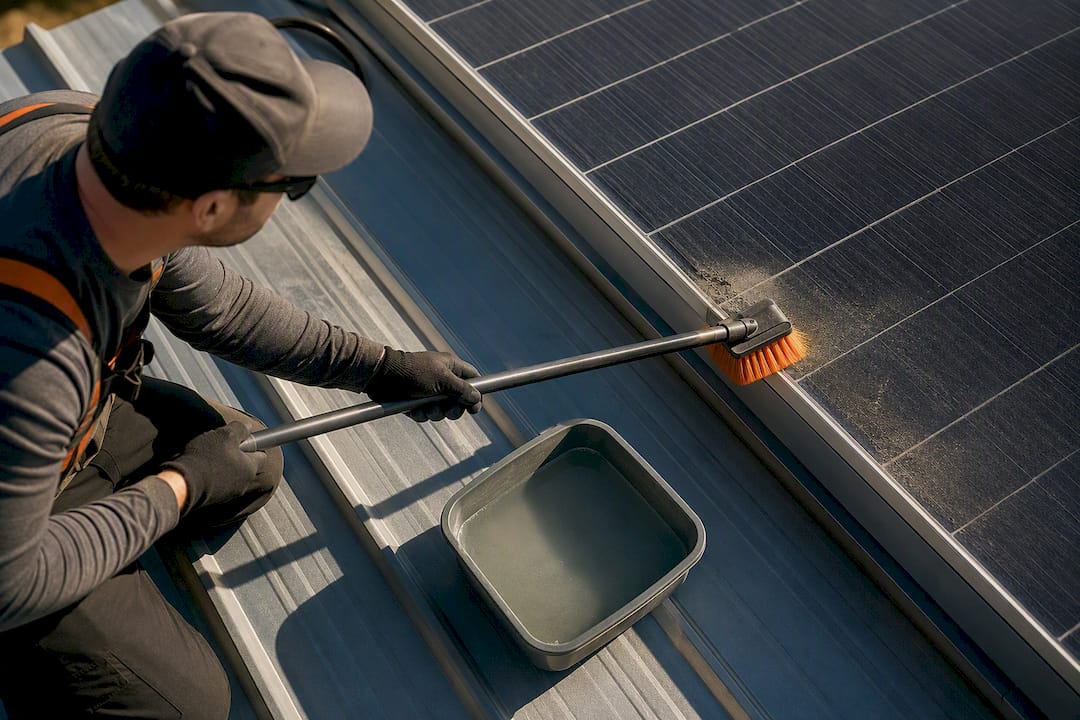
Inspect the racking hardware annually, not just the panels themselves. Clamps on standing seam roofs rarely loosen, but it’s worth a visual check after major storms to confirm nothing shifted. If your installer used penetrative brackets on a corrugated or trapezoidal roof, keep an eye on the sealant around each penetration point, since that’s the spot most likely to need resealing after a decade or so of thermal cycling.
Professional cleaning services can handle both the panels and a visual hardware check in one visit, which saves you from getting on the roof yourself.
Integrating Solar With Your Home’s Electrical System
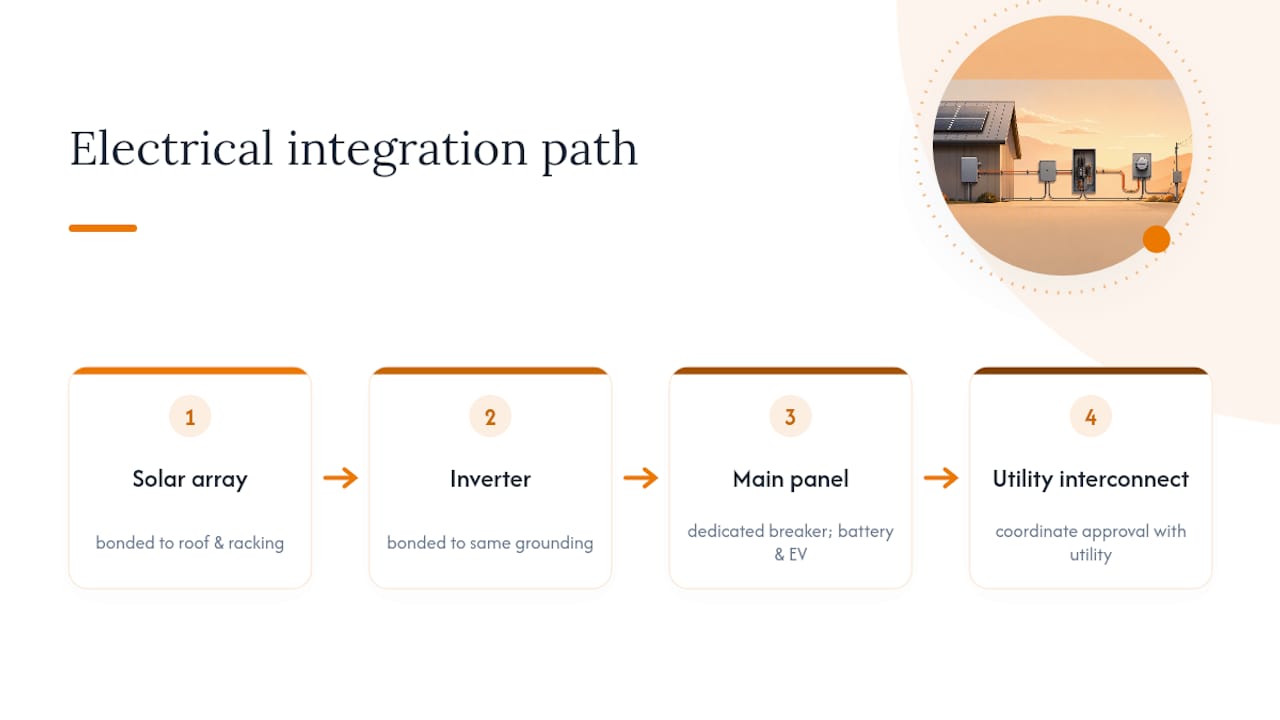
A metal roof doesn’t change your core electrical design, but the roof’s conductivity does add one extra layer to the plan. Because metal roofing is electrically conductive, it needs to be bonded into the same grounding system as your racking and inverter, closing any gap that could otherwise create a shock hazard or interfere with system performance.
Beyond that, integration follows the same path as any residential solar project. Your installer sizes the inverter to your panel array, ties into your main electrical panel through a dedicated breaker, and coordinates with your utility for interconnection approval. If you’re also adding battery storage, the conversation shifts to which circuits stay powered during an outage and whether your panel has room for the additional equipment.
Homeowners planning an EV purchase should raise it during the same design conversation rather than as an afterthought later. Sizing your system and panel capacity with EV charging in mind upfront avoids a second electrical upgrade down the road, and Alpha Solar Solutions handles EV charger installation alongside solar projects for exactly that reason.
Thermal Performance and Ventilation Effects on Metal Roofs
Panels mounted above a metal roof create a small air gap between the module and the roofing surface, and that gap changes how the roof deck behaves thermally. Airflow underneath the panels helps vent some heat that would otherwise radiate directly into the attic space, which can modestly ease cooling loads in the areas directly beneath the array.
Rail-less and low-profile clamp systems sit closer to the roof surface than tall rail-based racking, so the airflow benefit is smaller with those setups, though still present. Either way, the effect is a secondary bonus rather than a primary reason to choose metal roof solar. Don’t expect it to show up as a dramatic line-item change on your utility bill.
Ventilation at the roof’s ridge and soffit vents needs to stay clear of racking hardware and wiring runs. A well-designed install routes conduit and clamps around existing vent paths rather than through them, preserving the attic airflow your roof was built to manage in the first place. This is one more reason a stamped structural review matters. It confirms the racking layout respects both the wind-load math and the roof’s existing ventilation design.
Incentives and Rebates for Metal Roof Solar Projects
Incentive availability for solar depends on your specific location, utility, and the program rules in effect at the time you sign a contract, and those programs change often enough that a blanket national answer will mislead you. Some utilities offer net metering or production-based credits, while others run separate rebate programs for battery storage paired with solar. State and local programs also vary widely in eligibility and funding levels from year to year.
Metal roofs themselves don’t unlock or block any incentive eligibility. The roofing material has no bearing on whether your system qualifies for a given utility program or state rebate. What does matter is confirming current program details directly with your utility or a licensed installer before you sign anything, since incentive structures and deadlines shift with little public notice. Ask your installer which programs currently apply in your service area and get the eligibility terms in writing as part of your proposal.
The Long-Term Case for Pairing Metal Roofs With Solar
The strongest argument for metal roof solar isn’t the panels at all. It’s what you avoid. A standing seam roof lets you skip the removal and reinstallation cycle that asphalt reroofs eventually force on solar owners, and that avoided cost improves lifetime economics even when the initial hardware runs higher.
If you’re already planning a reroof, timing solar to follow it is usually the smarter sequence. If your metal roof still has decades of service life left, there’s no reason to wait.
*— Anthony
Alpha Solar Solutions: Metal Roof Solar Done Right
Alpha Solar Solutions is the installer that treats your metal roof’s warranty as seriously as your electric bill. We handle residential metal-roof solar installs from seam-clamp selection through engineering coordination, and if a future reroof ever requires it, we manage full panel removal and reinstallation so your array goes back up correctly the first time.
Requesting an on-site assessment is straightforward. Have your seam or roof photos ready, along with your roof’s age and manufacturer name if you know it, and we’ll come out to confirm your exact profile before quoting hardware. We also coordinate the roof manufacturer warranty confirmation letter and stamped structural documentation as part of the project, so you’re not chasing paperwork after the fact. If you’re a San Antonio homeowner ready to see what your specific roof can support, request a residential solar quote and we’ll walk the details with you before any hardware gets ordered.
Sources
For deeper technical detail, see Unirac’s rail-less mounting specs, ASCE 7-22 wind-load guidance for standing seam clamps, and this overview of professionally installed solar value.
- How solar is installed on metal roofs – Solar Reviews
- Solar panels on metal roof: install + cost | The Roofing Brief