
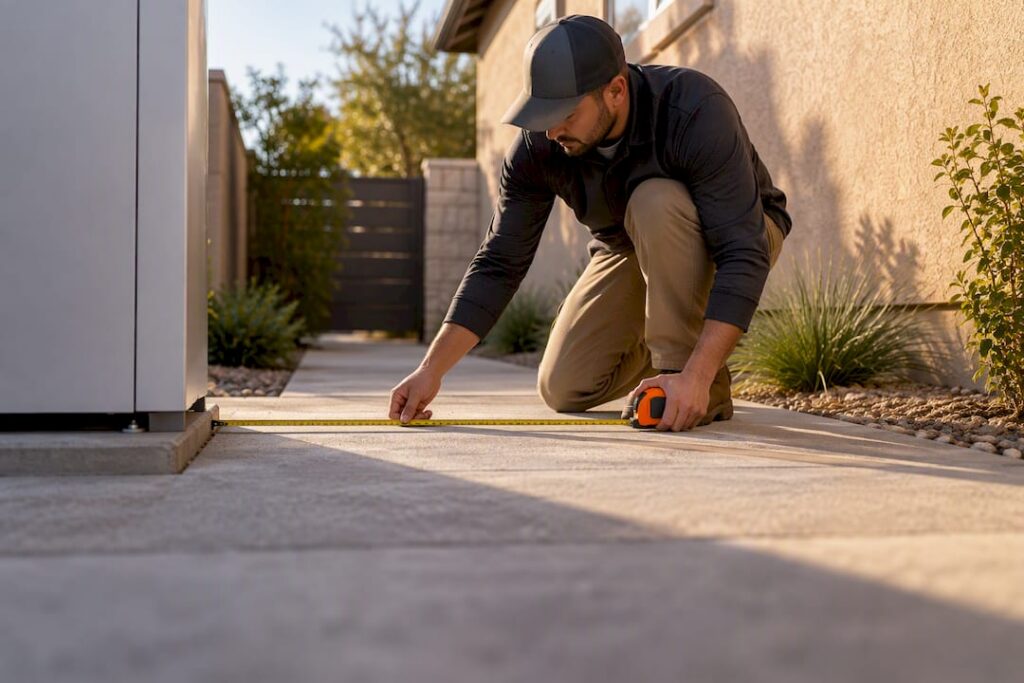
Outdoor installation is the safer default for most home battery backups, mainly because it keeps thermal risk away from living spaces and satisfies fire codes with less complication. Indoor placement is allowed too, but only when the battery is UL listed for residential indoor use and your installer adds the required detection and separation. Codes and the manufacturer’s own listing make the final call, so your first move is checking the product’s listing and talking to your installer or local building authority before you decide.
TL;DR:
- Outdoor installation generally offers easier thermal management, weatherproofing, and simpler compliance for large battery systems, especially in zones favoring exterior siting.
- Indoor placement requires UL-listed units with proper ventilation, smoke detection, and clearance from living spaces, but can benefit from more stable temperatures and added security.
- Local codes and standards, including NFPA 855 and UL 9540, along with your jurisdiction’s requirements, ultimately determine where and how the battery can be installed.
- Proper planning involves verifying product listings, measuring clearance distances, coordinating with authorities, and considering future expansion before installation.
- Regular maintenance, including sealing, corrosion checks, and ventilation verification, is essential for both indoor and outdoor sites to prolong battery lifespan and ensure safety.
Table of Contents
- Quick pros and cons of indoor vs outdoor siting
- What codes, standards, and listings actually require
- Ventilation, temperature, clearance, and access by location
- Your siting decision checklist
- Permits, AHJ engagement, and what to expect during installation
- Maintenance, performance, and lifespan by siting
- Where homeowners tend to land in practice
- Get a site assessment from Alpha Solar Solutions
- Sources
- FAQ
Quick pros and cons of indoor vs outdoor siting
Both locations work well for the right home. Outdoor placement tends to win when your local building authority prefers it, since it keeps the battery separated from living space by default and simplifies larger, multi-unit installations. Indoor placement tends to win when you want tighter temperature control, better security, or a cleaner look, and it’s often possible with a UL-listed residential unit.
- Outdoor advantages: easier separation from sleeping areas, no exposure to indoor off-gassing, and simpler permitting for larger battery banks.
- Indoor advantages: stable temperatures that support battery lifespan, protection from weather and theft, and a tidier appearance for garages or utility rooms.
- The short version: outdoor wins when you’re adding a big system or your jurisdiction leans that way, and indoor wins when the product is listed for it and you have a controlled space to spare.
What codes, standards, and listings actually require
Two documents shape almost every siting decision: NFPA 855 and the UL 9540 family of standards. NFPA guidance allows residential battery systems on exterior walls, in garages, in utility closets, or outdoors on the ground, as long as the installation meets specified separation distances and protections, commonly a 3-foot clearance rule along with restrictions on prohibited spaces like sleeping rooms and closets used as bedrooms.
UL testing determines whether a unit can even be considered for indoor use in the first place. UL Solutions explains that UL 9540A and UL 9540B testing supports how far apart units need to be and whether a battery may be installed indoors at all, with UL 9540B specifically addressing large-scale fire testing for small residential systems. A battery that hasn’t been tested and listed this way is typically restricted to non-habitable spaces or kept outdoors entirely.
Local building codes layer on top of these standards, and your local building authority, often called the Authority Having Jurisdiction, can adopt or add to them. That means the “right” answer sometimes depends less on the battery itself and more on what your specific jurisdiction requires for unit size and total stored energy.

Ventilation, temperature, clearance, and access by location
Indoor installations need a few things outdoor units don’t: ventilation to manage any off-gassing, smoke or heat detectors interconnected with your home’s alarm system, and real separation from sleeping areas. Depending on the battery chemistry, containment or spill control may also be required.
Outdoor installations trade those concerns for different ones. Weatherproofing keeps rain and dust out, while shading and passive airflow reduce the temperature swings that come with direct sun exposure. Anti-corrosion measures protect the enclosure over years of exposure, and mounting needs to be secure enough to resist wind, flooding, or accidental impact.
Both locations need to stay accessible. Technicians need clear room to service the unit safely, and code compliance usually depends on maintaining that access alongside the required clearances. A battery tucked behind stored boxes in a garage corner fails this test just as easily as one crowded by landscaping outdoors.
Your siting decision checklist
Working through these steps in order keeps you from making an expensive location choice you’ll need to undo later.
- Check the listing first. Confirm whether the product is UL listed for residential indoor use; this single fact rules entire locations in or out before anything else matters.
- Measure your clearances. Note distances to windows, doors, sleeping rooms, and neighboring structures, since separation requirements shape where indoor and outdoor units alike can legally sit.
- Review your home’s systems. Look at your HVAC setup, existing smoke alarms, and whether sprinklers or added heat detectors will be needed for an indoor location.
- Plan for climate. For outdoor cabinets, decide on shading, insulation, or venting based on how hot or cold your installation site gets across the year.
- Think ahead on access and expansion. Confirm there’s room for future battery additions within your aggregate kilowatt-hour limits, and make sure your installer coordinates the final layout with your local building authority.
Pro Tip: Bring your installer photos of the proposed spot, indoor or outdoor, before your first site visit; it speeds up the code review and often surfaces separation issues early.
Permits, AHJ engagement, and what to expect during installation
Expect your installer to submit a package that includes system plans, equipment specifications, kilowatt-hour ratings, exact placement, and any required signage or emergency response information for first responders. This isn’t paperwork for its own sake. DOE’s energy storage safety guidance points out that residential systems carry a lower absolute hazard than utility-scale storage but still pose real life-safety risk, which is why early planning, enclosure design, and thermal-runaway prevention all matter well before installation day.
That’s also why DOE and NFPA both stress bringing your local building authority and fire department into the process early, since NFPA’s own materials note that emergency operations planning is central to a safe installation, not an afterthought tacked on at the end.
A typical timeline runs through a site survey, system design, permit submission, inspection, and final commissioning, in that order. Each step depends on the last, so a delay at permitting pushes your install date back accordingly.

Maintenance, performance, and lifespan by siting
Temperature is the biggest long-term factor in how long your battery lasts, regardless of where it sits. Operating within the manufacturer’s recommended range extends cycle life, while chronic heat or cold stress shortens it.
Outdoor cabinets need periodic seal and vent checks along with attention to corrosion, especially in humid or coastal climates. Indoor units need less weatherproofing but do require confirming that ventilation and any interconnected alarms are still functioning as designed. Routine service tasks look similar either way, though outdoor units in harsh climates sometimes need more frequent visits to catch weather-related wear before it becomes a bigger repair.
Where homeowners tend to land in practice
Most of the scenarios we see fall into a few patterns: a battery on an exterior wall of an attached garage, a unit tucked into a utility closet, or a cabinet mounted outdoors against the house. Garages and closets often work well for indoor placement because they’re already somewhat separated from living space, while exterior walls give you the clearance outdoor code favors without eating into your yard.
A full-service installer’s job is to walk the site, check the product listing against local code, handle the permit paperwork, and install the system correctly the first time.
— Anthony
Get a site assessment from Alpha Solar Solutions
Figuring out whether your home favors an indoor or outdoor battery location doesn’t have to be guesswork on your end. When you book a site visit with a professional solar installer, you get a straightforward site report, a code check against NFPA and UL requirements, permit support, and a quote built around what your property actually allows.

The installer typically handles communication with your local building authority and manages the permitting and paperwork from survey through commissioning. If you’re weighing a new battery backup installation alongside a solar system, our team can fold both into a single site visit and design. Schedule your assessment today and find out exactly where your battery belongs.
Sources
- NFPA blog: Residential energy storage system regulations (2021)
- UL Solutions — Safety testing for residential energy storage systems
- Energy Department — Energy storage safety strategic plan (2024)
FAQ
Is it safer to install a home battery indoors or outdoors?
Outdoor installation is generally considered the simpler, safer default because it separates the battery from living space without extra mitigation. Indoor installation is safe too when the unit is UL listed for residential indoor use and paired with the required detection and clearances.
What clearance does a home battery need from windows or doors?
Guidance built around NFPA’s siting rules commonly calls for a 3-foot separation from windows, doors, and other exposures, along with a ban on placement in sleeping rooms or closets used as bedrooms. Your exact distances depend on the product listing and what your local building authority requires.
Can I install a battery in my garage?
Garages are one of the more common approved locations for residential batteries, provided the separation distances and any required alarm interconnects are met. Check the manufacturer’s listing first, since not every product is rated for that kind of enclosed indoor space.
Do I need a permit to install a home battery?
Yes, a permit is standard for residential battery installations and typically requires system plans, equipment specifications, and placement details submitted to your local building authority. Your installer usually handles this submission and coordinates the required inspections on your behalf.
Does an outdoor battery lose performance compared to an indoor one?
Extreme heat or cold can add stress that shortens battery life over time, which is why outdoor cabinets rely on shading, ventilation, and insulation to manage temperature swings. An indoor unit kept within its recommended operating range often faces less temperature stress, though both locations can perform well with proper setup and upkeep.