
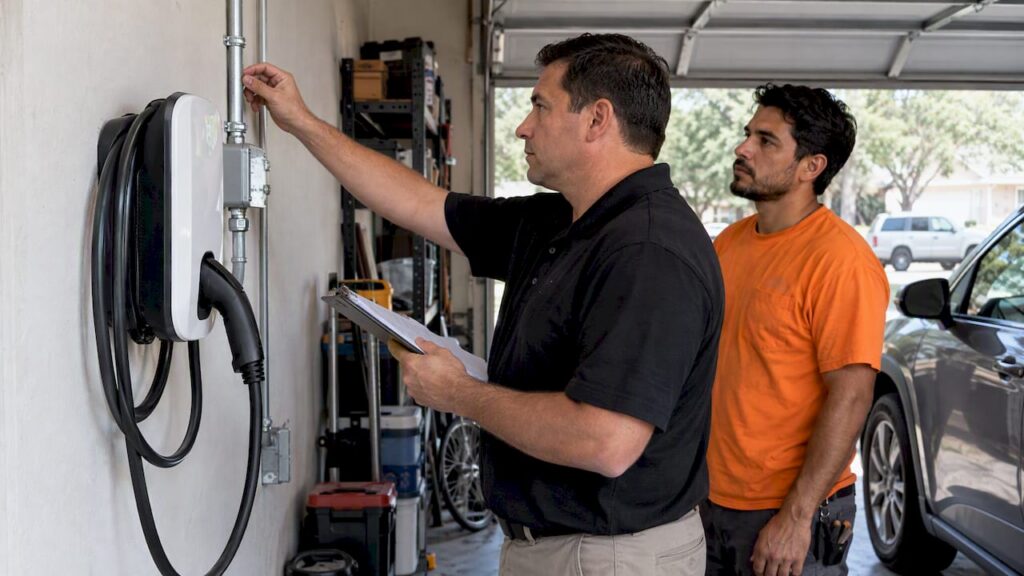
Yes, most Level 2 home charger installations in San Antonio require an electrical permit, while plugging a Level 1 charger into an existing, compliant outlet usually does not. The distinction comes down to whether you’re adding new electrical work, like a dedicated 240-volt circuit, and San Antonio Development Services treats that work the same way it treats any other electrical upgrade. Panel or service upgrades, hardwired chargers, and commercial or multi-port installations expand the scope further and can bring CPS Energy into the review process.
TL;DR:
- Any new Level 2 circuit, outlet, or hardwired connection needs a permit and inspection, with a Texas licensed electrician handling the electrical work.
- San Antonio’s historical residential examples list about $51.50 per charging port and $59.60 with a new panel; current fees depend on project scope.
- Prepare a site diagram showing the panel, circuit route, and charger location, along with equipment specifications and a load calculation if required.
- Projects adding 25 kilowatts or more of connected load require CPS Energy review and engineering drawings under San Antonio’s commercial permitting process.
- Residential trade permits are processed the same day; plan reviews can take up to three business days, and permit issuance does not guarantee inspection approval.
Table of Contents
- Which EV Charger Projects Require a Permit
- Typical Permit Fees and How San Antonio Calculates Them
- Documents and Technical Information You’ll Need for the Application
- When Panel Upgrades or Commercial Scope Change the Permit Process
- Step-by-Step: How to Apply for an EV Charger Permit in San Antonio
- Inspections: What Inspectors Check and How to Pass the Final Inspection
- How Contractors Price EV Charger Jobs and What to Look for in a Quote
- How We Help Homeowners Navigate the Permit Process
- Get Your San Antonio EV Charger Installed and Permitted the Right Way
- FAQ
- Sources
Which EV Charger Projects Require a Permit
The easiest way to think about this: are you changing your home’s wiring, or just using what’s already there? Level 1 charging uses an existing compatible outlet. If that outlet is code-compliant and you’re simply plugging in a charger that came with your vehicle, you typically won’t need a permit for that alone.
Level 2 charging is a different story. These chargers run on 240 volts and almost always require new electrical work, whether that’s a new NEMA 14-50 outlet, a dedicated circuit, or a hardwired connection straight to your panel. San Antonio Development Services treats this as standard electrical work that needs both a permit and an inspection, separate from the question of whether you’re simply using an existing receptacle.
Here’s how the scope typically breaks down:
- Level 1, existing outlet: usually no permit needed if the outlet already meets code.
- Level 2, new circuit or outlet: permit required, standard electrical trade permit.
- Hardwired Level 2 charger: permit required, often with a licensed electrician’s involvement.
- Panel or service upgrade included: permit scope expands, may require plan review.
Confirming your exact scope with a licensed electrician or Development Services before work starts saves you from guessing.
Typical Permit Fees and How San Antonio Calculates Them
Permit fees for EV chargers in San Antonio aren’t one flat number. San Antonio’s EV infrastructure study reports historical residential examples of about $51.50 for a charging port permit, rising to roughly $59.60 when a new panel was installed alongside the port. Those figures show how much a panel upgrade alone can shift your total, even before labor and equipment costs enter the picture.
Three things drive your actual fee:
- Project valuation: higher-cost installations generally carry higher permit fees.
- Plan review requirement: projects needing engineering review cost more than simple trade permits.
- Added trades: a panel upgrade or service change adds its own fee on top of the charger permit.
Because fees shift with scope, we always recommend checking the City’s current fee schedule before budgeting your project. The historical examples from the EV study give you a ballpark, but the City’s estimator reflects what you’ll actually pay today. If your contractor quotes a single flat number for “the permit” without referencing your specific scope, ask what’s included.
Documents and Technical Information You’ll Need for the Application
Pulling a permit goes faster when you have your paperwork ready before you submit. San Antonio’s residential permitting page outlines what a straightforward charger installation typically requires:
- Electrical permit application with your property address and project description.
- Site or installation diagram showing where the charger will be mounted and how the circuit runs from the panel.
- Equipment specifications, including the charger’s make, model, and UL listing.
- Electrical load calculation, if required for your project.
- Licensed electrician information, including contractor license number, when a licensed electrician is performing the work.
Your site diagram can be simple. Show the panel location, the route to the charger, and where it will be mounted.
Pro Tip: Ask your electrician for a spec sheet with the charger model, amperage, and breaker size before you submit. This can help the reviewer assess the application.

Permit-pulling rules vary. Check with Development Services to confirm who can submit the permit for your project. Check with Development Services if you’re unsure whether your project qualifies for homeowner self-permitting.
When Panel Upgrades or Commercial Scope Change the Permit Process
Some projects outgrow the standard residential trade permit. If your installation increases connected load by 25 kilowatts or more, San Antonio’s commercial permit process requires CPS Energy review and engineering drawings for the upgraded service, according to the City’s EV infrastructure study. That threshold matters most for multi-port commercial installations, but a significant residential panel upgrade can also trigger extra review.
Watch for these signs that your project has moved beyond a simple trade permit:
- Service panel upgrade that may affect the project’s scope.
- Multiple charging ports installed at once, common in commercial or multifamily settings.
- Structural changes needed to mount equipment or run conduit.
- Parking or accessibility modifications required for commercial installations.
A site assessment before you order equipment can help identify these triggers. An electrician or installer should check your panel’s capacity and connected load so you can determine whether plan review may be needed.
Step-by-Step: How to Apply for an EV Charger Permit in San Antonio
Breaking the process into stages keeps it manageable, whether you’re hiring an electrician directly or working with a full-service installer.
- Confirm your scope and hire a licensed electrician. Any new circuit, outlet, or hardwired connection needs a Texas-licensed electrician, both for code compliance and for permit submission.
- Gather your documents. Collect the load calculation, site diagram, and equipment specs before you apply, either through San Antonio’s online permitting system or in person at the One Stop counter.
- Pay fees and track your review timeline. Many residential trade permits process same-day, while plan review for more complex scopes typically takes up to three business days, though actual timing depends on whether corrections are requested or a panel upgrade is included.
- Schedule inspections and post your permit. Once work begins, your permit card needs to be visible on site, and you’ll schedule rough-in and final inspections as the project progresses.
Pro Tip: Submit a complete application and respond promptly if the reviewer requests corrections. Timing depends on the permit type and whether additional review is needed.
Ask your installer for the permit number and exact scope once it’s issued, not just a verbal confirmation that “it’s permitted.” Permit issuance and inspection approval are two separate steps, and the City doesn’t guarantee a passing inspection just because a permit was approved.
Inspections: What Inspectors Check and How to Pass the Final Inspection
Inspectors look at specific, checkable items rather than giving a general approval. Expect them to verify:
- Breaker sizing, checked against the equipment specifications and applicable requirements.
- Conductor sizing matched to the circuit load.
- Grounding and bonding connections at the panel and charger.
- Required protective measures for the installation type.
- Equipment match, confirming the installed charger matches what was listed on the application.
- Weatherproofing for any outdoor-mounted equipment or conduit.
An electrician can check conductor sizing and outdoor weather protection as part of the installation. You’ll schedule inspections directly with Development Services once your rough-in work is complete, and final inspection follows once everything is buttoned up.
How Contractors Price EV Charger Jobs and What to Look for in a Quote
A clear, itemized quote protects you from surprises later. Expect these line items:
- Charger hardware, the EVSE unit itself.
- Installation labor, covering the electrician’s time for circuit work and mounting.
- Permit and inspection fees, charged by the City.
- Panel or service upgrade costs, if your assessment shows you need one.
- CPS Energy coordination fees, when connected load changes require utility review.
Ask for a written quote that separates hardware from labor and keeps permit or upgrade costs on their own line. A bundled “total installation price” with no breakdown makes it hard to know what you’re actually paying for, or to compare quotes from different contractors.
Pro Tip: If a quote doesn’t mention a permit fee at all, ask why. A missing permit line is a reason to ask the contractor whether a permit is needed and who will obtain it.
How We Help Homeowners Navigate the Permit Process
We can discuss the permit paperwork for your EV charger installation, from the application through final sign-off with Development Services, as well as the site diagram, load calculation, and equipment specs needed for review.
Before moving forward, we can discuss your existing panel capacity and connected load, including whether your project may need a panel upgrade or used EV battery health checks to optimize your vehicle’s longevity.
Pro Tip: Choosing a full-service installer avoids the back-and-forth of coordinating electricians, permit offices, and utility reviews separately, especially when a panel upgrade is likely.
— Anthony
Get Your San Antonio EV Charger Installed and Permitted the Right Way
We can discuss the process for your EV charger installation, including site assessment, permit paperwork, coordination with Development Services, and CPS Energy review when a project requires it. We can also discuss final inspection scheduling, so you can understand the steps involved.

Before reaching out, have these details ready:
- Your property address.
- The charger’s make and model.
- Basic information about your current electrical panel.
- Your preferred charger location, like garage wall or driveway.
If a panel upgrade turns out to be part of the picture, our team can also walk you through battery backup options worth considering at the same time. Visit our EV Charger Installation page to request a quote and schedule your site assessment.
FAQ
Is the $200 EV registration fee still in effect in Texas?
This is a state vehicle registration fee question separate from local charger permitting, and registration fee rules can change from year to year. Check directly with the Texas Department of Motor Vehicles for the current fee amount that applies to your vehicle.
Do permit rules for EV chargers vary by state?
Yes, permit requirements for EV charger installations differ by state and even by city, since each jurisdiction’s building and electrical codes govern the process locally. In San Antonio, Development Services oversees residential electrical permits, and the process described here applies specifically to this market.
What state or utility incentives are available for EV owners in San Antonio?
Incentive programs change often and depend on your utility provider and the current state of federal and state policy. Check directly with CPS Energy and the Texas Comptroller’s office for programs currently available to San Antonio residents, since availability shifts year to year.
How long does EV charger permit approval take in San Antonio?
Many residential trade permits for EV chargers process same-day, while projects requiring plan review typically take up to three business days. Actual timing depends on whether your project involves a panel upgrade, corrections requested by the reviewer, or additional trades.
What happens if I install an EV charger without a permit?
Ask San Antonio Development Services or a licensed electrical contractor about the consequences of work done without a required permit. Permitted, inspected work gives you documentation that the installation meets code, which matters for both safety and resale.