
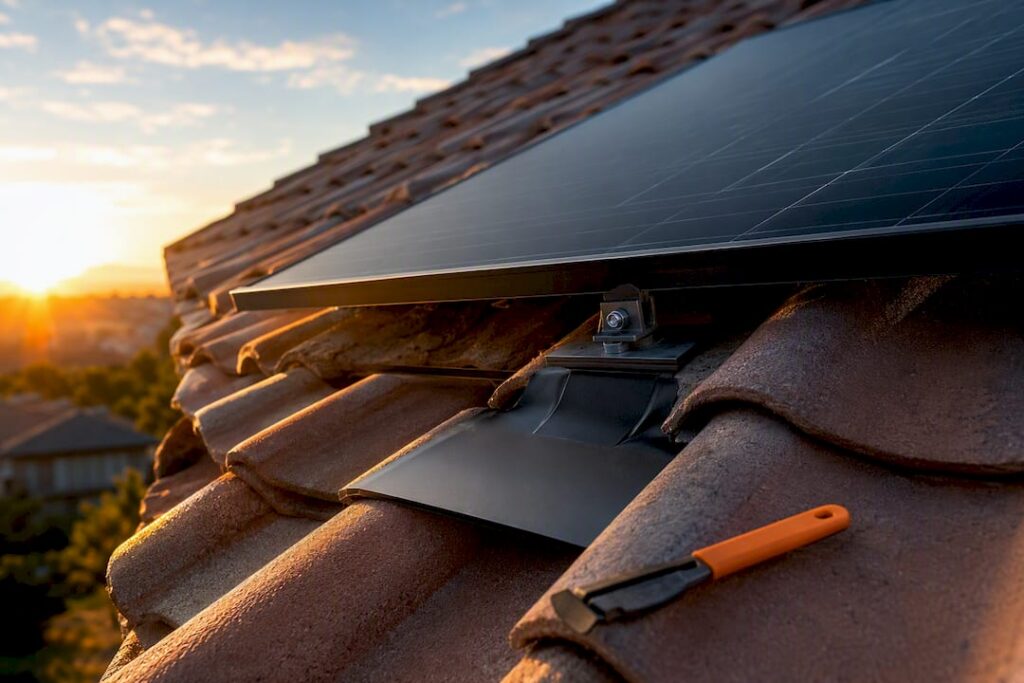
Yes, you can install solar on a tile roof, and it holds up just as well as any other roof type when the crew uses the right hardware. For a retrofit on an existing roof, rack-mounted panels with tile hooks and three-course flashing are the standard, proven approach. If you’re already replacing your roof, integrated solar tiles are worth a look instead.
TL;DR:
- Rack-mounted systems are usually more cost-effective and quicker to install if your roof has at least 15 years of lifespan remaining.
- A thorough roof assessment should verify tile material, structural condition, rafter location, and replacement needs before installation begins.
- Waterproofing quality relies on three-course flashing or tile-replacement pans, with the former blending in better but requiring more labor.
- Integrated solar tiles are best if you are re-roofing or need a seamless appearance, while rack-mounted panels suit existing roofs with maximum energy output focus.
- Longer installation times arise from additional tile handling, flashing complexity, and site accessibility, which impact overall costs and bid comparisons.
Table of Contents
- What Are Your Tile Roof Solar Installation Options?
- How Do You Assess a Tile Roof Before Installing Solar?
- What Hardware Keeps a Tile Roof Solar Install Leak-Free?
- Should You Choose Integrated Solar Tiles or Standard Panels?
- How Long Does a Tile Roof Solar Install Take?
- What Maintenance Protects Your Roof After Solar Goes In?
- How Alpha Solar Solutions Handles Tile Roof Solar Installations
- When Does Hiring a Tile Roof Solar Specialist Make Sense?
- Ready to Move Forward on Tile Roof Solar?
- Where to Find More Technical Detail
- Sources
What Are Your Tile Roof Solar Installation Options?
You have two real paths to putting solar on a tile roof, and they solve different problems.
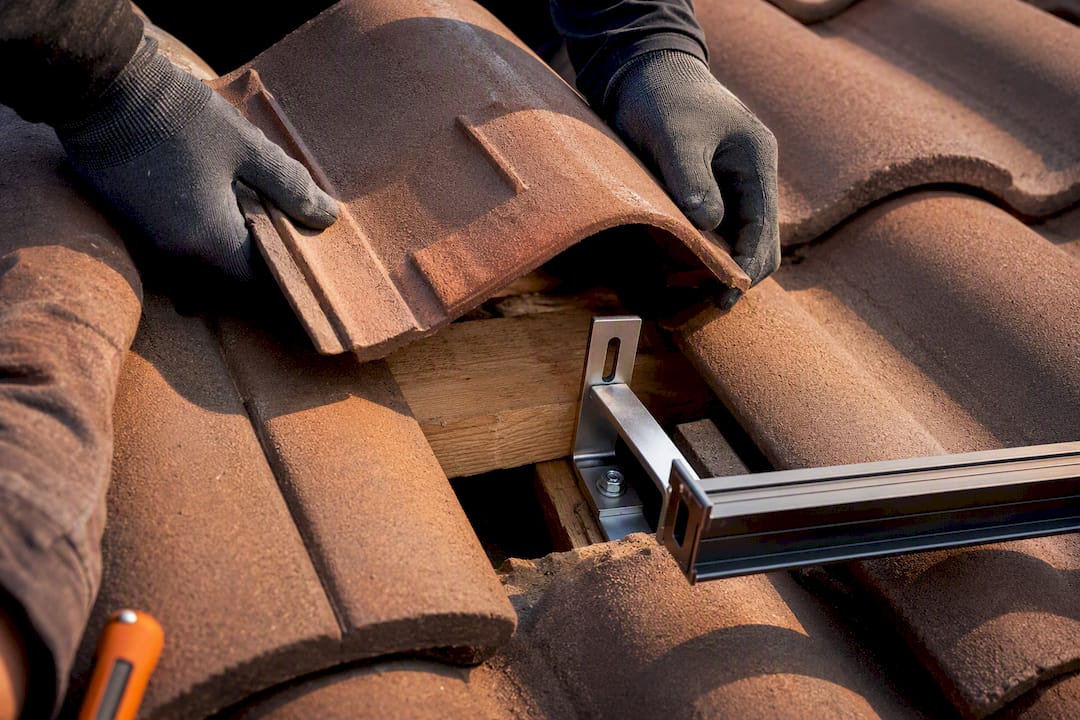
Rack-mounted systems with tile-bypass hooks sit on top of your existing clay or concrete tiles. A hook slides under the tile and attaches to the rafter below, and the panel mounts to a rail on top of that hook. This is the route most homeowners take because it works with the roof you already have.
Integrated solar tiles, often called building-integrated photovoltaics or BIPV, replace your roofing material entirely. Instead of adding hardware on top of tiles, the solar tile is the roof.
Here’s how they stack up:
- Cost: Rack-mounted is cheaper upfront since you keep your existing roof. Integrated tiles cost more because you’re buying a new roof and a solar system together.
- Efficiency: Rack-mounted panels tilt for better sun exposure and stay ventilated underneath, which helps performance. Integrated tiles sit flush and run warmer, which trims output slightly.
- Appearance: Integrated tiles look like a roof, not an add-on. Rack-mounted panels are visible.
- Disruption: Rack-mounted work happens in days. Integrated tile installs mean a full roof tear-off.
If your roof has 15 or more years of life left and you’re not touching the tiles, rack-mounted almost always makes more sense. If you’re already re-roofing, or your HOA has strict aesthetic rules, integrated tiles deserve a serious look.
How Do You Assess a Tile Roof Before Installing Solar?
A good contractor doesn’t just show up with panels and start drilling. They walk your roof first, and you should know what they’re checking for.
- Identify the tile material. Clay tiles are more brittle and crack more easily than concrete tiles, which changes hook selection and how carefully the crew has to walk your roof.
- Check the underlayment. If the felt or synthetic barrier underneath your tiles is degraded, water can get behind flashing even when the flashing itself is installed correctly.
- Locate your rafters. Hooks need to land on solid framing, not just decking, so a rafter map (sometimes called a stud map) gets built before a single hook goes in.
- Look for hidden structural damage. Sagging, rot, or previous water intrusion around vents and valleys often hides under tiles until someone lifts them.
- Decide if repairs or a comp-out are needed first. If more than a handful of tiles are cracked or the underlayment is failing, it’s cheaper to fix that before mounting anything.
- Confirm whether a PE-stamped structural plan is required. Many jurisdictions require an engineer-stamped attachment plan for roof-mounted solar, especially on older homes or in high-wind zones.
Skipping this step is the single biggest reason solar installs on tile roofs go wrong later.
What Hardware Keeps a Tile Roof Solar Install Leak-Free?
This is where a decent install and a great one part ways, and it’s worth pushing your contractor for specifics here rather than taking “we’ve done this before” at face value.
Tile hooks need at least 5 millimeters of clearance so they don’t put pressure on the tile itself, and adjustable trusshook-style systems let installers fine-tune that fit across an uneven roof plane, according to installation manuals from mounting-system manufacturers like Esdec’s ClickFit EVO system. Hardware grade matters too: A2 stainless works fine inland, but A4 stainless or hot-dip galvanized hardware holds up far better anywhere near salt air.
Waterproofing comes down to one of two methods:
- Three-course flashing builds up layers of flashing and roofing material in sequence around each mounting point, matching how a roofer would flash a vent or chimney. It’s slower but blends in visually and is considered the industry standard for clay and concrete tile roofs.
- Tile-replacement flashing pans swap a full tile for a metal pan built to shed water around the mount point. It’s faster and more consistent across a crew, though the visible metal can clash with HOA or historic-home requirements.
Screws must be installed with torque as specified by manufacturers, and hook spacing should adhere to rail manufacturer’s load requirements for structural integrity. Most leaks blamed on solar panels actually trace back to improper flashing or a single bead of caulk standing in for real flashing work, not the hardware itself.
Pro Tip: Ask your installer which flashing method they’re using and why, before you sign anything. If they can’t explain the tradeoff between three-course flashing and a replacement pan for your specific tile profile, keep shopping.
Should You Choose Integrated Solar Tiles or Standard Panels?
Integrated solar tiles make sense in a narrower set of situations than the marketing suggests. Because BIPV replaces your roofing material outright, it’s really a roofing decision with a solar system attached, not the other way around. Systems like Tesla’s Solar Roof mix power-producing and non-power-producing tiles into a single interlocking roof assembly, and that flush design trades some ventilation and efficiency for a cleaner look.
Here’s when each option fits:
- Choose integrated tiles if: you’re already replacing the roof, your HOA restricts visible panel hardware, or a seamless appearance matters more than squeezing out maximum output.
- Choose rack-mounted panels if: your existing roof has years of life left, you want the lowest upfront cost, or maximum energy production is the priority.
- Ask manufacturers about: warranty length on both the roofing and power-producing components separately, since some BIPV warranties split the two, and about historical durability data since these products have a shorter track record than conventional panels.
How Long Does a Tile Roof Solar Install Take?
Tile roofs take longer to work with than asphalt shingle, generally running 30% to 50% longer per crew-day because of tile handling, hook placement, and flashing detail work, based on industry cost and labor guidance. That extra time shows up in your quote, and it’s worth knowing why.
Several factors drive the cost difference between bids:
- Hook type: Universal hooks cost less than adjustable trusshook systems, but adjustable hooks reduce tile cutting and breakage.
- Flashing method: Three-course flashing takes more labor hours than replacement pans.
- Tile replacement needs: Cracked or brittle tiles found during assessment add material and labor cost.
- Site accessibility: Steep pitches, multiple stories, and tight roof access all add time.
When comparing bids, ask each contractor which flashing method they’re quoting, how many spare matching tiles they’re including, and whether their price already accounts for tiles they expect to break during installation. A bid that’s silent on all three is usually a bid that’s missing something.
What Maintenance Protects Your Roof After Solar Goes In?
A properly installed system needs a yearly visual inspection, plus a check after any major hailstorm or high wind event common in Texas.
- Have installers check flashing seals and hook tightness during scheduled inspections, not just panel output.
- Keep a stock of matching spare tiles on hand, since discontinued profiles can be hard to source years later.
- Ask your installer for a written protocol on what happens if a tile cracks during future panel service or cleaning.
- Get contract language specifying the installer covers workmanship-caused leaks and tile damage for a defined period, separate from the panel manufacturer’s warranty.
That last point is the one homeowners skip most often, and it’s the one that saves you the most money if something goes wrong two years down the road.
How Alpha Solar Solutions Handles Tile Roof Solar Installations
The roof, not just the panels, should be the starting point for every tile roof job. That means roof prep and inspection come before any design gets finalized, and removal or reinstallation services should be available if your tile roof needs work mid-system.
A typical installer checklist looks like this:
- Full roof inspection, including tile material identification and underlayment condition.
- Rafter mapping to confirm every hook lands on solid framing.
- Hook and flashing method selected based on your specific tile profile, not a one-size-fits-all default.
- A tile replacement plan built in before installation day, not discovered mid-project.
- Warranty-conscious installation practices designed to keep both your roofing and system warranties intact.
When Does Hiring a Tile Roof Solar Specialist Make Sense?
Brittle clay tiles, complex roof profiles, or coastal corrosion exposure all call for a specialist over a general installer. Crews unfamiliar with tile work crack more tiles and leave more leak points than they should, and that risk often voids the roof warranty you’re trying to protect. Check your tile’s age, your roof’s remaining lifespan, and your contractor’s tile-specific experience before signing anything.
— Anthony
Ready to Move Forward on Tile Roof Solar?
If you’ve read this far, you already know the difference between a crew that treats your tile roof as an afterthought and one that treats it as the foundation of the whole system. A reliable installer should provide roof-first assessment, hook and flashing choices matched to your actual tile profile, and paperwork that protects your roof warranty instead of quietly voiding it.

Every inspection includes a rafter map, a documented flashing method recommendation, and a straightforward site plan so you know exactly what you’re approving before work starts. If your roof is already showing wear, our team also handles panel removal and reinstallation so a re-roof doesn’t turn into a two-contractor headache. Ready to see what your roof actually needs? Request an inspection through our residential solar installation page and get a real answer, not a generic estimate.
Where to Find More Technical Detail
For deeper technical reading, the ClickFit EVO trusshook manual covers hook installation sequencing, the clay tile flashing guide from SurgePV walks through waterproofing detail, and Tesla’s Solar Roof construction guide documents integrated tile assembly requirements. Homeowners weighing broader roofing tradeoffs may also find this overview of energy-efficient roofing options useful before committing to a direction.
Sources
- Solar Panels on Clay Tile Roof: Complete Guide to Hooks, Flashing & Waterproofing 2026 | SurgePV
- How Solar Is Installed On Clay Tile Roofs
- Voltaic Solar Roof Tiles | Integrated Solar Roof for Extreme Weather
- SOLAR ROOF (Tesla) — Design and construction guide
Recommended
- Keep Your Roof Warranty With Solar: One Installer Prevents Voided Claims
- Roof preparation for solar: requirements, costs, and best practices
- 7 Things Metal Roof Homeowners Must Bring for Accurate Solar Quotes
- Roof Replacement with Solar Panels? Here’s Everything You Need to Know About Removing and Reinstalling Your Solar System