
TL;DR:
- Understanding what a solar inverter does helps homeowners maximize system performance and avoid costly mistakes. It converts DC electricity from panels into usable AC power, manages MPPT for optimal energy output, and supports grid compatibility and system monitoring. Choosing the right inverter type, quality, and features ensures higher energy yields, system longevity, and future integration with batteries and smart grid technologies.
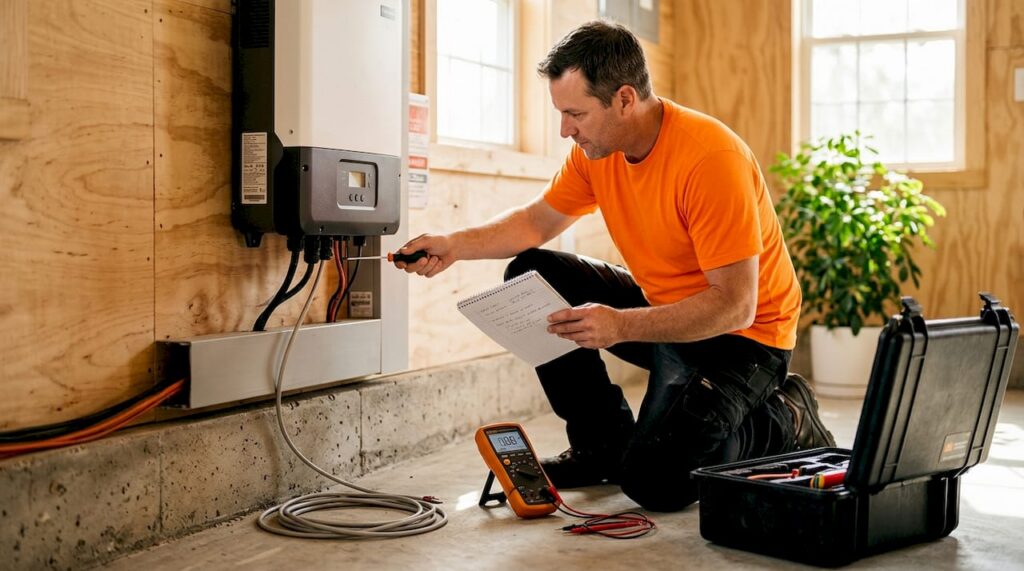
If you are researching solar energy for your home, understanding what a solar inverter is will save you from making costly decisions later. Solar panels generate electricity, but not the kind your refrigerator, TV, or air conditioner can actually use. Your home runs on alternating current (AC), while solar panels produce DC electricity, a completely different type. The solar inverter sits between your panels and your home, handling the conversion and a lot more. Getting this part right shapes how well your entire solar system performs.
Table of Contents
- Key Takeaways
- What a solar inverter does: the full picture
- Types of solar inverters for your home
- Real benefits of having the right solar inverter
- Choosing and maintaining your inverter wisely
- Smart inverters and the bigger picture
- My honest take on what homeowners get wrong
- Get the right inverter for your San Antonio home
- FAQ
Key Takeaways
| Point | Details |
|---|---|
| Inverters convert power type | Solar panels produce DC electricity; the inverter converts it to AC power your home can use. |
| MPPT maximizes your energy output | The inverter continuously adjusts to changing sunlight to extract the most power from your panels. |
| Three main types exist | String inverters, microinverters, and hybrid inverters each suit different home setups and budgets. |
| Smart inverters do more than convert | Modern inverters monitor performance, report errors, and support grid stability automatically. |
| Inverter quality affects your whole system | A low-quality inverter can limit energy output and shorten the lifespan of your solar investment. |
What a solar inverter does: the full picture
Most people assume the inverter is a simple box that flips a switch between DC and AC. That picture misses about half of what actually happens.
Inverters convert PV output from direct current to grid-compatible alternating current, but they also handle a range of auxiliary functions including performance monitoring and error reporting. Inside the inverter, transistors chop the DC current at high frequency, then charge and discharge inductors and capacitors to shape the output. The result is an AC wave that matches the voltage and frequency your home’s wiring and appliances expect.
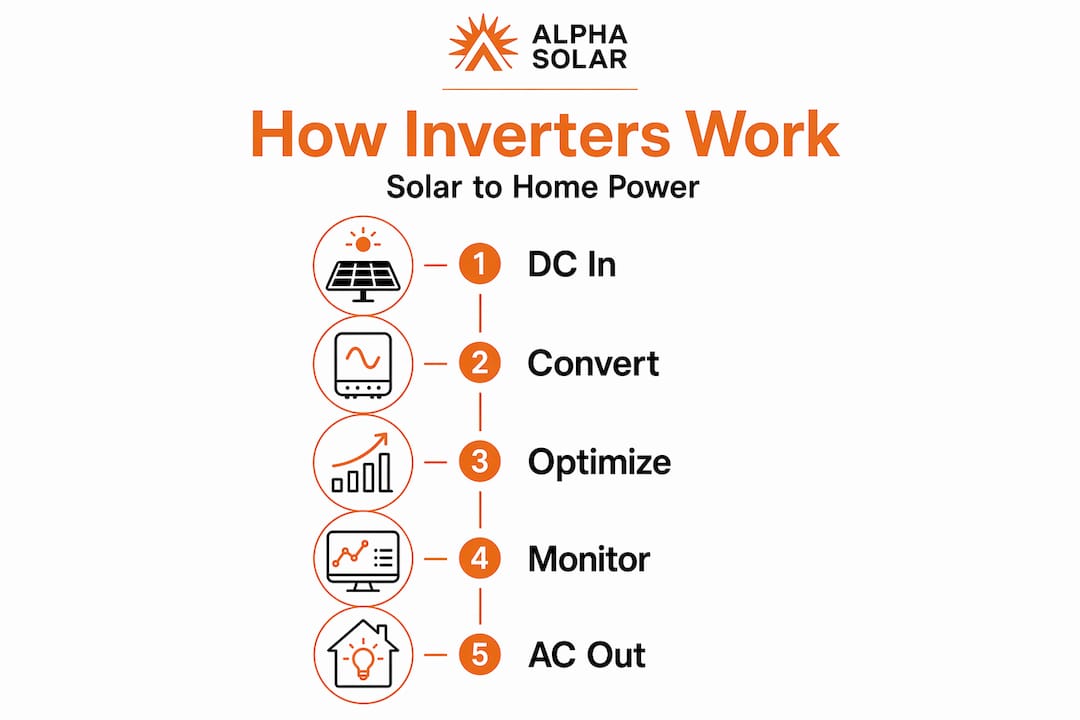
Here is where it gets more interesting. Switch-mode power conversion introduces voltage ripple and harmonic distortion, both of which need to be filtered out before the power reaches your outlets. A well-built inverter includes extra circuitry specifically to clean up that output. A cheap one may skip steps, which means lower power quality and potential long-term strain on your appliances.
Maximum power point tracking (MPPT)
One of the most valuable things your inverter does is something you never see. MPPT adjusts your PV operating point constantly, responding to changes in sunlight intensity and panel temperature throughout the day. A cloud passes overhead, the sun angle shifts, one panel heats up more than another. The inverter recalculates and adjusts in real time to keep your system producing as much power as possible.
This is not a static setting. MPPT must react dynamically to environmental changes, which means the inverter relies on intelligent algorithms rather than fixed values. This is why inverter choice directly affects how many kilowatt hours your system actually produces over a year.
- Conversion efficiency: How much of the DC input becomes usable AC output
- MPPT efficiency: How effectively the inverter keeps your panels operating at peak output
- Monitoring capability: Real-time tracking of energy production and system status
- Error detection: Automatic alerts when something in the system is underperforming
Pro Tip: When comparing inverter specs, look at both conversion efficiency and MPPT efficiency together. A unit with 98% conversion efficiency but poor MPPT can actually underperform one rated slightly lower on conversion alone.
Types of solar inverters for your home
Choosing between inverter types is one of the most impactful decisions in your solar installation. Each type works differently and fits different homes.
| Inverter Type | Best For | Relative Cost | Key Advantage |
|---|---|---|---|
| String inverter | Simple rooftops, minimal shading | Lower | Proven reliability, easy to service |
| Microinverter | Complex rooftops, mixed shading | Higher | Panel-level optimization, detailed monitoring |
| Hybrid inverter | Battery storage integration | Moderate to high | Manages solar, battery, and grid together |
String inverters
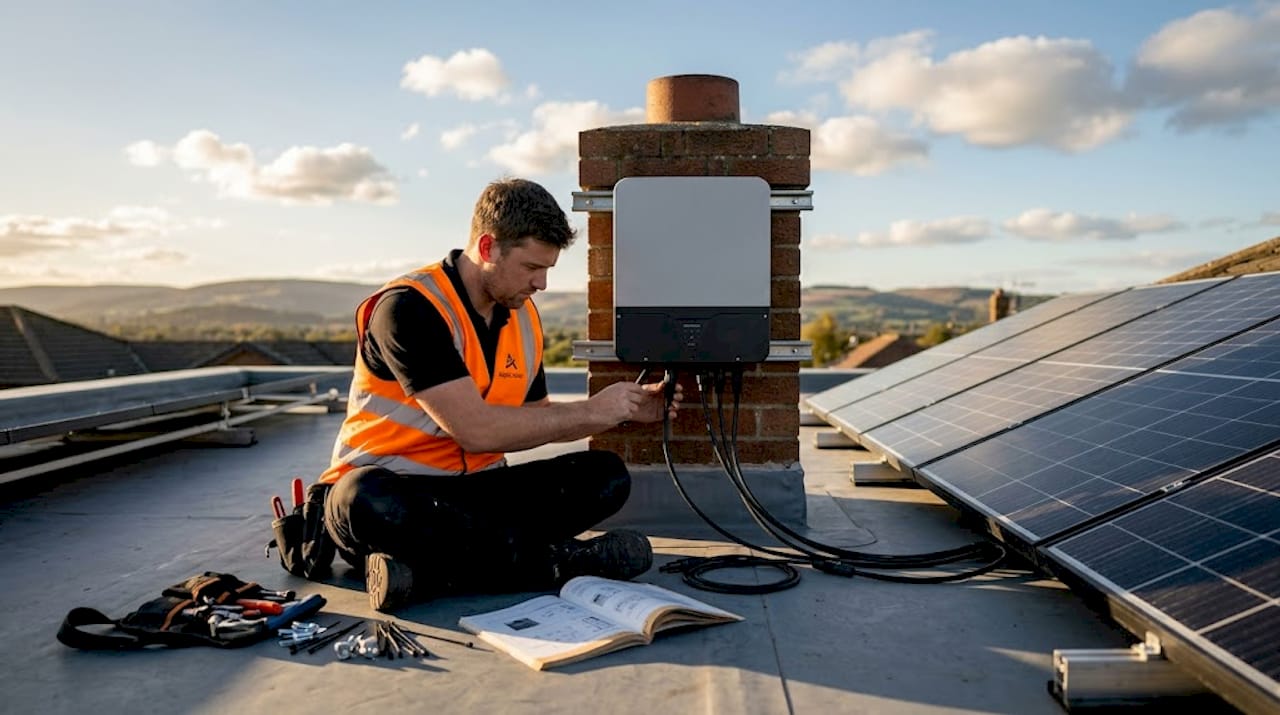
A string inverter connects a series of panels together as one “string” and processes all of that output centrally. This is the most common setup in residential solar and works very well on rooftops with a single orientation and little to no shading. If one panel in a string underperforms, the whole string output drops to match it. That is the main limitation.
Microinverters
Microinverters attach directly to each individual panel. Every panel operates independently, so shading on one panel has no effect on the rest. You also get panel-level monitoring, which means you can see exactly how each panel is performing. The tradeoff is higher upfront cost and more components on the roof. For homes with multiple roof angles or trees nearby, the performance gains often justify the price.
Hybrid inverters
A hybrid inverter manages your solar panels, a battery storage system, and the grid all at once. It decides when to charge the battery, when to send power to your home, and when to draw from or send back to the grid. If adding battery backup is part of your plan now or in the future, a hybrid inverter is worth serious consideration from the start. You can learn more about selecting the right components for your specific home setup when reviewing panel and inverter options together.
Real benefits of having the right solar inverter
The inverter is not just a technical requirement. Getting the right one has direct, measurable effects on what you get out of your solar system every single day.
-
Your home can actually use solar power. Without the inverter, the electricity your panels produce cannot run a single appliance. The conversion from DC to AC is what makes solar energy practical for residential use.
-
You can participate in net metering. When your system produces more power than you use, the excess can flow back to the grid. Your utility credits you for that power. Your inverter makes this possible by synchronizing your output with the grid’s frequency and voltage.
-
Your energy yield is higher, year-round. MPPT functionality means your system does not just sit at a fixed output level. It tracks the best possible operating point continuously, which translates to more kilowatt hours produced over the life of your system.
-
You get visibility into your system’s performance. Modern inverters include built-in monitoring that lets you and your installer track energy production and catch issues early. Logging into an app and seeing your real-time generation is one of the most satisfying parts of owning solar.
-
You are ready for batteries and smart home integration. With a hybrid inverter, you can add battery storage later without replacing the entire inverter. Your solar system grows with your needs instead of requiring a costly overhaul.
Choosing and maintaining your inverter wisely
The inverter is often the first component to show problems in a solar system. Knowing what to watch for keeps your system producing at its best.
Inverter-related issues can cause flat or dropping production during certain conditions, and the only reliable way to catch these problems early is through consistent monitoring. Most modern inverters come with a companion app or web portal. Check it regularly, especially after storms or extreme heat.
- Watch for error codes. Your inverter will flag faults before they become full failures. Do not ignore alerts.
- Check your production baseline. If a normally sunny day produces significantly less than expected, that is worth investigating.
- Verify warranty terms before buying. Quality inverters typically carry 10 to 25 year warranties. Shorter warranty periods often reflect lower build quality.
- Plan for expansion. If you might add panels or a battery later, confirm your inverter supports that capacity now. Selecting inverters involves grid-integrated control capabilities and local utility requirements, not just hardware specs.
Pro Tip: Ask your installer what inverter monitoring platform they support and whether they receive alerts on your behalf. A good installation partner watches your system, not just the hardware they bolt to your wall.
You can also explore solar system monitoring in more depth to understand how tracking your inverter’s output protects your investment over time.
Smart inverters and the bigger picture
Your inverter is not just a device in your home. It is part of a larger electrical network, and this is where modern inverter technology becomes genuinely interesting.
Advanced inverters include smart technologies that support grid stability by monitoring grid status, receiving operation instructions, and making decisions autonomously. As more homes in neighborhoods like San Antonio install solar, the collective impact on the local grid grows. Smart inverters help manage that growth by regulating voltage and frequency at the point of connection.
This matters to you for a practical reason. Utilities in many states now require smart inverter compliance before approving grid interconnection for new solar systems. Choosing a smart inverter-compatible system from day one avoids approval delays and future upgrade costs.
“Smart inverters are critical to integrating high solar penetration safely on the grid and are becoming a standard in residential systems.” — NREL, Advanced Inverter Functions
The shift toward smart inverters also future-proofs your system. As grid requirements evolve and home energy management becomes more automated, an inverter with communication capabilities positions your home to take full advantage of those changes rather than needing a replacement.
My honest take on what homeowners get wrong
I have worked with a lot of homeowners on solar installations, and one pattern comes up repeatedly. People spend hours comparing panel brands and barely ten minutes on the inverter. That is backwards.
In my experience, the inverter is where real system differences show up over time. Two homes with the same panels can produce meaningfully different annual energy outputs simply because one has a better inverter with more effective MPPT. The panel efficiency numbers in brochures assume ideal conditions. The inverter determines how close to ideal your system operates on every ordinary day.
I have also seen homeowners skip smart inverter features to save a few hundred dollars, then face utility interconnection issues that delay their system going live by weeks. The savings evaporate quickly when you factor in that delay.
My advice: treat the inverter as the brain of your solar system. Give it the same weight you give the panels. Ask your installer specific questions about MPPT performance, monitoring features, and compatibility with batteries. The answers will tell you a lot about both the inverter and the installer.
— Anthony
Get the right inverter for your San Antonio home
At Alphasolarsa, we design every residential solar system around your home’s specific energy profile, roof layout, and future goals. That means the inverter we recommend is matched to your panels, your usage patterns, and whether battery storage is part of your plan. We do not take a one-size-fits-all approach because no two homes are the same.
If you are ready to stop guessing and get a system designed to perform, our team is here to walk you through every component. Explore our residential solar installation services or reach out directly to schedule a consultation. We cover everything from system design and inverter selection to installation, monitoring setup, and long-term support.
FAQ
What is a solar inverter in simple terms?
A solar inverter converts the direct current (DC) electricity generated by your solar panels into alternating current (AC) electricity that your home’s appliances and wiring can use.
How does a solar inverter work?
The inverter uses transistors to rapidly switch DC current, then shapes it into a smooth AC wave that matches grid voltage and frequency. It also uses MPPT algorithms to continuously maximize power output from your panels.
What is the difference between string and microinverters?
A string inverter processes output from a group of panels centrally, while microinverters attach to each panel individually for panel-level optimization. Microinverters perform better when shading or multiple roof angles are involved.
What size solar inverter do I need for my home?
Your inverter capacity should match your total panel array output, typically expressed in kilowatts. An installer will size the inverter based on your panel count, energy usage, and whether you plan to add batteries.
How do I know if my solar inverter has a problem?
Most modern inverters display error codes and send alerts through a monitoring app. Inverter-related troubles show up as flat or inconsistent production profiles, which you can identify by comparing expected versus actual daily output.