
TL;DR:
- Most homeowners should upgrade their aging solar systems to recover energy efficiency and meet increasing household demands. Modern panels and inverters outperform older technology, with payback periods typically lasting 5 to 7 years. Regular system assessments and targeted upgrades ensure optimal performance and long-term savings.
If you’re asking why update your solar system, you’re already ahead of most homeowners who simply assume their panels are doing fine. The truth is more nuanced. Your system may still be producing power, but it’s likely producing less than it did when installed, and far less than a modern system would in the same roof space. Technology has moved fast. The inverters, panels, and monitoring tools available today are in a different league from what was standard even a decade ago. This guide breaks down the real reasons to upgrade solar, what it costs, and how to decide if the timing is right for you.
Table of Contents
- Key takeaways
- Why updating your solar system matters over time
- What newer technology actually delivers
- Life changes that make upgrading a practical necessity
- Compatibility challenges and how to solve them
- The cost side: what upgrades actually return
- My honest take on upgrading your solar system
- Ready to see what your system can do?
- FAQ
Key takeaways
| Point | Details |
|---|---|
| Panels degrade slowly but steadily | Output loss compounds over time, and upgrading recovers meaningful energy production. |
| New panels deliver dramatically more power | Modern panels exceed 22% efficiency versus roughly 15% a decade ago, more output from the same roof. |
| Lifestyle changes often outpace old system sizing | Adding an EV, a home office, or a battery requires upgrading capacity to match new energy demands. |
| Mixing old and new panels requires planning | Without micro-inverters or power optimizers, mismatched panels reduce your whole system’s output. |
| Upgrades typically pay back in 5 to 7 years | Rising utility rates and higher self-consumption make the financial case stronger each year. |
Why updating your solar system matters over time
A lot of homeowners assume solar panels either work or they don’t. The real picture is more gradual. Solar panels degrade at roughly 0.59% per year on average, based on a 16-year study tracking over one million installations. That’s slower than older estimates suggested, which is good news. But the math still adds up.
After 15 years, a system that once produced 10 kilowatt hours (kWh) per day is producing closer to 9.1 kWh. After 20 years, you’re looking at 8.8 kWh. On a monthly electric bill, you feel that difference, especially as utility rates keep climbing.
Here’s what matters when evaluating degradation:
- Heat and pollution accelerate wear on panels. San Antonio’s intense summer heat puts more stress on panels than cooler climates, making local degradation rates worth monitoring.
- Sudden output drops usually signal a failing component like a blown microinverter or a shading issue, not gradual degradation. These need repair, not necessarily full replacement.
- Age of the inverter matters as much as the panels. Inverters typically last 10 to 15 years. If yours is approaching that range, the inverter is often the first thing to address.
Understanding the difference between slow degradation and sudden failure helps you make smarter decisions. Degradation is predictable. You can plan and budget around it. Sudden failures are where deferred solar panel maintenance tends to cost you the most.
What newer technology actually delivers
This is where the case for upgrading gets genuinely exciting. Modern solar panels aren’t a modest improvement over what was available 10 years ago. They’re a substantial leap.
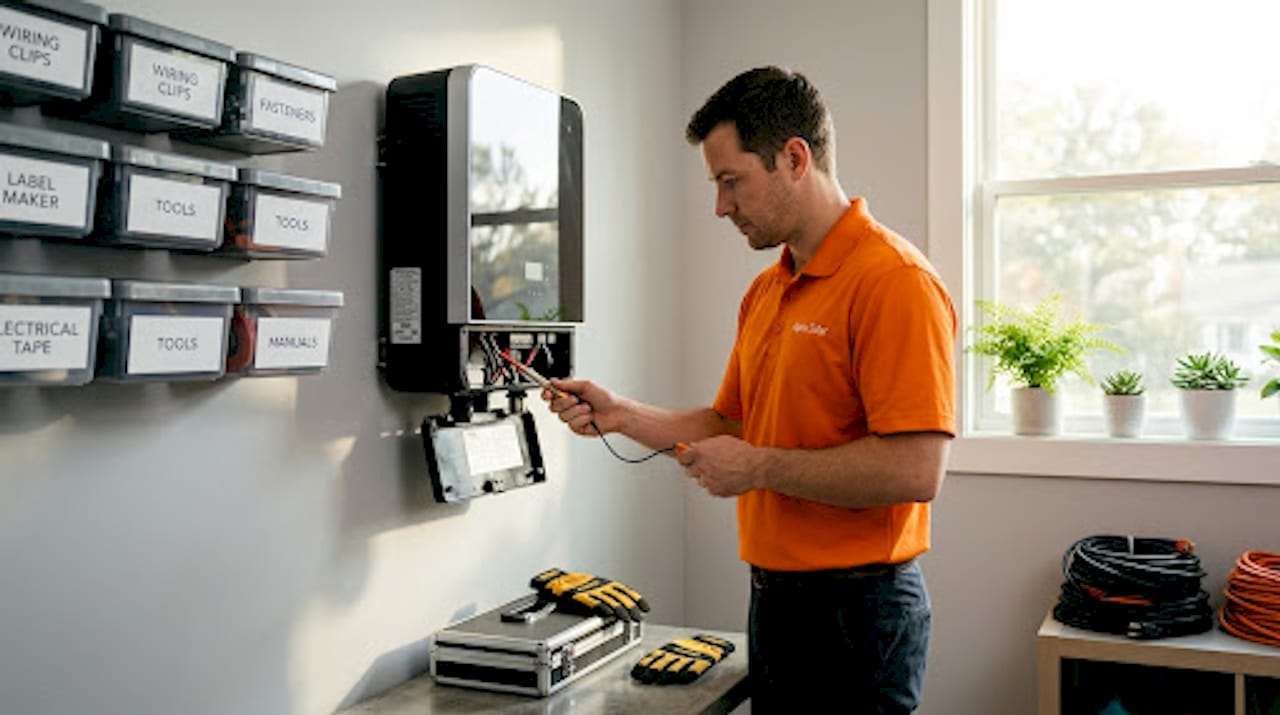
New panels exceed 22% efficiency compared to roughly 15% typical of panels installed a decade ago. In practical terms, that means the same roof space generates significantly more electricity. Bifacial modules, which capture light reflected off the roof surface as well as direct sunlight, can add up to 20% more energy without using any additional space.
The benefits extend well beyond the panels themselves:
- Smarter inverters now include app-based monitoring, allowing you to see real-time production data, catch underperforming panels, and schedule your biggest energy draws around peak solar hours.
- Smart monitoring tools in new inverters provide real-time performance data and remote management, which means issues get caught early before they drain your output for weeks unnoticed.
- Better warranties come standard with modern systems. Newer components carry longer performance guarantees, which directly reduces your exposure to unexpected repair bills.
- Grid-ready communications are now built in. 2026 inverter regulations require communications-capable devices for grid stability, and compliant inverters can even participate in Virtual Power Plants, programs where you earn credits for feeding stored energy back to the grid during peak demand.
Pro Tip: You don’t always need to replace your entire system to see major gains. Swapping out an aging string inverter for a modern hybrid inverter can unlock battery storage capability and app monitoring without touching your existing panels.
Even partial upgrades, like adding power optimizers to your existing string inverter system, can noticeably improve performance. You have more options than most homeowners realize.
Life changes that make upgrading a practical necessity
Technology improvements are compelling, but for many homeowners the real push to upgrade comes from changes in their own household, not just what’s happening in the solar market.
Increased home energy consumption from electric vehicles, remote work setups, and new appliances regularly pushes households well beyond what their original solar system was sized to handle. A system designed in 2014 for a household using 900 kWh per month may now be serving a household using 1,400 kWh per month, with an EV plugged in every night.
Common lifestyle triggers that drive upgrades include:
- Electric vehicle adoption. Home EV charging can add 300 to 500 kWh per month to your electricity use. A solar system that wasn’t sized for that load will leave you pulling heavily from the grid. If you’ve recently added an EV charger at home, revisiting your solar capacity is worth doing sooner rather than later.
- Backup power needs. Power outages, whether from storms or grid instability, push homeowners toward battery storage. Adding a battery to an older system is absolutely possible, but it often makes financial sense to upgrade the inverter at the same time to avoid compatibility limitations.
- Rising utility rates. Every kilowatt hour your upgraded system produces is a kilowatt hour you don’t buy from the utility. As rates continue to climb, the value of every additional unit of solar production goes up with them.
- Home additions or remodels. Adding a room, a pool, or an air conditioning unit changes your energy profile. Your original system may have been perfectly sized at install time and genuinely undersized today.
The bottom line is that your system was designed for a household that may no longer exist. Aligning your solar capacity to your current and future needs is one of the clearest reasons to upgrade solar that homeowners encounter.
Compatibility challenges and how to solve them
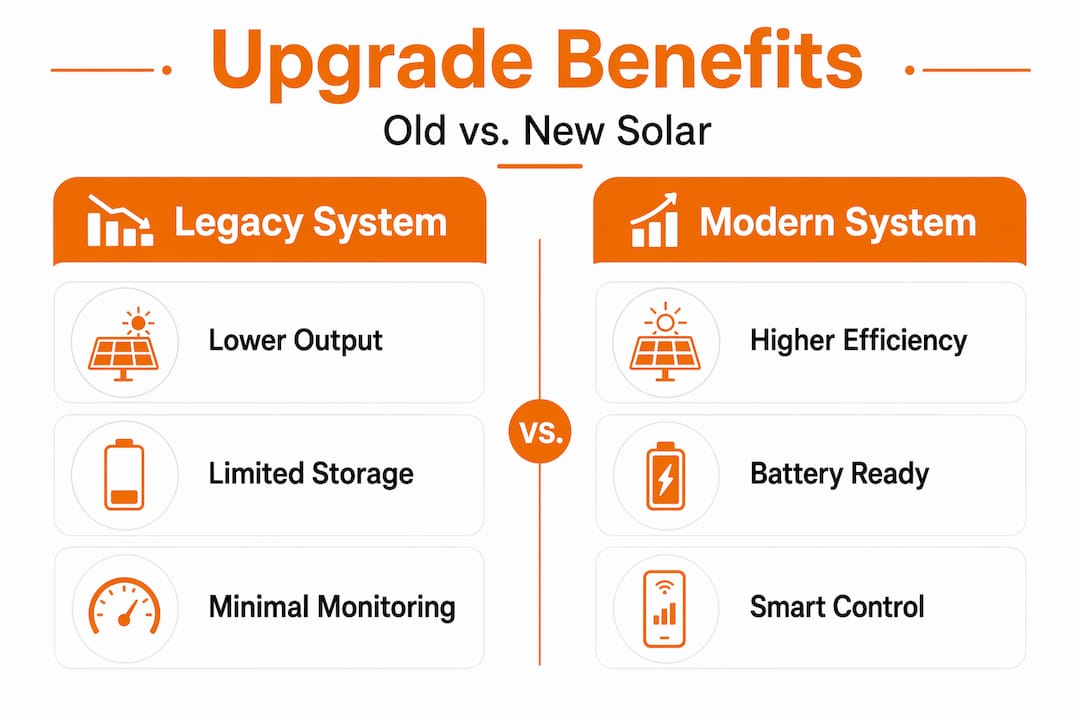
One of the most common concerns we hear from homeowners is this: “I want to add panels, but I already have an older system. Will that cause problems?” The honest answer is yes, it can, but there are solutions for every situation.
The core issue is panel mismatch. When you wire older, lower-efficiency panels together with newer, higher-efficiency ones in the same string (a string is just a series circuit of panels wired together), the newer panels get throttled down to match the output of the older ones. You lose the performance gains you paid for.
| Upgrade scenario | Challenge | Best solution |
|---|---|---|
| Adding new panels to old string inverter | Mismatch losses from voltage differences | Power optimizers or separate new string |
| Adding battery to legacy system | Old inverter not battery-compatible | AC-coupled inverter retrofit |
| Expanding capacity on aging system | Old inverter at maximum input | New hybrid inverter installation |
| Replacing failed panels mid-string | Efficiency gap between panel vintages | Micro-inverters on replaced panels |
Micro-inverters and power optimizers solve the mismatch problem by letting each panel operate independently. Instead of the weakest panel dragging down the whole string, every panel produces at its own peak level. This is particularly useful when you’re mixing older and newer panels.
For adding battery storage to a legacy system, AC-coupled inverters are often the best path. AC coupling means you add a new battery inverter that works alongside your existing solar inverter, without rewiring the whole system. It’s non-invasive and far less expensive than starting fresh.
Pro Tip: Before purchasing any new equipment, get a professional system audit. A qualified installer will identify your inverter’s input limits, check your roof capacity, and recommend the upgrade path that gets you the best return for your specific setup.
The cost side: what upgrades actually return
Understanding the financial case is often what moves homeowners from consideration to commitment. The numbers are more encouraging than many expect.
Upgrade payback periods typically range from 5 to 7 years depending on system size, the scope of the upgrade, and your current electricity rate. That range improves as utility rates rise, which in most markets they consistently do.
Here’s how the financial picture breaks down:
- Higher self-consumption means more of the solar energy you produce gets used in your home, reducing what you pull from the grid at full retail rates.
- Avoided repair costs matter more than they seem. Older systems require more frequent costly maintenance, and those repair bills add up. A modern system with better components and longer warranties reduces that exposure significantly.
- Home value gains are real and documented. An upgraded solar system is a selling point, and buyers who understand energy costs will pay for it. You can explore how solar affects home value on the Alphasolarsa blog.
- Proactive upgrades consistently outperform the “wait and see” approach financially. Repeated small repairs to aging equipment almost always cost more over a five-year period than a planned upgrade would have.
The right time to upgrade isn’t necessarily when your system fails. It’s when the combination of your energy needs, technology options, and financial situation makes the investment clearly worthwhile. For many homeowners in 2026, that moment is now.
My honest take on upgrading your solar system
I’ve worked with hundreds of homeowners who delayed upgrades because their system was “still working.” I understand the logic. If it’s producing power, why spend money on it?
Here’s what I’ve actually seen play out. The homeowners who wait tend to make the upgrade eventually anyway, just after paying for repairs they didn’t need to make, missing months of better output, and sometimes discovering that their old inverter is no longer compatible with any current battery product on the market. They end up spending more and getting less.
The homeowners who treat their solar system like a managed asset do better. They schedule regular checkups, pay attention to their monitoring data, and plan upgrades around their energy goals rather than around equipment failures. When they do upgrade, they’re choosing the best timing rather than reacting to a crisis.
My take is this: modern solar technology has advanced enough that an older system is a genuine opportunity, not just a liability. A well-planned upgrade can transform a system that’s slowly losing ground into one that covers your current energy load, supports your EV, handles a battery, and gives you visibility into every kilowatt hour. That’s not a minor improvement. That’s a fundamentally different energy situation for your household.
The conversation is worth having sooner than most homeowners think.
— Anthony
Ready to see what your system can do?
If you’ve been wondering whether your solar system is still pulling its weight, or if a lifestyle change has left it undersized, the team at Alphasolarsa can help you find out.
We specialize in residential solar upgrades across San Antonio, from full system replacements to targeted inverter swaps, battery additions, and panel expansions. We’ll start with a thorough system audit so you understand exactly what you have, what’s underperforming, and what upgrade path makes the most financial sense for your home. We also offer panel cleaning services to make sure your existing panels are performing at their best before any upgrade decisions are made. Getting started is straightforward. Reach out to schedule a no-pressure consultation and we’ll do the math with you.
FAQ
How often should you update your solar system?
There’s no single schedule, but most homeowners benefit from a system review every 5 to 7 years. Inverters typically need attention after 10 to 15 years, and any major lifestyle change like adding an EV should trigger a capacity review sooner.
Can you add new panels to an existing solar system?
Yes, but panel mismatch can reduce performance if old and new panels are wired in the same string. Micro-inverters or power optimizers solve this by letting each panel operate independently, protecting your overall system output.
What is the biggest sign your solar system needs an upgrade?
A steady rise in your electricity bill despite no change in usage habits is a strong signal. It often means your panels are degrading, your inverter is underperforming, or your household energy needs have grown beyond what your original system was sized to handle.
How much does upgrading a solar system typically cost?
Costs vary widely based on what you’re upgrading, but partial upgrades like a new inverter or adding panels are far less expensive than full replacements. Most upgrade scenarios have payback periods in the 5 to 7 year range when factoring in electricity savings and avoided repair costs.
Does upgrading solar panels increase home value?
Yes. An updated, higher-capacity solar system is a recognized home value driver. Buyers who understand energy costs will factor in a modern, well-performing solar system when making offers, particularly in markets with high utility rates.