
TL;DR:
- Proper roof assessment and replacement before solar installation can prevent costly future repairs.
- San Antonio roofs face faster aging due to heat and hail, requiring careful structural and material considerations.
- Bundling roof work with solar projects saves money and reduces project delays over the system’s lifespan.
Skipping roof prep before going solar is one of the most common and costly mistakes San Antonio homeowners make. A roof that’s too old, structurally weak, or made of the wrong material can turn a smooth solar installation into a project that costs thousands more than expected. In fact, panel removal and reinstallation alone can run between $1,500 and $23,000 when roof problems surface after the fact. This guide walks you through exactly what your roof needs before solar goes up, what everything costs, and how to make smart decisions that protect your investment for decades.
Table of Contents
- Assessing your roof before going solar
- Structural requirements: Ensuring your roof can support solar panels
- Choosing the right roofing material for solar longevity
- San Antonio permitting, inspection, and cost breakdowns
- Maximizing savings: Bundling roof and solar work
- What most homeowners don’t realize about prepping for solar in San Antonio
- Get expert roof and solar help for your San Antonio home
- Frequently asked questions
Key Takeaways
| Point | Details |
|---|---|
| Roof age is critical | A roof less than 10-15 years old best supports new solar panels and prevents costly rework. |
| Know the requirements | San Antonio roofs must meet structural and wind codes to safely handle solar systems. |
| Material matters | Metal roofs offer the best longevity and least hassle for solar installations in Texas climates. |
| Permitting costs add up | Expect $600-1,100 in local permitting and inspection fees before solar can go live. |
| Bundle for savings | Combine roof and solar work to avoid double labor costs and save $2,000 or more. |
Assessing your roof before going solar
Before a single solar panel touches your roof, you need an honest look at what’s already up there. This is the step most homeowners skip, and it’s the one that causes the most financial pain later.
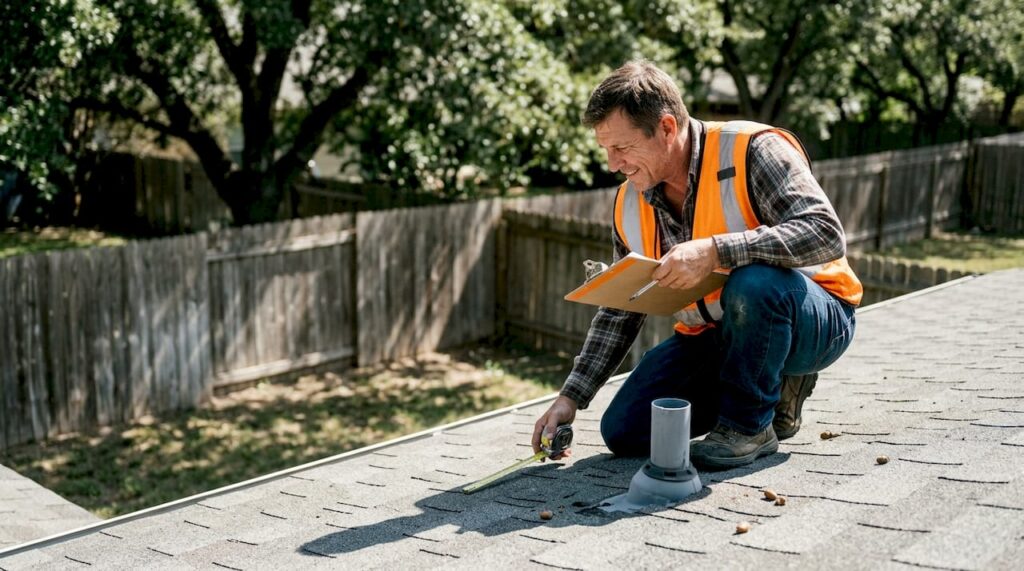
The biggest factor is age. Asphalt shingles last 15-25 years in Texas heat and hail conditions, which is shorter than the national average. If your roof is already 10-15 years old or showing signs of wear, replacing it before solar is strongly recommended. Installing panels on a roof that will need replacement in five years means paying for panel removal and reinstallation later, which ranges from $16,000 to $23,000 depending on system size.
Here are the warning signs that your roof is not solar-ready:
- Curling, cracking, or missing shingles anywhere on the surface
- Visible sagging in the deck or rafters when viewed from the attic
- Active leaks or water stains on interior ceilings
- Two or more layers of shingles, which adds weight and reduces mounting integrity
- Granule loss in gutters, which signals shingle deterioration
San Antonio’s climate adds extra pressure here. Summer heat regularly exceeds 100°F, and hail storms are a real seasonal threat. Both accelerate shingle aging faster than what manufacturers assume in their warranty timelines.
A professional inspection is not just helpful, it’s essential. Getting an NRCIA-certified roof inspection before committing to solar gives you a credentialed, unbiased assessment of whether your roof can support 25+ years of panel life. NRCIA (National Roof Certification and Inspection Association) inspectors are trained specifically to evaluate roofs for longevity, not just current condition.
For deeper roof condition guidance tailored to Texas homes, it helps to consult local roofing resources that understand our climate specifically.
Pro Tip: Replacing your roof one or two years before you planned, just to time it with your solar install, is almost always cheaper than paying for panel removal and reinstallation down the road. Think of it as getting both projects done for the price of one mobilization.
“A roof in poor condition is the single biggest threat to a solar system’s long-term performance. Panels lock moisture in, and a failing roof beneath them often goes undetected until major damage is done.”
Structural requirements: Ensuring your roof can support solar panels
Once you’ve assessed the age and condition, it’s time to look deeper at your roof’s strength and what’s legally required in San Antonio.
Solar panels aren’t lightweight. A typical residential system adds 3-5 lbs per square foot of dead load to your roof structure. Your roof must already be capable of supporting at least 20 lbs per square foot of live load (like snow or workers) and 10 lbs per square foot of dead load (permanent fixtures). Adding solar on top of a structurally borderline roof without an inspection is a code violation and a safety risk.
San Antonio also sits in a high-wind zone. Local building codes account for wind speeds of 115-130 mph in Texas regions, and your mounting hardware must be rated accordingly. This affects both the racking system design and how deeply fasteners penetrate your roof deck.
Here’s a quick breakdown of what to check structurally:
| Requirement | Standard | Notes |
|---|---|---|
| Live load capacity | 20 lbs/sq ft | Snow, workers, maintenance |
| Dead load capacity | 10 lbs/sq ft | Panels, racking, wiring |
| Wind speed rating | 115-130 mph | Texas high-wind zone |
| Rafter spacing | 16-24 inches on center | Affects mounting options |
| Roof deck integrity | No rot or delamination | Required for secure fastening |
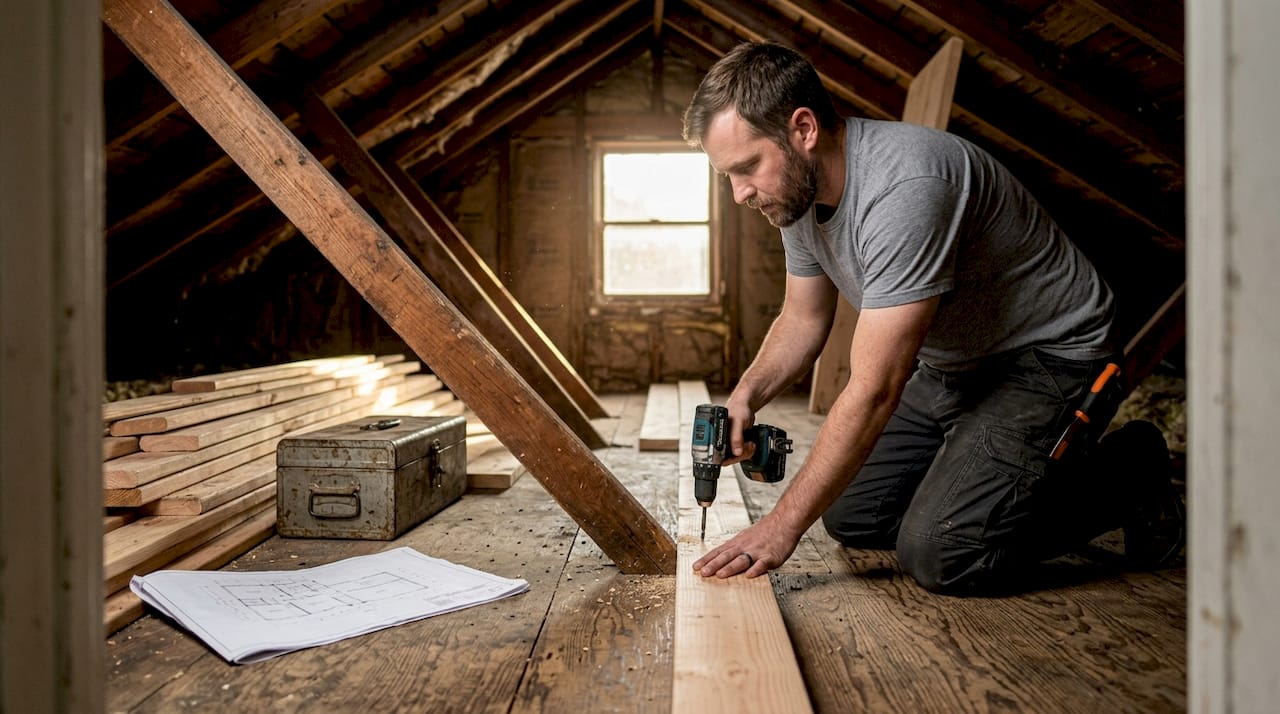
If your home is older or was built with undersized rafters, reinforcement may be needed. Rafter sistering costs $1,000-8,000, which involves attaching new lumber alongside existing rafters to increase load capacity. A structural engineer inspection runs $300-600 and is often required by the City of San Antonio before a permit is issued.
For homes where panels have previously been installed or removed, reviewing the structural and removal factors involved is a smart next step before committing to any new installation.
Pro Tip: Investing in a structural engineer’s report early in your planning can actually speed up your permit approval and prevent insurance disputes if a future weather event causes damage. It’s $300-600 well spent.
Choosing the right roofing material for solar longevity
Having checked your structure, let’s examine how your roof type shapes the cost, durability, and maintenance needs once solar is added.
Not all roofing materials work equally well with solar. The material affects how panels are mounted, how waterproofing is maintained, and how long the combined system will last without problems.
| Roof type | Lifespan | Solar compatibility | Notes |
|---|---|---|---|
| Standing seam metal | 40-70 years | Excellent | No penetrations needed, ideal pairing |
| Asphalt shingles | 15-25 years (TX) | Good if newer | Most common, must be in good condition |
| Tile (clay/concrete) | 30-50 years | Moderate | Requires special mounts, tiles can crack |
| Flat/low-slope | 10-20 years | Poor without upgrades | Drainage and racking issues |
| Wood shake | 20-30 years | Not recommended | Fire rating concerns with panels |
Metal roofs are the best pairing for solar longevity. With a lifespan of 40-70 years, a metal roof installed today will likely outlast your solar system’s 25-year warranty and then some. Standing seam metal in particular allows clamp-on mounting with no roof penetrations, which eliminates leak risk entirely.
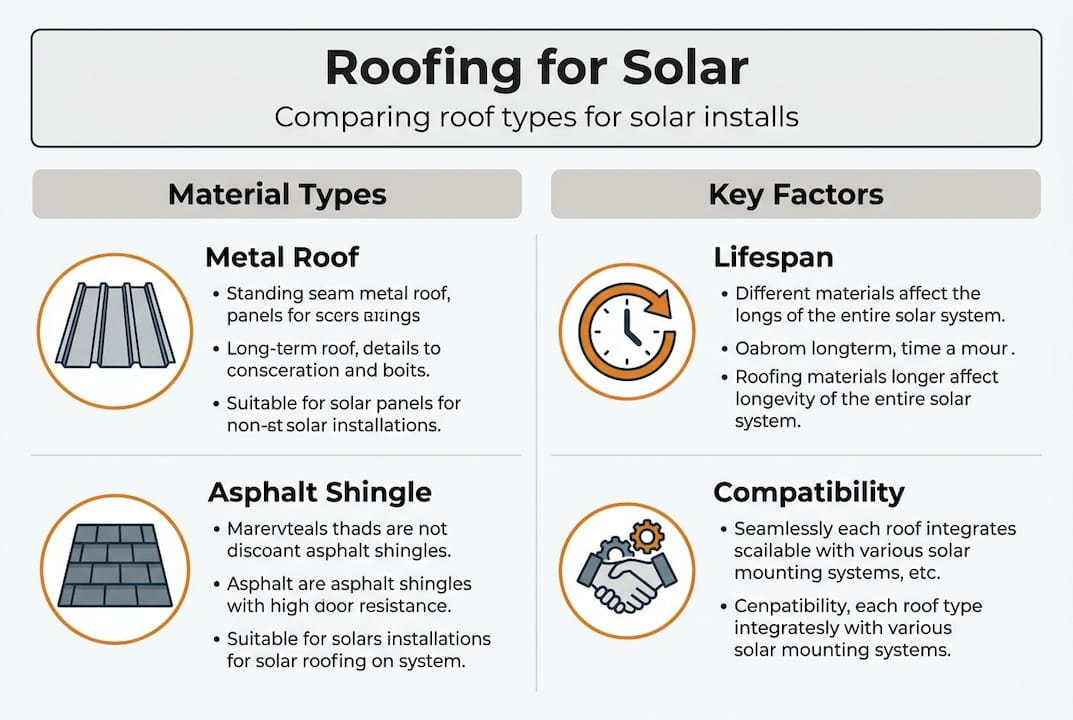
Asphalt shingles are the most common roof type in San Antonio and they work fine for solar, provided the shingles are newer and in solid condition. Flat or low-slope roofs require upgraded drainage systems and angled racking to position panels correctly, adding both cost and complexity.
One requirement that often surprises homeowners: your solar panels must be installed with a fire rating at least equal to your roof’s fire rating. This is a building code requirement, not optional. Make sure your installer confirms this before finalizing equipment choices.
For a full look at roofing and solar services available in San Antonio, you can review what a full-service approach covers from roof to system design.
Keeping panels clear of debris and buildup matters too. Dirty panels lose efficiency fast in Texas dust and pollen seasons. Keeping panels efficient through regular cleaning is part of protecting your return on investment.
If you want your system to hold up through Texas winters, preparing panels for weather is another layer of protection worth reviewing.
San Antonio permitting, inspection, and cost breakdowns
With the right roof and materials selected, you’ll need to navigate San Antonio’s permitting and inspection steps to stay compliant and on budget.
Permitting is not optional. San Antonio requires permits for all solar installations, and skipping this step can result in fines, forced removal, or problems when you sell your home. Here’s how the process typically works:
- Hire a licensed solar installer who pulls permits on your behalf.
- Submit plans to the City of San Antonio Development Services for review.
- Coordinate CPS Energy approval, San Antonio’s utility provider, for grid interconnection.
- Schedule a city inspection after installation is complete.
- Receive Permission to Operate (PTO) from CPS Energy before turning the system on.
Here’s what typical pre-installation costs look like for a San Antonio homeowner:
| Item | Estimated cost |
|---|---|
| City permit | $275-$525 |
| Structural engineer inspection | $300-$600 |
| Roof reinforcement (if needed) | $1,000-$8,000 |
| CPS Energy interconnection fee | Included in permit |
| Roof replacement (if needed) | $8,000-$18,000 |
San Antonio permits run $275-525, and the structural inspection adds $300-600 on top of that. Most homeowners budget $600-1,100 just for inspections and permits before installation begins.
“Permits plus structural inspection average $600-1,100 before installation begins. Budget for this upfront so it doesn’t catch you off guard.”
For up-to-date local permitting knowledge in San Antonio, it helps to work with an installer who already has a track record navigating CPS Energy and city requirements. For broader solar installation tips specific to Texas homes, our blog is regularly updated with practical guidance.
Maximizing savings: Bundling roof and solar work
Finally, if your roof needs work, timing matters. Here’s how strategic planning can turn what feels like two big projects into one that lowers your lifetime cost.
The biggest hidden cost in solar ownership is not the panels. It’s paying to remove and reinstall them when your roof eventually needs replacement. Panel removal and reinstallation costs $1,500-6,000 depending on system size, and that’s before any roofing work begins. If you wait until your roof is failing, you’re paying full price for both projects separately.
Bundling roof replacement with solar installation can save you $2,000-4,000 through shared labor and permit costs. Here’s how to make that work:
- Get your roof and solar quotes at the same time. Some companies handle both, which simplifies coordination.
- Schedule roofing first, solar immediately after. This minimizes the window your home is without panels.
- Share permit applications where possible. A combined project can sometimes use a single structural review.
- Negotiate labor costs together. Roofers and solar crews working in close sequence reduces mobilization fees.
- Ask about warranties that cover both systems. Some bundled providers offer unified workmanship warranties.
For a closer look at panel removal savings and how to plan this process, we cover the full scope of what’s involved in a coordinated removal and reinstall project.
Pro Tip: If a solar contractor is pushing you to install on a roof you’re unsure about, get a second opinion from an independent roofer. A contractor motivated to close a sale may not give you the full picture on your roof’s remaining life.
Strategic roof work timing can make a significant difference in your total project cost over a 25-year system life.
What most homeowners don’t realize about prepping for solar in San Antonio
Here’s what we’ve learned working with San Antonio homeowners through this process: the roof step is the one people most want to skip, and it’s the one that causes the most regret.
Most cost overruns we see in San Antonio solar projects trace back to a roof that wasn’t properly evaluated before installation. The city’s heat and hail conditions mean roofs here genuinely age faster than in other parts of the country. That changes the math on what counts as “good enough.”
The counter-intuitive truth is this: replacing a roof a few years earlier than planned almost always costs less than a premature panel removal forced by a failing roof. You pay once, instead of twice.
We also strongly recommend getting both a credentialed roofing professional and a solar professional to assess your home before you commit. These are two different trades with two different lenses. One contractor covering both perspectives often means something gets missed. Use our roofing insights as a starting point, and then bring in professionals who can give your specific home the attention it deserves.
Get expert roof and solar help for your San Antonio home
Understanding your roof’s requirements is the first step. The next step is working with people who know San Antonio’s climate, codes, and utility requirements firsthand.

At Alpha Solar Solutions, we handle residential solar installation from initial roof assessment through final CPS Energy approval. If your roof needs attention first, our removal and reinstallation services are designed to protect your existing system during the process. We also offer panel cleaning to keep your system producing at full capacity year-round. One team, one project, and a process built around getting your investment right the first time.
Frequently asked questions
How old can my roof be and still qualify for solar installation?
Most experts recommend your roof be less than 10-15 years old for solar in San Antonio, given the faster aging caused by Texas heat and hail. Older roofs with deterioration or multiple shingle layers should be replaced first.
Do I need a structural engineer before installing solar panels?
A structural engineer inspection is often required by the City of San Antonio and typically costs $300-600. It confirms your roof can safely handle the added weight of solar panels and mounting hardware.
What is the typical cost range for roof reinforcement in San Antonio?
Reinforcing roof rafters for solar installation, a process called rafter sistering, costs $1,000-8,000 depending on how many rafters need reinforcing and the extent of structural work required.
How can I avoid extra costs when replacing my roof with solar installed?
Bundling your roof replacement with your solar installation can save $2,000-4,000 through combined labor and shared permit costs, compared to treating them as two separate projects.
What certifications or inspections should I get before solar installation?
An NRCIA-certified inspection is strongly recommended before going solar, as it evaluates your roof’s condition and confirms that flashing and sealing details are properly addressed to prevent future leaks.